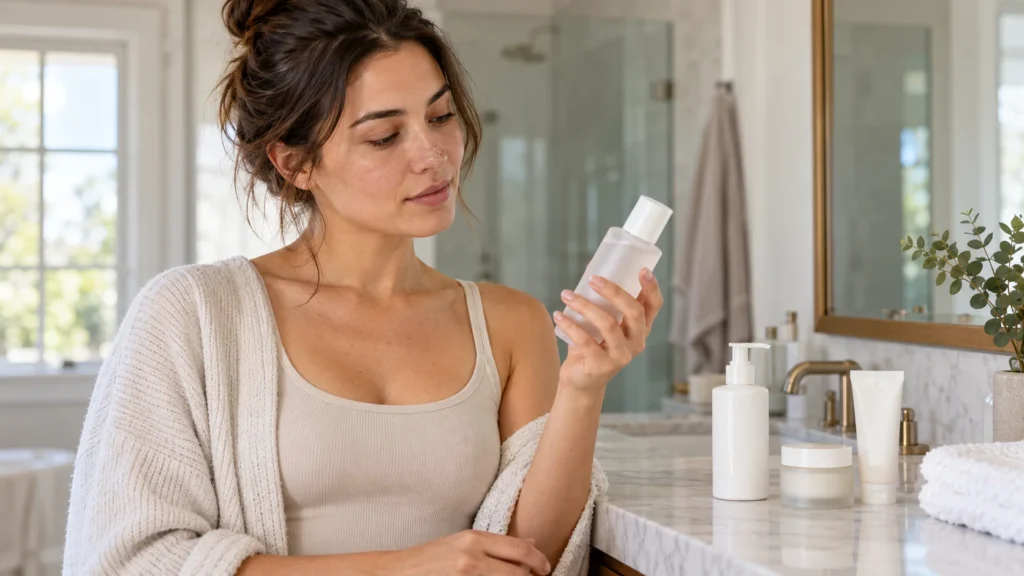
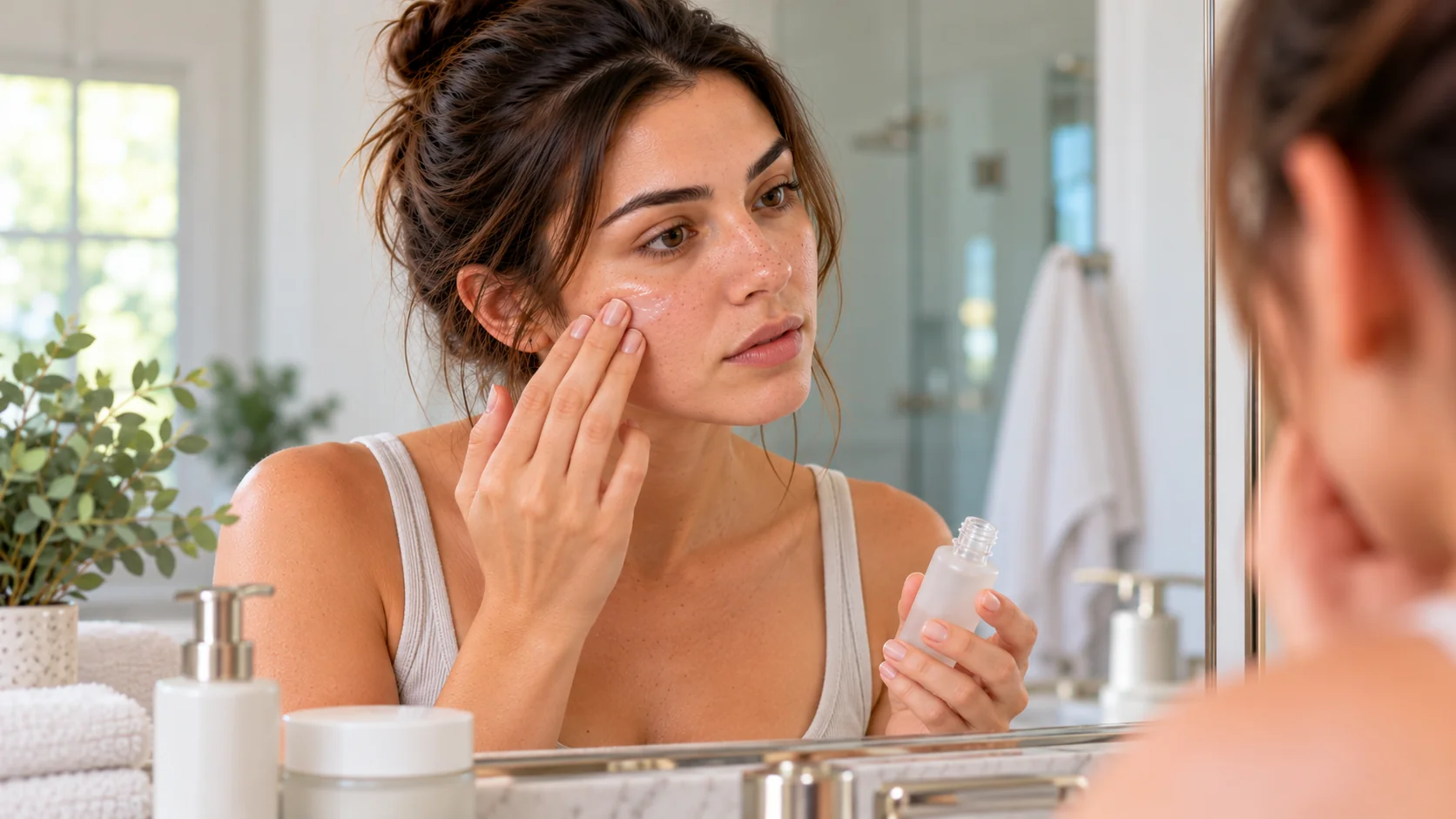
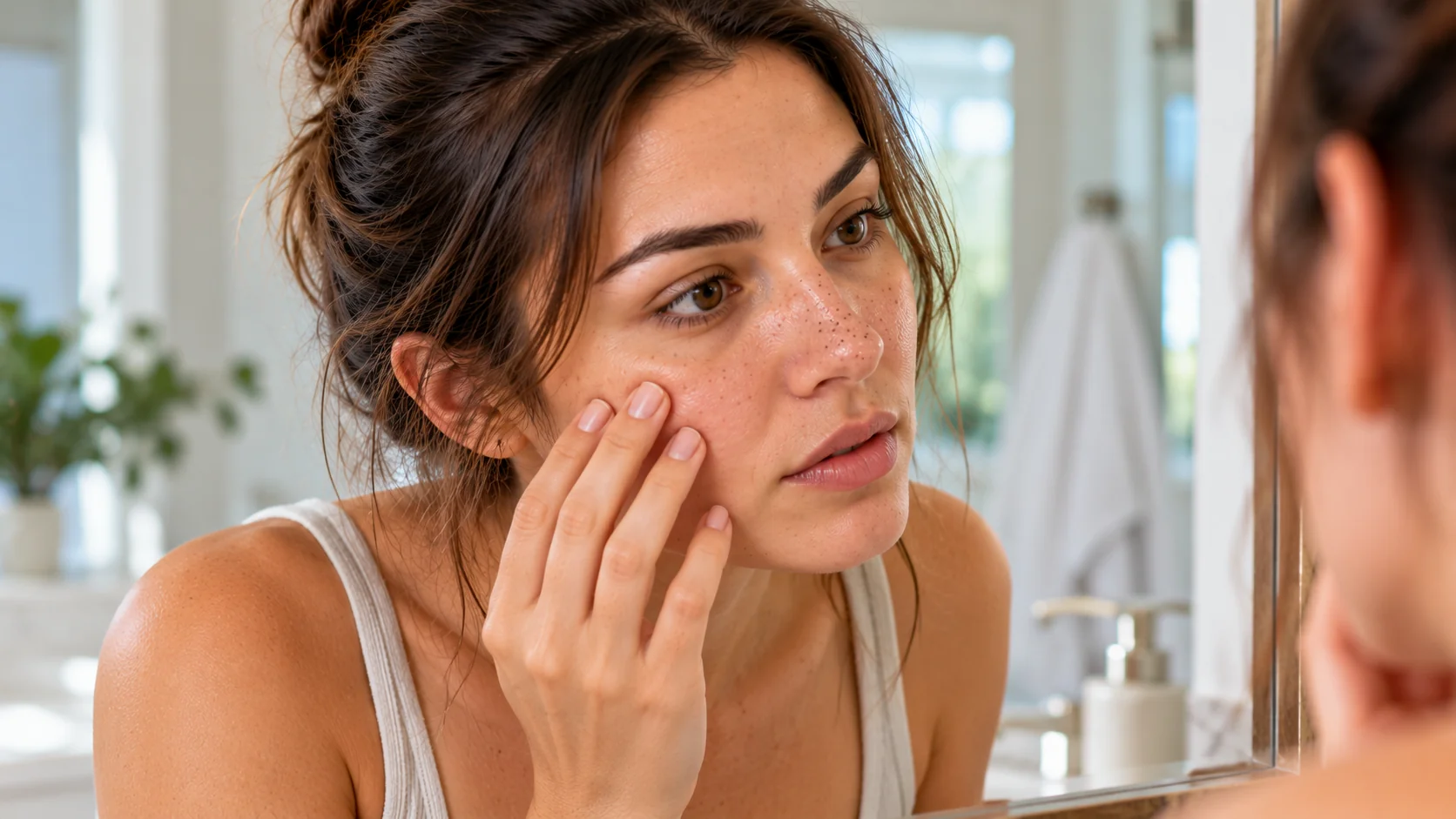
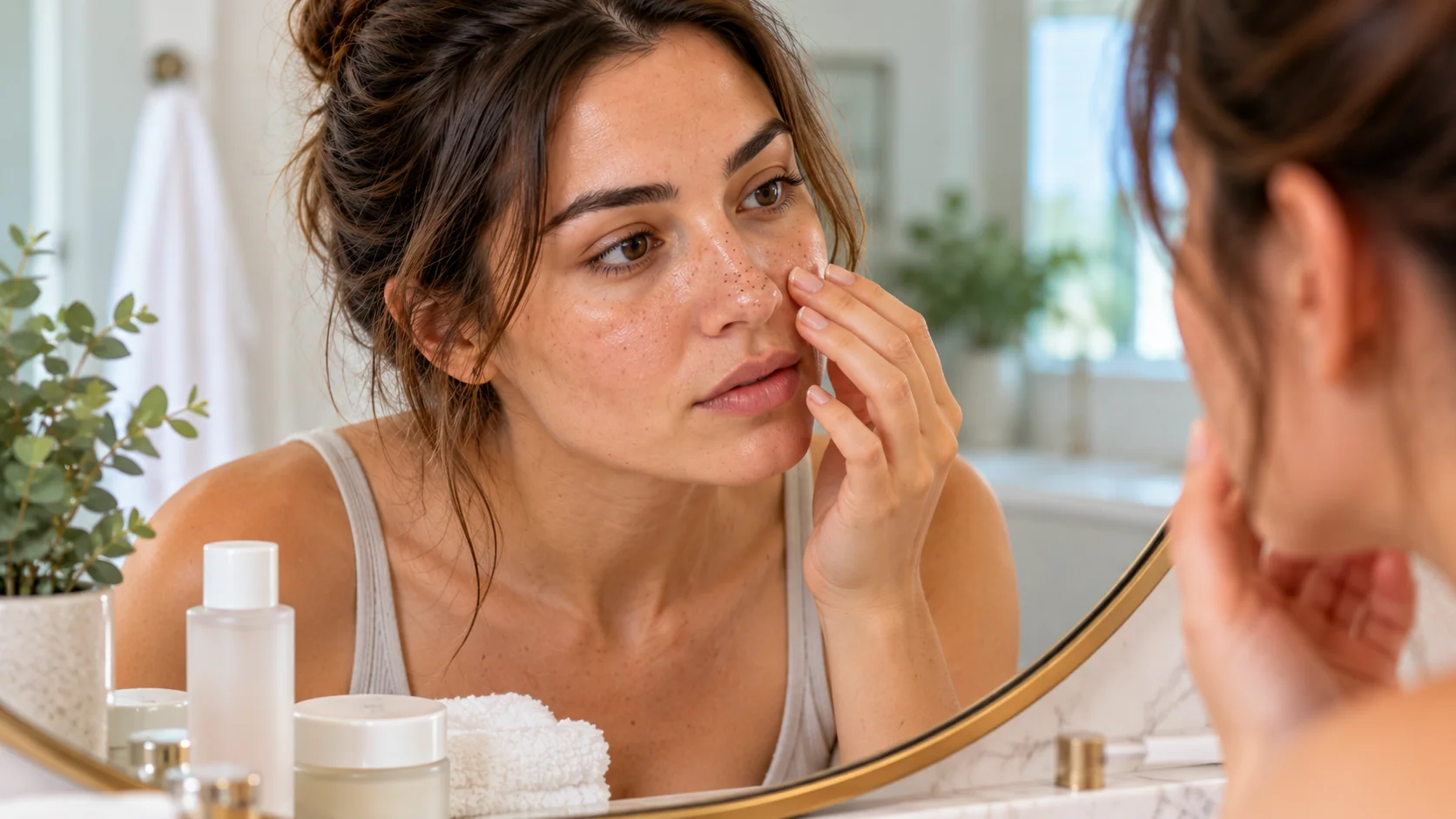
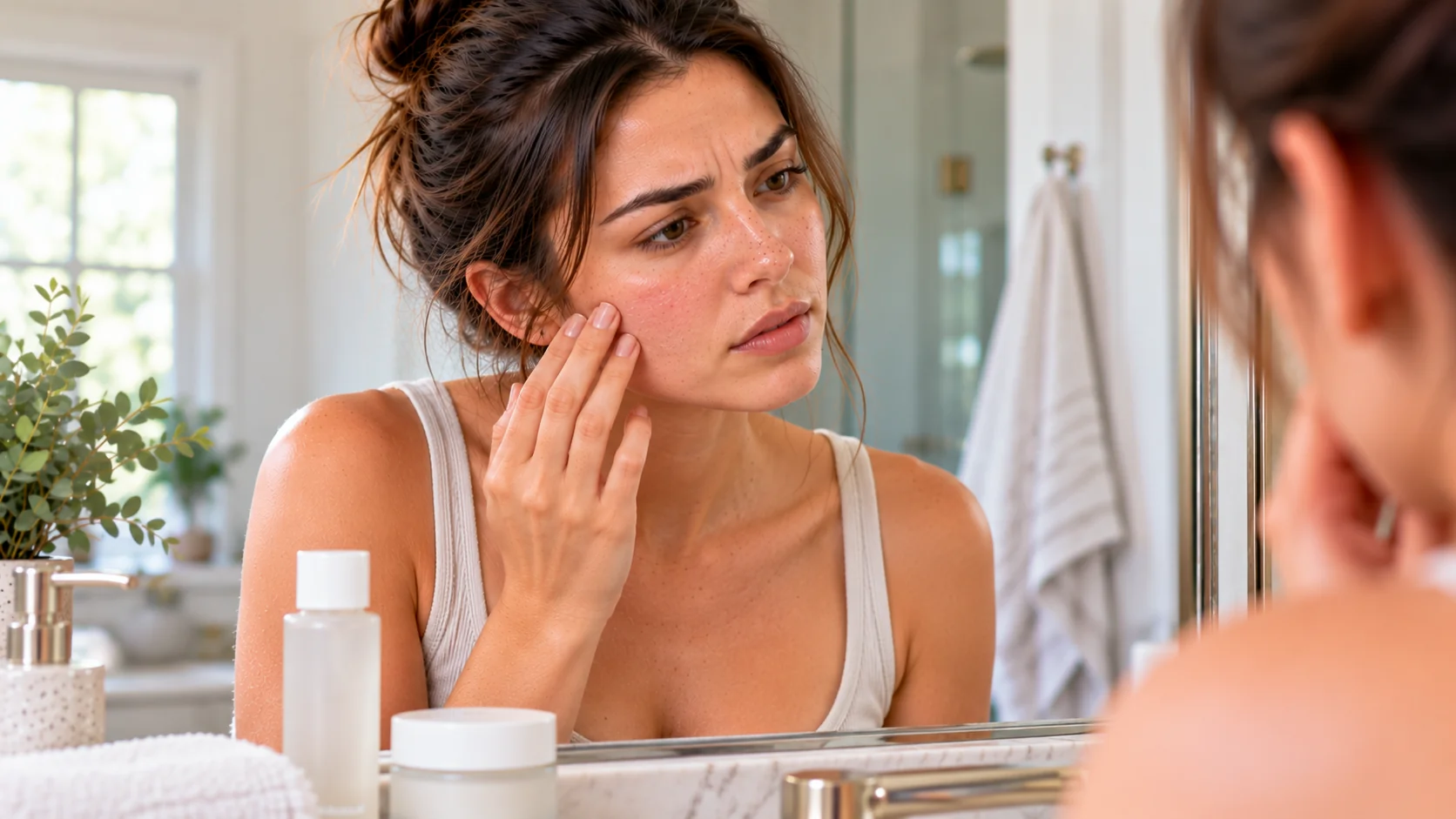
Salicylic acid shows up on an enormous number of acne and skincare labels, and almost as often shows up wrapped in confident-sounding claims that don’t hold up under a closer look — that it dissolves oil, that it shrinks pores, that it cleans “deep inside” your pores the way a drain cleaner clears a pipe. Underneath the marketing language, there’s a real, reasonably well-understood ingredient with genuine (if more modest and more conditional) evidence behind it.
This guide focuses on salicylic acid as used in over-the-counter (OTC) skincare and acne products in the United States — generally in the 0.5% to 2% range — not professional chemical peels, which use far higher concentrations under different rules, and not oral aspirin or other systemic salicylates, which are a different exposure entirely. It’s written to separate what the evidence actually supports from what’s simply repeated often enough online to sound settled.
Salicylic acid is a beta hydroxy acid (BHA) that’s oil-soluble, which lets it get into the oil-rich lining of a pore rather than just sitting on the surface. That property gives it a real, if modest and evidence-limited, role in managing clogged pores, blackheads, and some comedonal acne, plus mild exfoliation and texture improvement. It does not permanently shrink pores, does not “dissolve” sebum the way a solvent would, and at typical OTC strength (0.5–2%) has not been shown to reduce how much oil your skin actually produces. It’s one option among several for oily or acne-prone skin — not a universal daily requirement, and not appropriate as a stand-in for professional care if acne is severe. The most reliable approach is to follow your specific product’s own label directions first, introduce it cautiously if you’re new to exfoliating acids, scale back frequency if irritation develops, pair daytime use with sunscreen, and talk to a dermatologist about anything persistent, severe, or unclear.
What Is Salicylic Acid?
Salicylic acid is a beta hydroxy acid (BHA) — chemically related to aspirin (acetylsalicylic acid), since salicylic acid is aspirin’s active breakdown product in the body. In skincare, it’s used as a topical exfoliant, most often in cleansers, toners, serums, and spot treatments aimed at acne-prone or oily skin.
The two properties that matter most for how it behaves on skin:
It’s oil-soluble (lipophilic). Unlike water-soluble alpha hydroxy acids (AHAs) such as glycolic acid, salicylic acid can mix into the lipid-rich environment inside a hair follicle — the oily lining where clogged pores and blackheads form. This is a real, well-documented chemistry fact, and it’s the actual basis for salicylic acid being associated with oily or congested skin specifically.
It loosens the “glue” holding dead skin cells together. Salicylic acid is often described as “keratolytic,” but a more precise description from the dermatology literature calls it desmolytic — it disrupts the protein junctions (desmosomes) that hold skin cells together, rather than chemically dissolving keratin itself. The practical effect is similar either way: cells at the surface and inside the follicle shed more easily instead of clumping into a plug.
Those two facts are accurate and important. What they don’t support is the leap marketing language often makes from there — see What Salicylic Acid Cannot Do, below.
How Does Salicylic Acid Work?
Put simply: salicylic acid’s oil solubility lets it reach into the oily lining of a pore, and its effect on cell-to-cell adhesion helps loosen the mix of dead skin cells and oil that would otherwise clump together and form a clog. Over time and with consistent use, that can mean fewer new blackheads and whiteheads and somewhat smoother-feeling skin.
What this mechanism does not mean, despite how often you’ll see it phrased this way:
“Dissolves oil” or “melts sebum.” There’s no evidence salicylic acid chemically breaks down or dissolves sebum the way a solvent dissolves grease. What’s actually supported is that it’s miscible with follicular oil — meaning it can mix into that environment — not that it destroys the oil that’s there.
“Cleans deep inside your pores.” No research describes a physical deep-cleaning action. The supported mechanism is surface- and follicular-lining desquamation (cell shedding), not a scrubbing or flushing effect reaching deep into the follicle.
Both of these are marketing metaphors built on top of a real but narrower chemistry fact (oil solubility), not findings from clinical research.
Benefits of Salicylic Acid for Skin
Acne and clogged pores
The American Academy of Dermatology’s acne management guidelines give salicylic acid a conditional recommendation — the weakest tier of positive recommendation — for helping unclog pores and exfoliate skin, and describe the supporting evidence as limited. That’s a meaningfully different evidence tier than benzoyl peroxide and topical retinoids, which carry strong recommendations and more robust trial data. A recent Cochrane-referenced overview of acne treatment evidence didn’t include salicylic acid in its synthesized findings at all, which is consistent with “an evidence gap,” not with salicylic acid having been tested and found ineffective.
Salicylic acid is more associated with comedonal acne — blackheads and whiteheads — than with inflammatory, red, or cystic breakouts. If you have more inflamed or widespread acne, or acne that hasn’t responded to consistent OTC use, that’s a reasonable point to see a dermatologist rather than keep escalating salicylic acid use on your own; AAD guidelines point to prescription options, including isotretinoin for severe or treatment-resistant cases, as the appropriate next step.
Blackheads and clogged pores
Because it can mix into the oily lining of a follicle, salicylic acid is commonly recommended for blackheads and general pore congestion. What it does not do: permanently eliminate pores, permanently prevent future blackheads, or physically “open” or “close” a pore. No skincare ingredient — salicylic acid included — has been shown to permanently change a pore’s actual anatomical size. Dermatology reviews describe visible pore size as likely influenced by a mix of factors — oil/sebum output, hair-follicle size, skin elasticity, and genetic or ethnic variation — but describe this as “speculated” rather than firmly settled, and at least one multiethnic study has specifically pushed back on the simplest “larger oil glands cause larger pores” explanation. What can genuinely change is the appearance of a pore once it’s less congested with trapped oil and dead skin; that’s a real and worthwhile benefit, just a different (and more honest) claim than “shrinks your pores.”
Oily and congestion-prone skin
This is a good place to slow down, because two different claims get blurred together constantly. Salicylic acid’s oil solubility is a real reason it’s associated with oily or acne-prone skin — it can reach into oil-filled follicles in a way water-soluble ingredients can’t. That is not the same as salicylic acid reducing how much oil your sebaceous glands actually produce. At typical OTC concentrations (0.5–2%), there isn’t good evidence for an actual reduction in sebum production; the one study found using salicylic acid to measurably affect skin’s lipid/sebum levels used a 30% professional chemical peel — far above the 0.5–2% range permitted for OTC acne-drug products, and not something you’ll find in a drugstore cleanser or serum. So: helps manage oily, congestion-prone follicles — plausible and reasonably supported. Reduces oil production at the concentration you’re actually using — not something the OTC-level evidence currently supports.
Texture and mild exfoliation
By loosening the connections between surface skin cells, salicylic acid can contribute to smoother-feeling, more evenly textured skin with regular use. At OTC leave-on strength, expect gradual, cumulative improvement rather than a dramatic transformation — the more pronounced “resurfacing” results sometimes described for salicylic acid come from professional chemical peels at 20–30%+ concentrations, an entirely different category of use.
What about dark spots and inflammation?
Hyperpigmentation / post-acne marks: Salicylic acid chemical peels at high (20–30%+) professional concentrations have shown real benefit for melasma and post-inflammatory hyperpigmentation in the literature — but that evidence doesn’t transfer to a 0.5–2% leave-on product. At OTC strength, the plausible role is indirect: fewer new breakouts may mean fewer new marks over time. That’s a reasonable inference from the acne evidence, not a directly tested outcome, and it’s a different claim from salicylic acid actively fading pigment that’s already there. If dark spots or uneven tone are your main concern, our skincare routine for dark spots guide covers the fuller picture.
Anti-inflammatory effects: Because salicylic acid is chemically related to aspirin, an anti-inflammatory mechanism is plausible, and salicylic acid does have documented anti-inflammatory pharmacologic properties. A specific concentration range sometimes cited for this effect traces mainly back to decades-old animal research rather than modern human dose-response data, so this guide doesn’t repeat a precise percentage here. Treat “may have some anti-inflammatory activity” as reasonable; treat “proven anti-inflammatory acne treatment” as overstating what’s been directly tested in human inflammatory acne specifically.
What Salicylic Acid Cannot Do
To put the myths in one place: salicylic acid does not permanently shrink or close pores, does not dissolve or melt away sebum, does not “deep clean” pores in a literal sense, and — at the concentrations found in OTC products — has not been shown to reduce actual oil production. It’s also not a substitute for professional treatment of severe, cystic, or treatment-resistant acne, and it’s not primarily a dark-spot or pigmentation treatment at leave-on strength. None of this means salicylic acid is ineffective — it means the realistic benefits (less congestion, milder comedonal acne, smoother texture) are worth having on their own, without needing the exaggerated version to justify using it.
Who Is Salicylic Acid Best For?
Salicylic acid tends to make the most sense for oily, combination, or acne-prone skin dealing with blackheads, whiteheads, or general pore congestion. It’s not automatically wrong for dry or sensitive skin, but those skin types are more likely to find it drying or irritating and may do better starting with a lower frequency, a gentler (often rinse-off) format, and a supportive moisturizer. If you’re not sure which category describes you, our how to determine your skin type guide can help before you decide whether salicylic acid fits your routine. And if acne, oiliness, or large pores are your main concern more broadly, our dedicated routine guides for acne-prone skin, oily skin, and large pores each cover where an ingredient like salicylic acid fits alongside the rest of a routine.
What Percentage of Salicylic Acid Should You Use?
In the United States, the FDA’s over-the-counter acne drug monograph permits salicylic acid at 0.5% to 2% in products making an acne-treatment claim — this is a specific, current, regulatory concentration range, not an informal convention. It’s worth being precise about what “contains salicylic acid” actually tells you, because it’s less than you might think: under FDA rules, a product is only an “OTC acne drug” if it makes an acne-treatment claim (like “treats acne” or “clears blemishes”). A product can contain salicylic acid and be marketed purely as a cosmetic exfoliant — smoothing texture, with no disease-treatment claim — without being required to follow the acne-drug concentration rules at all. Classification depends on the claims a brand makes, not simply on whether the ingredient is present. That’s also why you’ll sometimes see a cleanser or serum containing salicylic acid with no percentage disclosed anywhere on the label — if it’s positioned as a cosmetic rather than a drug, the manufacturer isn’t required to state a concentration the way a Drug Facts panel would.
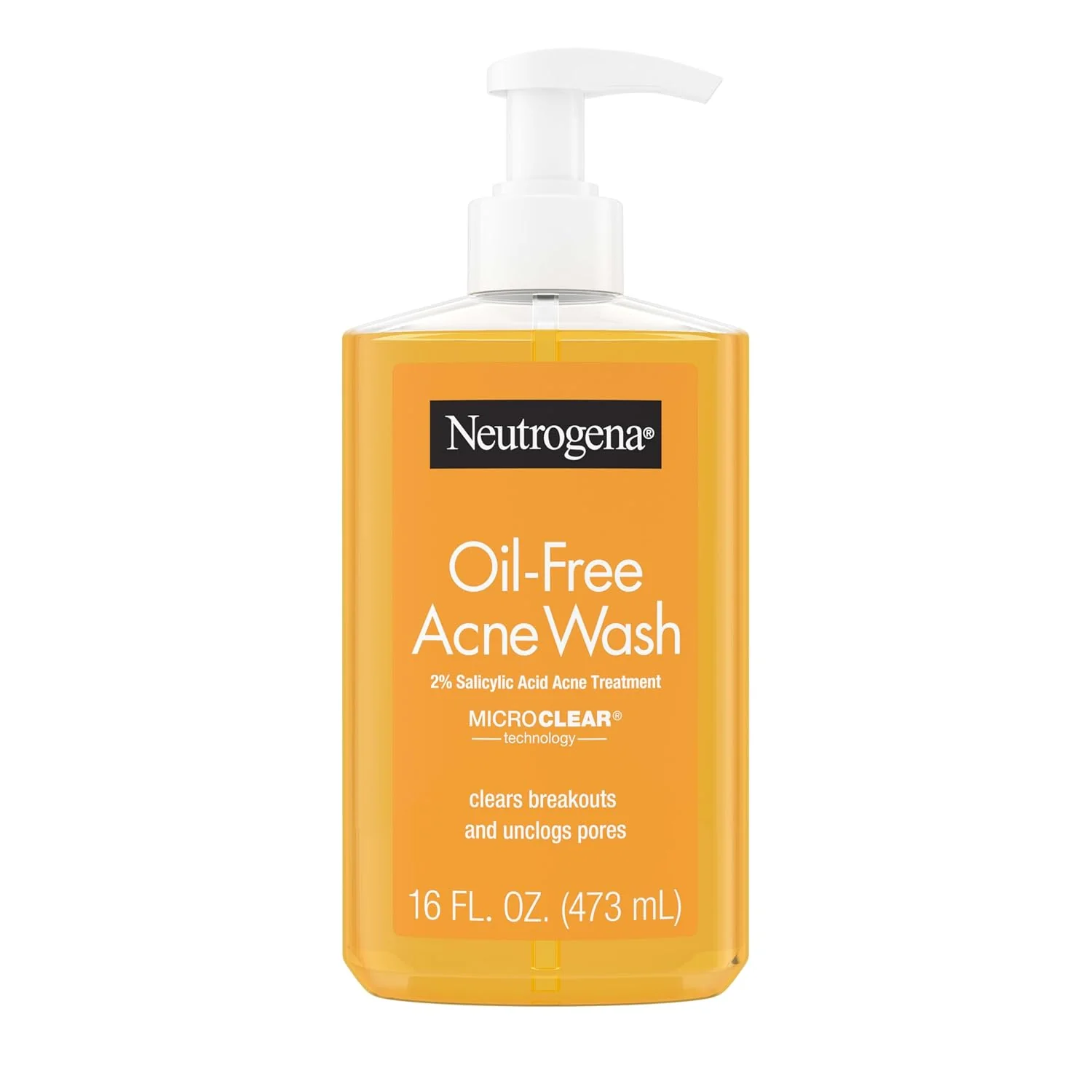
Two real products on the market illustrate this distinction concretely. Neutrogena Oil-Free Acne Wash carries an actual FDA Drug Facts panel listing “Salicylic Acid (2%)” as its active ingredient and “Acne treatment” as its stated purpose, with directions to cleanse twice a day — a genuine, regulated OTC acne drug.
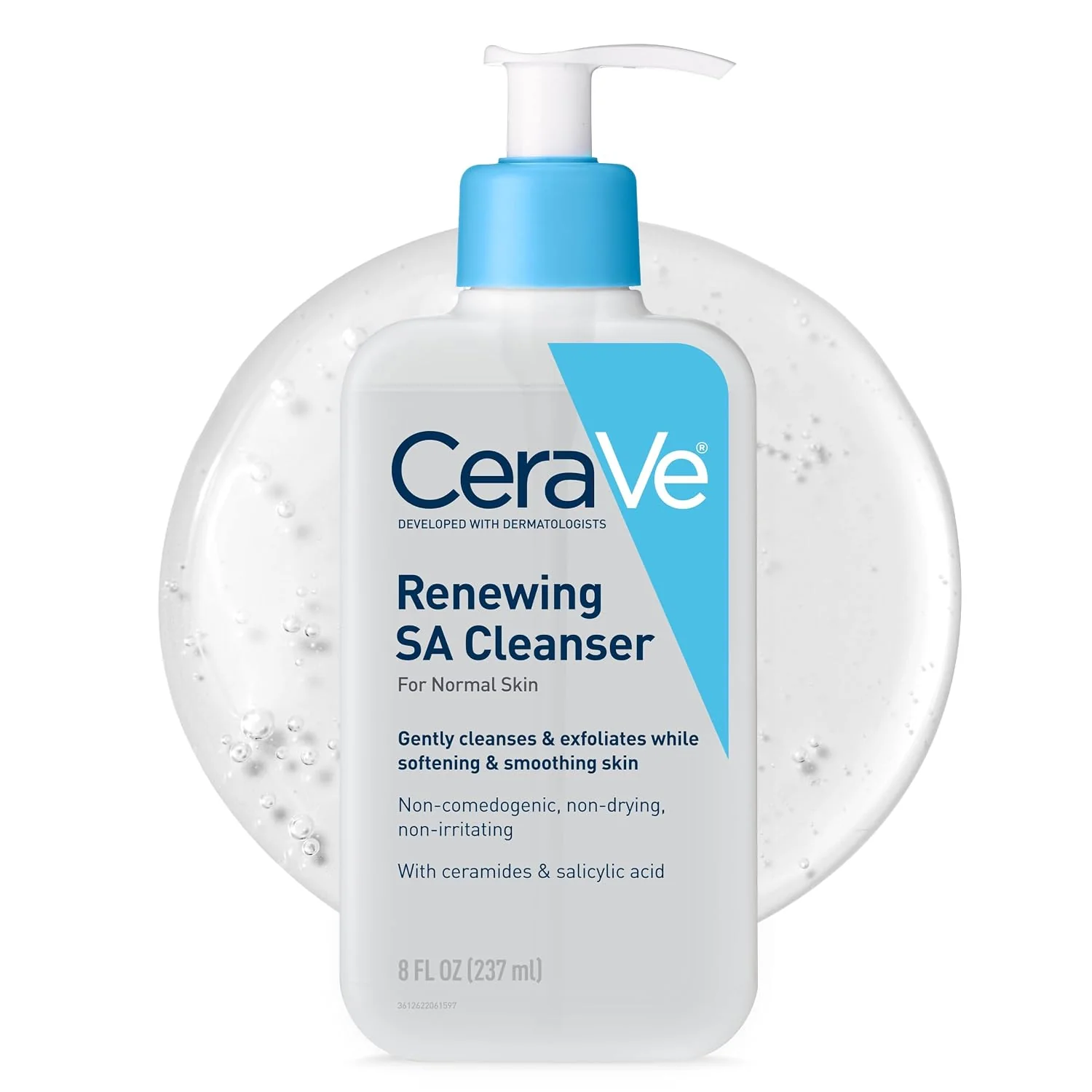
CeraVe Renewing SA Cleanser illustrates the other side of the same distinction: its official U.S. ingredient list names salicylic acid, but the brand’s own product page does not disclose a specific percentage anywhere — consistent with its positioning as a cosmetic exfoliating cleanser (built around ceramides, niacinamide, and hyaluronic acid) rather than an OTC acne drug, since it carries no Drug Facts panel or acne-treatment claim.
Neither of these facts means one product is “better” than the other — a cosmetic-positioned cleanser isn’t automatically weaker, and carrying a Drug Facts panel isn’t automatically more effective for your particular skin. They’re simply two different regulatory and marketing approaches to formulas that both list salicylic acid as an ingredient.
Professional chemical peels use much higher concentrations — commonly in the 20–30%+ range — administered by a trained professional, which is a different context of use rather than simply a stronger version of a retail product. The FDA’s 0.5–2% range specifically applies to products making an OTC acne-drug claim; it isn’t a universal rule that anything above 2% is automatically classified as a “peel.” In practice, though, professional-administered high-concentration use and everyday retail products remain different contexts, and research on peel-strength salicylic acid — including some of the hyperpigmentation and dramatic-resurfacing findings mentioned earlier — shouldn’t be assumed to apply to a 2% product you can buy off a shelf.
Salicylic Acid Cleanser vs. Leave-On Treatment
A common question is whether a rinse-off cleanser can really do anything, given how briefly it’s in contact with skin. The honest answer: there’s no single, agreed-upon “contact time” that salicylic acid needs to work, and no research locates a specific number of seconds or minutes as a hard requirement. What the research on short-contact formulas does show is that how much active ingredient actually reaches skin during a quick wash depends heavily on the product’s own formulation — its pH, and whether it includes ingredients that help the active ingredient deposit onto skin before being rinsed away — at least as much as on contact time itself. A well-formulated cleanser can meaningfully deposit salicylic acid onto skin even during a short wash. No published human trial directly compares a leave-on salicylic acid product against a rinse-off salicylic acid cleanser for actual clinical outcomes (lesion counts, comedone counts, and so on) — so the common assumption that leave-on formats work better rests on reasonable pharmacokinetic logic (more total contact time, in principle, means more total exposure), not on a directly tested comparison. Even for benzoyl peroxide, a more heavily studied acne active, a recent clinical review states that efficacy data comparing cleanser and leave-on formulations are limited. Treat “leave-on is generally more reliable” as a sensible, evidence-consistent inference rather than a proven finding, and don’t assume a cleanser is doing nothing.
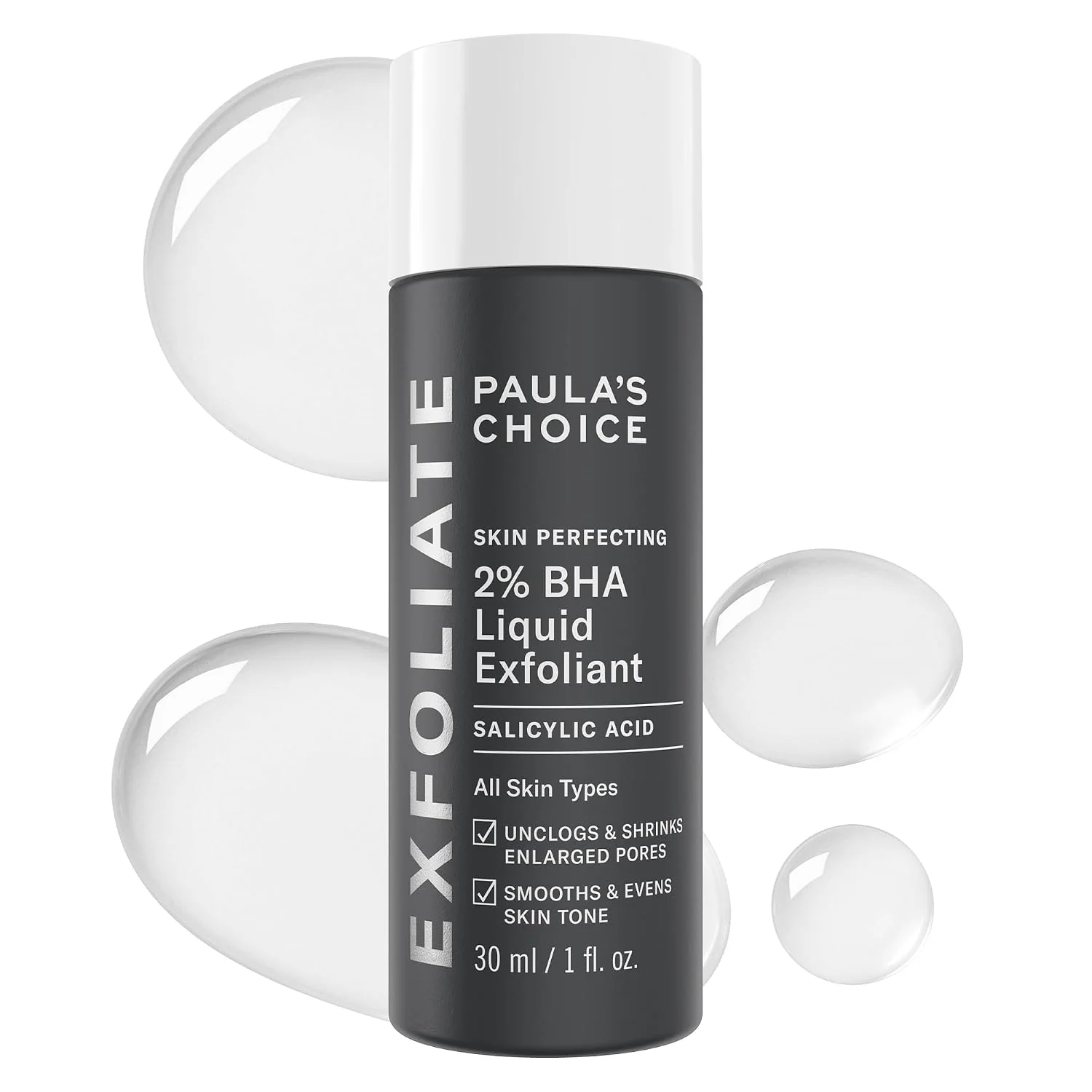
As one concrete illustration of the leave-on format discussed above: Paula’s Choice markets a product called SKIN PERFECTING 2% BHA Liquid Exfoliant, positioned within the brand’s “leave-on BHA exfoliant” product category — an example of the 2% leave-on BHA format discussed in this section.
If you’re building out your cleanser step more generally, our best gentle cleansers for beginners guide covers how an active-ingredient cleanser like this fits alongside a basic daily cleanser.
How to Use Salicylic Acid
How often
Follow your specific product’s own label first — directions vary by product format and brand, and a label’s own instructions take priority over any general description here. For products regulated under the FDA’s OTC acne-drug monograph — a labeling framework that covers salicylic acid along with the monograph’s other acne actives, not a salicylic-acid-only rule — the required label language builds in a specific, graduated approach: apply a thin layer to the entire affected area, starting with once a day, then gradually increasing to two or three times a day if needed — and if bothersome dryness or peeling happens, cutting back to once a day or every other day. That’s the actual regulated directions for a qualifying OTC product, not just general dermatologist advice. The commonly repeated “start with 2–3 times a week” guidance you’ll see in a lot of consumer content isn’t something this research could trace to a specific clinical finding — it’s reasonable, cautious practical advice, but treat it as a sensible starting convention rather than a proven, universal rule.
How much
The FDA’s label language for OTC acne-drug products (a category that includes, but isn’t exclusive to, salicylic acid) specifies a “thin layer” over the “entire affected area” — meaning the area you’re treating generally, not a single-spot-only application. Instructions you’ll see elsewhere — “a pea-sized amount,” “2–3 drops” — are common conventions, not phrasing tied to a specific salicylic acid study or monograph; follow your specific product’s own directions, since a cleanser, a toner, and a spot-treatment gel are applied differently by design.
Morning or night
There’s no strong evidence requiring one or the other. If you use it in the morning, pair it with sunscreen as a matter of general routine logic (see below); if you prefer night use, that’s a reasonable choice too, including for people who’d rather not add another step to a sunscreen morning. For a broader sense of where an exfoliating active fits relative to the rest of your products, see our guide on how to layer skincare products.
Results timeline
Be skeptical of specific, fast timelines like “results in one week” or “blackheads gone in two weeks” — this research didn’t find support for claims that fast. The American Academy of Dermatology’s own general guidance for topical acne medications points to fewer breakouts in roughly 4 to 8 weeks, with fuller clearing commonly taking up to about 16 weeks — general guidance for topical acne treatment, not a salicylic-acid-specific number, but a far more realistic benchmark than most marketing timelines. Give a product at least several weeks of consistent use before judging whether it’s working, and don’t generalize one product’s advertised results to every salicylic acid product.
Salicylic Acid and Sunscreen
Alpha hydroxy acids (AHAs) like glycolic acid carry a well-documented FDA sun-sensitivity caution. Salicylic acid, a different acid category (BHA), isn’t treated the same way in FDA’s own materials — the FDA’s OTC acne monograph requires a sun-exposure warning specifically for benzoyl peroxide, not for salicylic acid, and FDA’s consumer information on AHAs doesn’t extend its sun-sensitivity findings to BHAs. In other words, salicylic acid does not carry the same FDA sun-sensitivity warning discussed for AHAs in the sources reviewed here — an absence of a flagged warning, not a tested finding that salicylic acid is proven safe in the sun.
That doesn’t make sunscreen optional. Any routine built around acne treatment or exfoliation benefits from daily sunscreen regardless — healing or irritated skin is generally more vulnerable to UV damage, sun protection can help keep UV exposure from worsening or prolonging visible post-inflammatory hyperpigmentation (post-acne marks), and a well-rounded skincare routine includes daily sunscreen as a baseline, independent of whether a specific active ingredient carries a sun-sensitivity warning. For help with that step, see our best sunscreens for beginners guide and how much sunscreen you actually need on your face.
These work through genuinely different mechanisms, not two versions of the same thing: salicylic acid acts desmolytically, loosening cell-to-cell junctions directly, while retinoids bind nuclear retinoic acid receptors (RAR/RXR) and change skin-cell behavior through gene transcription — a slower process dermatologists call “retinization.” Combining the two doesn’t cause a chemical conflict, but it does raise cumulative dryness and irritation risk, especially for beginners
Alternate nights (salicylic acid one night, retinoid the next) rather than layering both at full strength right away — see Common Retinol Mistakes
Benzoyl peroxide
Generally yes
Mainly cumulative dryness, not a blocking chemical interaction; avoid layering both at maximum frequency immediately
Alternate AM/PM or alternate days at first; combination products containing both exist and are sold under the same FDA framework
The popular “neutralizes vitamin C” claim isn’t supported — vitamin C is actually most stable at a low pH, so the usual reasoning for this myth runs backwards
If you’re irritation-prone, separating them (vitamin C in the AM, salicylic acid in the PM) is a reasonable comfort choice, not a chemistry requirement
Hyaluronic acid
Yes
None identified
Often paired specifically to help offset the dryness salicylic acid can cause
AHAs (glycolic, lactic acid)
Workable, in moderation
Both exfoliate; combining adds up rather than causing a specific reaction
Alternate rather than use both daily at first; watch for over-exfoliation (stinging, visible flaking)
Moisturizer
Recommended
Supports comfort and the skin barrier while using an exfoliating acid
Apply a basic, fragrance-free moisturizer after salicylic acid, especially when starting out — see best moisturizers for beginners
Potential Side Effects
Dryness, peeling, stinging, or temporary redness can occur, and this isn’t automatically a sign something is wrong. The FDA’s own required OTC label language anticipates this directly, building in a step-down (“reduce to once a day or every other day”) for exactly this situation — though the regulation itself doesn’t state how commonly these effects actually occur, so “can happen and has a built-in response” is a more accurate framing than calling them universally expected.
Can You Overuse Salicylic Acid?
Yes. More frequent or higher-concentration use isn’t automatically better, and pushing through significant irritation tends to backfire rather than speed up results. If you notice ongoing dryness, flaking, or stinging that doesn’t settle, the reasonable response is to cut back frequency per the step-down built into the FDA’s OTC directions, simplify the rest of your routine, and lean on a basic moisturizer — not to push through it. If irritation is significant or doesn’t improve after cutting back, that’s a reasonable point to stop and check in with a dermatologist, rather than continuing to adjust on your own.
Who Should Be More Cautious?
Large-area use and salicylate toxicity. Reported cases of systemic salicylate toxicity from topical use are real but specific — they cluster around high-concentration products, large body-surface-area application, use on broken or compromised skin, occlusive dressings, and whole-body application in infants and young children. A clinical review on acne and pregnancy states directly that there are no known cases of salicylate toxicity associated with acne products specifically. A normal 0.5–2% facial product, used as directed on intact skin, is not the pattern seen in toxicity case reports — but that’s a reason for proportionate caution (don’t apply a high-strength product over large areas of skin, and don’t use it on broken or irritated skin), not a reason to worry about ordinary facial use.
Aspirin allergy or salicylate sensitivity. This is a genuinely open question rather than one with a clean yes-or-no answer. Many reactions labeled “aspirin allergy” are actually a non-allergic, enzyme-mediated sensitivity (sometimes called AERD) that’s distinct from how a topical skincare product is absorbed through skin, and a separate, uncommon contact allergy to topical salicylates also exists, unrelated to a person’s aspirin history. There isn’t a single authoritative source directly stating whether someone with an aspirin allergy should avoid topical salicylic acid. If you have a known aspirin or NSAID allergy or sensitivity, it’s worth checking with your allergist or dermatologist before starting a salicylic acid product, rather than assuming either that it’s automatically fine or automatically risky.
Children. There’s no single FDA-mandated minimum age that applies to every OTC salicylic acid acne product — the federal acne-drug monograph itself doesn’t set one. Some individual product labels may include their own age guidance beyond the federal minimum, so check the specific product’s own Drug Facts panel rather than assuming a universal age cutoff.
Pregnancy and Breastfeeding
This deserves more precision than a quick yes-or-no.
Pregnancy: You may still see topical salicylic acid described online as “pregnancy category C” — that letter-grade system (A/B/C/D/X) was never actually applied to over-the-counter drugs in the first place, and the FDA replaced it for prescription drugs in 2015 with a narrative labeling format. So the “Category C” label circulating for this ingredient isn’t current or applicable regulatory terminology; it’s a holdover that doesn’t accurately describe how the FDA evaluates topical OTC products today. Setting that label aside, there are no controlled human studies of topical salicylic acid use during pregnancy specifically — so this isn’t a “proven safe” claim in the way daily moisturizer would be. That said, the available clinical-review literature draws a meaningful distinction: a review in the Journal of the American Board of Family Medicine concludes that risk during pregnancy is considered low when use is limited to a small area for a limited duration (think: a basic facial cleanser or spot treatment), while noting that high-concentration, widespread use on compromised skin is where salicylate toxicity has actually been reported — again, not in connection with ordinary acne products. That “low risk” conclusion is reasoning-based — grounded in how little of the ingredient is absorbed at low concentrations and limited surface area, plus animal and case-report data on toxicity thresholds — rather than based on a dedicated human-outcome study measuring pregnancy results directly. This is also a different exposure than oral aspirin or other systemic salicylates, which have documented pregnancy-related concerns at therapeutic doses; a low-concentration topical facial product is not the same exposure as swallowing aspirin. None of this amounts to a guarantee, and it isn’t a substitute for talking to your OB-GYN or dermatologist about your specific product and situation, especially if you’re considering anything beyond a basic low-concentration facial product — including peels, which fall into a different, higher-exposure category entirely.
Breastfeeding: The NIH’s LactMed database — the standard reference for medication safety during lactation — states that because salicylic acid is unlikely to be meaningfully absorbed into breastmilk, it’s considered acceptable to use while breastfeeding, with one specific caveat: avoid applying it anywhere your infant’s skin or mouth could come into direct contact, which in practice means not applying it to the chest or breast area. There isn’t dedicated research measuring effects on breastfed infants directly — this guidance is based on how little of the ingredient is expected to be absorbed, not on a dedicated infant-outcome study — so the caution about site of application is worth taking seriously even though the overall risk is considered low.
As with anything involving pregnancy or breastfeeding, treat this as a starting point for a conversation with your own doctor, not a final answer.
Common Salicylic Acid Myths
“Salicylic acid permanently shrinks your pores.” Not supported. Pore size is structural; what can improve is the appearance of a pore once it’s less clogged.
“It dissolves all the oil in your pores.” Not accurate. Salicylic acid is oil-soluble, meaning it can mix into oily, follicle-lining material — it doesn’t chemically dissolve or break down the oil itself.
“Higher concentration is always better.” Not supported for regular OTC use. The FDA’s 0.5–2% range applies specifically to products making an OTC acne-drug claim, not as a universal ceiling on every cosmetic formulation; separately, concentrations well above that range are generally administered professionally, in a different-use context with higher irritation risk. Within the OTC range itself, more isn’t automatically better either, and tolerability matters more than chasing a higher number.
“Tingling or burning means it’s working.” Tingling or burning isn’t evidence that salicylic acid is working — significant or persistent discomfort is a reason to reduce use or stop and reassess, not a sign of extra effectiveness.
“You can’t use salicylic acid with retinol.” Overstated. The real concern is additive dryness and irritation, not a chemical block — many people alternate the two successfully.
“You can’t use it with vitamin C.” Not supported by the evidence found for this guide. The commonly cited “neutralization” reasoning doesn’t hold up, since vitamin C is actually most stable at low pH.
“Salicylic acid always causes sun sensitivity.” Not accurate. Unlike AHAs, salicylic acid isn’t currently flagged by the FDA with a sun-sensitivity warning — though daily sunscreen remains a good idea in any acne or exfoliation routine regardless.
“Everyone with oily skin should use it every day.” Not a universal rule. It’s one option for oily, congestion-prone skin, not a mandatory daily step, and starting less frequently is reasonable for most beginners.
“Salicylic acid and aspirin are basically the same thing when applied to skin.” Related, but not equivalent. They’re chemically connected, but a low-concentration topical facial product is a very different exposure than swallowing aspirin.
“If it’s purging, that means it’s working — ride it out.” Worth real skepticism. “Purging” is widely used in consumer skincare language, but this research didn’t find a standardized clinical definition or strong evidence that lets a new breakout be confidently labeled as purging rather than simple irritation or an incompatible product. Worsening, persistent, unusually irritated, or spreading breakouts shouldn’t automatically be dismissed as a sign the product is “working.”
Frequently Asked Questions
It helps loosen the mix of oil and dead skin cells that clogs pores and contributes to blackheads, whiteheads, and some comedonal acne, and it can mildly exfoliate for smoother texture. It isn’t a cure-all for every type of acne or skin concern.
Many OTC products are labeled for daily (even up to three-times-daily) use, with a built-in instruction to cut back if dryness or peeling becomes bothersome. Most beginners do better starting once a day or every other day and adjusting from there, rather than starting at maximum frequency.
Not inherently — 2% is within the FDA-permitted range for OTC salicylic-acid acne-drug products, but there’s no good evidence that it’s specifically “the” recommended beginner concentration. Percentage alone doesn’t determine tolerability; a product’s full formulation (and your own skin) matters at least as much, so starting with less frequent use of a 2% product is a reasonable way to gauge tolerance.
It can help reduce the buildup that forms blackheads over time with consistent use, but it doesn’t instantly extract or permanently prevent every blackhead.
No — pore size is structural, not something a skincare ingredient changes. What can look different is how congested a pore appears once buildup is reduced.
It can help with oily, congestion-prone follicles because of its oil solubility, but there isn’t good evidence that OTC-strength salicylic acid actually reduces how much oil your skin produces.
Generally yes, with some caution — but they’re not “both exfoliants” in the same sense. Salicylic acid loosens cell-to-cell junctions directly (desmolytic action), while retinoids work through a slower, receptor-mediated process that changes skin-cell behavior at the gene level. Different mechanisms, but combining them can still raise the chance of dryness and irritation. Alternating nights is a common, reasonable approach, especially when starting out.
Yes — no documented incompatibility was found. The usual caution about not stacking too many active ingredients at once still applies.
Yes. The popular claim that combining them “neutralizes” the vitamin C isn’t supported by the evidence reviewed for this guide.
No strong evidence requires one or the other for salicylic acid specifically; follow your product’s own directions, and apply to skin that’s been cleansed.
Either can work. If used in the morning, follow with sunscreen as part of your normal routine; there’s no strong evidence that one time of day is required.
Be cautious of claims promising results in a week or two. A more realistic general benchmark (from AAD guidance on topical acne treatment broadly, not salicylic acid specifically) is some improvement within 4 to 8 weeks, with fuller results sometimes taking up to around 16 weeks.
“Purging” isn’t a term with a standardized clinical definition, and new breakouts after starting a product can just as easily be irritation or an incompatible product as a deeper process pushing congestion to the surface faster. If breakouts worsen, persist, or spread, that’s a reason to stop and reassess rather than wait it out.
Limited, small-area OTC use is generally considered lower risk by the available clinical literature, but there are no controlled human studies specifically, and this is different from high-concentration peels or oral salicylates. Talk to your OB-GYN or dermatologist about your specific situation.
Bottom Line
Salicylic acid is a genuinely useful, well-established ingredient for managing clogged pores, blackheads, and some comedonal acne — not because it dissolves oil or permanently reshapes your pores, but because its oil solubility and effect on cell shedding give it a real, if more modest, role in reducing congestion and smoothing texture. Most of the dramatic claims attached to it — permanent pore shrinking, deep-cleaning, guaranteed fast results, universal “never combine” rules — go well beyond what the evidence actually supports. Start with a reasonable frequency, follow your product’s own directions, pair daytime use with sunscreen as part of a normal routine, and treat persistent irritation, severe acne, or questions about pregnancy, breastfeeding, or allergy history as reasons to check in with a dermatologist rather than push through on your own.
This guide was researched using the FDA’s official OTC acne drug regulations and cosmetic ingredient guidance, American Academy of Dermatology clinical guidelines, peer-reviewed dermatology literature (including a comprehensive review of salicylic acid as a peeling agent and a Cochrane-referenced overview of acne treatment evidence), NIH’s LactMed database for breastfeeding guidance, a peer-reviewed clinical review addressing acne treatment during pregnancy, and the American Academy of Allergy, Asthma & Immunology’s guidance on salicylate sensitivity. Where a popular claim — that salicylic acid dissolves sebum, permanently shrinks pores, reduces actual oil production at OTC strength, requires a specific application frequency, or causes a clinically defined “purging” phase — lacked solid supporting evidence, that claim was corrected or clearly flagged as unsupported rather than repeated as fact. Some specific claims (including one older study on salicylic acid and UV protection, and a case study on salicylic acid peels in darker skin tones) could not be independently retrieved in full during this research and were excluded rather than cited secondhand. This guide does not claim clinical or dermatologist review, and it is not a substitute for personalized medical advice — particularly for severe or treatment-resistant acne, pregnancy or breastfeeding questions, known drug allergies, or persistent irritation.
Medical Disclaimer IncludedClearly marked below — this guide is educational, not personalized medical advice.
Read our Review Policy for a plain explanation of what our review process does — and doesn't — mean for health-adjacent content.
Sources & Further Reading
U.S. Food & Drug Administration — Final Administrative Order OTC000013 (M006), “Topical Acne Drug Products for Over-the-Counter Human Use” (current permitted salicylic acid concentration: 0.5%–2%)
21 CFR § 333.310 and § 333.350 — FDA OTC acne drug monograph (permitted labeling/claims; required directions and warnings)
U.S. Food & Drug Administration — “Is It a Cosmetic, a Drug, or Both? (Or Is It Soap?)” (cosmetic vs. drug classification by intended use/claims)
U.S. Food & Drug Administration — “Alpha Hydroxy Acids” consumer information (AHA-specific sun-sensitivity findings; does not extend to BHA)
American Academy of Dermatology — Updated Guidelines for the Management of Acne (salicylic acid’s conditional recommendation; severe-acne/isotretinoin guidance; general topical-treatment results timeline)
American Academy of Family Physicians (AAFP) clinical summary of AAD acne guidelines, American Family Physician, 2025
Cochrane Database of Systematic Reviews — overview of topical, light-based, and complementary acne interventions (CD014918)
Arif T. — “Salicylic acid as a peeling agent: a comprehensive review,” Clinical, Cosmetic and Investigational Dermatology, 2015 (mechanism, lipophilicity, concentration-dependent anti-inflammatory effect, peel-concentration sebum/pigmentation findings)
Facial pores treatment review (19 clinical trials, 591 cases), PubMed, 2022 (no permanent pore-size reduction identified across modalities)
Madan R, Levitt J — “A review of toxicity from topical salicylic acid preparations,” Journal of the American Academy of Dermatology, 2014 (salicylate toxicity risk factors: concentration, body-surface area, occlusion, compromised skin)
Clinical review of acne treatment during pregnancy, Journal of the American Board of Family Medicine, 2016 (pregnancy category C; limited-area/limited-duration risk framing; no known toxicity cases tied to acne products)
American Academy of Allergy, Asthma & Immunology — “Ask the Expert: Salicylate” (AERD/NSAID-sensitivity mechanism, distinct from topical contact allergy)
DermNet NZ — “Allergy to Topical Salicylate” (contact-allergy mechanism; described as uncommon)
Leyden JJ, Stein Gold L, Weiss JS — “Why Topical Retinoids Are Mainstay of Therapy for Acne,” Dermatology and Therapy, 2017 (PMC5574737) (retinoid mechanism and “retinization” adjustment period, used for the salicylic-acid/retinoid compatibility comparison)
Lee Y, et al., Dermatologic Surgery, 2016; Roh M, et al., British Journal of Dermatology, 2006; Flament F, et al., Clinical, Cosmetic and Investigational Dermatology, 2015; Dong J, et al., Cutis, 2016 — pore-size determinant research (sebum output, follicle size, skin elasticity, genetic/ethnic variation; described as “speculated” rather than firmly settled, with at least one study pushing back on a simple oil-gland-size explanation)
American Academy of Dermatology — “What Can Treat Large Facial Pores?” consumer page (plain-language summary consistent with the pore-size research above)
U.S. Food & Drug Administration — Pregnancy and Lactation Labeling Rule (PLLR), effective June 30, 2015 (confirms the old A/B/C/D/X pregnancy-letter-category system applied only to prescription drugs and has been phased out; never officially applied to OTC drugs)
Affiliate Disclosure: This article contains affiliate links. If you buy through these links, AvaFitCare may earn a commission on qualifying purchases at no additional cost to you. Product selection and descriptions on this page are based on verified manufacturer information, not on affiliate relationships — affiliate participation does not influence which products are included or how they are described, and the article’s medical and scientific conclusions are not affected by, and do not depend on, any affiliate relationship.
This article is for general informational and educational purposes only and is not a substitute for professional medical advice, diagnosis, or treatment. It does not create a doctor-patient relationship. Always seek the advice of a dermatologist, physician, or other qualified healthcare provider with any questions you may have regarding a medical condition, pregnancy or breastfeeding, a known drug allergy, or persistent skin irritation.
Get New Guides in Your Inbox
No spam, no filler — just new articles as we publish them.