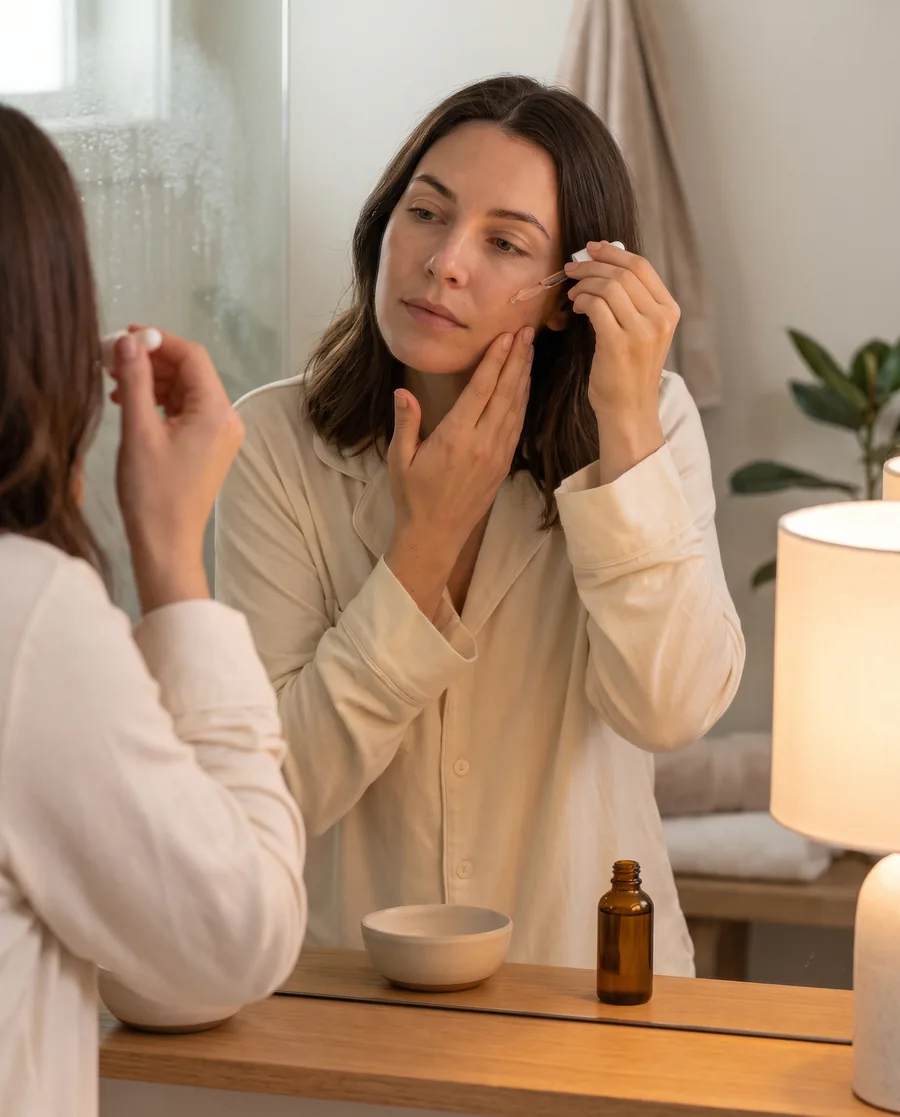
You wash your face, it feels clean and matte for maybe an hour, and by lunchtime your forehead and nose look like you just came from a workout. Sound familiar? Most people’s first instinct is to fight back: wash more, switch to a stronger cleanser, skip moisturizer entirely because “it’s just going to add more oil anyway.”
That approach almost always backfires. A good skincare routine for oily skin isn’t about drying your face out as much as humanly possible. It’s about managing oil production without stripping your skin, which is usually what makes oiliness worse in the first place.
This guide covers what oily skin actually is, why it happens, and how to build a routine you’ll actually keep up with. Not a ten-step routine. Just the handful of steps that matter, explained in plain terms. If you’re completely new to skincare, our beginner skincare routine guide covers the fundamentals first; this guide builds on that with an oily-skin-specific approach.
Your Oily Skin Routine in 60 Seconds
Morning
Cleanser
Optional treatment
Lightweight moisturizer
SPF 30+ sunscreen
Night
Cleanser
Optional treatment
Lightweight moisturizer
You can build on this once your skin is used to it. But this four-step structure is where almost anyone with oily or oily/acne-prone skin should start.
Oily skin comes down to your sebaceous glands making more sebum than your skin needs. It has nothing to do with being “unclean.”
Skipping moisturizer can leave skin feeling dry, tight, or irritated, even when it’s oily.
Three products cover most of what oily skin actually needs: a gentle cleanser, an oil-free moisturizer, and a broad-spectrum SPF 30+ sunscreen.
Washing more than twice a day, outside of a post-sweat rinse, usually irritates skin instead of helping it.
Salicylic acid, niacinamide, and retinoids can all help, but they work best added one at a time.
Oily skin and acne overlap, but they’re not the same thing. Plenty of people have oily skin and never break out.
Consistency beats intensity. A gentle routine you actually stick with will outperform an aggressive one you quit after a week.
What Is Oily Skin?
Oily skin happens when your sebaceous glands produce more sebum (the natural oil that keeps skin lubricated and protected) than your face really needs. That extra oil sits on the surface, which is what gives oily skin its shine, especially across the T-zone: forehead, nose, and chin.
A few things usually come with it:
Visible shine within a few hours of washing, even if you haven’t touched your face
Pores that look larger, especially around the nose and cheeks — our large pores guide covers this in more depth
More blackheads, whiteheads, and breakouts than average
Makeup that slides around or gets patchy by midafternoon
One thing worth knowing before you declare war on your own skin: oil isn’t the enemy. It helps protect your skin barrier and keep it hydrated, and the American Academy of Dermatology notes that people with oilier skin actually tend to have thicker skin and fewer visible wrinkles over the years (AAD). You’re not trying to eliminate oil. You’re trying to get it down to a level where your skin looks balanced instead of slick by 2 p.m.
Why Does My Skin Get Oily?
There’s rarely one single cause. Usually it’s a mix.
Genetics plays a big role. If oily skin runs in your family, you probably inherited sebaceous glands that are just more active than average. That’s not something a routine fixes so much as manages. Hormones matter too. Androgens (hormones everyone has, regardless of sex) ramp up oil production, which is a big part of why oiliness spikes during puberty, around your period, or during other hormonal shifts, and why it’s often worse in your teens and twenties than it will be later on.
Climate plays into it as well. If your face gets noticeably shinier in the summer or in a humid climate, that’s real, not in your head. Heat and humidity both increase oil output.
Then there’s the part people don’t expect: your own routine can be making things worse. Over-cleansing, harsh products, and skipping moisturizer can all leave skin feeling stripped, dry, or irritated, and for some people that seems to trigger more oil in response. And heavy, pore-clogging products (thick creams, certain oils, some makeup) can sit on top of oily skin and make it look greasier than it actually is underneath.
Genetics and hormones are well-documented drivers of sebum production. The gentle-cleansing advice below is standard dermatological guidance, not a guarantee for every single person, but it’s the right place to start for most.
The 3 Products You Actually Need
The three products that cover most of what oily skin needs: cleanser, moisturizer, sunscreen.
Forget the ten-step routine. Three products, done consistently, cover almost everything oily skin needs.
Affiliate Disclosure: Some links below are paid links, and Ava Fit Care may earn a commission on qualifying purchases at no extra cost to you. As an Amazon Associate I earn from qualifying purchases.
1. Gentle Cleanser
A gel or foaming cleanser labeled “oil-free” and “non-comedogenic” is your best bet. Its job is to lift off excess oil, sweat, sunscreen, and makeup, not to leave your face feeling tight or squeaky clean. That tight, stripped feeling usually means your barrier just took a hit, and for some people that seems to lead to more oil later in the day, not less.
Skip bar soaps and high-alcohol cleansers. If a wash leaves your skin red or stinging, it’s too harsh, no matter what the marketing says. See our guide to choosing a cleanser for your skin type.
Product to Consider
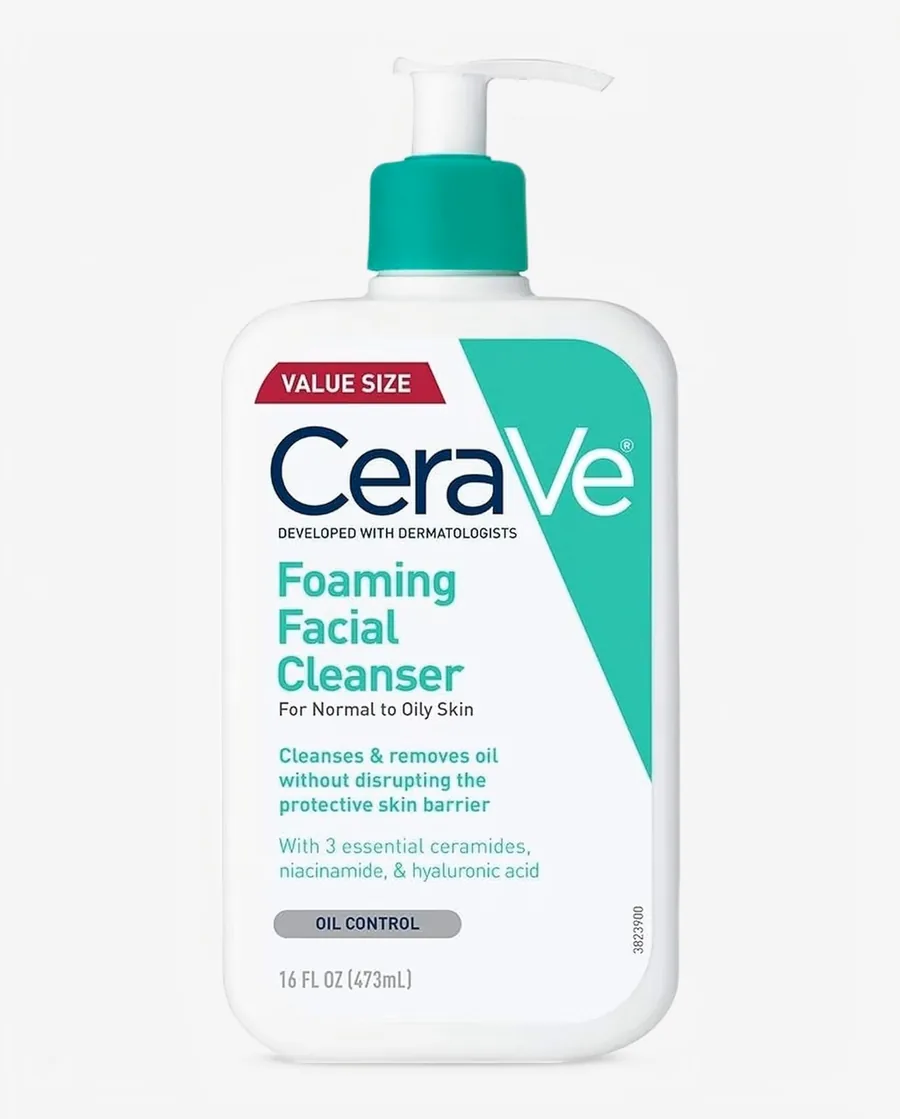
CeraVe Foaming Facial Cleanser
An easy option if you prefer a foaming cleanser that fits into a simple oily-skin routine.
Labeled non-comedogenic and formulated for normal-to-oily skin, which lines up with what a gentle, oil-free cleanser should look like.
This is the step people with oily skin skip most, and it’s often a mistake. Skipping moisturizer can leave some people with dry, tight, or irritated skin. If you have oily skin, a lightweight moisturizer can help maintain a comfortable skin barrier without adding a heavy, greasy feel. The AAD is specific about this: oily skin still needs to moisturize daily (AAD). Texture is what matters here: gel or “gel-cream” formulas, labeled oil-free and non-comedogenic, sink in fast without adding shine.
What to avoid is anything heavy: thick, occlusive creams built for dry skin, or formulas with a lot of oil near the top of the ingredient list. See our guide to choosing a moisturizer for your skin type.
Product to Consider
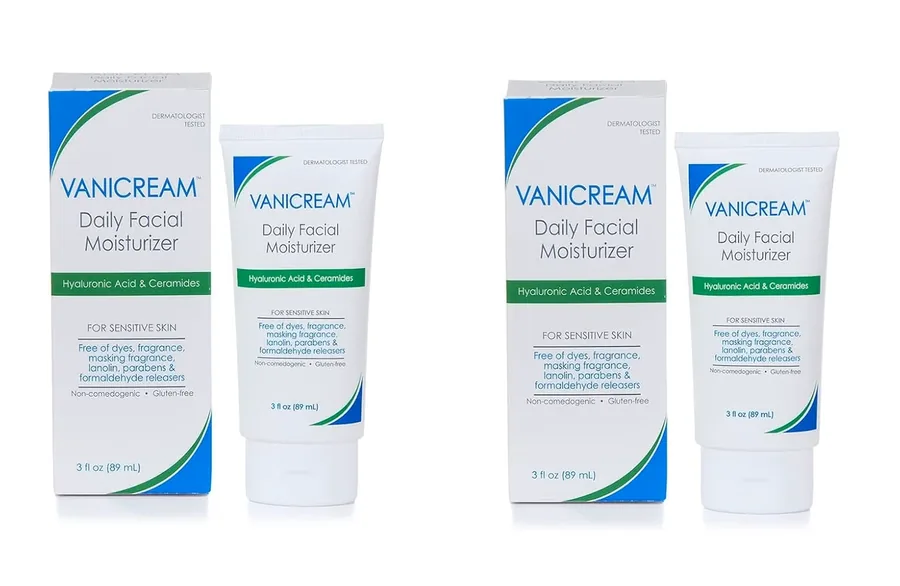
Vanicream Daily Facial Moisturizer
A lightweight moisturizer option for keeping skin comfortable without making the routine feel overly heavy.
A gel-cream formula free of common fragrance and dye additives, which can be worth considering if your skin tends to react to added ingredients.
Sunscreen isn’t a “dry skin” thing or an “anti-aging” thing. It’s a daily thing, for everyone. The AAD recommends a broad-spectrum sunscreen with SPF 30 or higher, applied every day (AAD). For oily skin, look for oil-free or “matte finish” formulas. Gel and fluid textures tend to feel lighter than creams. Reapply if you’re outdoors for an extended stretch, especially if you’re sweating or swimming.
“It makes my skin oilier” isn’t a great reason to skip sunscreen anymore. There are enough genuinely lightweight, matte formulas on the market now that this shouldn’t be the thing standing between you and daily SPF.
Product to Consider
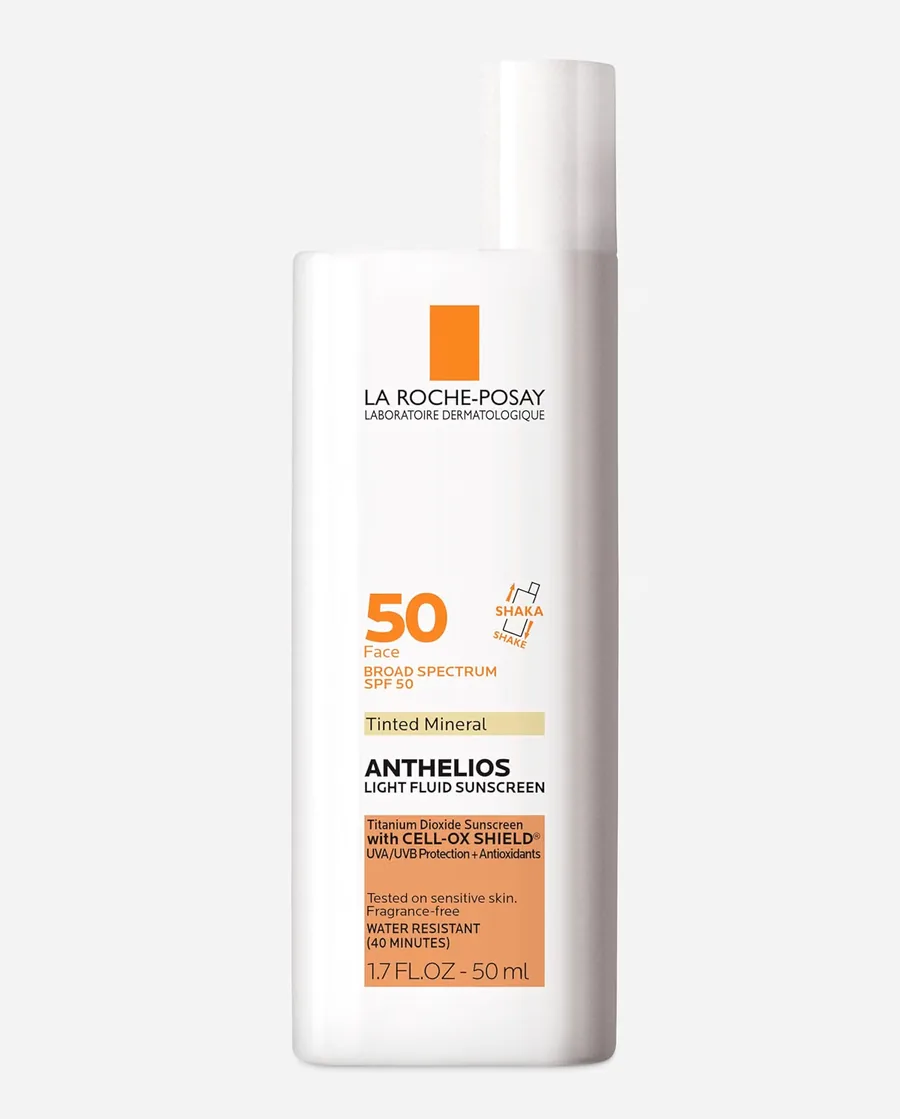
La Roche-Posay Anthelios Sunscreen
A daily sunscreen option to pair with your morning routine and help protect against UV exposure.
A fluid, oil-free finish that’s often mentioned as comfortable to wear under makeup for oily or combination skin.
Cleansing is step one of the morning routine — it clears overnight oil and sweat so everything else can absorb.
01
Cleanse
Wash with your gentle cleanser and lukewarm water. This clears out the oil and sweat that built up overnight so your other products can actually absorb instead of sliding around on top of it.
02
Optional Treatment
If you’re using something targeted, like a niacinamide serum, it goes here, after cleansing and before moisturizer. This step is genuinely optional, especially when you’re first getting started. Cleanser, moisturizer, and SPF alone is a complete routine for a lot of people.
03
Moisturize
Apply your lightweight moisturizer while skin is still a little damp. This helps lock in hydration without piling on a heavy layer. Give it a minute to sink in before you move on.
04
Sunscreen
Finish with a broad-spectrum SPF 30+ sunscreen. It’s the step most people skip, and it might be the one that matters most long-term. Sun exposure affects everything from fine lines to how long acne marks and dark spots stick around.
Nighttime Skincare Routine for Oily Skin
The nighttime routine focuses on removing the day’s buildup and giving treatment products time to work.
Nighttime doesn’t have to turn into an eight-step production. The point is to remove the day’s buildup and give any treatment products a chance to work overnight.
01
Cleanse
Wash off sunscreen, makeup, oil, and whatever the day left behind. If you wore heavy makeup or sunscreen, doing a first pass with micellar water or an oil cleanser (yes, even on oily skin, since it’s good at breaking down oil-based products) followed by your regular cleanser can help get everything off. If you’ve been mostly bare-faced, one wash is plenty.
02
Treatment (Optional)
Stronger active ingredients, if you’re using them, go here: something like salicylic acid or a retinoid. You don’t need a treatment step every single night, especially early on. Adding one active a few nights a week is a lot more sustainable than layering several strong products at once.
03
Moisturize
Moisturizer still belongs here, even at night, even on oily skin. Skipping it doesn’t make you less oily. It just makes your skin more likely to feel tight or irritated by morning.
That’s the entire nighttime routine: cleanse, treat if needed, moisturize. You can build on it later, but you don’t have to.
Best Skincare Ingredients for Oily Skin
Active ingredients like salicylic acid and niacinamide are optional add-ons, not requirements.
Salicylic Acid
Salicylic acid is a beta-hydroxy acid, and unlike most exfoliating acids, it’s oil-soluble, meaning it can get down into the pore itself and may help with the oil and dead skin buildup behind blackheads and breakouts. The AAD describes it as a long-standing acne treatment that “opens clogged pores and exfoliates the skin” (AAD). It’s not something everyone with oily skin needs, but it can be worth considering if you’re dealing with clogged pores or mild-to-moderate acne. It can also cause dryness or irritation for some people, so it’s worth introducing gradually and following the product’s directions rather than starting at full strength.
Niacinamide
Niacinamide is a form of vitamin B3 that’s commonly used in skincare formulas. It may be useful for people concerned about oiliness, uneven-looking skin tone, or supporting the skin barrier, though how much it helps varies from person to person. Cleveland Clinic notes it’s generally well tolerated and used for a range of skin concerns, including oil control (Cleveland Clinic). It’s about as low-risk as active ingredients get, which makes it a reasonable first step if you’ve never used one before. Don’t expect overnight results. If you notice a difference, it tends to build gradually — see our niacinamide guide for more.
Product to Consider
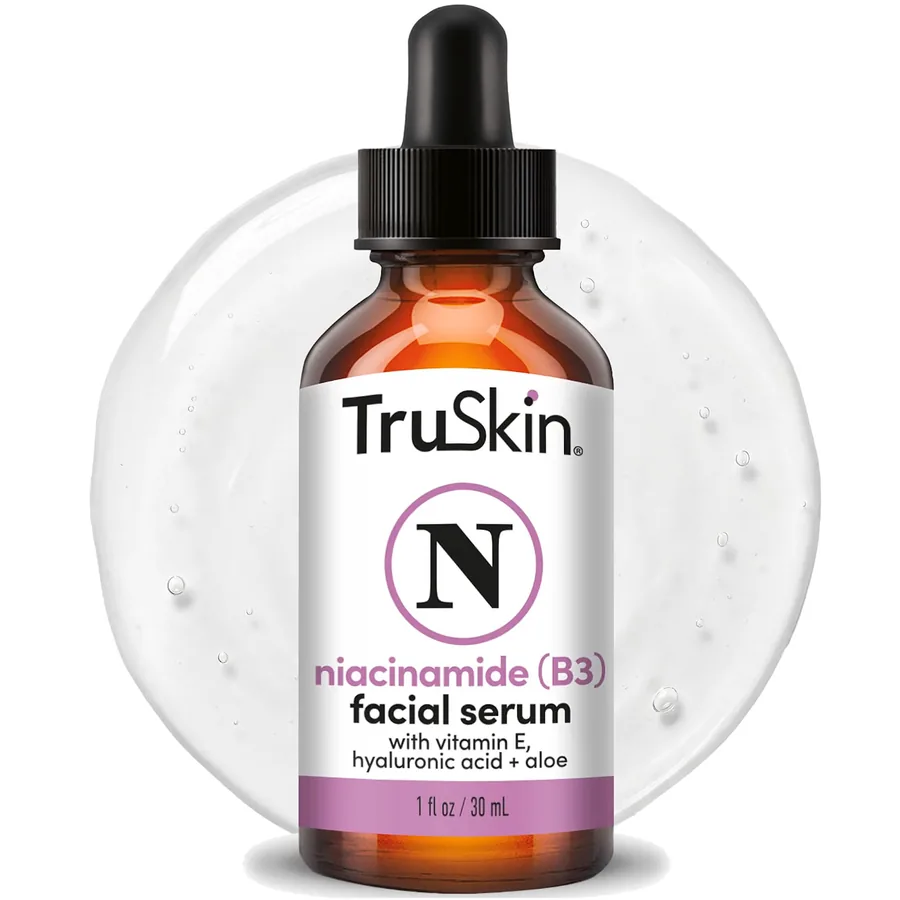
TruSkin Niacinamide (B3) Facial Serum
An optional niacinamide serum for readers who want to add a targeted step to their routine.
A simple way to try the ingredient discussed above without committing to a full routine overhaul.
“Retinoid” is an umbrella term that covers a few different strengths. Retinol is the over-the-counter version found in a lot of drugstore and skincare-brand products. Adapalene is also available over the counter in the US. Tretinoin and other prescription retinoids are stronger and require a dermatologist. All of them work by speeding up skin cell turnover, and the AAD notes retinoids can help clear pores and treat blackheads, whiteheads, and pimples (AAD), though results vary and a retinoid isn’t the only ingredient worth considering.
Retinol isn’t something everyone with oily skin needs, and it isn’t a day-one ingredient if you’re new to actives. If you decide to try a retinol product, introduce it gradually and follow the product’s directions. Starting slowly, some people begin with just a couple of nights a week and a pea-sized amount, then build up from there, can help your skin adjust and may reduce irritation like dryness or peeling. Retinoids can also make skin more sensitive to the sun, so daily sunscreen matters even more while you’re using one.
Hyaluronic Acid
Hyaluronic acid is a humectant commonly used in skincare to help attract and hold water. Cleveland Clinic notes that a small amount can hold an impressive quantity of water, which is why it shows up in so many lightweight moisturizers and serums (Cleveland Clinic). It’s a good fit for oily skin too, since hydration and oiliness aren’t opposites. If you use a hydrating serum, applying it to slightly damp skin and following with a moisturizer can help support comfortable hydration.
How Often Should You Wash Oily Skin?
Twice a day, plus after you sweat. The AAD’s guidance is to cleanse oily skin up to twice daily and after heavy sweating (AAD), and it’s worth following in both directions, not just as a minimum.
More oil doesn’t mean you need more washing. Cleansing four or five times a day, or scrubbing hard to chase that squeaky-clean feeling, tends to strip your skin’s barrier. For some people, a stripped barrier responds by producing even more oil, which can put you right back where you started, just redder and more irritated.
A rinse after a workout or a sweaty day makes sense. Beyond that, morning and night is really all most people need.
Should You Exfoliate Oily Skin?
Yes, in moderation, and chemical exfoliants are generally the smarter pick over physical scrubs for oily or acne-prone skin.
Something like salicylic acid, or glycolic and lactic acid for some people, works by loosening the “glue” holding dead skin cells together. That helps with texture, clogged pores, and dullness, and tends to be gentler on skin than a scrub, since aggressive physical scrubbing can irritate skin, especially if you’re already using acne treatments or other active ingredients.
Gritty physical scrubs feel satisfying in the moment, but on oily or acne-prone skin they’re more likely to cause irritation and spread bacteria from any active breakouts. If you want a physical option anyway, a soft washcloth is the gentler choice.
Two or three times a week is a reasonable place to start with chemical exfoliation, and it’s worth introducing gradually rather than jumping straight in. Daily use is rarely necessary, and it tends to cause more problems than it solves, especially if you’re also using something like a retinoid. If your skin starts feeling irritated, dry, or extra reactive, that’s a sign to scale back, not push through.
Oily Skin and Acne: What Changes?
Oily skin and acne are connected, but one doesn’t guarantee the other. Excess sebum, dead skin cells, inflammation, and other factors can contribute to clogged pores and acne development. Still, plenty of people have oily skin and rarely break out, and plenty of people with drier skin deal with acne regularly. Oiliness is one factor in the mix, not a verdict, and having oily skin doesn’t automatically mean you have acne.
If you’re specifically dealing with oily, acne-prone skin, a few things matter more than usual:
Non-comedogenic products across the board: moisturizer, sunscreen, and makeup, not just your treatment step
Gentle cleansing over aggressive scrubbing, since irritated skin tends to break out more, not less
Consistent use of a targeted ingredient like salicylic acid or benzoyl peroxide, rather than using it only when things flare up
Patience, since acne-focused ingredients typically take weeks to show any real difference
If over-the-counter products haven’t made a dent after a few months of consistent use, that’s a good point to bring in a dermatologist instead of continuing to guess on your own — our skincare routine for acne-prone skin guide covers that in full.
7 Common Oily Skin Mistakes
1
Trying to dry your skin out completely
Harsh, stripping products might cut the shine for an hour, but for some people they trigger a rebound where skin produces even more oil to compensate.
2
Washing too often
More than twice a day, aside from a post-workout rinse, usually irritates skin instead of controlling it.
3
Skipping moisturizer
Probably the most common mistake on this list. Oily and dehydrated aren’t opposites. You can be both at once, and skipping moisturizer doesn’t change that.
4
Piling on too many active ingredients
Salicylic acid, retinol, and a handful of other actives all in the same week is a fast track to red, peeling skin. One new active at a time.
5
Scrubbing too hard
A rough scrub or cleansing brush can inflame skin, and if you’ve got active breakouts, it can spread bacteria to areas that were otherwise clear.
6
Picking at pimples
It’s tempting, but it raises your odds of scarring and dark marks that stick around much longer than the pimple itself would have.
7
Skipping sunscreen
Beyond the general sun-damage concerns, going without SPF can make acne dark spots and scarring more noticeable and slower to fade.
Fragrance-free formulas, introducing one active at a time
Makeup getting greasy midday
Oil-free primer, blotting papers, lightweight matte sunscreen as a base
How Long Does an Oily Skin Routine Take to Work?
Give it a few weeks before deciding whether something’s working, longer if you’re treating acne. For many people, shine and texture start to look better within two to four weeks of consistent use, though this varies by skin. Acne is slower going. The AAD notes it typically takes at least six to eight weeks to see real improvement, sometimes more (AAD).
Nobody’s skin transforms in three days. If a product promises that, treat it as a red flag. What actually moves things along is sticking with one simple routine, not swapping products every time results don’t show up immediately.
When Should You See a Dermatologist?
Basic skincare handles a lot, but not everything. It’s worth booking an appointment if you’re dealing with:
Acne that isn’t improving after a few months of consistent over-the-counter treatment
Painful, deep, or cystic breakouts, especially ones leaving marks or scars behind
Scarring that’s already starting to show
Redness or irritation that won’t calm down
Symptoms that seem to be getting worse instead of better, even with a gentle routine
Any skin concern that’s affecting your confidence more than feels manageable
A dermatologist has access to things you can’t get over the counter: prescription-strength retinoids, oral medications, in-office treatments. This guide is meant to give you a solid foundation, not to replace a professional opinion on something that isn’t responding to basic care.
Yes. Skipping moisturizer can leave some people with dry, tight, or irritated skin. If you have oily skin, a lightweight, oil-free, non-comedogenic formula can help maintain a comfortable skin barrier without adding a heavy, greasy feel.
A gentle, oil-free, non-comedogenic gel or foaming cleanser. Skip bar soaps and high-alcohol formulas, which tend to strip the skin and can leave it feeling tight or irritated.
Yes, every single day. A broad-spectrum SPF 30+ formula labeled oil-free or non-comedogenic is your best bet, and a gel or fluid texture will feel lighter than a cream if that’s a dealbreaker for you.
Twice a day is the standard recommendation, plus a rinse after heavy sweating. Washing more than that tends to irritate skin rather than help it.
Yes. Oiliness is about how much sebum your skin produces; hydration is about water content. They’re not the same measurement, so you can absolutely have an oily surface over a dehydrated barrier. A hyaluronic acid serum under a lightweight moisturizer can help with that combination.
For a lot of people, yes. It’s oil-soluble, so it can get into the pore itself and help clear the buildup behind blackheads and breakouts. Start with a lower concentration a few times a week rather than jumping straight to daily use.
No. A lot of acne treatments, including retinoids and benzoyl peroxide, are drying on their own. Skipping moisturizer on top of that usually leads to more irritation, not clearer skin. A lightweight, non-comedogenic moisturizer belongs alongside acne treatment, not instead of it.
It can be an option for some people with oily or acne-prone skin, since it may support cell turnover and help keep pores clearer over time. If you decide to try it, ease in gradually, follow the product’s directions, and pair it with daily sunscreen, since retinoids can increase sun sensitivity.
A simple oily-skin routine still applies: gentle cleansing, a lightweight moisturizer, and daily sunscreen, with an optional active like salicylic acid or niacinamide if your skin tolerates it. Pores can’t be permanently closed or shrunk, but for more detail see our skincare routine for large pores guide.