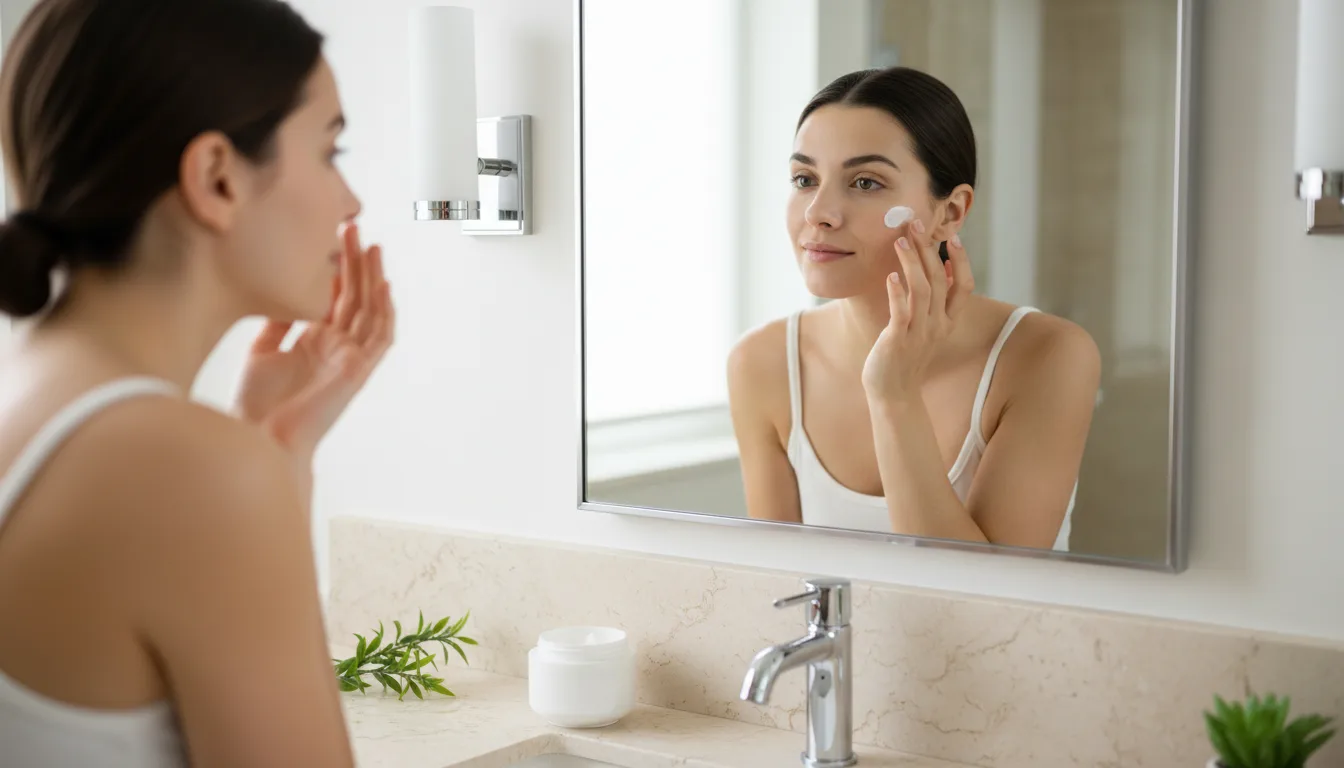
Walk down any moisturizer aisle and you’ll find gels, gel-creams, lotions, creams, and ointments, each one claiming to be right for oily, dry, sensitive, acne-prone, or “all” skin types. It’s a lot of packaging making a lot of promises, and it doesn’t leave much room to figure out what actually applies to you.
Texture can give you a useful clue — a lightweight gel and a thick, rich cream are genuinely different products built for different comfort levels — but the word on the jar doesn’t decide whether a moisturizer will work for your skin. The full formulation, and how your skin responds to it over time, matters more than the label alone.
This guide walks through how to choose a moisturizer for your skin type: what moisturizers actually do, the main texture categories, how to think through your options by skin tendency, and how to tell whether the one you picked is working.
Oily skin often does well with a lightweight gel or gel-cream. Dry skin often benefits from a richer lotion or cream. Combination skin can frequently use one balanced, moderate-weight moisturizer for the whole face. Sensitive skin may do better with simpler, fragrance-free formulas introduced gradually. Acne-prone skin shouldn’t skip moisturizer; a lightweight, non-comedogenic option is a reasonable starting point. These are starting points based on general tendencies, not fixed rules, and how your own skin responds matters more than any of them.
Key Takeaways
Moisturizer texture (gel, lotion, cream, ointment) is a useful starting clue, not a guarantee of how a product will perform on your skin.
Oily skin still benefits from moisturizer; skipping it isn’t necessary.
Acne-prone skin isn’t automatically oily skin, and it can also be dry, combination, or sensitive.
Dry skin and dehydrated skin describe different things, though they can overlap.
“Fragrance-free” and “unscented” aren’t the same thing, and neither guarantees a product won’t irritate anyone.
“Non-comedogenic” is a useful shopping signal, not a guarantee against breakouts.
A higher price doesn’t automatically mean a moisturizer works better for your skin.
The complete formulation and how your skin responds to it matter more than any single label.
What Does a Moisturizer Actually Do?
A facial moisturizer’s core job is to help skin hold on to water and feel more comfortable, whether that means relieving dryness, supporting the skin’s outer barrier, or keeping skin from feeling tight after cleansing. Moisturizing ingredients generally work in one of a few ways, and most real products combine more than one rather than fitting cleanly into a single category.
Humectants draw water in, either from deeper layers of skin or from the surrounding air. Glycerin and hyaluronic acid are common examples. Emollients smooth and soften the skin’s surface by filling in tiny gaps between skin cells, which is part of why moisturized skin feels less rough or flaky; shea butter and certain oils commonly serve this role. Occlusives form a layer on top of skin that slows water loss from the surface, with petrolatum (petroleum jelly) the ingredient most often cited for this purpose.
You don’t need to memorize which category every ingredient belongs to. What matters more is that a well-formulated moisturizer usually blends all three, in different ratios, which is a big part of why a gel, a lotion, and a cream can all technically “moisturize” while feeling completely different on skin.
Types of Facial Moisturizers
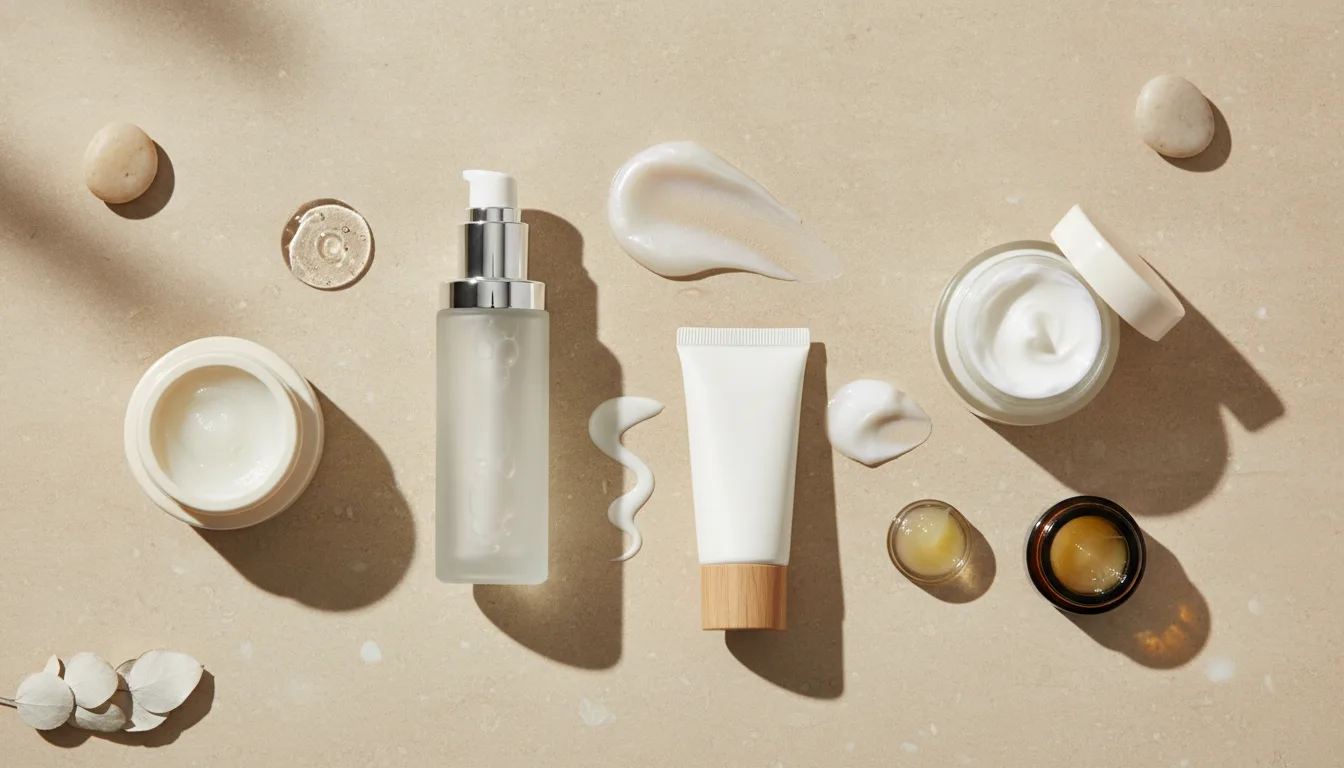
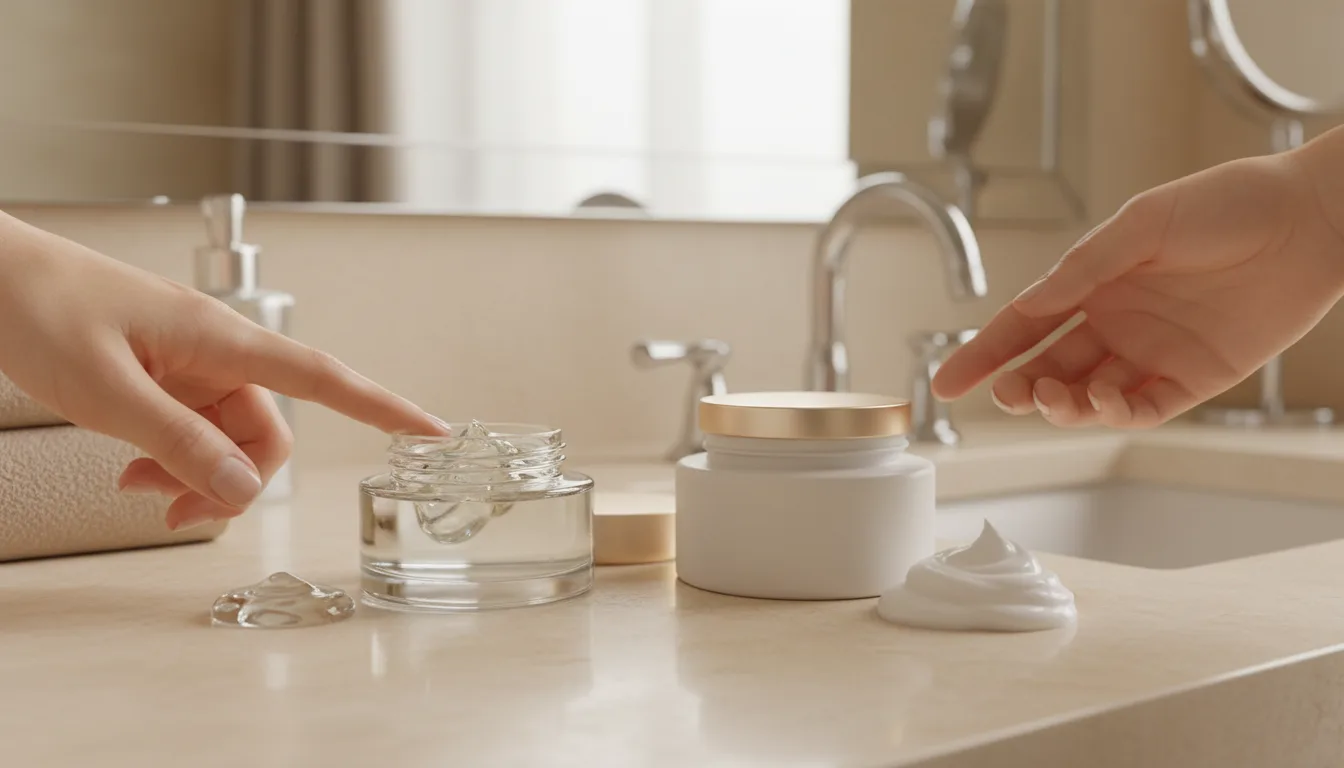
Here’s a quick look at the main texture categories, roughly ordered from lightest to richest.
Gel Moisturizers
Light, often translucent, water-based, and quick to absorb. Frequently marketed toward oily or combination skin, though a gel isn’t automatically the only right choice for oily skin, and some gels are formulated to suit other skin tendencies too.
Gel-Cream Moisturizers
A middle ground: lighter than a traditional cream but with more cushion than a straight gel. A common option for combination skin or anyone who wants more comfort than a gel without the richness of a full cream.
Lotions
Thinner than creams, generally water-based with lower oil content, and fast-absorbing. Can work well for normal or mildly dry skin, though very dry skin may find a lotion alone isn’t rich enough.
Creams
Thicker with a higher oil content than lotions, which generally makes them more effective at helping skin hold on to moisture. A common starting point for dry skin.
Ointments and Very Occlusive Moisturizers
The thickest, most occlusive category, usually built around a high concentration of oil-based or petrolatum-based ingredients. Effective for very dry or compromised skin, but the heavy texture isn’t comfortable or necessary for most everyday facial use.
How to Choose a Moisturizer for Your Skin Type
With texture categories covered, here’s how to think through the decision by general skin tendency. Treat these as starting points to test, not rules to follow rigidly.
Oily Skin
Oily skin still benefits from moisturizer. Skipping it because your skin already feels oily isn’t necessary and won’t reliably reduce oiliness. A lighter gel or gel-cream is often a comfortable starting texture, and looking for “oil-free” or “non-comedogenic” labels can help narrow the field. Skincare Routine for Oily Skin covers how this step fits into a fuller routine.
Dry Skin
Dry skin often does better with a richer lotion or cream, since these formulas generally help skin hold on to more water than a lighter gel. If dryness is significant, an ointment-level product for particularly dry areas isn’t unreasonable. Skincare Routine for Dry Skin has more on building out that routine.
Combination Skin
Combination skin, often oilier through the T-zone and drier through the cheeks, can frequently be managed with one balanced, moderate-weight moisturizer for the whole face. If one texture doesn’t feel right everywhere, applying a thinner layer to oilier areas and a bit more to drier areas is a reasonable adjustment. Skincare Routine for Combination Skin covers structuring a fuller routine.
Sensitive Skin
Sensitive skin responses vary a lot from person to person, so paying attention to your own known triggers matters more than any single formulation rule. Introducing new products one at a time makes it easier to notice a reaction if one occurs, and fragrance-free options are often worth prioritizing (more on that distinction below). No formulation, including a fragrance-free one, guarantees zero irritation for every person; what matters most is how the finished product actually affects your skin. Skincare Routine for Sensitive Skin covers the rest of a gentler routine.
Normal or Balanced Skin
A straightforward, comfortable moisturizer in a lotion or light cream texture is usually enough if your skin doesn’t lean strongly oily, dry, or reactive. There’s no need to seek out something more intensive just because your skin tolerates products well. Skincare Routine for Normal Skin has more on rounding out that routine.
Acne-Prone Skin
Acne-prone skin is not automatically oily skin. Breakouts can happen on oily, dry, combination, or normal skin, so moisturizer choice should match your actual tendencies rather than an assumption that acne always means excess oil. Moisturizer also isn’t something to skip because you’re breaking out: many acne treatments (benzoyl peroxide, salicylic acid, and retinoids among them) can dry out or irritate skin, and a moisturizer can help skin tolerate that treatment more comfortably. A lightweight, oil-free, non-comedogenic option is a reasonable starting point. Skincare Routine for Acne-Prone Skin covers acne-focused care in more depth.
Mature Skin
Skin can become drier as people age, which is part of why a richer texture sometimes feels more comfortable over time. That doesn’t mean aging automatically means dry skin for everyone, though; some people keep oilier or combination tendencies well into later life. Match texture to how your skin actually behaves, not to age alone. Skincare Routine for Mature Skin goes into more detail on this specific routine.
What If Your Skin Is Dehydrated Rather Than Dry?
“Dry” and “dehydrated” get used interchangeably, but they describe different things. Dry skin generally refers to a skin type or tendency involving lower natural oil production — typically a longer-term characteristic. Dehydration refers to a lack of water in the skin itself, and it can occur temporarily in skin of any type, including oily skin. Environmental conditions such as dry or cold air, hot showers, and certain skincare products are commonly discussed as factors that can affect how hydrated skin’s surface feels, though the exact contributors vary from person to person.
In practice, that means oily skin can be dehydrated at the same time, which can feel confusing if you assumed oily skin never needs extra hydration. If your skin regularly feels tight, dull, or rough despite not looking classically “dry,” dehydration may be part of what’s going on. Skincare Routine for Dehydrated Skin walks through a full routine for that concern, and Dehydrated Skin vs. Dry Skin: What’s the Difference? covers the distinction in more depth.
Quick Comparison Table
Skin Tendency
Useful Starting Texture
What to Prioritize
What to Watch For
Oily
Gel or gel-cream
Oil-free, non-comedogenic, comfortable finish
Skipping moisturizer entirely
Dry
Lotion or cream (ointment for very dry areas)
Richer formulas that help skin hold water
Assuming a light lotion alone will be enough
Combination
Gel-cream or balanced lotion
One product that works across the whole face
Assuming you need two separate moisturizers
Sensitive
Simple, fragrance-free formulas
Gradual introduction, attention to known triggers
No label guarantees zero irritation
Normal/Balanced
Lotion or light cream
A comfortable, straightforward everyday option
Using something more intensive than you need
Acne-Prone
Lightweight, oil-free, non-comedogenic
Matching texture to actual skin type, not assumptions about acne
Skipping moisturizer because skin feels oily or breakout-prone
Fragrance-Free vs. Unscented: What’s the Difference?
These terms sound interchangeable but are generally understood to mean different things, and the distinction can matter for sensitive or reactive skin. Neither is strictly standardized under FDA cosmetic labeling rules the way an ingredient list is. In common usage, “unscented” typically means a product has no noticeable smell, sometimes achieved with a masking fragrance that cancels out the scent of other ingredients, meaning an “unscented” product can still contain fragrance you simply can’t detect. “Fragrance-free” generally means no fragrance ingredients, including a masking fragrance, were intentionally added.
For sensitive or reactive skin, fragrance-free is generally the more cautious starting point, since fragrance is a commonly cited source of irritation for some people. That isn’t the same as saying fragrance is universally harmful; most people tolerate it fine, and a fragrance-free product can still irritate skin for other reasons. If you’re specifically trying to minimize fragrance exposure, “fragrance-free” is the more precise label to look for.
What Does Non-Comedogenic Mean on a Moisturizer?
“Non-comedogenic” signals a product has been formulated to be less likely to clog pores and contribute to comedones (blackheads and whiteheads). Non-comedogenic can be a useful shopping signal for people prone to clogged pores or breakouts, but it does not guarantee that a moisturizer will work for every person or never contribute to breakouts, since skin responses vary and breakouts can happen for unrelated reasons too. If visible pores are your main concern, our guide to moisturizer for large pores and the rest of a supporting routine goes into more detail.
How Do You Know If a Moisturizer Isn’t Working for Your Skin?
A few signs are worth watching for, especially if they show up consistently:
Persistent burning or stinging during or after application
Ongoing itching that doesn’t settle down
Redness that shows up reliably after using the product
Skin that feels excessively greasy or uncomfortable no matter how little you apply
Increased dryness or flaking despite using the moisturizer as intended
Repeated breakouts that seem to line up with a new product
One instance of any of these doesn’t necessarily mean the moisturizer caused it; skin reacts to plenty of things, including weather and other products in your routine. A consistent pattern tied to a specific product is more meaningful. If irritation is persistent or doesn’t improve after stopping the product, that’s worth a dermatologist visit rather than continued troubleshooting on your own.
How Much Moisturizer Should You Use?
There’s no single measurement that applies to every product and face. How much you need depends on the moisturizer’s texture, your face size, how dry your skin is, and the product’s own instructions. A rich cream generally goes further than a light lotion, so a fixed rule like “always use a dime-sized amount” isn’t meaningful unless it comes directly from that product’s own packaging. As a practical starting point, apply enough to evenly cover your face and neck without a heavy, unabsorbed layer, and adjust based on how your skin feels once it settles.
When Should You Apply Moisturizer?
Apply moisturizer after cleansing, while your skin is still slightly damp rather than fully dry; this is generally considered to help the moisturizer work with the water already on your skin’s surface. You don’t need to time this to an exact number of seconds, but applying within a few minutes of washing is a reasonable, practical target.
Sunscreen is a separate step with its own purpose and isn’t a substitute for moisturizer or vice versa. If your morning routine includes both, moisturizer generally comes first, with sunscreen applied afterward as the final step before makeup.
Do You Need a Different Moisturizer at Night?
Not necessarily. Using the same moisturizer morning and night is reasonable for a lot of people, and there’s no requirement to buy separate AM and PM products just because they’re marketed that way. Where a difference sometimes makes sense is texture: a daytime moisturizer might be formulated to sit comfortably under makeup, while a nighttime option might be a bit richer since it isn’t layered under anything.
Should You Change Your Moisturizer With the Seasons?
Not automatically, but it’s worth noticing how your skin responds as conditions change. Colder, drier air can make skin feel tighter for some people, favoring a richer texture, while hot, humid conditions can have the opposite effect. This varies by climate and by person, and plenty of people use the same moisturizer year-round without issue. If your current product stops feeling comfortable as weather changes, that’s a reasonable prompt to try a different texture, not a sign you did something wrong.
Common Mistakes When Choosing a Moisturizer
Skipping moisturizer because skin is oily. Oily skin still benefits from it, and skipping it isn’t a reliable way to reduce oiliness.
Choosing based only on skin-type marketing. A jar labeled “for oily skin” isn’t automatically right for you; check how your own skin responds.
Assuming a higher price means a better result. Cost doesn’t determine how well a formulation suits your skin.
Reaching for the richest product available just because skin feels dehydrated. Dehydration and dryness aren’t identical, and a very heavy texture isn’t always the answer.
Assuming acne-prone automatically means oil-free everything. Acne-prone skin can be oily, dry, combination, or normal.
Introducing several new products at once. This makes it harder to tell what’s actually working or causing a reaction.
Ignoring persistent irritation. Ongoing discomfort with a product is worth listening to.
Assuming “natural” automatically means gentler. Natural ingredients can still irritate or trigger allergic reactions in some people.
Constantly switching products. Frequent switching makes it hard to know what’s actually working.
Expecting a moisturizer to treat concerns it isn’t designed for. It supports hydration and comfort; it isn’t a substitute for a treatment product or professional care.
When Should You See a Dermatologist?
Most day-to-day moisturizer mismatches resolve with product adjustments. Certain symptoms are worth a professional evaluation, especially if persistent: ongoing burning, itching, or redness that doesn’t resolve; cracking or rash-like changes; significant or worsening irritation; or breakouts that continue despite reasonable at-home adjustments. These can have several underlying causes, and a dermatologist is better positioned to sort out what’s going on than continued trial and error.
Simple Moisturizer-Choosing Checklist
Have you identified your general skin tendency (oily, dry, combination, sensitive, normal, or acne-prone)?
Are you evaluating the whole formulation rather than just the texture or marketing claim?
If you have sensitive or reactive skin, have you checked for fragrance-free options and considered your known triggers?
Does the moisturizer leave your skin feeling comfortable, not greasy, tight, or irritated?
Are you introducing new products one at a time rather than several at once?
Have you given the product a fair trial period rather than judging it after a single use?
Are you expecting the moisturizer to do a job it’s actually designed for?
Frequently Asked Questions
Start from your general skin tendency, then judge candidates by the full formulation and how your skin actually feels afterward: comfortable and balanced, not greasy or tight.
Yes. Oily skin still benefits from moisturizer; a lightweight, oil-free, or gel texture is often a comfortable starting point.
Neither is universally better — gel tends to suit lighter, oilier preferences, while cream suits drier skin or anyone who wants a richer texture. The right choice depends on your skin, not the format.
Yes — it can help skin tolerate acne treatments that often dry out or irritate it. A lightweight, non-comedogenic option is a reasonable starting point.
A richer lotion or cream, since these formulas generally hold on to more water than a lighter gel.
Yes. Fragrance-free formulations introduced gradually, with attention to your own known triggers, are often a more cautious starting point.
It means a product has been formulated to be less likely to clog pores and contribute to breakouts. It’s a useful signal, not a guarantee.
Many people moisturize morning and night, though needs vary — there’s no strict rule beyond keeping skin comfortable.
Applying while skin is still slightly damp, rather than fully dry, is a commonly cited practice.
Not necessarily; the same product morning and night works fine for many people. See the section above for when a separate AM/PM texture can make sense.
Bottom Line
Choosing a moisturizer for your skin type comes down to a simple framework: start from your skin tendency, pick a reasonable starting texture, judge the complete formulation rather than the label on the jar, and pay attention to how your own skin responds over time.
Once you’ve settled on a moisturizer that fits, it’s worth looking at how that step fits into the rest of your routine. Skincare Routine for Beginners is a useful next stop for the bigger picture.
This guide draws on publicly available guidance from established dermatology and health organizations, including the American Academy of Dermatology, Cleveland Clinic, Mayo Clinic, and the National Eczema Association, cited throughout and listed below. It has not been reviewed by a dermatologist and is intended as general educational information, not personalized medical advice.
This article is for general educational purposes only and is not a substitute for personalized medical diagnosis or treatment. It has not been medically reviewed. If you have persistent skin irritation, a suspected allergic reaction, or a skin condition that isn’t improving with basic care, talk with a board-certified dermatologist or other qualified healthcare provider.
Get New Guides in Your Inbox
No spam, no filler — just new articles as we publish them.