Quick answer: Gel moisturizers tend to work well for oily skin because most are water-based and lightweight, which means they hydrate without adding the heavier oils and waxes found in richer creams. This guide compares 6 true gel and gel-cream products, plus 2 additional lightweight alternatives (a water cream and a cream) for readers who want a non-gel option. Our top picks among the 6 gel/gel-cream products are the CeraVe Oil Control Moisturizing Gel-Cream for most oily-skin routines, the CeraVe Ultra-Light Moisturizing Gel if your skin runs especially oily, the Cetaphil Gentle Clear Mattifying Acne Moisturizer if you’re also dealing with breakouts, and the Biossance Squalane + Probiotic Gel Moisturizer if your oily skin is also sensitive or reactive. One of those gels, Neutrogena Hydro Boost Water Gel, contains added fragrance — and so does Tatcha’s The Water Cream, a lightweight cream covered in this guide’s alternatives section rather than among the gels. Both fragrance disclosures are worth knowing before you buy if fragrance is a concern for your skin.
In This Guide
- Key Takeaways
- Does Oily Skin Actually Need a Gel Moisturizer?
- Gel vs. Gel-Cream vs. Water Cream: What’s the Difference?
- What to Look for in a Gel Moisturizer for Oily Skin
- Is Your Oily Skin Actually Oily and Dehydrated?
- Product Comparison
- The Best Gel Moisturizers for Oily Skin, Reviewed
- Lightweight Water-Cream and Cream Alternatives
- Best Gel Moisturizers for Acne-Prone Oily Skin
- Best Options for Sensitive Oily Skin
- Using a Gel Moisturizer in Hot or Humid Weather
- How to Apply a Gel Moisturizer
- Common Mistakes With Gel Moisturizers for Oily Skin
- Frequently Asked Questions
- Bottom Line
- Why You Can Trust This Guide
- Affiliate Disclosure
- Sources
Key Takeaways
- Oily skin still needs a moisturizer — skipping it doesn’t reliably reduce oiliness, and the AAD specifically warns that over-cleansing with a harsh face wash (not dryness in general) can backfire and trigger more oil.
- “Gel,” “gel-cream,” and “water cream” aren’t strictly standardized terms — brands use them differently, so texture and ingredient list matter more than the name on the label.
- “Non-comedogenic” and “oil-free” are useful shopping signals, but neither is an FDA-regulated term, and neither guarantees a product can never cause a breakout for every person.
- Fragrance isn’t limited to one texture category: one of this guide’s main gel picks (Neutrogena Hydro Boost Water Gel) and one of its non-gel alternatives (Tatcha The Water Cream) both contain added fragrance. We flag that clearly for each product rather than assuming any texture name means “fragrance-free.”
- If your oily skin also feels tight, flaky, or dehydrated at times, that’s a real and common combination — it doesn’t mean you have the wrong skin type, and it changes which moisturizer is likely to feel comfortable.
Does Oily Skin Actually Need a Gel Moisturizer?
If you’re not entirely sure oily skin is actually your skin type, it’s worth confirming that first — our how to determine your skin type at home guide walks through a simple way to check before you commit to a texture based on an assumption.
Yes, oily skin still benefits from moisturizing — that part is well established. According to the American Academy of Dermatology (AAD), “although you have oily skin, it is still important to apply moisturizer to keep your skin hydrated,” and the AAD specifically recommends choosing skin care products labeled “oil free” and “noncomedogenic,” since these “won’t clog your pores or cause acne.” [1] The AAD also warns against a common workaround: trying to “dry out” oily skin with a harsh face wash can backfire, since “using a face wash that is too harsh can irritate your skin and trigger increased oil production.” [1] In other words, it’s over-cleansing specifically — not moisturizing, and not dryness in general — that the AAD ties to a rebound in oil production.
What the AAD’s own published guidance does not do is single out “gel” as the one correct texture for oily skin — its advice is about the “oil-free” and “noncomedogenic” labels, not about gel versus lotion versus cream specifically. The recommendation that gel formulas in particular tend to suit oily skin comes from skincare brands and the dermatologists they feature, not from AAD. CeraVe’s own consultant dermatologist, for example, explains on the brand’s site that “heavy skincare products can make the skin feel oilier, so gels, serums, or lightweight lotions are optimal for oily skin,” noting gels “generally have a thin consistency.” [2] That’s a reasonable, widely echoed rationale — but it’s worth knowing it’s a brand-affiliated recommendation, not an AAD position, so we’re citing it as such rather than blurring the two.
In practice, a genuinely lightweight, water-based gel is less likely to leave oily skin feeling heavy or greasy than a rich, occlusive cream — which is probably why gel formulas have become the default recommendation for this skin type. But “gel” alone doesn’t guarantee a good fit; the ingredient list underneath the texture still matters, which is exactly what the next section gets into.
Gel vs. Gel-Cream vs. Water Cream: What’s the Difference?
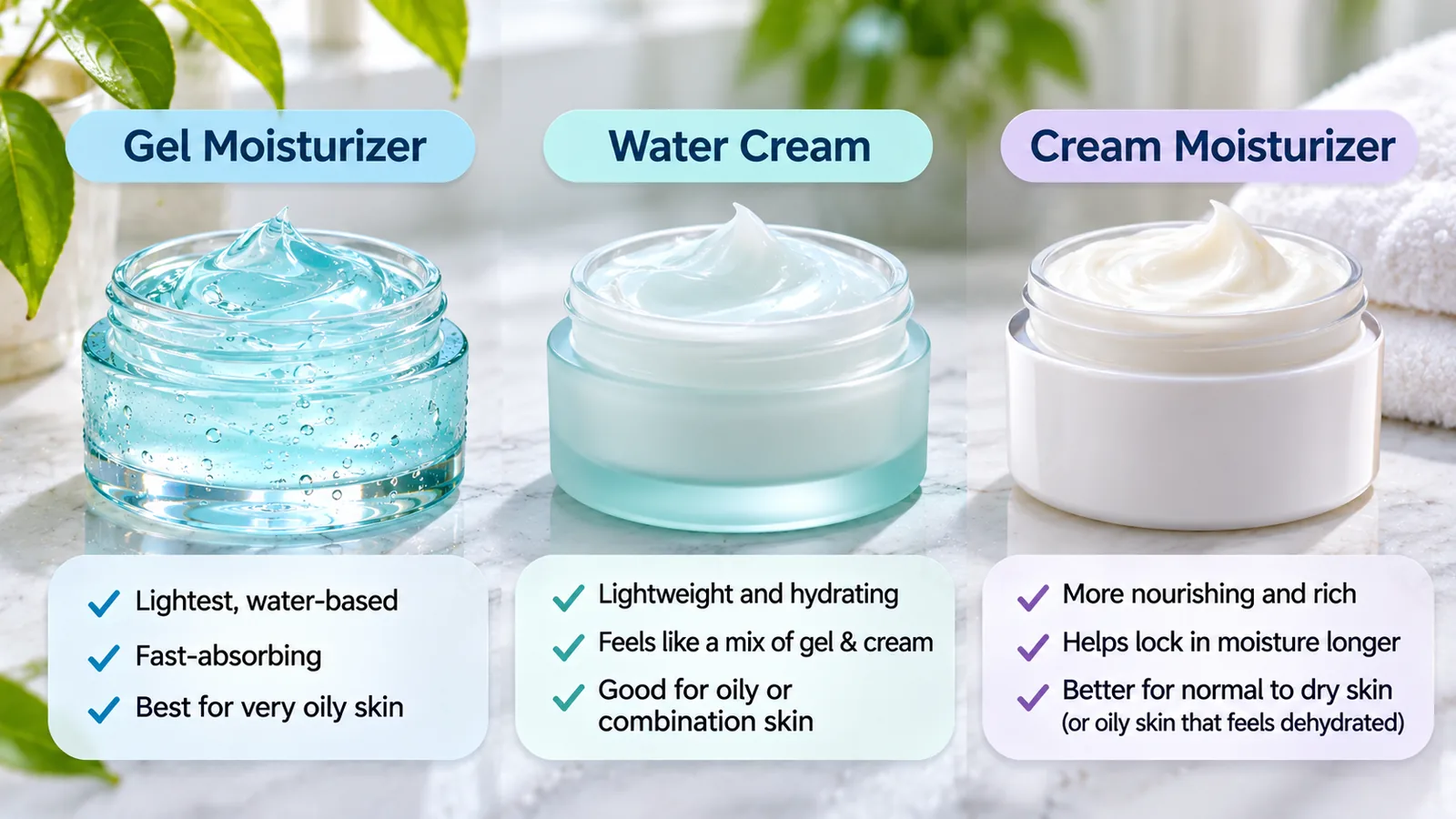
This is genuinely confusing, because brands use these words inconsistently. Here’s how they tend to differ in practice:
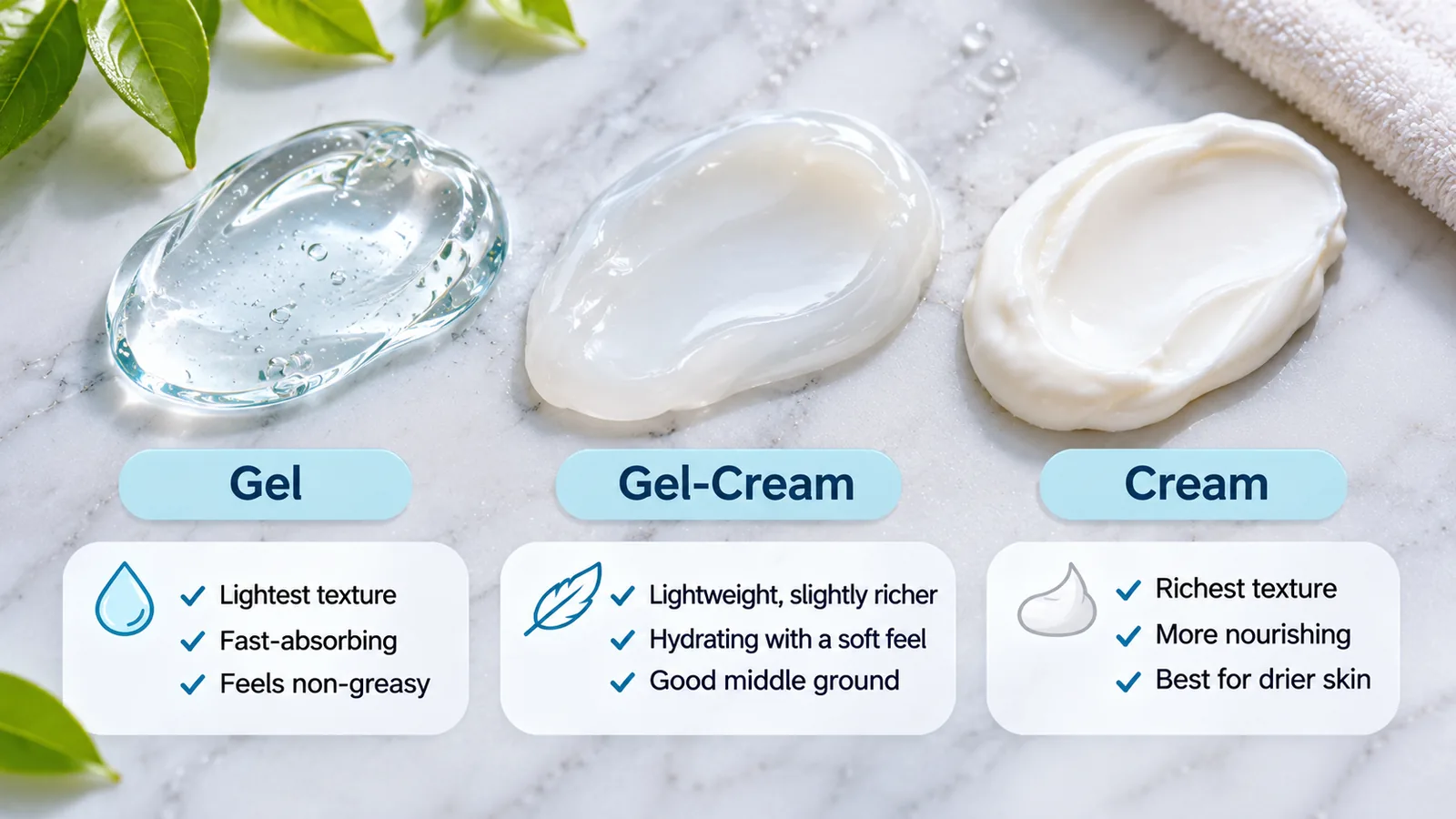
Gel moisturizers are usually mostly water, with gelling agents (like carbomer) replacing most of the heavier oils and waxes in a traditional cream. They tend to feel the lightest, absorb the fastest, and are the least likely to leave a residue — which is why they’re the most commonly recommended texture for oily skin.
Gel-cream moisturizers sit between a gel and a cream. They’re still largely water-based and feel lighter than a traditional cream, but they usually include a bit more in the way of emollients (ingredients that smooth and soften skin) than a pure gel, which can make them feel slightly more cushioned without tipping into “heavy.” CeraVe describes its own gel-cream as combining “the characteristics of both a cream and gel moisturizer.” [3]
Water creams are a newer marketing term, and brands don’t use it consistently — some water creams are closer to a lightweight lotion, others lean closer to a gel-cream. In this guide, we treat “water cream” as its own category rather than assuming it behaves like a gel, and we say so explicitly for any product marketed that way.
None of this is a strict, universal classification — it’s a practical way to think about where a product sits on the spectrum from “thin and fast-absorbing” to “thick and cushioning.” If you want the fuller breakdown of moisturizer types and how to match one to your skin beyond gel-specific formulas, our guide to choosing a moisturizer for your skin type covers that in more depth.
What to Look for in a Gel Moisturizer for Oily Skin
A few label terms come up constantly in this category, and it’s worth knowing exactly what they do (and don’t) mean:
Oil-free. This means the product doesn’t contain added oils as an ingredient. It’s a reasonable thing to look for, but it’s a self-declared marketing term, not an independently verified or standardized claim — two “oil-free” products can still feel very different depending on everything else in the formula.
Non-comedogenic. This means a product is formulated with the intent not to clog pores. A 2018 systematic review in the Journal of Dermatological Treatment found that “non-comedogenic,” “oil-free,” “fragrance-free,” and “hypoallergenic” claims on cosmetic labels “are not regulated by any governing body and provide varied clinical utility.” [11] In plainer terms: there’s no single standardized test every brand must run before using the label, and — importantly — it does not guarantee a product can never cause a breakout for any individual. Pore-clogging reactions vary from person to person based on their specific skin and the full ingredient list, not just this one label.
Fragrance-free vs. unscented. “Fragrance-free” means no fragrance ingredients were added, which is usually the safer choice if you’re fragrance-sensitive or prone to irritation. A product can still smell faintly like its other ingredients without being “fragrance-free” in the strict sense, but a true fragrance-free product won’t list “fragrance” or “parfum” on its ingredient label. We checked every product in this guide’s actual ingredient list for this — not just the marketing copy — and we flag it clearly whenever a product contains fragrance.
Helpful ingredients for oily skin: niacinamide (often included to help calm skin and support the moisture barrier), hyaluronic acid and glycerin (humectants that draw water into skin without adding oil), and ceramides (which support the skin’s barrier function). None of these ingredients controls oil production on their own, and no ingredient in this category is a substitute for an actual acne treatment if that’s what you need. If you’re newer to moisturizer shopping in general and want the fuller basics before diving into gel-specific picks, our Best Moisturizers for Beginners guide is a good companion read.
Is Your Oily Skin Actually Oily and Dehydrated?
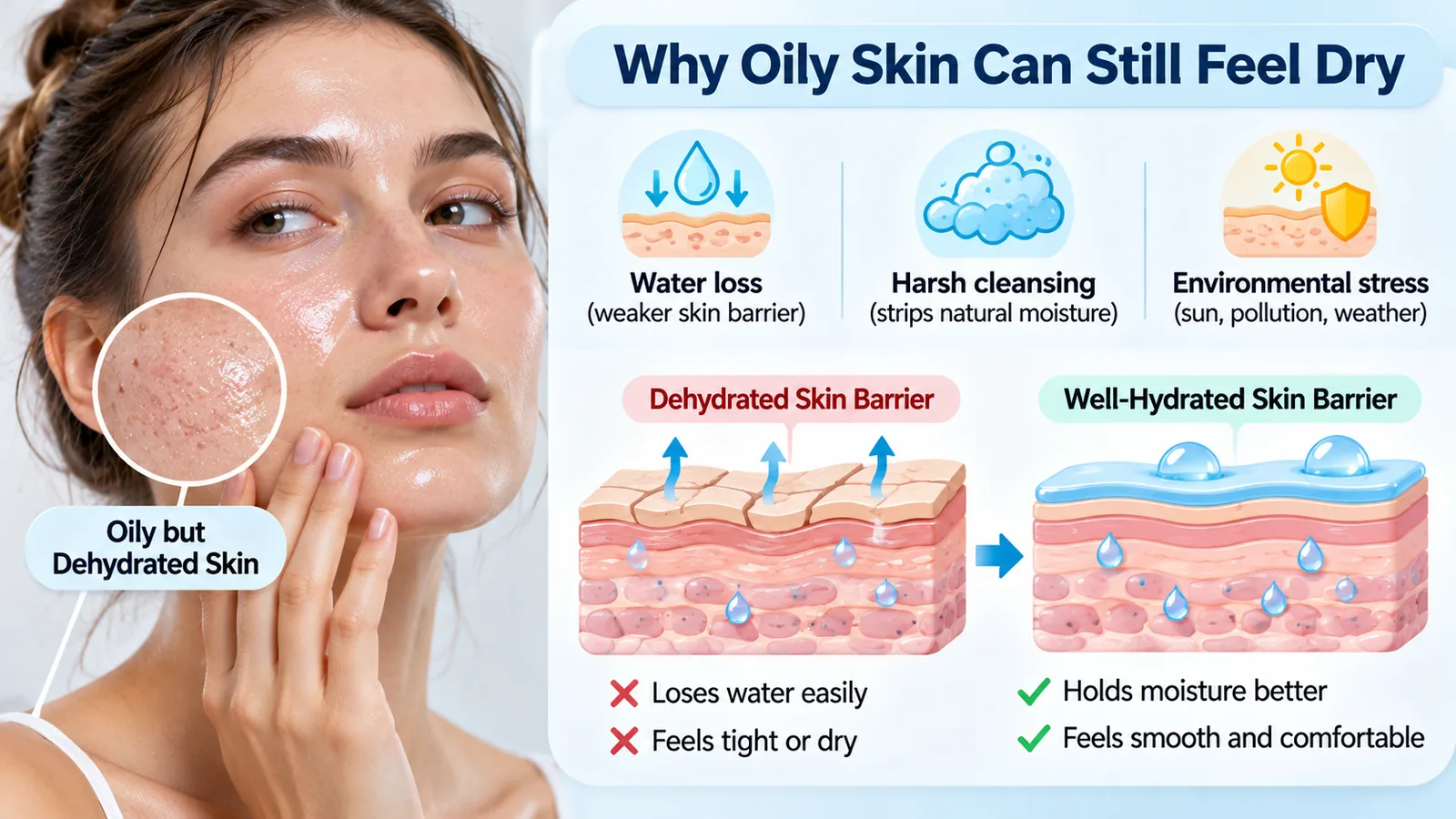
It’s a real, recognized combination: skin can produce plenty of oil on the surface while still lacking water underneath, since oiliness and hydration are two different things that are easy to conflate. That said, tightness, flaking, dullness, or oiliness that seems to worsen later in the day can also come from several other causes — a harsh cleanser, a skipped moisturizing step, cold or dry air, over-exfoliating, or simply how your individual skin behaves — so this isn’t something to self-diagnose from surface oiliness alone. If this pattern sounds familiar and persists regardless of what you try, it’s worth mentioning to a board-certified dermatologist rather than guessing.
Either way, this isn’t a reason to switch to a heavy cream. A gel or gel-cream that leans on humectants like glycerin and hyaluronic acid (rather than one built mainly around oil-absorbing powders) can address the hydration side without adding the heavier, pore-clogging-feeling ingredients that oily skin tends to react badly to. If this sounds like your skin, the Biossance Squalane + Probiotic Gel Moisturizer in this guide, along with the Krave Beauty Oat So Simple Water Cream covered in the alternatives section below, are both built around that humectant-forward approach rather than an oil-control-first one.
Product Comparison
The six products below are genuinely described as a gel or gel-cream by their own brands. (Two more options — a water cream and a cream — are compared separately in the “Lightweight Water-Cream and Cream Alternatives” section below, since neither brand calls its product a gel.)
| Product | Texture | Best Suited For | Key Ingredients | Fragrance | Size | Where to Buy |
|---|---|---|---|---|---|---|
| CeraVe Oil Control Moisturizing Gel-Cream | Gel-cream | Best Overall | Niacinamide, ceramides, hyaluronic acid, silica (oil-absorbing) | Fragrance-free | 3 fl oz | Official page · Amazon* |
| CeraVe Ultra-Light Moisturizing Gel | Gel | Best for Very Oily Skin | Niacinamide, ceramides, hyaluronic acid | Fragrance-free | 1.75 fl oz | Official page · Amazon* |
| Neutrogena Hydro Boost Water Gel | Gel | Best Budget / Drugstore (fragrance caveat — see below) | Hyaluronic acid, glycerin, dimethicone | Contains added fragrance | 1.7 fl oz** | Official page · Amazon* |
| Cetaphil Gentle Clear Mattifying Acne Moisturizer | Gel-cream | Best for Acne-Prone Oily Skin | Salicylic acid 0.5%, bisabolol, kojic acid, licorice root extract | Fragrance-free | 3 fl oz (89 mL, per the product’s FDA label record) | Official page · Amazon* |
| Biossance Squalane + Probiotic Gel Moisturizer | Gel | Best for Sensitive Oily Skin | Squalane, encapsulated probiotics, bisabolol, allantoin | No fragrance/parfum listed; brand doesn’t explicitly claim “fragrance-free” | 1.69 fl oz / 50 mL | Official page · Amazon* |
| Dieux Air Angel Peptide Plumping Gel Cream | Gel-cream | Best Lightweight Gel-Cream | Glycerin, collagen amino acids, peptides, squalane, ceramide NG | Fragrance-free | 25 mL / 50 mL / 100 mL | Official page · Amazon* |
*Amazon links are affiliate links — Ava Fit Care may earn a commission on qualifying purchases at no extra cost to you. These links were provided directly for this article and have not been independently re-verified against the live Amazon listing by this research process (Amazon.com has consistently returned a permanent robots_disallowed error to the tools available for this project). See the Affiliate Disclosure section below for the full disclosure.
**Neutrogena size: 1.7 fl oz, corroborated by Kroger’s retail listing (“Neutrogena Hydro Boost Water Gel, 1.7 Oz”) — Neutrogena’s own page doesn’t state a size, so treat this figure as less certain than the others and reconfirm with the brand or retailer if the exact size matters for your purchase.
Sizes above are confirmed directly from the brand’s own product page where noted, or from the product’s official FDA label record (Cetaphil). The “Official page” link in each “Where to Buy” cell goes to each brand’s own official product page and is never an affiliate link; the “Amazon” link is an affiliate link (see above). This article still contains no prices.
The Best Gel Moisturizers for Oily Skin, Reviewed
Best Overall: CeraVe Oil Control Moisturizing Gel-Cream
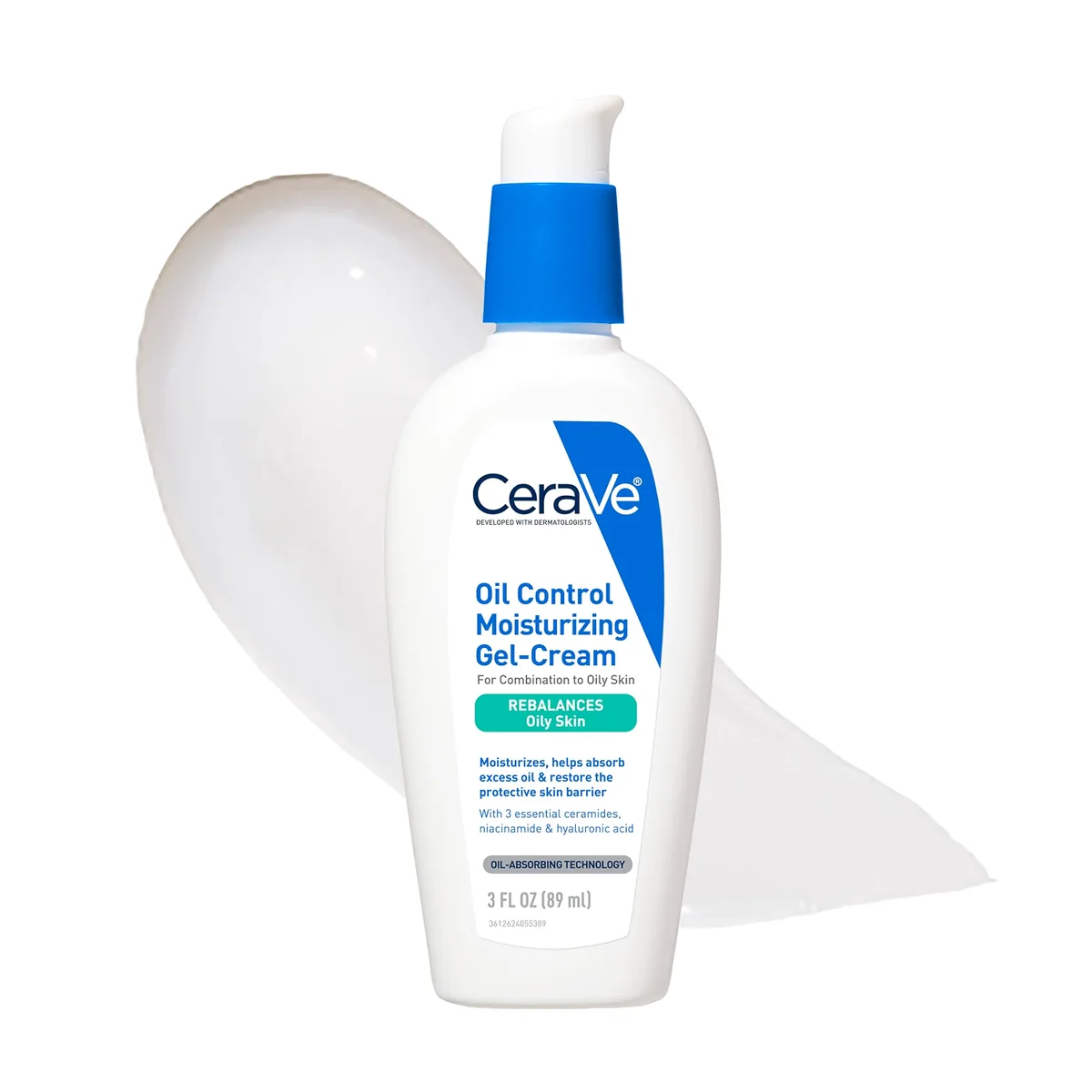
Texture: Gel-cream. CeraVe describes it as combining “the characteristics of both a cream and gel moisturizer,” with a water-based formulation the brand calls “lightweight, non-greasy, and fast-absorbing.” [3]
Fragrance: Fragrance-free, per the brand’s official product page.
Key ingredients: Niacinamide, three ceramides (NP, AP, EOP), hyaluronic acid, and silica/corn starch, which CeraVe’s page describes as helping “absorb excess oil.” [3]
Why it’s our top pick: Of every product in this guide, this is the one most specifically formulated and marketed for “Combination to Oily Skin,” with oil-absorbing ingredients built in rather than just a generically lightweight texture. It’s also fragrance-free, explicitly labeled non-comedogenic by the brand, and backed by a full, verifiable ingredient list.
Limitations: CeraVe’s page states the product helps with “visibly reduced pores over time,” but doesn’t cite a specific study for that claim on the page itself — treat it as a brand claim, not an independently verified result. The brand also notes that people with acne-prone skin should work with a board-certified dermatologist to build the right regimen, rather than relying on any one moisturizer alone.
Best for: Combination-to-oily skin looking for an everyday gel-cream with some oil-control benefit built in.
Shop this pick: Check it on Amazon — affiliate link; Ava Fit Care may earn a commission on qualifying purchases at no extra cost to you. See the Affiliate Disclosure below.
Best for Very Oily Skin: CeraVe Ultra-Light Moisturizing Gel
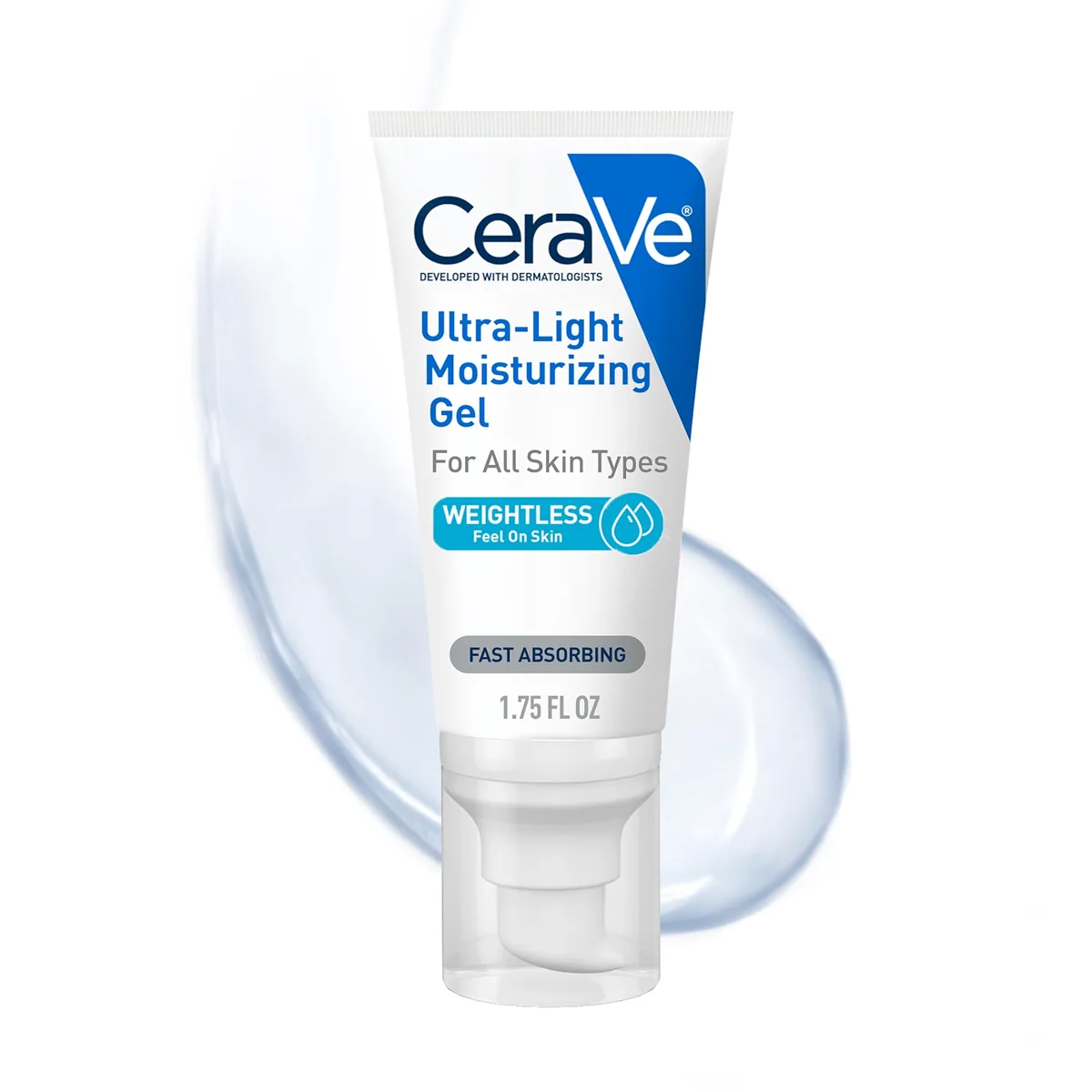
Texture: A true gel — CeraVe’s own copy calls it a “gel formula” with a “refreshing, lightweight texture.”
Fragrance: Fragrance-free, per the brand’s official product page.
Key ingredients: Niacinamide, the same three ceramides as the Oil Control version, and hyaluronic acid — without the oil-absorbing silica/starch additions.
Why it made the list: This is the lightest, most “pure gel” texture of any CeraVe product in this guide, without mattifying powders. If your skin is oily enough that even a gel-cream feels like too much, this is the simpler, water-forward option — while still supporting the skin barrier with the same ceramide trio.
Limitations: Because it’s marketed for “All Skin Types” rather than oily skin specifically, it doesn’t include the oil-absorbing ingredients found in the Oil Control Gel-Cream — if visible shine control matters more to you than a bare-minimum formula, the Oil Control version may suit you better.
Best for: Very oily skin that wants the lightest possible texture with barrier-supporting ingredients, without added mattifying powders.
Shop this pick: Check it on Amazon — affiliate link; Ava Fit Care may earn a commission on qualifying purchases at no extra cost to you. See the Affiliate Disclosure below.
Best Budget / Drugstore: Neutrogena Hydro Boost Water Gel
Texture: Gel. Neutrogena describes it as an “ultra-lightweight gel” that “instantly refreshes and cools.”
Fragrance — important disclosure: This product is not fragrance-free. Its full name on Neutrogena’s own site is “Hydro Boost Hyaluronic Acid Water Gel with Signature Fragrance,” and “Fragrance” appears directly in the ingredient list. If you’re fragrance-sensitive, this is not the right pick regardless of its popularity — Neutrogena does sell a separate “Fragrance Free” variant of Hydro Boost Water Gel under a different product listing, which we have not independently verified in this research round.
Key ingredients: Hyaluronic acid, glycerin, and dimethicone.
Why we’re keeping the Best Budget / Drugstore award, with a caveat: This is one of the most widely available and recognized gel moisturizers at US drugstores, and the brand states the formula is “non-greasy, noncomedogenic, and won’t clog pores,” with a stated use case of “normal to oily and combination skin types” that includes acne-prone skin. We reconsidered this award given the fragrance content above, but the combination of price, availability, and a verifiable ingredient list still makes it the most defensible budget pick in this guide — as long as you’ve actually read the fragrance disclosure first. If fragrance is a dealbreaker for you specifically, this isn’t your pick regardless of the price; the fragrance-free CeraVe options above are the better budget-adjacent fit.
Limitations: The added fragrance is the main trade-off with this pick, full stop — see the disclosure above. The “oil-free” claim for this product appears only in the page’s title/metadata on Neutrogena’s site, not in the visible product description, so we’re not treating it as a prominent brand claim, just noting it’s technically present.
Best for: Budget-conscious shoppers without fragrance sensitivity who want an easy-to-find gel at any US drugstore.
Shop this pick: Check it on Amazon — affiliate link; Ava Fit Care may earn a commission on qualifying purchases at no extra cost to you. See the Affiliate Disclosure below.
Best for Acne-Prone Oily Skin: Cetaphil Gentle Clear Mattifying Acne Moisturizer
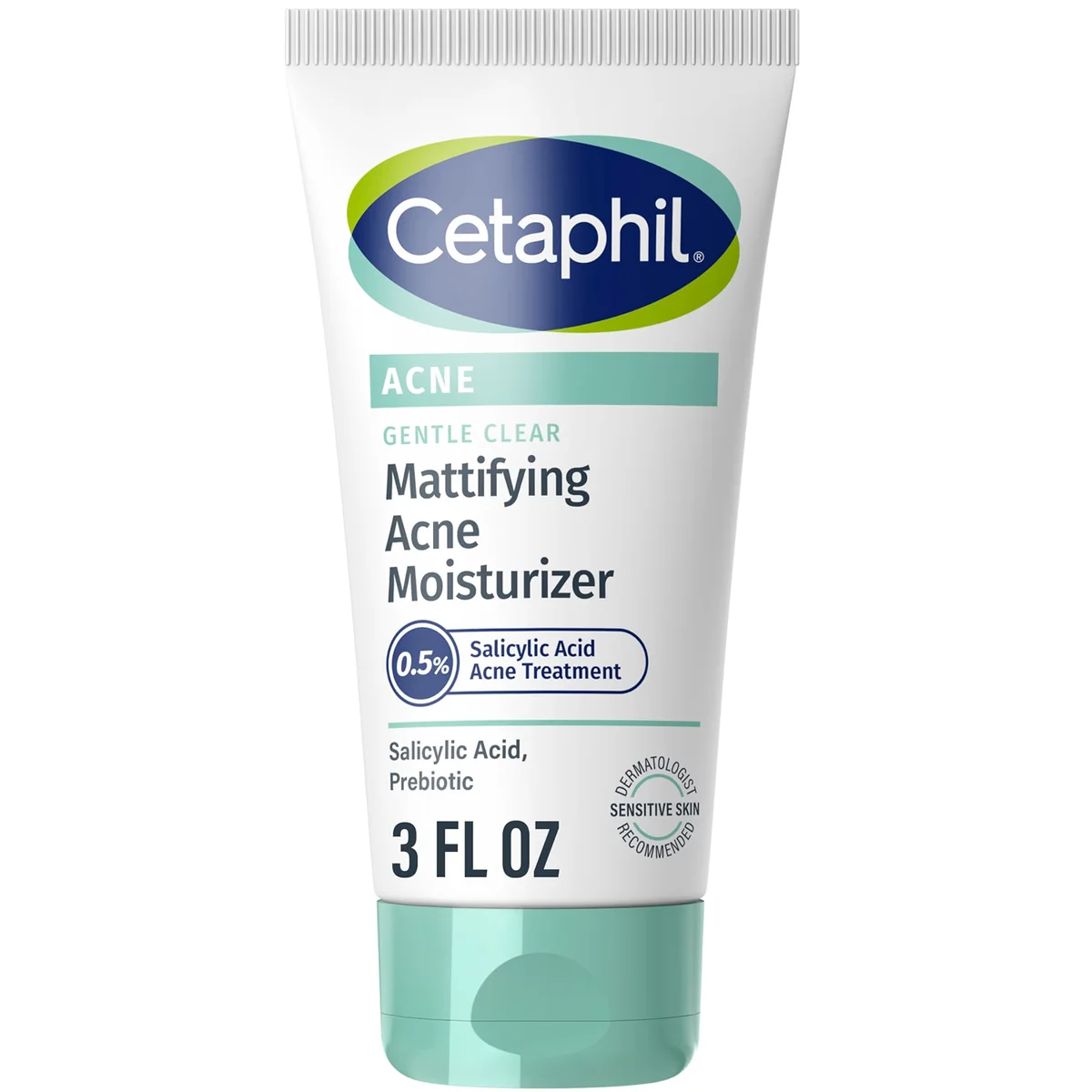
Texture: Gel-cream — Cetaphil’s own meta description calls it a “lightweight gel-cream.”
Fragrance: Fragrance-free, per the brand’s official product page.
Key ingredients: Salicylic acid 0.5% (an acne-treatment active), bisabolol, kojic acid, and licorice root extract — the brand markets the latter two as helping with the appearance of marks left behind after breakouts.
Why it made the list: This is the only product in this guide built around an actual acne-treatment ingredient (salicylic acid) rather than just a lightweight, non-comedogenic formula — a meaningfully different approach if breakouts, not just shine, are your main concern.
Salicylic acid precautions — from the product’s own Drug Facts label: Because this product contains an active acne-treatment ingredient (not just a cosmetic moisturizer), it carries an actual Drug Facts panel, not just marketing copy. Per the official DailyMed label record: [12]
- Test new skin first. Before regular use, apply the product sparingly to one or two small affected areas for the first three days. If no discomfort occurs, you can move to regular use.
- Start low, increase gradually. Begin with one application daily, then gradually increase to two or three times daily if needed — the label notes this gradual approach specifically because “excessive drying of the skin may occur” with salicylic acid.
- If dryness or peeling shows up, back off. The label directs reducing to once a day or every other day if bothersome dryness or peeling occurs — this is a normal, expected adjustment, not a sign you’re using it wrong.
- Don’t stack it with another topical acne treatment at the same time. The label specifically warns that skin irritation and dryness are more likely if you use another topical acne medication at the same time, and directs using only one topical acne treatment at a time.
- Stop and ask a doctor if irritation becomes severe. That’s the label’s specific stated trigger for discontinuing use and seeking medical advice — it doesn’t list other stop-use symptoms beyond that.
- Keep out of reach of children, and if swallowed, get medical help or contact a Poison Control Center right away, per the label.
The DailyMed label does not include a sun-sensitivity warning, and it does not include a specific pregnancy, nursing, or child-use statement — so we’re not including those here, rather than inventing precautions the product’s own label doesn’t state. If you’re pregnant, nursing, or considering this for a child, that’s still worth a quick check with a doctor as general practice, just not because this specific label says so. The directions above are a titration schedule, not a requirement to use the product every single day — use it as often as your skin tolerates within that range.
Limitations: The brand’s “won’t clog pores” wording is similar to, but not identically phrased as, a formal “non-comedogenic” claim — we’re noting the exact wording rather than treating the two as interchangeable. A specific “89% of consumers” hydration claim on the brand’s page doesn’t come with cited study details.
Best for: Oily, acne-prone skin where a plain lightweight moisturizer isn’t addressing active breakouts.
Shop this pick: Check it on Amazon — affiliate link; Ava Fit Care may earn a commission on qualifying purchases at no extra cost to you. See the Affiliate Disclosure below.
Best for Sensitive Oily Skin: Biossance Squalane + Probiotic Gel Moisturizer
Texture: Gel — described by the brand as having a “lightweight, fast-absorbing gel texture.”
Fragrance: No fragrance or parfum appears in the listed ingredients; the brand’s product page does not explicitly use the words “fragrance-free,” so we’re stating what’s verifiable (no fragrance ingredient listed) rather than a claim the brand doesn’t make.
Key ingredients: Squalane, encapsulated probiotics, fermented bisabolol, and allantoin — an ingredient set aimed at calming and soothing rather than mattifying.
Why it made the list: Of every product researched for this guide, this one is most explicitly positioned for “redness- and blemish-prone, oily, sensitive, and reactive skin types” together, rather than oily skin alone — a useful fit if standard oil-control formulas tend to irritate your skin.
Limitations: The brand’s clinical-sounding claims (for example, “100% agreed skin was immediately comforted”) come from a brand-commissioned study of 32 self-described sensitive-skin women over 4 weeks — a disclosed sample size, but not independent, third-party research, and a small study. The product page’s “non-comedogenic” claim appears in an image caption rather than the main body copy.
Best for: Oily skin that’s also sensitive, reactive, or prone to redness, where mattifying or oil-absorbing ingredients tend to cause irritation.
Shop this pick: Check it on Amazon — affiliate link; Ava Fit Care may earn a commission on qualifying purchases at no extra cost to you. See the Affiliate Disclosure below.
Best Lightweight Gel-Cream: Dieux Air Angel Peptide Plumping Gel Cream
Texture: Gel-cream — the brand’s own name for the product and its marketing copy (“Hydrating, Lightweight Gel Cream”).
Fragrance: Fragrance-free, non-comedogenic, non-acnegenic, non-sensitizing, and ophthalmologist-tested, all explicitly stated by the brand — one of the more thoroughly labeled products in this guide.
Key ingredients: Glycerin (a stated 10%+), a vegan collagen amino acid blend, two named peptides for skin firmness, squalane, and ceramide NG.
Why it made the list: Beyond general “oily and combination skin types,” Dieux specifically calls out this product for people “living in humid climates” — a genuinely useful, specific claim for anyone shopping for a gel moisturizer to get through a hot, humid US summer.
Limitations: This product is sold direct through the brand’s own site in three sizes (25 mL, 50 mL, 100 mL), so availability is less widespread than a drugstore pick.
Best for: Oily or combination skin, including in hot, humid weather, that also wants added anti-aging ingredients like peptides.
Shop this pick: Check it on Amazon — affiliate link; Ava Fit Care may earn a commission on qualifying purchases at no extra cost to you. See the Affiliate Disclosure below.
Lightweight Water-Cream and Cream Alternatives
The two products below didn’t make the main gel/gel-cream lineup above for an honest reason: neither brand calls its own product a “gel.” We’re including them anyway because they’re genuinely useful for the oily-skin audience this guide is for, but we’re keeping them clearly separated rather than blurring them into the gel category just to round out the list.
| Product | Texture (brand’s own term) | Best Suited For | Key Ingredients | Fragrance | Size | Where to Buy |
|---|---|---|---|---|---|---|
| Krave Beauty Oat So Simple Water Cream | Water cream (“light-as-water,” not called a gel by the brand) | Best Lightweight Water-Cream Alternative | Oat extract, trehalose, squalane (9 ingredients total) | Fragrance-free | 2.7 fl oz / 80 mL | Official page · Amazon† |
| Tatcha The Water Cream | Cream (Tatcha calls it an “oil-free cream,” not a gel) | Best Premium Option | Coix seed extract, multi-weight glycerin, hyaluronic acid | Contains fragrance (parfum) and listed fragrance allergens | 75 mL‡ | Official page |
†Krave Beauty’s Amazon link is an affiliate link — Ava Fit Care may earn a commission on qualifying purchases at no extra cost to you; see the Affiliate Disclosure section below. Tatcha’s “Where to Buy” link points only to Tatcha’s own official product page — Tatcha is not part of this article’s Amazon affiliate links, and that link is not an affiliate link.
‡Tatcha size: 75 mL / 2.54 fl. oz. is the only size currently listed on Tatcha’s own official site. A 1.7 fl. oz. size appears to exist through third-party retail (e.g., a Target marketplace seller, Costco multi-packs), but it isn’t confirmed as a current Tatcha-authorized size, so it isn’t included here. Tatcha’s own on-page Q&A also references a “full-size 1.7 oz version” for refill-pod compatibility — language that doesn’t match the 75 mL size currently sold. See the Tatcha review below for the full discrepancy discussion.
Best Lightweight Water-Cream Alternative: Krave Beauty Oat So Simple Water Cream
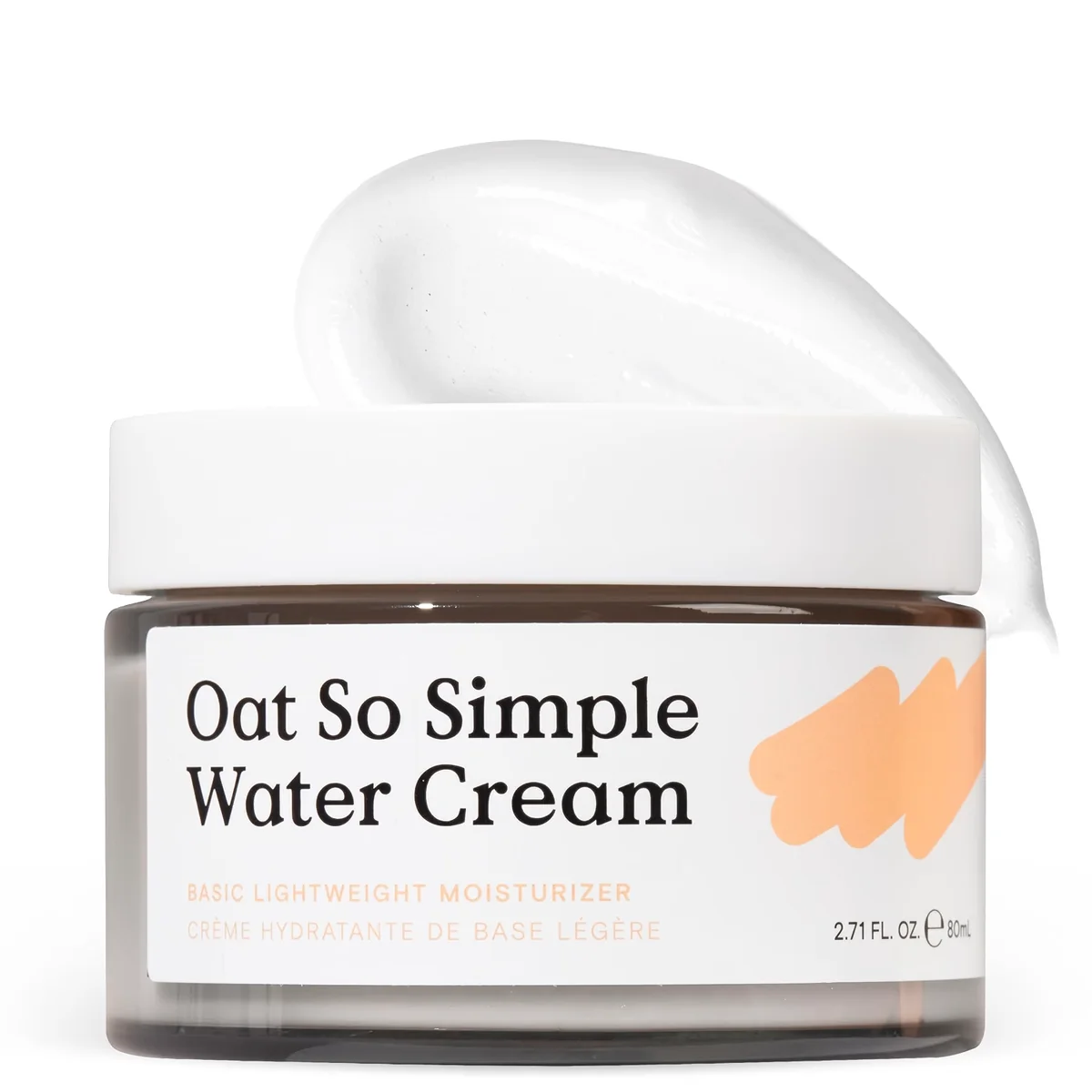
A note on classification: We’re intentionally not calling this a “gel moisturizer.” Krave Beauty’s own marketing describes the texture as “light-as-water” and “airy, featherweight” — the brand itself never uses the word “gel.” We’re including it because it’s genuinely useful for oily skin that’s also sensitive or dehydrated, but it behaves more like a very lightweight lotion than a true gel.
Fragrance: Explicitly “Essential Oil & Fragrance Free,” per the brand.
Key ingredients: A short, 9-ingredient formula built around oat extract, trehalose (a moisture-binding sugar), and squalane.
Why it made the list: This is the most minimalist, ingredient-transparent product in this entire guide — just 9 ingredients, with a clinical hydration claim that discloses its sample size (an independent study of 21 subjects). It’s marketed “especially for sensitive skin” rather than oily skin specifically, which is exactly why we’re positioning it as an alternative for oily-and-sensitive or oily-and-dehydrated skin rather than a general oily-skin pick.
Limitations: Because it’s not built around oil-absorbing or mattifying ingredients, it may feel too simple for very oily skin looking specifically for shine control. The brand notes the product’s color and texture can vary slightly batch to batch.
Best for: Oily skin that’s also sensitive, reactive, or prone to dehydration, and for anyone who prefers a short, easy-to-understand ingredient list.
Shop this pick: Check it on Amazon — affiliate link; Ava Fit Care may earn a commission on qualifying purchases at no extra cost to you. See the Affiliate Disclosure below.
Best Premium Option: Tatcha The Water Cream
Texture: Despite “Water Cream” in the name, Tatcha’s own copy calls this an “oil-free cream” and never uses the word “gel” anywhere in its brand description (only customer reviews use that word) — the main reason it sits in this alternatives section rather than the main lineup above.
Fragrance and allergens — important disclosure: This product contains fragrance. Its ingredient list includes “Parfum/Fragrance,” along with three ingredients that are recognized fragrance allergens: limonene, linalool, and citral. If you’re fragrance-sensitive or prone to reactions from fragrance allergens specifically, this is a real consideration, regardless of the product’s other credentials.
Current size (re-verified): We checked Tatcha’s official site again specifically for this revision. As of this check, tatcha.com sells exactly one size of The Water Cream: 75 mL / 2.54 fl. oz. We did not find a 50 mL / 1.7 fl. oz. size offered directly on Tatcha’s own site at the time of this check. (This article doesn’t report prices for any product — see the Affiliate Disclosure section for why.)
A 1.7 fl. oz. size does appear to exist in the US market through other channels — for example, a Target.com listing fulfilled by a third-party marketplace seller (not Target or Tatcha directly), and apparent multi-packs through Costco — but we could not confirm whether that’s a current, Tatcha-authorized size, or older inventory still circulating through resellers. We’re not including the 1.7 oz size in this guide’s table, because we could not verify it from Tatcha’s own site or another fully reliable first-party source. The 75 mL size is the one we can verify directly from Tatcha’s own official page right now, so that’s what we’re recommending.
The unresolved inconsistency we flagged previously is still there, and this re-check actually clarifies it a bit: Tatcha’s own on-page Q&A references refill pods that “fit only the full-size 1.7 oz version” — language that appears to be left over from a previous size Tatcha itself called “full size,” which doesn’t match the 75 mL size currently sold as the only option. That’s a discrepancy on Tatcha’s own site, not something we introduced, and it’s worth rechecking directly on Tatcha’s own site before you buy, since sizing and availability like this can change.
Key ingredients: Japanese coix seed extract (marketed for smoothing texture and refining the look of pores), a multi-weight glycerin blend, wild rose and heartleaf extracts, and hyaluronic acid.
Why it made the list: Tatcha explicitly states this product is “oil-free” and “Non-Comedogenic,” and recommends it for “Combo to Oily” skin specifically — among the clearest, most explicit claims of any product in this guide, despite the fragrance content.
Limitations: Several of the brand’s clinical-sounding percentage claims (for example, “97% showed improvement in clogged and enlarged pores”) don’t name an independent testing body on the page. Tatcha’s page also proactively tells rosacea-prone users to use a different product instead of this one — a limitation worth repeating here rather than glossing over.
Best for: Combination-to-oily skin without fragrance sensitivity, looking for a premium pore-focused option.
Where to buy: Tatcha isn’t currently part of this article’s Amazon affiliate links — the official Tatcha page linked above and in the table is the only purchase link we’re providing for this product right now, and it’s not an affiliate link.
Best Gel Moisturizers for Acne-Prone Oily Skin
If breakouts are your main concern, texture alone won’t solve that — you generally need an actual acne-treatment ingredient, not just a lightweight, non-comedogenic moisturizer. Of this guide’s lineup, the Cetaphil Gentle Clear Mattifying Acne Moisturizer is the only one built around a treatment-level active (0.5% salicylic acid), alongside ingredients the brand markets for fading post-acne marks. Read the salicylic-acid precautions in its review above before adding it to a routine that already includes other actives. If you’re building out that routine from scratch, our step-by-step acne skincare routine guide covers how to introduce a treatment like this one safely alongside other actives.
For acne-prone skin that isn’t actively treating breakouts with this moisturizer (for example, if you’re using a separate prescription or over-the-counter treatment elsewhere in your routine), the CeraVe Oil Control Moisturizing Gel-Cream and CeraVe Ultra-Light Moisturizing Gel are both explicitly labeled non-comedogenic and fragrance-free, which makes either a reasonable plain moisturizer to pair with a dedicated treatment step — remembering that “non-comedogenic” reduces, but doesn’t eliminate, the chance of a product contributing to clogged pores for any individual.
Best Options for Sensitive Oily Skin
Oily skin can still be sensitive and reactive — mattifying or oil-absorbing ingredients that work fine for some people can sting or irritate others. The Biossance Squalane + Probiotic Gel Moisturizer and the Krave Beauty Oat So Simple Water Cream are the two picks in this guide built specifically around calming, minimal-irritant ingredient lists rather than oil-control-first formulas — Biossance leans on probiotics and bisabolol, while Krave Beauty keeps things to a 9-ingredient, fragrance-free formula. Neither is marketed as a dedicated treatment for rosacea or eczema; if you have a diagnosed sensitive-skin condition, a board-certified dermatologist is the right person to confirm any new product is appropriate for you specifically.
Using a Gel Moisturizer in Hot or Humid Weather
Gel moisturizers tend to be the most comfortable texture in hot, humid conditions, simply because they’re mostly water and absorb quickly without leaving the heavier residue a thicker cream can in warm weather. Sunscreen is the product you actually need to reapply through the day if you’re sweating or outdoors for long stretches — that’s a separate step from your morning moisturizer application, not something the moisturizer itself needs repeating for. If you live somewhere humid for most of the year, it’s reasonable to simply stick with a gel or gel-cream year-round rather than switching to a heavier winter formula the way some skin types do — oily skin generally has less reason to make that seasonal switch than drier skin types do.
How to Apply a Gel Moisturizer
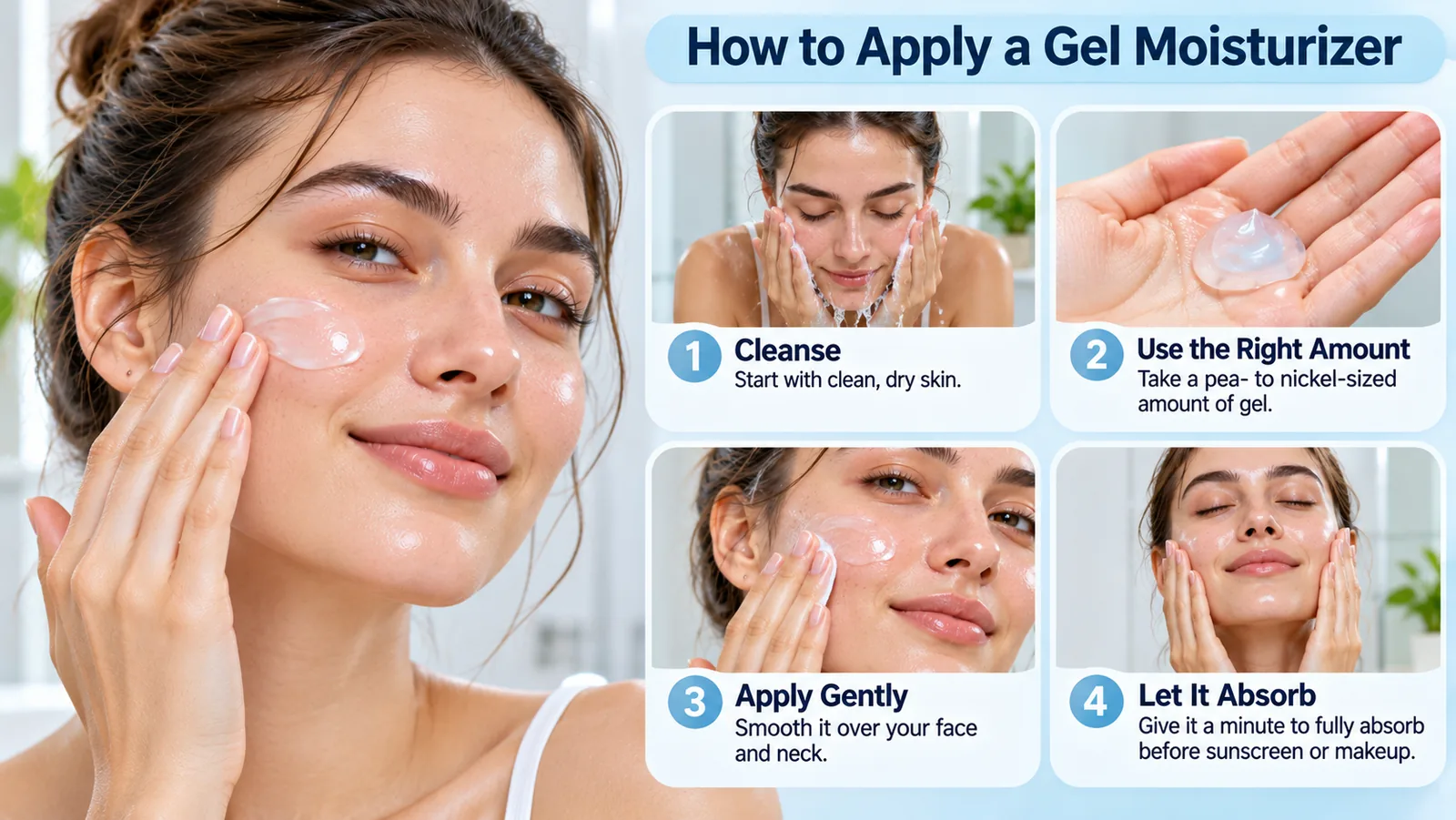
The basic approach is the same as any moisturizer: apply an even layer to clean (and ideally still slightly damp) skin, let it absorb for a minute or so, and then follow with sunscreen during the day before any makeup. How much product that takes varies by formula and by your own skin — follow the specific product’s own directions rather than a universal amount, and aim for a comfortable, even layer rather than a thick one; gel textures generally spread more easily than thicker creams, so you may naturally find you need less than you expect. For a more detailed breakdown of building a full routine around this step, see our skincare routine for oily skin guide.
Common Mistakes With Gel Moisturizers for Oily Skin
Skipping moisturizer altogether. As covered above, this isn’t supported as a fix for oiliness, and it skips a step dermatology sources consistently recommend keeping regardless of skin type. If you’re newer to skincare overall and want the fuller picture beyond this one step, our Best Skincare Products for Beginners guide covers how moisturizer fits into a full routine.
Over-cleansing in an attempt to “dry out” oily skin. The AAD specifically warns that a face wash that’s too harsh can irritate skin and trigger more oil production — the opposite of the intended effect. [1] A gentle cleanser paired with the right moisturizer is more effective than an aggressive one.
Assuming “gel” automatically means “fragrance-free.” As this guide’s own research shows, that’s not reliably true — always check the actual ingredient list, not just the texture name.
Treating “non-comedogenic” as a guarantee. It’s a helpful shopping signal, not a promise that a product can never cause a breakout for you specifically.
Using a mattifying, oil-absorbing formula when your skin is actually oily and dehydrated. If your skin gets oilier as the day goes on despite using an oil-control product, the issue may be a lack of water, not too little oil control — see the dehydration section above.
Layering a treatment-level gel moisturizer (like a salicylic-acid formula) with several other active ingredients at once. This increases the odds of irritation; introduce new actives one at a time.
Frequently Asked Questions
Bottom Line
For most oily skin, a lightweight, water-based gel or gel-cream is a comfortable, reasonable starting point — but “gel” on the label isn’t a guarantee of fragrance-free, non-comedogenic, or oil-free status, and it’s worth checking each product’s actual ingredient list rather than assuming. The CeraVe Oil Control Moisturizing Gel-Cream is our overall pick for straightforward oily-skin use, with more specific options above if you’re also managing breakouts, sensitivity, or an oily-but-dehydrated combination, and a couple of honest non-gel alternatives if a water-cream texture suits you better.
Why You Can Trust This Guide
Every product recommendation above is based on each brand’s own official product page — including the full ingredient list where the brand discloses one — cross-checked against the American Academy of Dermatology’s published guidance on oily skin where relevant. We did not personally test these products, and no claim of hands-on testing or independent dermatologist endorsement is made for any product here. Where a brand’s own clinical or consumer-study claims appear in this guide, they’re identified as brand-sponsored, not independent research. Several products were researched but left out of this guide because key facts — ingredients or availability — couldn’t be verified from the brand’s own site or a reliable US retailer at the time of this research; we’d rather leave a product out than guess. This article does not report prices for any product (see the Affiliate Disclosure section below).
Affiliate Disclosure
Disclosure: This article contains Amazon affiliate links for 7 of the 8 products covered: CeraVe Oil Control Moisturizing Gel-Cream, CeraVe Ultra-Light Moisturizing Gel, Neutrogena Hydro Boost Water Gel, Cetaphil Gentle Clear Mattifying Acne Moisturizer, Biossance Squalane + Probiotic Gel Moisturizer, Dieux Air Angel Peptide Plumping Gel Cream, and Krave Beauty Oat So Simple Water Cream. As an Amazon Associate, Ava Fit Care earns from qualifying purchases made through those links, at no extra cost to you.
Tatcha The Water Cream is not currently part of this article’s Amazon affiliate links; its link points only to Tatcha’s own official product page, which is not an affiliate link and earns no commission. Separately, the link next to each product’s review heading and the “Official page” link in every “Where to Buy” table cell always point to that brand’s own site, for all 8 products — those links are never affiliate links, regardless of whether an Amazon affiliate link also exists for that product.
On verification: The 7 Amazon links above were supplied directly for this article rather than located and confirmed through this project’s own research process. We have not independently re-verified that each link resolves to the exact listing for its matching product — Amazon.com has consistently returned a permanent robots_disallowed error to the tools available for this project, which has prevented us from confirming Amazon listings directly in every revision round of this article. If a link appears broken, redirects somewhere unexpected, or doesn’t match the product it’s attached to, please let us know so it can be corrected.
Either way, product selection and descriptions on this page are based on publicly available brand and retailer information, not on affiliate relationships — affiliate participation does not influence which products are included or how they’re described.
More In Skincare

Why You Can Trust This Guide
Read our Review Policy for a plain explanation of what our review process does — and doesn't — mean for health-adjacent content.
Sources & Further Reading
- American Academy of Dermatology, “How to control oily skin” — source for: oily skin still needs moisturizer; oil-free/non-comedogenic label guidance; cleansing guidance. This page does not make a gel-specific texture recommendation.
- CeraVe, “How To Choose a Facial Moisturizer for Oily Skin” — brand-affiliated dermatologist commentary, cited as such, as the source for the gel-texture rationale for oily skin.
- CeraVe, Oil Control Moisturizing Gel-Cream official product page
- CeraVe, Ultra-Light Moisturizing Gel official product page
- Neutrogena, Hydro Boost Water Gel with Signature Fragrance official product page
- Cetaphil, Gentle Clear Mattifying Acne Moisturizer official product page
- Biossance, Squalane + Probiotic Gel Moisturizer official product page
- Dieux, Air Angel Peptide Plumping Gel Cream official product page
- Krave Beauty, Oat So Simple Water Cream official product page
- Tatcha, The Water Cream official product page — re-verified for this revision; see the product review for current size findings and the unresolved third-party-retail size question.
- Boozalis, Emily, and Shivani Patel. “Clinical utility of marketing terms used for over-the-counter dermatologic products.” Journal of Dermatological Treatment 29, no. 8 (2018): 841-845. DOI: 10.1080/09546634.2018.1467540. PMID 29671667. Independent, peer-reviewed source for the claim that “non-comedogenic,” “oil-free,” “fragrance-free,” and “hypoallergenic” are not regulated by any governing body. Author names and full citation details independently confirmed via the Crossref API record for this DOI. Only the abstract was reviewed, not the full paper text.
- U.S. National Library of Medicine, DailyMed. “CETAPHIL GENTLE CLEAR MATTIFYING ACNE MOISTURIZER- salicylic acid lotion” (NDC 0299-4117, labeler: Galderma Laboratories, L.P.; label updated November 12, 2024; version 5). This is the official FDA-sourced label record, fetched and quoted directly for this article. It was cross-checked against two independent label-data mirror sites (ndclist.com, drugcentral.org) used in an earlier revision; all Warnings and Directions text used in this article matched across all three sources.
This article is for general informational purposes and is not a substitute for professional dermatological advice. If you have persistent acne, skin irritation, or a diagnosed skin condition, consult a board-certified dermatologist before changing your skincare routine.
This guide was researched and fact-checked following our Editorial Guidelines and Review Policy.