Quick Answer
There is no single niacinamide percentage that research has proven is “best” for oily skin. Most of the human clinical evidence for reduced oiliness and fewer breakouts used niacinamide at 2% to 5% — lower than the 10%, 12%, or 15% found in many of today’s commercial serums. Those higher-percentage products are widely sold, and the tolerability research cited in this article covers concentrations up to 10% — it doesn’t specifically establish that 12% or 15% formulas are equally well-tolerated, even though both are common and widely used. Stronger oil control at any of these higher concentrations hasn’t actually been demonstrated in the studies available, either — a higher number is a shopper preference, not a proven advantage. With that in mind: Naturium Niacinamide Serum 12% Plus Zinc 2% is our Best Overall pick based on its disclosed ingredient profile, formulation, and overall editorial fit — not a claim that its 12% concentration, or any clinical result, has been shown to outperform the other six — The Ordinary Niacinamide 10% + Zinc 1% is the simplest lower-cost way to try it, COSRX The Niacinamide 15 Serum suits readers who specifically want a stronger-feeling formula and already tolerate actives well, and Good Molecules 5% Niacinamide Serum with Ectoin is the lower-concentration option for easily irritated oily skin. Keep reading for the full comparison, what the research actually does and doesn’t support, and how to choose based on your specific skin.
How We Picked These 7
We compared products using brand-published ingredient lists and disclosed niacinamide percentages, not personal testing — AvaFitCare has not independently tested these products, and nothing below should be read as a first-hand review. Selection criteria: a disclosed or brand-confirmed niacinamide formulation, current verifiable US availability, genuine suitability for oily/combination/acne-prone/sensitive-oily skin specifically, and enough variety in concentration, price, and supporting ingredients to represent meaningfully different shopper needs.
A note on how the category labels below work: labels like “Best for a Stronger Formula” or “Best Overall” describe editorial fit — formulation, disclosed ingredients, brand positioning, format, and availability — not a claim that one product is clinically proven more effective than another. No product earned its category simply for having the highest (or lowest) niacinamide percentage; see each review below for the specific reasoning, and see “What Percentage of Niacinamide Is Best for Oily Skin?” for why percentage alone isn’t a reliable ranking signal.
A Note on Affiliate Links
As an Amazon Associate I earn from qualifying purchases. This article contains affiliate links — where a “Where to Buy” link or product CTA is marked (paid link), AvaFitCare may earn a commission on qualifying purchases made through it, at no extra cost to you. Our picks and rankings were made independently of any commission and reflect the ingredient research, product comparison, and editorial reasoning documented throughout this article, not paid placement.
On the Amazon links themselves: the user has manually verified that all 7 Amazon URLs used below resolve to the correct product listing for each product. That confirmation covers the link destination — it does not mean AvaFitCare has independently verified each listing’s current price, seller, stock status, size availability, or ASIN, any of which can change on Amazon at any time. For that reason, this article intentionally does not display specific Amazon prices anywhere (check each “View on Amazon (paid link)” link directly for current pricing), and does not claim any rating, live stock status, or ASIN beyond what’s already disclosed per product in the reviews below.
Niacinamide Serums for Oily Skin: Side-by-Side Comparison
| Product | Best Suited For | Niacinamide % | Key Supporting Ingredients | Texture | Fragrance | Size | Where to Buy |
|---|---|---|---|---|---|---|---|
| Naturium Niacinamide Serum 12% Plus Zinc 2% | Best Overall | 12% | Zinc PCA, sodium hyaluronate, vitamin E | Light gel-serum | Fragrance-free | 30 mL / 60 mL | View on Amazon (paid link) |
| The Ordinary Niacinamide 10% + Zinc 1% | Best Budget | 10% | Zinc PCA | Watery serum | None listed | 30 mL / 60 mL | View on Amazon (paid link) |
| COSRX The Niacinamide 15 Serum | Best for a Stronger Formula | 15% | Zinc PCA, N-acetylglucosamine, allantoin | Light, fast-absorbing | None listed | 20 mL | View on Amazon (paid link) |
| Neutrogena Hydro Boost+ Niacinamide Serum, Fragrance Free | Best for Acne-Prone Oily Skin | 10% | Hyaluronic acid, glycerin | Lightweight lotion-serum | Fragrance-free | 1 fl oz | View on Amazon (paid link) |
| Good Molecules 5% Niacinamide Serum with Ectoin | Best for Sensitive Oily Skin | 5% | Ectoin, acetyl glucosamine, betaine | Not described by brand (texture/format unverified — see note) | Fragrance-free (per third-party ingredient database; not labeled on official page) | 30 mL | View on Amazon (paid link) |
| The INKEY List Niacinamide Serum | Best Lightweight Formula | 10% | Hyaluronic acid, panthenol, squalane | Fast-absorbing, non-sticky | Fragrance-free | 30 mL (brand’s own single bottle intermittently out of stock — see note) | View on Amazon (paid link) |
| Paula’s Choice 10% Niacinamide Booster | Best for Oily Skin with Uneven Tone (booster format, not a standalone serum) | 10% | Ascorbyl glucoside (vitamin C derivative), licorice root extract | Water-light liquid “booster,” meant to be mixed into or layered with another product | Fragrance-free | 20 mL | View on Amazon (paid link) |
Sizes reflect what each brand’s official page listed at the time of research (November 2026) and can change. Exact prices are intentionally not listed in this article — check each “View on Amazon (paid link)” link for current pricing, since Amazon prices change frequently and this article does not use an approved, live-updating price display.
The 7 Picks, Reviewed
1. Best Overall: Naturium Niacinamide Serum 12% Plus Zinc 2%
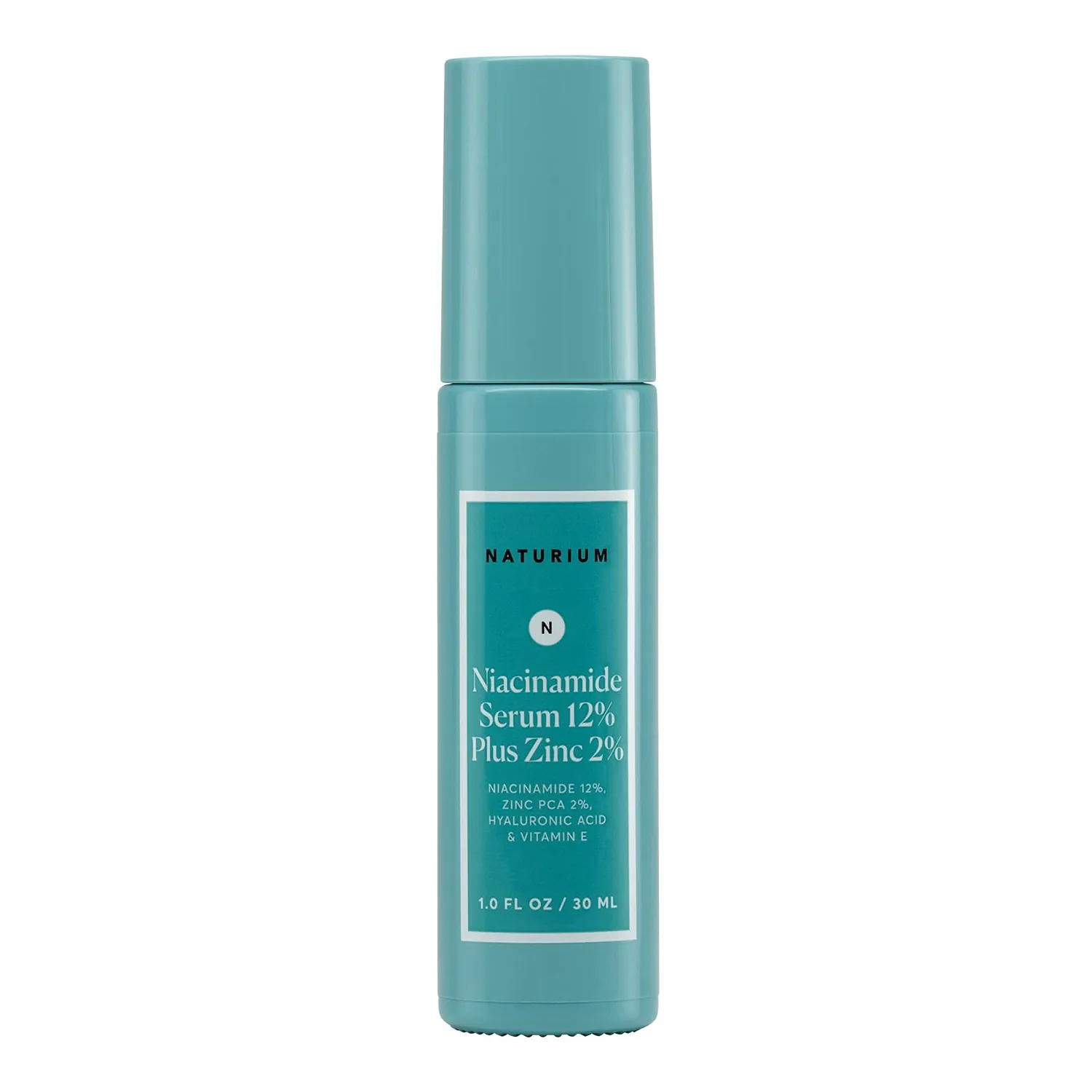
Naturium pairs a slightly higher niacinamide concentration (12%) with a meaningfully higher dose of zinc PCA (2%, versus the 1% most competitors use) plus sodium hyaluronate for hydration and vitamin E as an antioxidant. It earns “Best Overall” for breadth of fit — a clearly disclosed 12% niacinamide concentration; a fuller supporting-ingredient list than most competitors; explicit sensitive-skin guidance from the brand; and confirmed US availability — not because 12% has been shown to outperform 10% or 15% for oil control specifically. The brand says it’s “appropriate for those with sensitive skin, though a patch test prior to use is advised.” View on Amazon (paid link)
Worth knowing: Naturium’s own FAQ says it can be layered with vitamin C, a looser restriction than some competitors use — useful if your routine already includes a vitamin C serum.
2. Best Budget: The Ordinary Niacinamide 10% + Zinc 1%
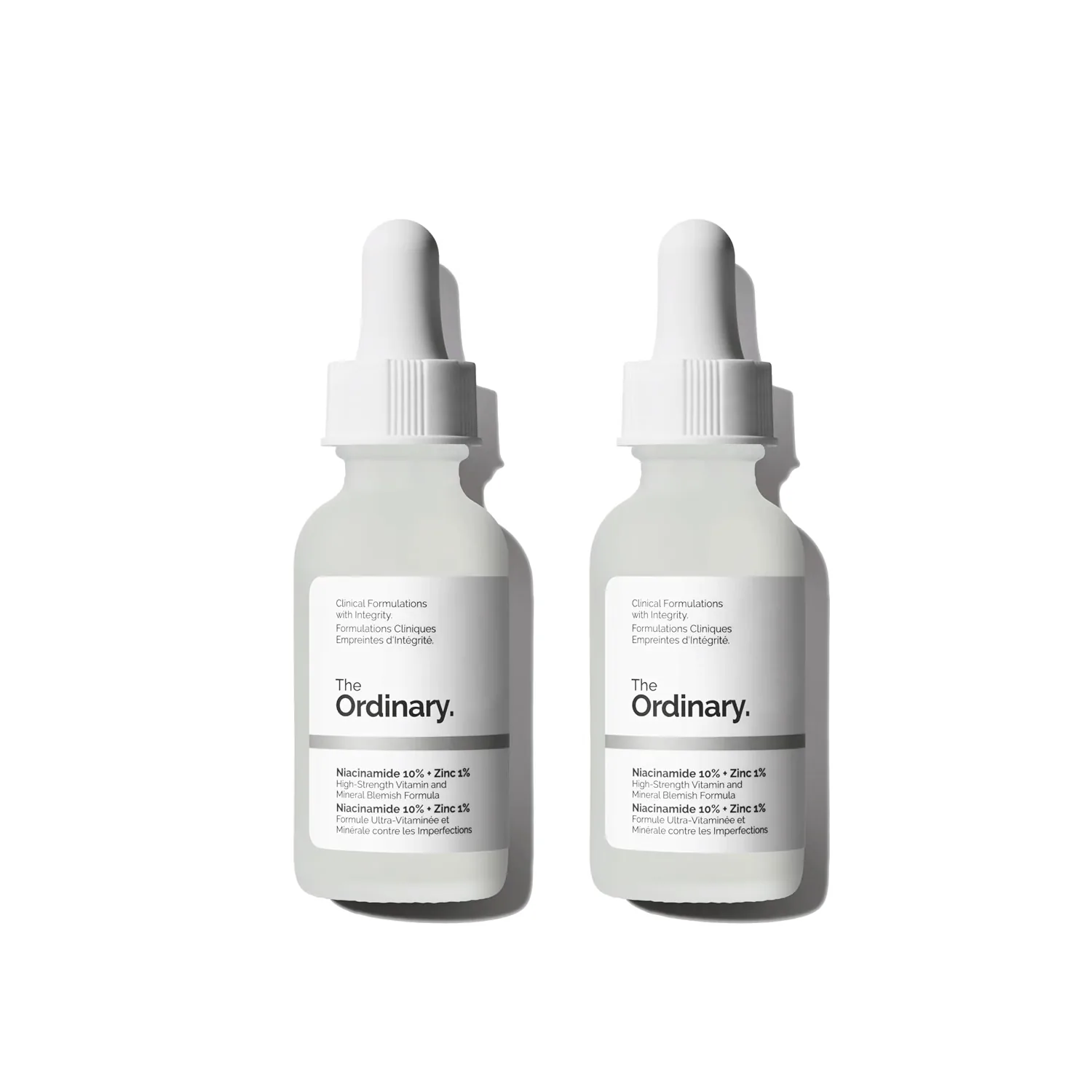
The most recommended niacinamide serum across every major buying guide we reviewed (see our competitor research): a simple, well-documented 10% niacinamide + 1% zinc PCA formula that the brand positions as one of its most accessible, entry-level products. We’re calling this “Best Budget” as a relative label among our verified final seven, based on that brand positioning and competitor consensus, not a claim that it’s the single cheapest niacinamide serum sold anywhere — and not based on any specific price figure, which this article intentionally doesn’t display (check the Amazon link for current pricing). It’s genuinely no-frills — no hyaluronic acid, no fragrance, no extras. The Ordinary advises against combining it with vitamin C in the same routine. View on Amazon (paid link)
3. Best for a Stronger Formula: COSRX The Niacinamide 15 Serum
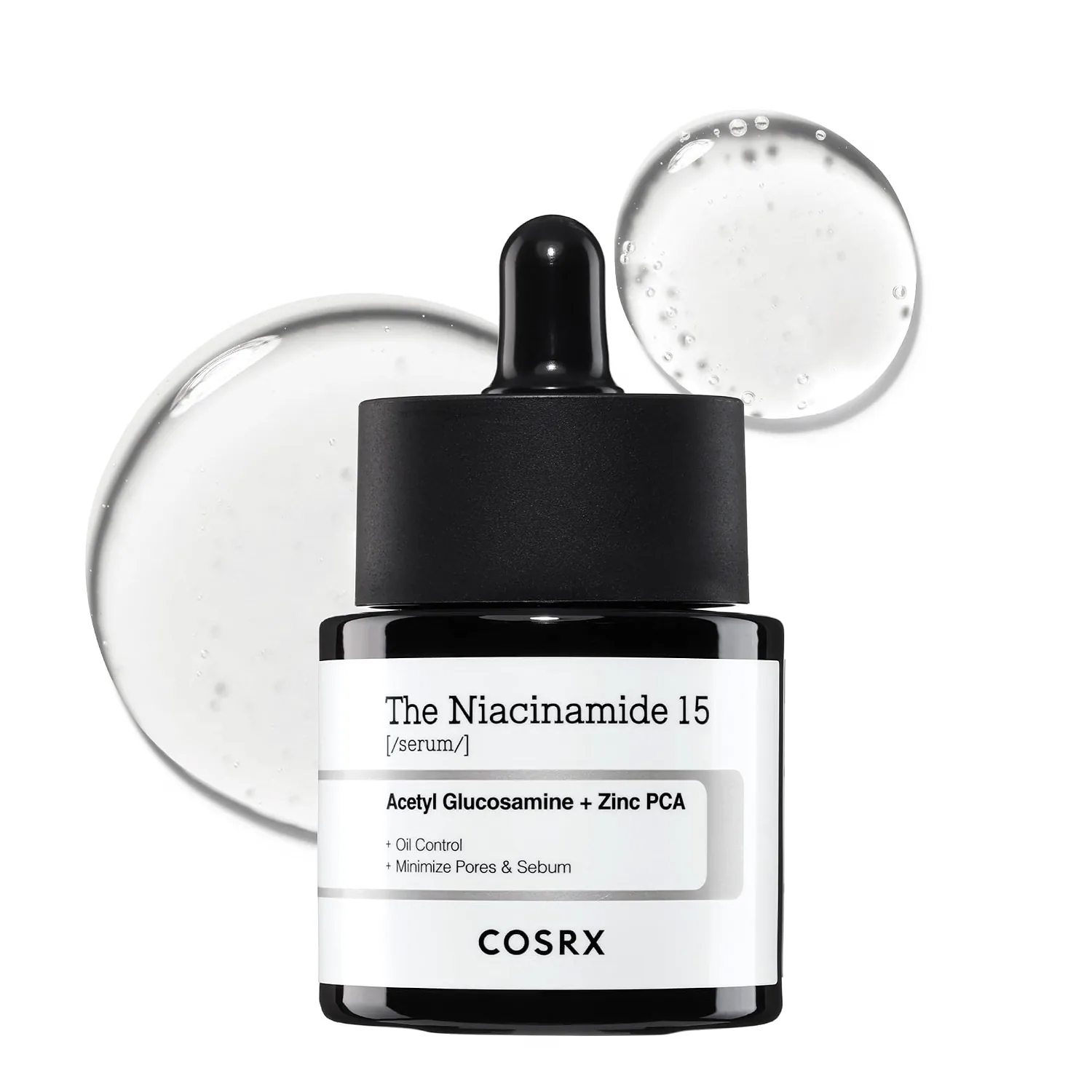
At 15% niacinamide, this is the highest concentration in our comparison, paired with zinc PCA and N-acetylglucosamine. We’re not calling this “Best for Very Oily Skin” based on concentration alone — the available research doesn’t show that 15% controls oil more effectively than a lower percentage (see “What Percentage of Niacinamide Is Best for Oily Skin?” below). It earns its place here because COSRX markets it specifically toward oily, combination, and acne-prone skin, and brand/reviewer descriptions consistently note it absorbs quickly without feeling heavy despite the higher percentage. Treat the 15% concentration as a formulation fact and a shopper preference (if you specifically want a stronger-feeling product and have tolerated niacinamide well before), not as evidence of superior oil control. View on Amazon (paid link)
4. Best for Acne-Prone Oily Skin: Neutrogena Hydro Boost+ Niacinamide Serum, Fragrance Free
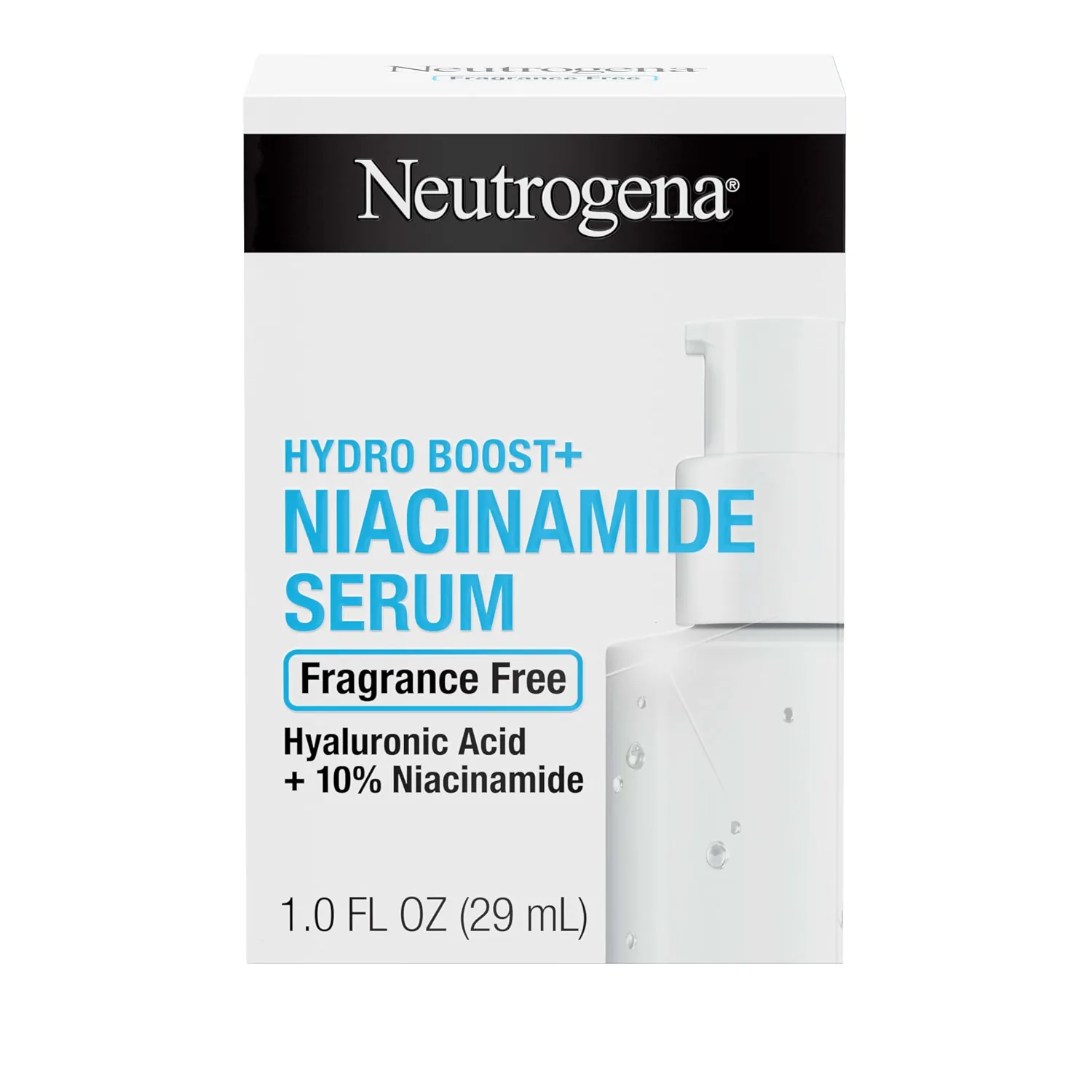
Neutrogena’s fragrance-free formula pairs 10% niacinamide with hyaluronic acid, and the brand specifically calls out acne-prone skin in its own product description. Its biggest practical advantage is availability — it’s stocked at CVS, Target, Walmart, and Kroger, so you can typically buy it in person. The ingredient list includes dimethicone, so expect a slightly more lotion-like feel than a purely watery serum. View on Amazon (paid link)
5. Best for Sensitive Oily Skin: Good Molecules 5% Niacinamide Serum with Ectoin
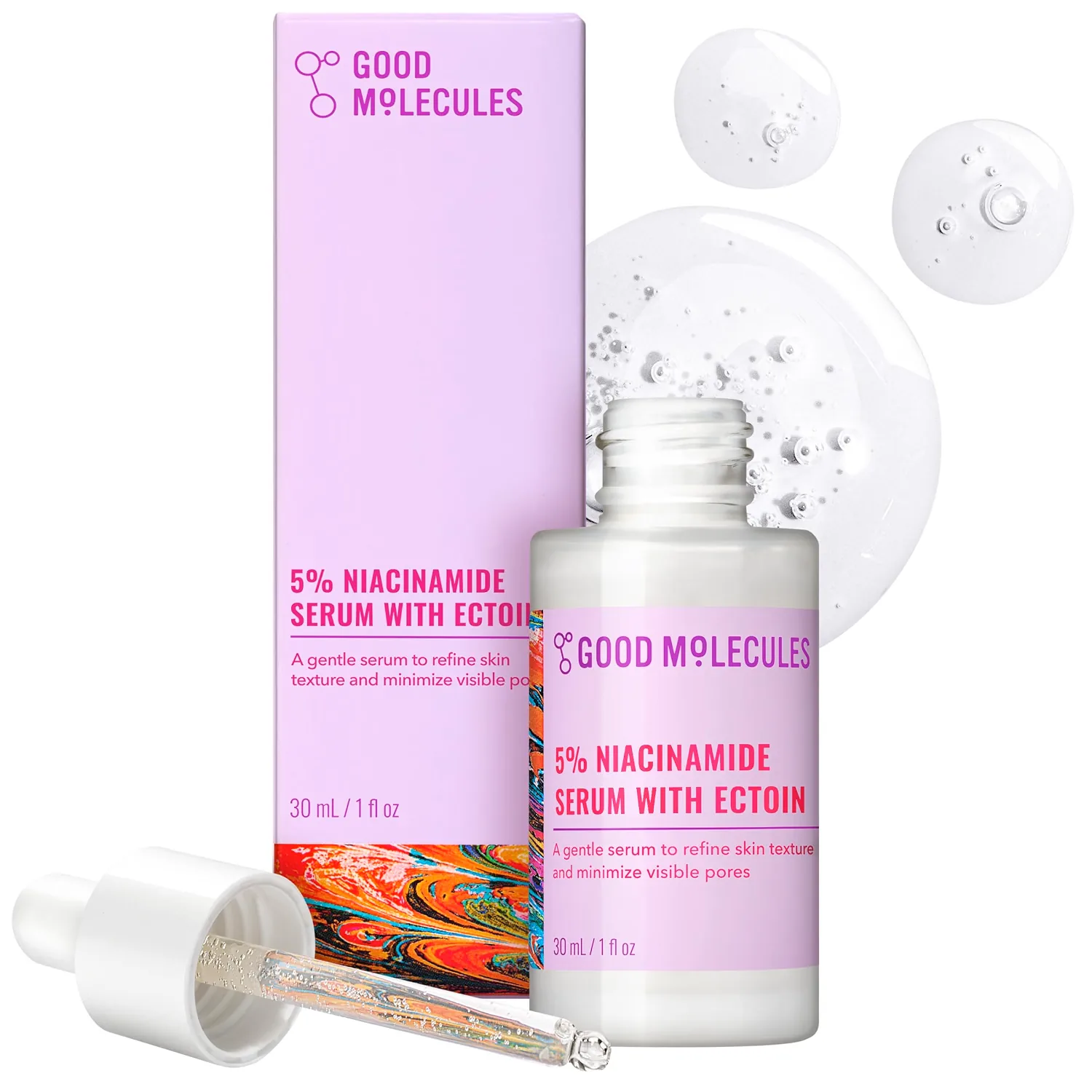
This pick replaces Glossier Super Pure from our earlier draft — see the note at the end of this review for why. At 5% niacinamide, this is the lowest concentration in our comparison, paired with ectoin (an osmolyte ingredient generally used for its hydrating/soothing properties) and acetyl glucosamine. A third-party ingredient database (the brand’s own page does not publish a full ingredient list) confirms the full formula contains no fragrance/parfum ingredient, consistent with a fragrance-free product, though Good Molecules does not use that exact label on its own page. What we could not confirm: the brand does not describe this product’s texture or finish anywhere we could find, and no independent source filled that gap either — we’re not guessing at it. Confirmed via the brand’s own site: a 30 mL size, listed in stock at time of research (current price intentionally not listed here — check the Amazon link for that).
Why the swap: our original research flagged Glossier Super Pure (5% Niacinamide + Zinc PCA) as the sensitive-skin pick, but its own purchase page shows a “Coming soon” label alongside an active “Add to bag” button — an unresolved, contradictory stock signal that was still present on a second check. Rather than recommend a product we can’t confirm is actually purchasable, we replaced it with Good Molecules’ 5% formula, which is confirmed in stock, at the cost of a less complete ingredient/texture disclosure than Glossier’s own page offered. If Glossier’s availability is confirmed before this article is finalized, it remains a reasonable alternate pick for this category — its ingredient disclosure is more complete than Good Molecules’. View on Amazon (paid link)
6. Best Lightweight Formula: The INKEY List Niacinamide Serum
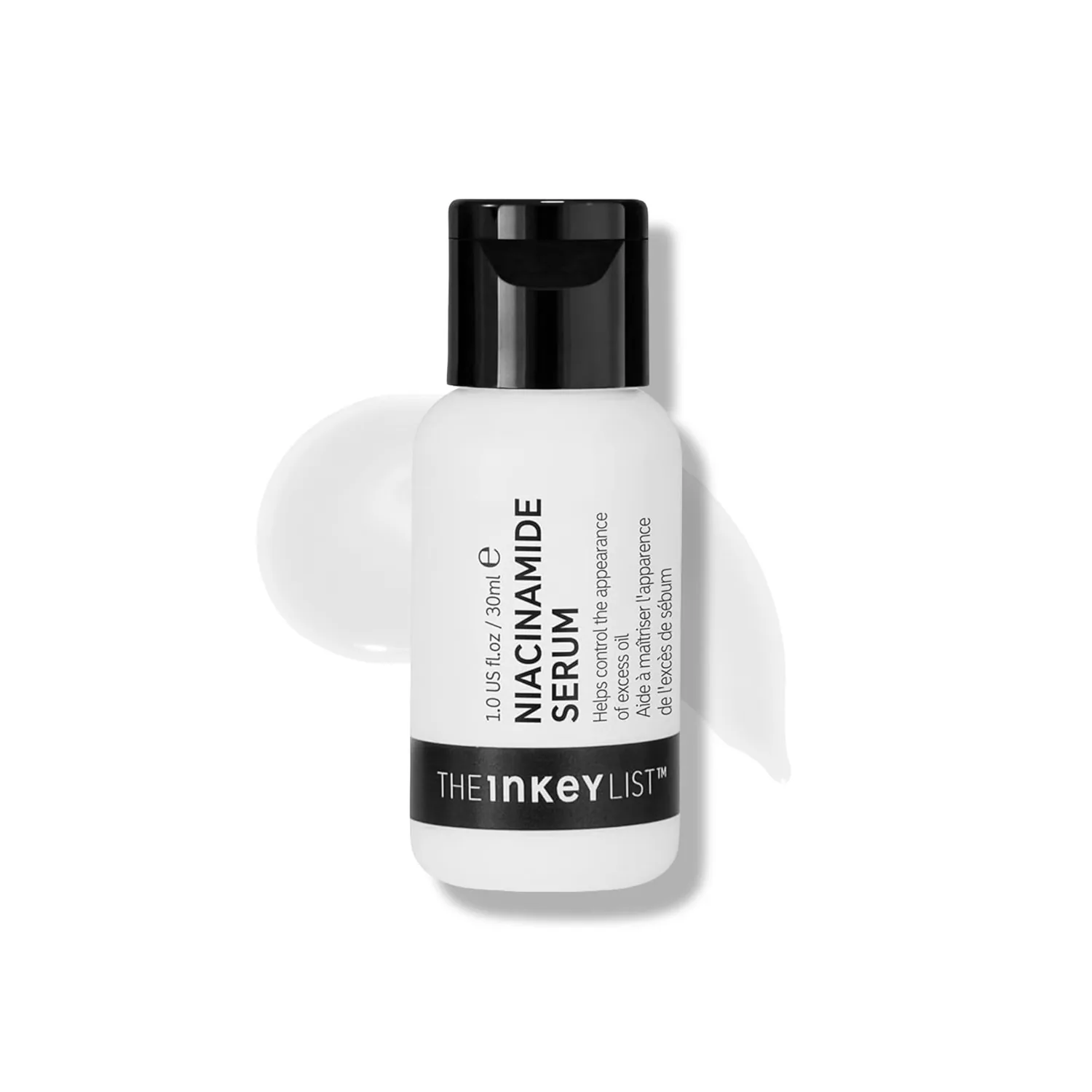
At 10% niacinamide with added hyaluronic acid, panthenol, and squalane, this is consistently described (by the brand and by reviewers) as fast-absorbing and non-sticky. A stock note: at the time of this research, the brand’s own single 30 mL bottle showed as out of stock directly on theinkeylist.com, while a “Duo” two-pack was in stock there; separately, Kohl’s lists the single 30 mL bottle with an active add-to-cart button (no explicit “in stock” label, but no out-of-stock notice either), so a single bottle does appear purchasable through that retailer even when the brand’s own site is sold out. Check both before assuming availability. The brand advises against combining it with high-strength vitamin C or exfoliating acids (AHA/BHA/PHA) in the same routine. View on Amazon (paid link)
7. Best for Oily Skin with Uneven Tone: Paula’s Choice 10% Niacinamide Booster
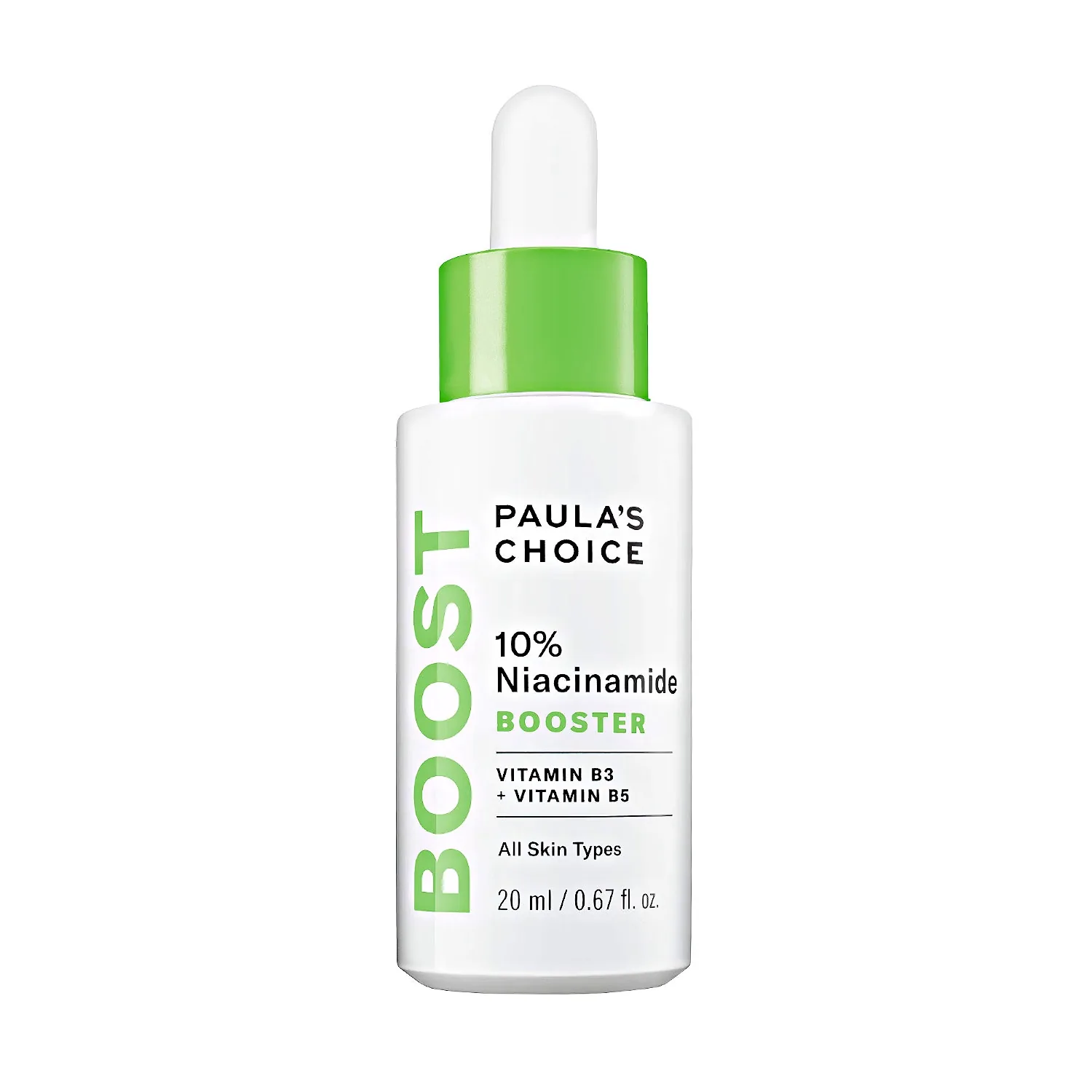
This is a “booster,” not a conventional stand-alone serum — Paula’s Choice markets it as a concentrated liquid meant to be used alone or mixed into another serum or moisturizer, in a small 20 mL size. We kept it in this comparison (rather than dropping it from a “serums” roundup) because several of the competitor buying guides we reviewed also include booster-format products alongside conventional serums, and it remains the only product in our research that pairs niacinamide with a vitamin C derivative (ascorbyl glucoside) and licorice root extract — a genuinely different angle from the other six picks, aimed at uneven tone alongside oiliness. At 20 mL, this is the smallest size in our comparison and — per Sephora’s official listing, since we could not reach Paula’s Choice’s own US product page directly — a noticeably higher price per milliliter than every other pick here; check the Amazon link for current pricing rather than relying on a price figure in this article. If the booster format or price point doesn’t appeal to you, First Aid Beauty’s Dark Spot Serum with Niacinamide is a possible alternate for uneven tone, though its niacinamide percentage isn’t disclosed by the brand — we did not find a better-verified, non-booster alternative that specifically pairs niacinamide with a tone-evening ingredient. View on Amazon (paid link)
How to Choose the Right One for Your Skin
Start with how your oily skin actually behaves, not just the highest percentage on the shelf:
- If you’re oily but not particularly reactive or breakout-prone: Naturium (12%) or The Ordinary (10%) are reasonable starting points — both pair niacinamide with zinc PCA. The Ordinary’s 10% falls within the range this article’s tolerability sources actually tested; Naturium’s 12% is a step above that range — commercially available, but a concentration the tolerability studies cited in this article do not specifically establish as well-tolerated.
- If your skin is oily AND acne-prone: Neutrogena’s fragrance-free formula is built with that combination in mind, and is easy to find in stores if you want to compare it in person first.
- If your skin is oily AND easily irritated, flushed, or reactive: start lower, not higher. Good Molecules’ 5% formula is the clearest low-concentration option here (confirm current stock before ordering, same as any pick).
- If you specifically want a stronger-feeling formula and your skin has tolerated niacinamide well before: COSRX’s 15% is the pick — but patch-test it first, and don’t expect it to control oil more effectively than a lower percentage just because the number is higher.
- If uneven tone bothers you as much as oiliness: Paula’s Choice’s booster format adds a vitamin C derivative into the mix, at a premium price and in a mix-in format rather than a stand-alone serum.
- If you’re new to niacinamide entirely: The Ordinary is the easiest, lowest-commitment way to find out how your skin responds before spending more (check INKEY List’s current stock if you’d rather start there).
If you’re not sure your skin actually qualifies as oily versus combination or dehydrated-but-oily-feeling, AvaFitCare’s guide to determining your skin type at home is a useful first stop before buying anything.
What Percentage of Niacinamide Is Best for Oily Skin?
This is the question nearly every competing buying guide gestures at but doesn’t actually answer, and it’s the most important thing to get right in this article. Here’s what the evidence shows, plainly: most of the human clinical research connecting niacinamide to reduced oiliness used concentrations of 2% to 5%, typically in creams, gels, or lotion-style moisturizers — not the thinner, higher-concentration aqueous serums that dominate the commercial market at 10%, 12%, or 15% today. That formulation difference matters on top of the concentration difference: a cream and a serum deliver an ingredient to skin differently, so results from one format don’t automatically carry over to the other.
A 2006 study found that 2% niacinamide reduced a measure of facial oil production in a Japanese subject group over 4 weeks, and reduced a related but different surface-oil measure in a Caucasian subject group over 6 weeks (the oil-production measure specifically did not reach significance in that second group). A 2013 trial found that, overall, 4% topical nicotinamide performed comparably to a common prescription-strength acne antibiotic (1% clindamycin) — not better than it, overall — while a subgroup analysis found nicotinamide specifically more effective among participants with oily skin, and clindamycin specifically more effective among those with non-oily skin. A study first published online in 2019 (appearing in the 2020 print issue of the International Journal of Cosmetic Science) found that a 4% niacinamide-containing biomimetic lamellar moisturizer — not a serum — improved hydration and modestly reduced blemish count over 8 weeks as part of a daily skincare regimen in women with oily, blemish-prone skin; its own authors describe this as a “proof-of-concept” result, not confirmatory evidence. A 2024 mechanistic review of the broader literature states plainly that the exact biological mechanism by which niacinamide affects sebum is still unknown — niacinamide doesn’t act through the same well-established pathway used by niacin (a related but chemically different molecule), and the review’s authors describe the sebum effect as something that “needs more study,” not a settled fact.
None of this research establishes that a 10–15% serum works better, faster, or more reliably than a well-formulated 2–5% product. There is no published dose-response data showing that more niacinamide produces proportionally more oil control — and no study reviewed for this article tested a 10% or higher concentration specifically for its effect on sebum production. What the research does support is that niacinamide is generally well-tolerated at concentrations up to 10% (one review found no irritation at up to 5% in a 21-day test, and no stinging at up to 10% specifically) — but that’s where this specific evidence stops. It doesn’t extend to the 12% or 15% concentrations sold in some commercial serums (including two of the seven picks below); those higher concentrations are commercially available, but the tolerability studies cited in this article do not specifically establish tolerability at 12% or 15%. Tolerability and effectiveness are different questions regardless. Treat any specific claim that a particular commercial percentage “controls oil better” as going beyond what’s actually been tested, whichever brand makes it.
In practical terms: 2–5% is the concentration range most represented in the clinical evidence described above — not a proven ideal or universally best concentration, just the range most directly reflected in the studies reviewed here. If you want your choice to track that evidence as closely as possible, it’s the range to start with. Commercial serums at 10%, 12%, or 15% — including several of the picks in this comparison — are widely available and a perfectly reasonable choice for plenty of people; plenty of readers will prefer one for reasons like price, texture, or what’s easy to find in stores. The tolerability evidence cited in this article specifically covers up to 10% — it doesn’t establish that 12% or 15% is equally well-tolerated, even though both are commonly sold and used. Separately, choosing a higher percentage also isn’t a step toward a stronger demonstrated effect on oil control, since that hasn’t actually been tested in the research reviewed here. There’s no single percentage — in the 2–5% range or above it — that this evidence identifies as the one “best” choice; treat concentration as one factor among several (price, format, supporting ingredients, how your own skin tends to react), not the deciding one.
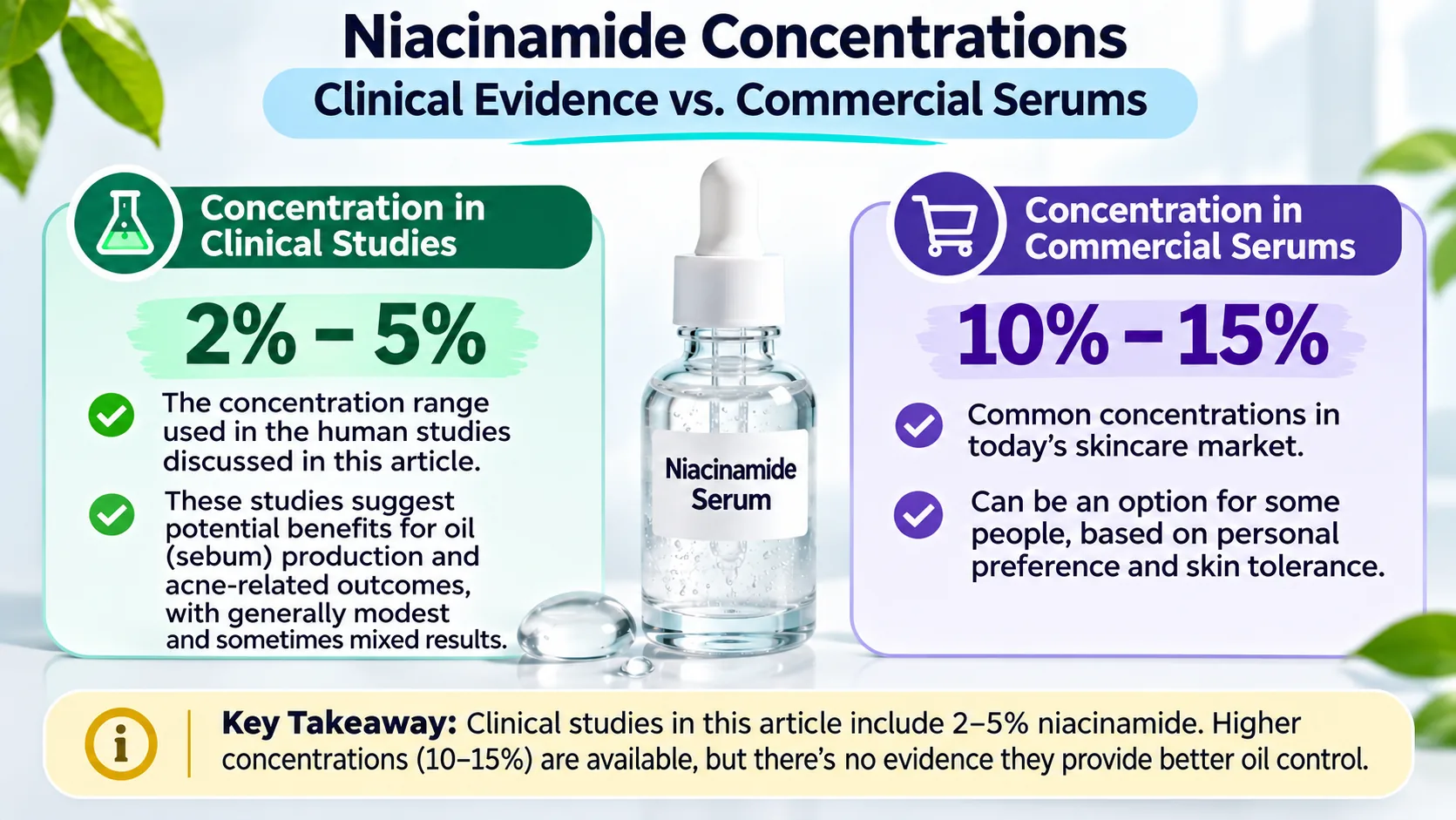
2–5% is the concentration range most represented in the clinical research cited in this article — not necessarily studies that specifically recruited subjects diagnosed with “oily skin,” but research measuring facial oil/sebum output or acne severity, some of it in general or acne-affected populations rather than an oily-skin-specific one. Reported benefits at that range are modest and not fully consistent: one of the underlying studies found a significant oil-production reduction in one subject group but not in a second group tested at the same concentration. Commercial serums at 10–15% are widely available and can be a reasonable choice based on personal preference and tolerance, but no study reviewed for this article tested those higher concentrations for their effect on oil control, so “higher” should not be read as “more effective here.”
Does Niacinamide Actually Control Oil?
The honest answer is: modestly, for some people, over time — not dramatically, and not for everyone. Multiple studies, mostly using creams, gels, or moisturizers rather than serums, have found statistically significant reductions in measures of facial oiliness or acne/blemish severity after 4 to 12 weeks of consistent use. That’s a real, repeated pattern across more than one study population, but it is not evidence that niacinamide “shuts off” oil production, permanently changes how much oil your skin makes, shrinks pores, or cures acne on its own — no research reviewed for this article supports claims anywhere near that strong, and none of it was run on the thin, high-concentration aqueous serums most readers will actually be buying.
Several of the products above pair niacinamide with zinc PCA, an ingredient that shows up in Naturium, The Ordinary, and COSRX’s formulas specifically (Good Molecules’ formula instead uses ectoin). Zinc PCA is commonly included in oil-control formulas for its astringent, oil-absorbing properties, and some formulators pair it with niacinamide on that basis — but we did not find a study that directly tested niacinamide-plus-zinc-PCA against niacinamide alone for oil control. Any benefit from pairing them is a formulation rationale, not an independently proven synergy, and should be understood that way rather than as a demonstrated added effect.
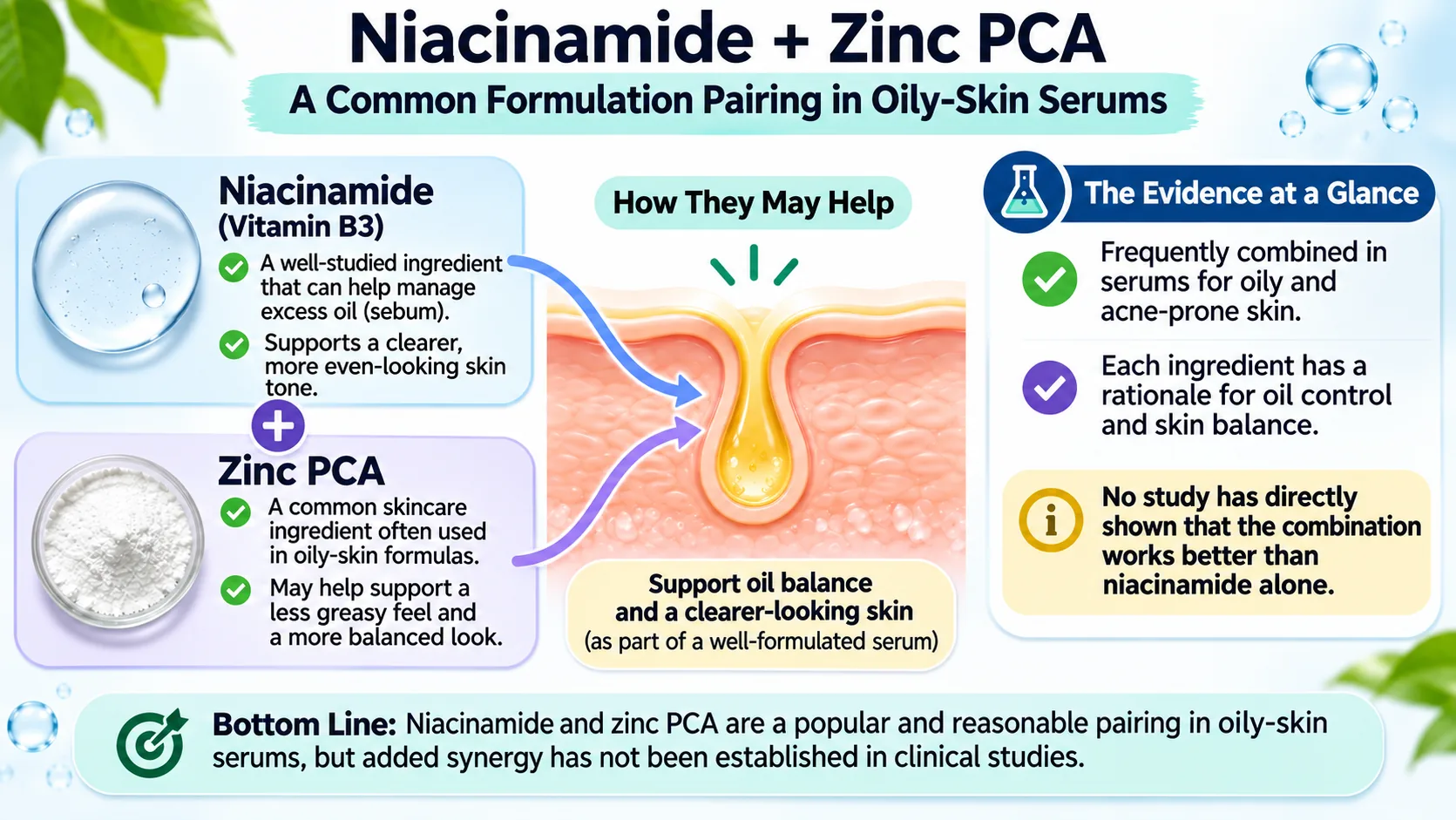
This graphic’s own wording is appropriately hedged: it describes zinc PCA’s inclusion as a common formulation choice that “may help support” a less-greasy look, and states directly that no study has shown the niacinamide-plus-zinc-PCA combination works better than niacinamide alone — consistent with what this article’s own sources support. Treat the pairing as a reasonable, common formulation choice, not a demonstrated synergy.
Can Niacinamide Irritate Oily Skin?
Oily skin is not the same as tough or irritation-proof skin — plenty of people with oily skin also deal with redness, sensitivity, or reactivity, which is exactly why a lower-concentration option like Good Molecules’ 5% formula exists in this comparison. Published tolerability testing has found niacinamide generally well-tolerated at concentrations up to 10%, with one specific test showing no irritation at 5% over 21 days. This specific evidence caps at 10% — it doesn’t extend to the 12% (Naturium) or 15% (COSRX) formulas in this comparison; those concentrations are commercially available, but the tolerability studies cited in this article do not specifically establish tolerability at 12% or 15%. That’s a safety finding for up to 10%, not a guarantee at any concentration — any new active ingredient can cause redness, stinging, or breakouts in an individual person regardless of what the average study participant experienced.
A simple way to reduce your risk: patch-test a new niacinamide serum on a small area (like your inner forearm or behind your ear) for a few days before applying it to your whole face, and introduce it into your routine on its own before adding other new active ingredients at the same time. If you’re also using a retinoid, an exfoliating acid (AHA/BHA), or a vitamin C serum, check the specific product’s guidance — several brands in this comparison (The Ordinary, The INKEY List, COSRX) advise against combining their niacinamide formula with vitamin C in the same routine, while Naturium’s own FAQ says the opposite is fine with their formula. These aren’t universal rules; they’re brand-specific guidance that can differ even between similar products.
How to Use a Niacinamide Serum for Oily Skin
The basics are simple and consistent across the products above: apply a thin layer to clean, dry skin, after cleansing and before moisturizer, once or twice daily. A few oily-skin-specific notes:
- Start with once a day. Introducing it alongside your existing routine, rather than replacing multiple steps at once, makes it easier to tell what’s actually working (or not).
- Niacinamide isn’t a substitute for an oil-control moisturizer. It’s a serum step, not a mattifying finisher — many people still want a lightweight, oil-free moisturizer on top.
- It doesn’t increase sun sensitivity, so it can be used in a morning routine under sunscreen without extra precaution on that specific point.
- Give it time before judging results. The clinical research behind niacinamide’s effect on oiliness measured outcomes over 4 to 12 weeks of consistent use, not days.
For a complete, step-by-step walkthrough of where niacinamide fits into a full skincare routine — including how much to apply, how it works with your cleanser and moisturizer, and which other ingredients pair well with it — see AvaFitCare’s complete guide to niacinamide benefits and how to use it. This article focuses specifically on comparing serums for oily skin; that guide covers the full how-to in depth.
If you’re also managing breakouts specifically, our skincare routine for acne-prone skin covers how an ingredient like niacinamide fits alongside acne-focused actives like salicylic acid.
Frequently Asked Questions
Final Verdict
There’s no scientifically proven “best” niacinamide percentage for oily skin — the clinical evidence clusters at 2% to 5%, while most commercial serums (including several of our picks) sit at 10% or higher, which is a shopper-preference gap, not a settled efficacy question. With that caveat firmly in mind: Naturium Niacinamide Serum 12% Plus Zinc 2% earns our Best Overall pick based on its disclosed ingredient profile, fuller supporting-ingredient list, and sensitive-skin guidance — an editorial judgment about formulation and fit, not a claim that it has been clinically proven to outperform the other six, or that its 12% concentration controls oil more effectively than a lower or higher one. The Ordinary Niacinamide 10% + Zinc 1% remains the simplest, lowest-cost way to try niacinamide for the first time. Readers whose oily skin is also reactive or easily irritated should start with Good Molecules’ 5% formula rather than reaching for the highest percentage available. Whichever you choose, confirm it’s actually in stock before ordering, and give it a full 4 to 12 weeks before judging results — that’s the timeframe the actual clinical evidence covers.