How to Determine Your Skin Type at Home: A Simple Beginner’s Guide
September 17, 2026
If you’ve ever stood in the skincare aisle wondering whether you’re “oily” or “combination,” you’re not alone. Most skincare advice — from cleanser labels to influencer routines — starts with the assumption that you already know your skin type. For a lot of beginners, that’s the part that’s actually confusing.
The good news is that you don’t need special equipment or a dermatology degree to get a reasonably clear picture of how your skin tends to behave. A few minutes of simple observation can tell you a lot. What it can’t do is replace a professional diagnosis if something is actually wrong — and knowing that difference is part of using this information well.
This guide walks through what skin type really means, how to observe your own skin at home, and what to do with that information once you have it.
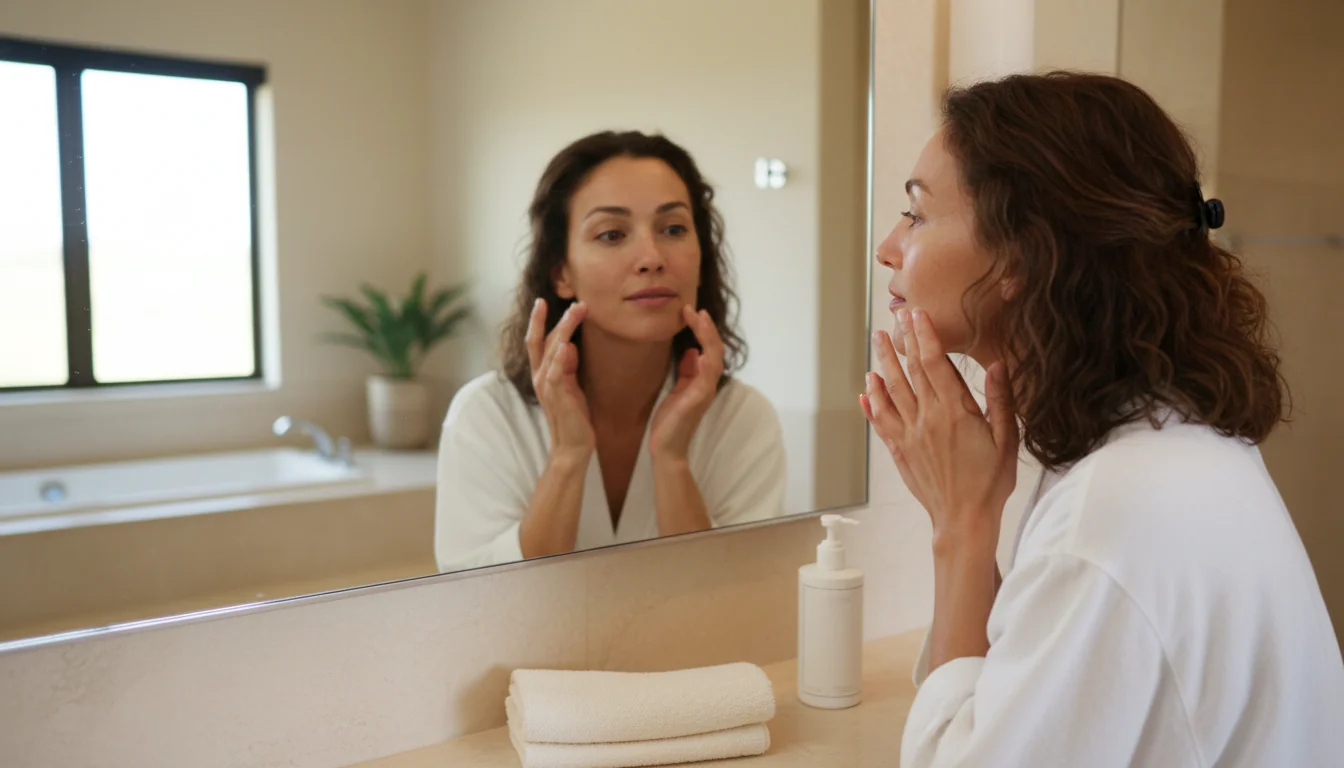
Wash your face with a gentle cleanser, pat dry, and skip other products while you let your skin settle for a bit. Then check different areas: shine across most of your face suggests oily skin; an oily T-zone with drier cheeks suggests combination; tightness or flaking suggests dryness; and comfortable, balanced skin suggests a normal tendency. This is a helpful starting point, not a medical test.
Key Takeaways
Skin type is a practical way of describing how your skin tends to behave, not a fixed biological category.
The five commonly used labels are oily, dry, combination, normal, and sensitive — and they aren’t perfectly separate from each other.
Sensitive skin can overlap with any of the other types; it isn’t its own opposite category.
Dry skin and dehydrated skin are different things, and oily skin can still be dehydrated.
Simple at-home observation and the blotting-sheet method can offer clues, but neither is a diagnostic test.
Your skin’s behavior can shift with weather, age, hormones, and your routine, so it’s worth rechecking occasionally rather than assuming it never changes.
What Does “Skin Type” Actually Mean?
“Skin type” is a shorthand the skincare industry and dermatology both use to describe general tendencies — mainly how much oil (sebum) your skin produces and how well it holds onto water. It’s a useful starting point for choosing products, not a rigid medical diagnosis.
In practice, most people’s skin doesn’t fall neatly into one box all the time. It can behave one way on your forehead and another way on your cheeks, act differently in July than it does in January, and shift as you get older. Thinking of skin type as a general tendency — rather than a permanent label — tends to be more useful and more accurate.
The 5 Common Skin-Type Labels
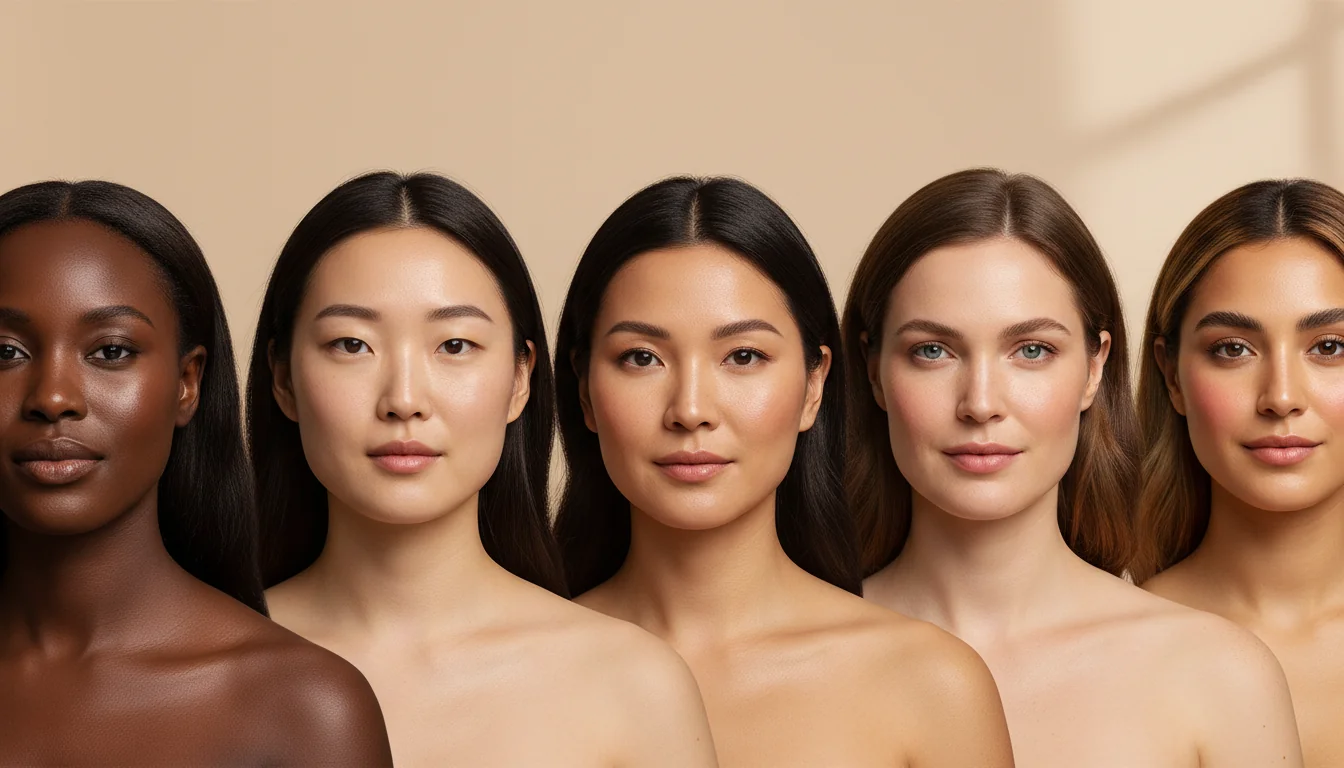
Skincare brands and dermatology resources both commonly describe five general categories. They’re useful for orientation, but none of them is an exact science, and real skin often shows traits from more than one.
Oily Skin
Oily skin produces more sebum than it needs, which can leave the face looking shiny, especially by midday. People with oily skin often notice larger-looking pores, a tendency toward blackheads and breakouts, and makeup that fades faster than expected. The extra oil isn’t a flaw — it’s more sebum production than average, and it genuinely helps protect and lubricate skin.
Dry Skin
Dry skin is generally associated with impaired moisture retention and skin-barrier function, often linked to reduced lipids in the skin’s outer layer. It can feel tight, especially after cleansing, and may look dull, rough, or flaky, with fine lines appearing more noticeable. Dry skin is a skin type rather than a temporary state — though, as covered below, it’s easy to confuse with dehydration, which is different.
Combination Skin
Combination skin describes a mix of tendencies on the same face — most often an oilier T-zone (forehead, nose, and chin) alongside cheeks that are closer to normal or dry. It’s a common pattern, and part of why a one-size-fits-all product doesn’t always feel right.
Normal or Balanced Skin
Normal, or balanced, skin doesn’t lean strongly toward oily or dry. It tends to feel comfortable without much visible shine or tightness. “Normal” isn’t a judgment on other skin types — it’s just the label used when neither oiliness nor dryness is pronounced, and normal skin can still become irritated or reactive under the wrong conditions.
Sensitive Skin
Sensitive skin describes skin that reacts more easily than average to products, fragrances, weather, or friction — with symptoms like stinging, burning, itching, redness, or dryness. According to DermNet NZ, sensitive skin is best understood as a lay term describing this kind of reactivity rather than a formal medical diagnosis.
This matters because sensitivity isn’t the opposite of oily, dry, combination, or normal skin — it can show up alongside any of them. You can have oily and sensitive skin, dry and sensitive skin, or combination and sensitive skin. Treat reactivity as its own factor when choosing products, rather than assuming it only applies to one skin type.
How to Determine Your Skin Type at Home
There’s no perfect at-home test, but a simple observation method can give you a reasonably useful starting point. Here’s a straightforward version:
1
Wash your face
with a gentle, non-stripping cleanser. Avoid using a cleanser that you already know leaves your skin feeling unusually tight, dry, or irritated, since that could temporarily affect what you observe.
2
Pat your skin dry
with a clean towel rather than rubbing.
3
Don’t apply any other products
— no moisturizer, serum, or sunscreen yet.
4
Give your skin some time to settle
— a practical observation window, not a fixed lab timing — so you’re not just observing how it looks immediately after water contact.
5
Observe how different areas of your face feel and look
, paying attention to your forehead, nose, chin, and cheeks separately rather than judging your whole face at once.
Here’s roughly what different observations tend to suggest:
What You Notice
Likely Tendency
Shiny or oily across most of your face
An oily tendency
Oily T-zone but relatively normal or drier cheeks
A combination tendency
Tight, rough, flaky, or uncomfortable skin
A dry tendency
Generally comfortable, without noticeable oiliness or dryness
A normal or balanced tendency
Frequent stinging, redness, or reactivity, regardless of oil level
Sensitivity may also be present
This is a practical observation exercise, not a medical diagnostic test. It’s meant to help you choose a reasonable starting routine, not to confirm or rule out a skin condition.
This table is meant as a general reference, not a diagnostic tool — plenty of people notice a mix of traits from more than one row.
Can You Use Blotting Paper to Determine Your Skin Type?
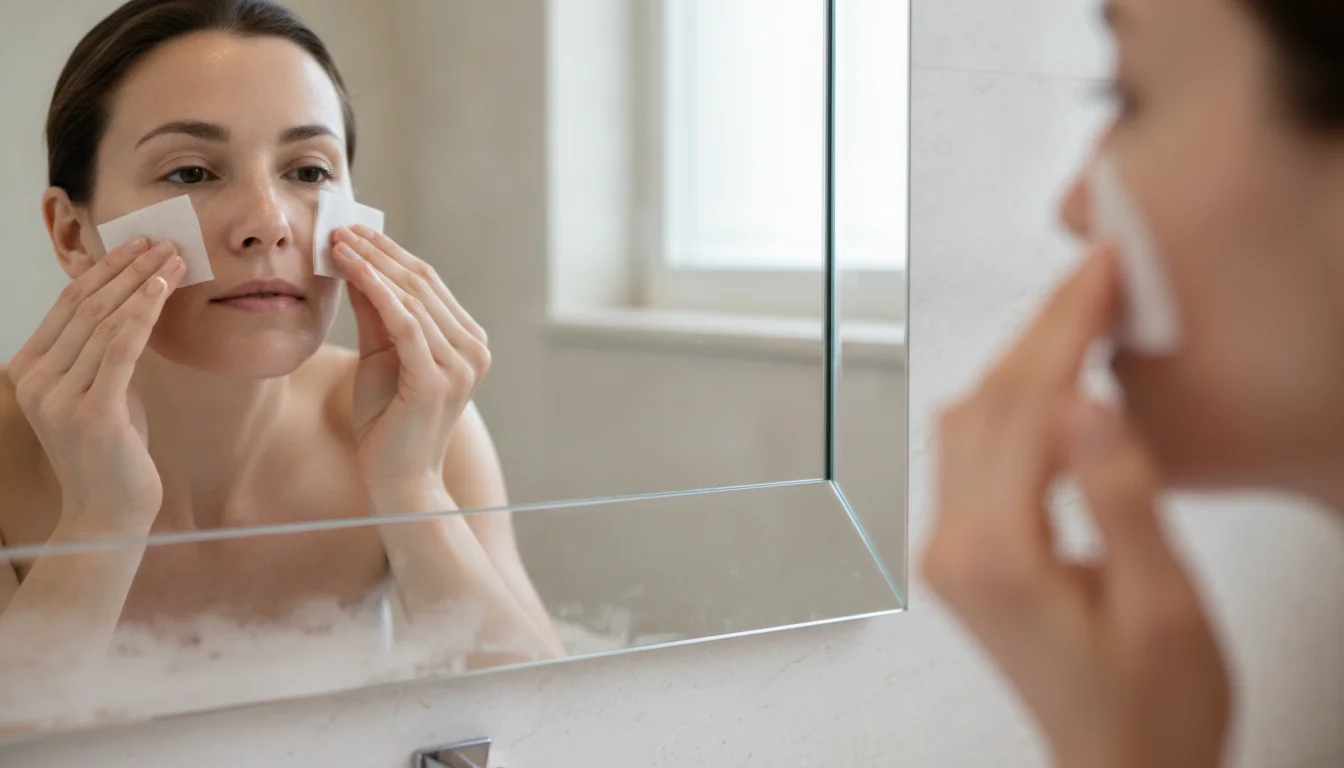
Blotting sheets are a popular at-home method: you press a small sheet of absorbent paper against different areas of your face — typically the forehead, nose, and cheeks — and see how much oil transfers, and where.
It can offer a rough, informal clue about surface oiliness at that specific moment. If the paper picks up a lot of oil across your whole face, that’s consistent with an oily tendency; if it picks up oil mainly from your T-zone, that’s more consistent with combination skin; if it barely picks up any oil at all, that leans normal or dry.
That said, it isn’t a validated medical diagnostic tool, and a few things can throw off the result:
Time of day — oil builds up over hours, so morning versus late-afternoon testing can give different results.
Recent cleansing — testing right after washing understates how oily your skin normally gets.
Products already on your skin — moisturizer, sunscreen, and makeup can affect how much oil the paper picks up.
Environment and activity — heat, humidity, and sweating can temporarily increase surface oil.
Cleveland Clinic notes that blotting papers aren’t actually necessary to get a sense of your skin type — simply paying attention to how your skin feels after cleansing can be just as informative. Treat blotting paper as one casual data point among several, not a conclusive test.
Dry Skin vs. Dehydrated Skin: Don’t Confuse the Two
These two terms get used interchangeably in everyday conversation, but they describe different things, and mixing them up can lead to choosing the wrong products.
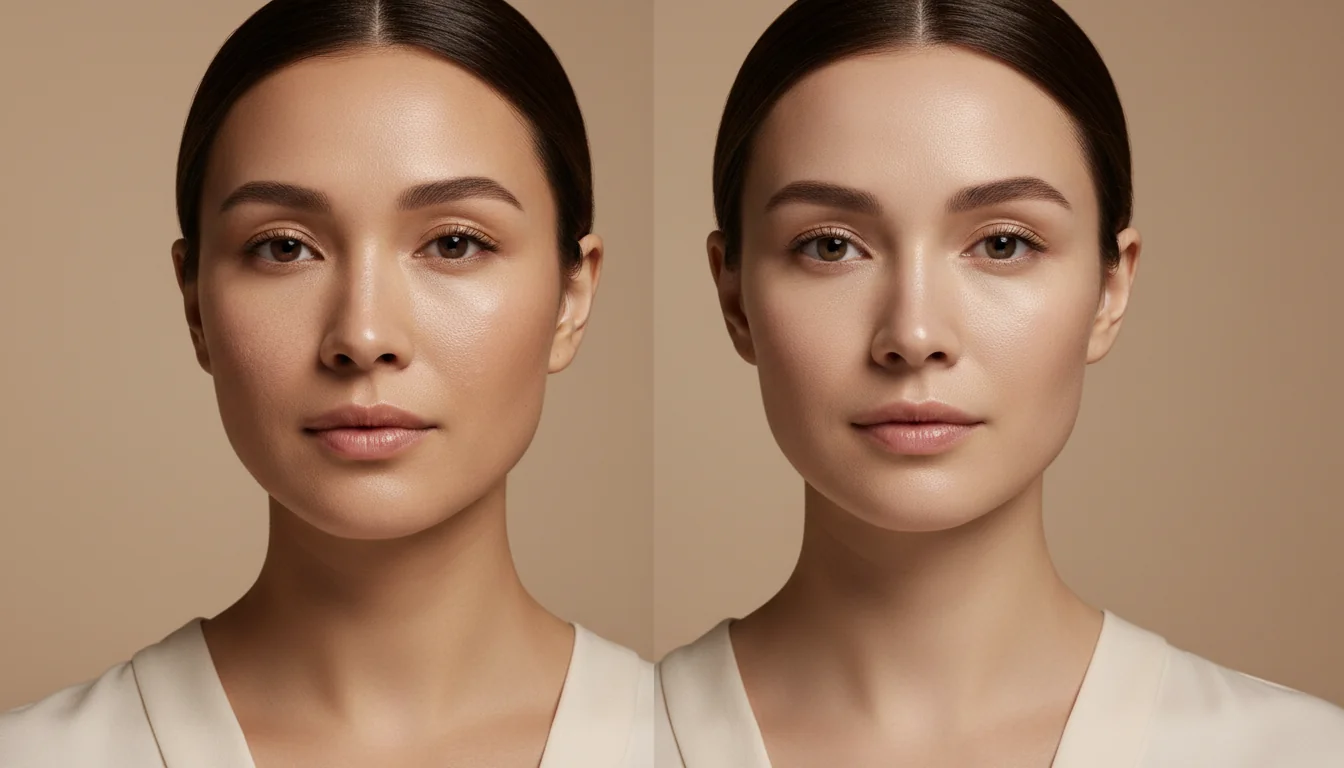
Dry skin is generally treated as a skin type. According to DermNet NZ, it involves both a reduction in the skin’s natural lipids and a reduced capacity to hold onto water — a combined barrier and moisture-retention issue, not simply “not enough oil” — which is part of why it can look flaky, feel rough, and show fine lines more easily.
Dehydrated skin is a term commonly used in skincare, rather than a formal medical diagnosis, to describe inadequate water in the outer layer of skin. It can occur alongside oily, combination, dry, or normal tendencies — including in people whose skin produces plenty of oil. Dehydration is often associated with a temporary dull, tired, or “crepey” look, and skin that feels tight but isn’t necessarily flaky the way dry skin is.
Yes. Oiliness is about how much sebum your skin produces; hydration is about how much water your skin is holding onto. These are related to your skin’s overall balance, but they aren’t the same measurement, and one doesn’t rule out the other.
Oily skin can also be dehydrated because sebum production and water content are different aspects of skin function. Surface oiliness and an inadequately hydrated stratum corneum (the skin’s outermost layer) can coexist without one causing the other. If your skin feels oily but also tight, dull, or uncomfortable, dehydration (rather than your baseline skin type) may be part of what’s going on, and a lightweight, hydrating product can help without necessarily adding more oil-controlling ingredients.
Can Your Skin Type Change?
Skin isn’t static, and it’s normal for the way it behaves to shift over time. A few common factors:
Weather and seasons — humidity, temperature, and indoor heating or AC affect oil production and water loss.
Age — oil production commonly changes with age, and skin’s ability to retain moisture can decline over time.
Hormonal changes — puberty, the menstrual cycle, pregnancy, and menopause can all influence oil production.
Environment — climate, pollution, and altitude can affect how skin behaves day to day.
Skincare habits — harsh cleansers, over-exfoliation, or skipping moisturizer can make skin behave differently than its underlying tendency.
Certain medications — some list dry skin or changes in oil production as a known effect, so mention any new symptoms to a doctor if they coincide with a prescription change.
None of this means skin type is meaningless — it just means it’s worth rechecking your assumptions occasionally rather than treating a label you settled on years ago as permanent.
Your Skin Type May Be Different in Summer and Winter
It’s common for skin to feel oilier in the summer and drier in the winter, largely due to humidity and temperature changes. This doesn’t necessarily mean your fundamental skin type flips twice a year — for most people, it means the same underlying tendency shows up differently depending on conditions. Someone with naturally oily skin might feel less oily in a cold, dry winter, while someone with normal skin might notice more dryness in the same conditions.
If you find your routine stops working as well when the seasons change, that’s a reasonable cue to adjust — a slightly richer moisturizer in winter, for example, or a lighter one in summer — rather than a sign that something is wrong.
What If Your Skin Doesn’t Fit One Category?
For a lot of people, it doesn’t — and that’s normal. Your forehead might behave differently than your cheeks. Your skin might be oily in summer and closer to normal in winter. You might have oily skin that also gets irritated easily.
Rather than trying to force your skin into exactly one label, it can be more useful to think in terms of a few separate questions: How much oil does my skin tend to produce? Does it hold onto water well? Does it react easily to products or environmental changes? Answering those separately, rather than looking for one single word that describes everything, usually leads to a more workable routine.
What Skincare Routine Should You Use for Your Skin Type?
Once you have a general sense of your skin’s tendencies, the next step is choosing a routine that fits — without overcomplicating it. Ava Fit Care has dedicated, in-depth routines for each type; here’s a brief starting point for each.
Oily skin generally does well with a gentle, non-stripping cleanser and lightweight, non-comedogenic moisturizer — not skipping moisturizer or over-cleansing. Full guide: skincare routine for oily skin.
Dry skin typically benefits from a creamy, non-foaming cleanser and a richer, barrier-supporting moisturizer. Full guide: skincare routine for dry skin.
Combination skin often does well with a balanced, gentle routine as a base, adjusting texture by area rather than switching products entirely. Full guide: skincare routine for combination skin.
Sensitive skin benefits from simple, fragrance-free, minimal-ingredient products introduced one at a time, with patch testing. Full guide: skincare routine for sensitive skin.
Normal skin generally needs the fewest adjustments — a basic cleanser, moisturizer, and daily sunscreen is often enough. Full guide: skincare routine for normal skin.
If you’re building a routine completely from scratch, our skincare routine for beginners is a good place to start regardless of skin type.
Common Mistakes When Trying to Identify Your Skin Type
1
Judging your skin immediately after washing
Skin often feels tighter right after cleansing, which can make it seem drier than it actually is.
2
Using a harsh cleanser before observing
A stripping cleanser can temporarily disrupt your skin’s normal behavior, skewing the result.
3
Assuming acne automatically means oily skin
Breakouts can happen on dry, combination, or sensitive skin too.
4
Assuming tight skin always means dry skin
Tightness can also signal dehydration, which needs different products.
5
Confusing dehydration with dry skin
The two can overlap, but understanding the distinction can help you choose a routine that addresses hydration and barrier support appropriately.
6
Relying on pore size alone
Pore size is influenced by genetics, sun exposure, and age, not just oiliness.
7
Copying someone else’s routine
A routine built for a friend or influencer’s skin may not suit yours.
8
Treating sensitivity as mutually exclusive with other skin types
It can exist alongside oily, dry, combination, or normal skin.
When Should You See a Dermatologist?
Most people can get a reasonable sense of their skin’s general tendencies through simple observation. That said, some symptoms go beyond what a “skin type” label explains. Persistent redness, itching, burning, cracking, significant peeling, rash-like changes, or ongoing acne can have several causes and may warrant evaluation by a board-certified dermatologist, who can offer a proper diagnosis rather than trial and error with over-the-counter products.
Simple Skin Type Checklist
I’ve observed my skin without any products on it, not just right after washing.
I’ve checked different areas of my face separately (forehead, nose, chin, cheeks) rather than judging my whole face at once.
I understand that oily, dry, combination, normal, and sensitive are general tendencies, not strict categories.
I know that sensitivity can occur alongside any other skin type.
I can tell the difference between how my skin looks right after cleansing versus after it settles.
I understand dry skin and dehydrated skin are different, and that oily skin can still be dehydrated.
I’m not relying on pore size alone to judge my skin type.
I’ve considered whether weather, hormones, age, or my current routine might be affecting how my skin behaves lately.
I know persistent redness, itching, burning, or unresolved acne is worth a dermatologist visit rather than more guesswork.
Frequently Asked Questions
If your whole face tends to look shiny and feel oily, that points to an oily tendency. If mainly your forehead, nose, and chin are oily while your cheeks feel more normal or dry, that points to combination skin.
Dry skin tends to look flaky, rough, or dull and involves reduced barrier lipids and moisture retention. Dehydrated skin lacks adequate water in the outer skin layer and can feel tight or look dull without necessarily flaking, and it can happen even on oily skin.
Yes. Oil production and water content are related but separate, so oily skin can still lack sufficient hydration.
Yes, to a meaningful extent. Weather, age, hormones, environment, and your skincare routine can all influence how your skin behaves over time.
Yes. Acne can occur on dry, sensitive, or combination skin, not only oily skin, and treating all acne as an oiliness issue can lead to an overly harsh routine.
It’s usually described as a pattern of reactivity rather than a type on its own, and it can occur alongside oily, dry, combination, or normal skin.
It can offer a rough clue about surface oil at that moment, but time of day, recent cleansing, and products on your skin can all affect the result, so it isn’t a reliable stand-alone test.
This is common and doesn’t automatically mean you have dry skin — it can also happen with a harsh cleanser or with dehydration. Giving your skin time to settle before judging it helps avoid a false read.
That’s common, and it’s part of what “combination skin” describes. It can help to think about your forehead, nose, chin, and cheeks somewhat separately when choosing products.
Bottom Line
Figuring out your skin type doesn’t require special tools — a few minutes of unhurried observation, done without products on your skin, is usually enough to get a useful general sense of how your skin behaves. Oily, dry, combination, normal, and sensitive are helpful starting labels, not fixed diagnoses, and it’s completely normal for your skin to show a mix of traits or to shift with the seasons, your age, or your routine. Use what you notice to choose a simple, appropriate routine — and if you’re dealing with persistent redness, irritation, or acne that isn’t responding to the basics, a board-certified dermatologist can offer guidance a self-check can’t.
This article is for educational purposes only and is not a substitute for personalized medical advice, diagnosis, or treatment. If you have persistent, painful, worsening, or otherwise concerning skin symptoms, consider speaking with a board-certified dermatologist or another qualified healthcare professional.
Get New Guides in Your Inbox
No spam, no filler — just new articles as we publish them.