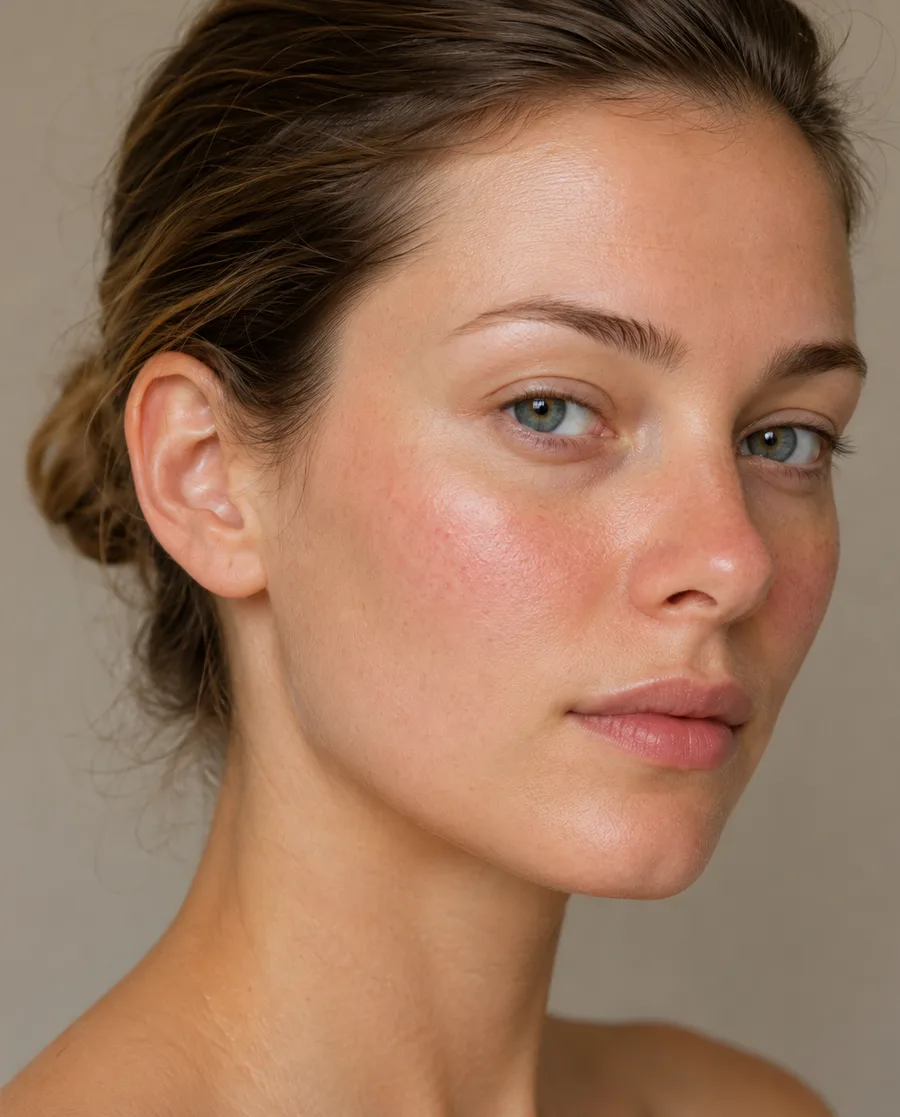
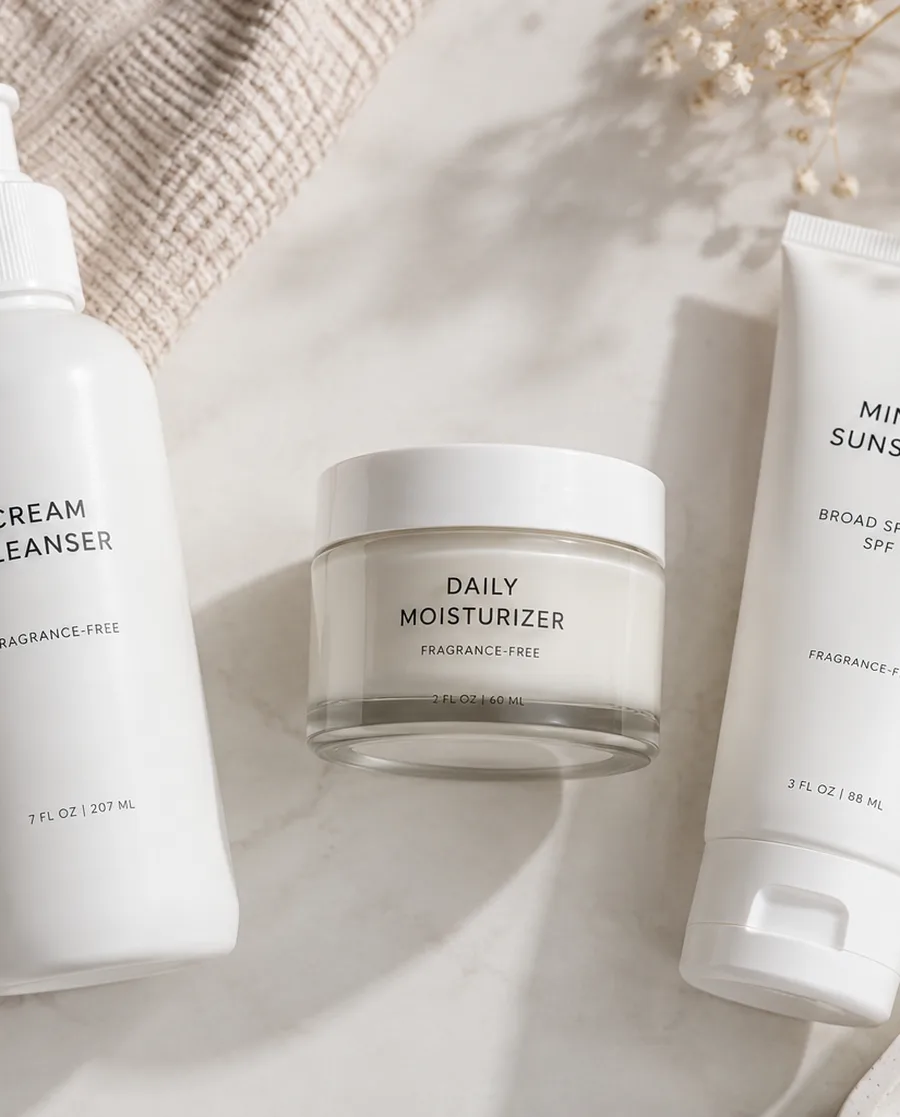
Your skin turns red after a hot shower. A new cleanser leaves your cheeks stinging for twenty minutes. Sunscreen that works fine for your friend makes your skin itch and flush the moment you put it on. If this sounds familiar, you’re probably dealing with sensitive skin, and you already know how frustrating it can be to never quite trust a product before you’ve tried it.
The tricky part about a skincare routine for sensitive skin is that what triggers a reaction in one person does almost nothing to another. Fragrance might be the problem for you, while your sister’s skin reacts to a completely different ingredient — or to nothing in particular, just too many products layered on at once. There’s no single formula that works for everyone.
That’s exactly why simple tends to beat complicated here. Instead of chasing the newest multi-step routine or stacking active ingredients, sensitive skin usually does better with a small number of gentle, well-chosen basics used consistently — and any additions introduced slowly, one at a time, so you can actually tell what’s helping and what isn’t.
This guide walks through what sensitive skin actually means, how to tell if that’s what you’re dealing with, which ingredients tend to be more comfortable, which ones are worth introducing carefully, and how to build a realistic morning and nighttime routine around all of it.
Your Sensitive Skin Routine in 60 Seconds
Morning
Gentle cleanser or rinse
Moisturizer
Broad-spectrum SPF 30+
Night
Gentle cleanser
Moisturizer
Treatments — a targeted serum, an exfoliant, or a retinoid — are optional add-ons, not required steps. Add them one at a time only where your skin actually needs them.
What’s the Best Skincare Routine for Sensitive Skin?
Here’s the short version.
Morning:
Gentle cleanser or rinse
Moisturizer
Broad-spectrum SPF 30+
Night:
Gentle cleanser
Moisturizer
That’s the whole foundation. Treatments — things like a targeted serum, an exfoliant, or a retinoid — are optional add-ons, not required steps. Whether any of them make sense for you depends on your specific skin concerns and how well your skin tolerates new ingredients. For a lot of people with sensitive skin, a consistent cleanse-moisturize-protect routine, done well, is genuinely enough.
What Is Sensitive Skin?
Sensitive skin is a term used to describe skin that reacts more easily than average to certain products, ingredients, or environmental factors. That reaction can show up as redness, stinging, burning, itching, or general discomfort — sometimes right after a product is applied, sometimes building up over repeated use.
It’s worth being clear about one thing: having sensitive skin isn’t a diagnosis of a specific skin disease. It’s a description of how your skin tends to behave, and it can exist on its own or alongside other skin conditions. Triggers vary widely from person to person. Fragrance bothers some people and not others. Certain preservatives, specific acids, harsh cleansers, or even just weather changes can each be the culprit for someone else. There isn’t one universal list of “sensitive skin ingredients to avoid” that applies to everyone equally.
How to Tell If Your Skin Is Sensitive
A few patterns tend to show up if your skin runs sensitive:
New products frequently sting, burn, or tingle, and not in a mild, fleeting way
You notice recurring redness, even without an obvious cause
Cleansing leaves your skin feeling tight, raw, or uncomfortable rather than simply clean
Certain fragranced products, or specific ingredients, reliably cause a reaction
Your skin seems to react to things — weather, fabric, sweat, certain foods — that don’t seem to bother other people’s skin as much
None of this amounts to a medical diagnosis on its own. These are just observations that can help you and, if needed, a dermatologist understand what your skin is dealing with. If your skin is reacting in ways that feel severe, persistent, or confusing, that’s a good reason to get a professional opinion rather than trying to sort it out through trial and error alone.
Sensitive Skin vs. Sensitized Skin
These two terms get used interchangeably, but they describe slightly different things.
Sensitive skin usually refers to a longer-term tendency — skin that has reacted easily for a while, sometimes for as long as you can remember. Sensitized skin, on the other hand, describes a temporary state: skin that has become more reactive than usual because of something specific, like over-exfoliating, using too many active ingredients at once, sun exposure, harsh weather, or a compromised skin barrier.
The practical difference matters because sensitized skin can sometimes improve once the underlying cause is removed and the skin barrier is given time to recover, while sensitive skin is more of an ongoing baseline to manage. That said, this isn’t a rigid medical distinction, and plenty of people experience some overlap between the two. If you’re not sure which describes your situation, treating your skin gently either way is a reasonable starting point.
Essential Products for Sensitive Skin
Gentle Cleanser
A cleanser for sensitive skin needs to do its job — removing dirt, oil, sweat, and product buildup — without leaving your skin feeling stripped, tight, or raw afterward. Look for gentle, non-foaming or low-foaming formulas, since heavy lathering cleansers often rely on surfactants that can be more irritating for reactive skin. Fragrance-free options are worth prioritizing, since added scent is one of the more common triggers people report.
Cream or lotion cleansers tend to be a comfortable starting point for a lot of people with sensitive skin, though this isn’t universal — some people do fine with a gentle gel formula instead. The main thing to watch for is how your skin feels a few minutes after rinsing. If it feels tight, dry, or uncomfortable, that’s usually a sign the cleanser is too harsh for your skin, regardless of what the label promises.
As an Amazon Associate I earn from qualifying purchases.
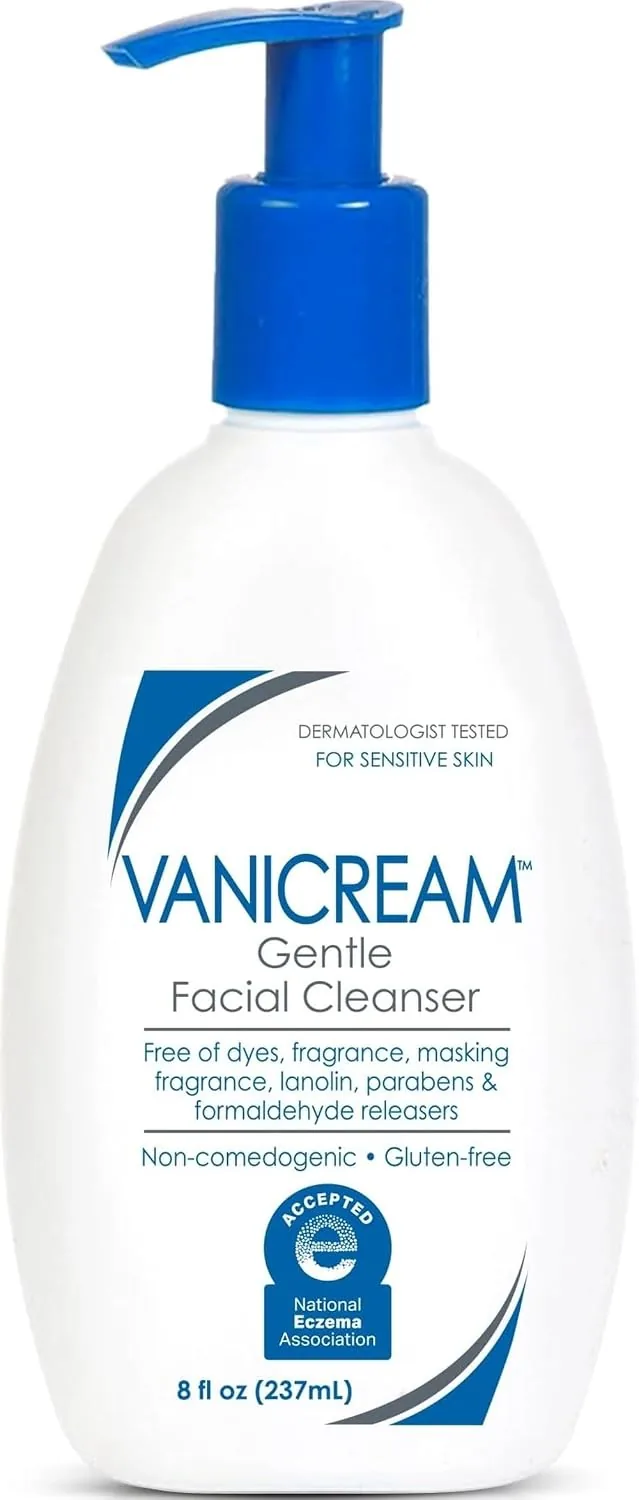
One option to consider is the Vanicream Gentle Facial Cleanser — a fragrance-free, low-foaming formula that may be a comfortable starting point for sensitive skin. As always, individual tolerance varies, so it can help to patch test before adding it to your full routine.
Moisturizer plays a genuinely important role for sensitive skin, since a well-supported skin barrier tends to be more resilient against irritation. What counts as the “right” moisturizer varies by individual — some people with sensitive skin do best with a simple, minimal-ingredient formula, while others need something a bit richer depending on how dry or reactive their skin runs.
Fragrance-free formulas are generally worth prioritizing here as well. Ingredients like ceramides and glycerin are commonly recommended because they tend to support hydration and the skin barrier without a long list of potentially irritating additives. As with cleansers, paying attention to how your skin actually responds matters more than following a generic recommendation.
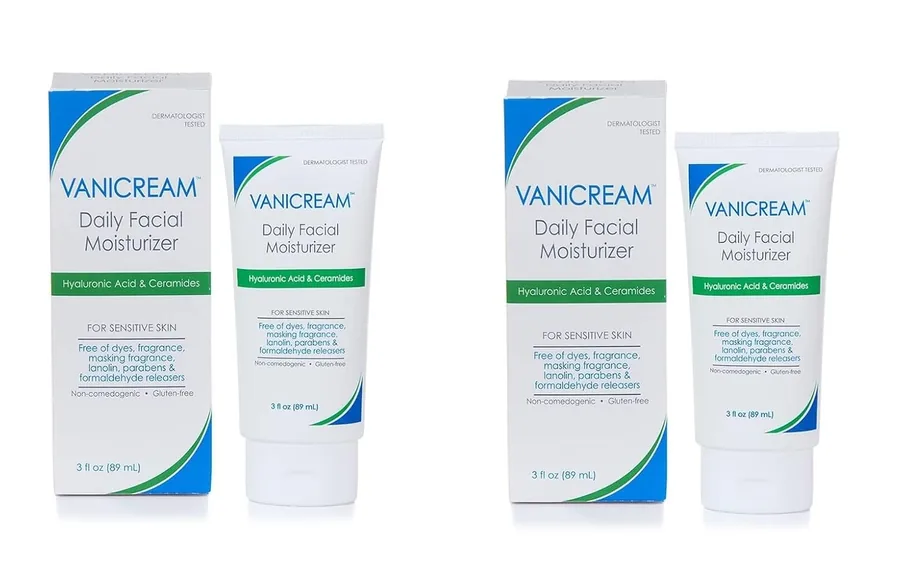
For a simple routine, you might consider the Vanicream Daily Facial Moisturizer — a fragrance-free, minimal-ingredient formula that can be an option for supporting the skin barrier without unnecessary additives.
Daily sunscreen matters for everyone, including people with sensitive skin — though finding a comfortable formula can take some trial and error. Look for a broad-spectrum sunscreen with SPF 30 or higher. Some people with sensitive skin find mineral formulas more comfortable, while others tolerate chemical sunscreen formulas well. The best choice depends on the individual formula and how your skin responds.
Fragrance-free sunscreens are worth seeking out as well. If one sunscreen consistently causes stinging or breakouts, that doesn’t mean sunscreen itself is the problem — it usually means that particular formula isn’t the right match, and trying a different one is often worth it rather than skipping sun protection altogether.
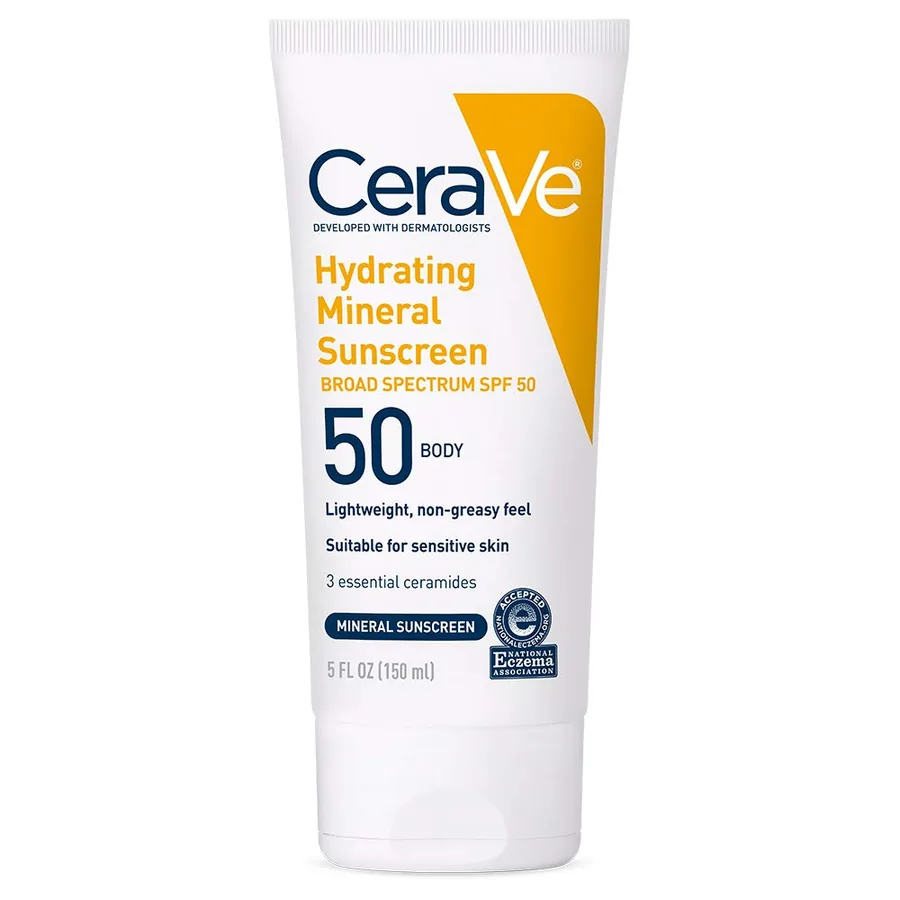
An example is the CeraVe Hydrating Mineral Sunscreen Broad Spectrum SPF 50 — a fragrance-free, mineral-based formula that can be worth trying first if your skin tends to react to chemical filters.
What they are: Lipids that occur naturally in the skin and play a role in supporting its outer barrier.
Why they may help: A well-supported skin barrier may be more resistant to irritation and moisture loss, which can be particularly relevant for sensitive skin.
How they fit into a routine: Commonly found in moisturizers; typically used daily, morning and night.
Caution: Generally well tolerated, though as with any ingredient, individual reactions can vary.
Glycerin
What it is: A humectant that draws water into the skin.
Why it may help: Glycerin is widely used in gentle formulas because it hydrates effectively without the irritation potential of some other ingredients.
How it fits into a routine: Found in cleansers, moisturizers, and some serums; works well applied to slightly damp skin.
Caution: Generally well tolerated, though very high concentrations in certain formulas may feel different depending on your skin and the climate you’re in.
Hyaluronic Acid
What it is: A humectant naturally found in the skin, known for its ability to hold a significant amount of water.
Why it may help: May add hydration without necessarily introducing potentially irritating ingredients, which can make it a reasonable option for sensitive skin.
How it fits into a routine: Apply to damp skin, then follow with a moisturizer to help lock in hydration.
Caution: If your skin feels dry or tight after using it, follow with a moisturizer rather than using it alone.
Panthenol
What it is: A form of provitamin B5 commonly used in skincare formulas.
Why it may help: Often included in products aimed at supporting comfort and hydration, and generally considered gentle.
How it fits into a routine: Commonly found in moisturizers and some serums; typically used once or twice daily.
Caution: Generally well tolerated, though individual sensitivities can still vary.
Colloidal Oatmeal
What it is: Finely ground oats, recognized by the FDA as a skin-protectant ingredient.
Why it may help: Often used in formulas aimed at soothing and comfort, and it’s a fairly well-established option for sensitive or easily irritated skin.
How it fits into a routine: Found in some cleansers and moisturizers marketed toward sensitive skin.
Caution: People with an oat allergy should avoid it, and as with any ingredient, individual reactions can still occur.
Ingredients and Products to Be Cautious With
Some ingredients are more likely to cause irritation for sensitive skin, though this doesn’t mean they’re automatically harmful to everyone:
Fragrance — including “natural” fragrance — may irritate some people, even in small amounts.
Essential oils — often used for scent, these may irritate some people the same way synthetic fragrance can.
Strong exfoliating acids — high concentrations of AHAs or BHAs may be too much for sensitive skin, particularly when used frequently.
High-strength active ingredients — potent retinoids, strong vitamin C formulas, and similar actives may cause more noticeable irritation for some people, especially when introduced too quickly.
Anything that repeatedly causes burning or stinging — occasional mild tingling with certain actives can be normal, but a product that consistently burns or stings is generally worth discontinuing, regardless of its ingredient list.
None of this means these ingredients are off-limits forever. Plenty of people with sensitive skin do eventually tolerate low concentrations of certain actives when introduced slowly. The point is simply to pay attention and not assume a product is safe just because it’s popular or well-reviewed.
Morning Skincare Routine for Sensitive Skin
Step 1 — Gentle cleanse or rinse. Some people with sensitive skin do fine with just a water rinse in the morning, especially if their skin doesn’t build up much oil overnight. Others prefer a gentle cleanser. Either can work.
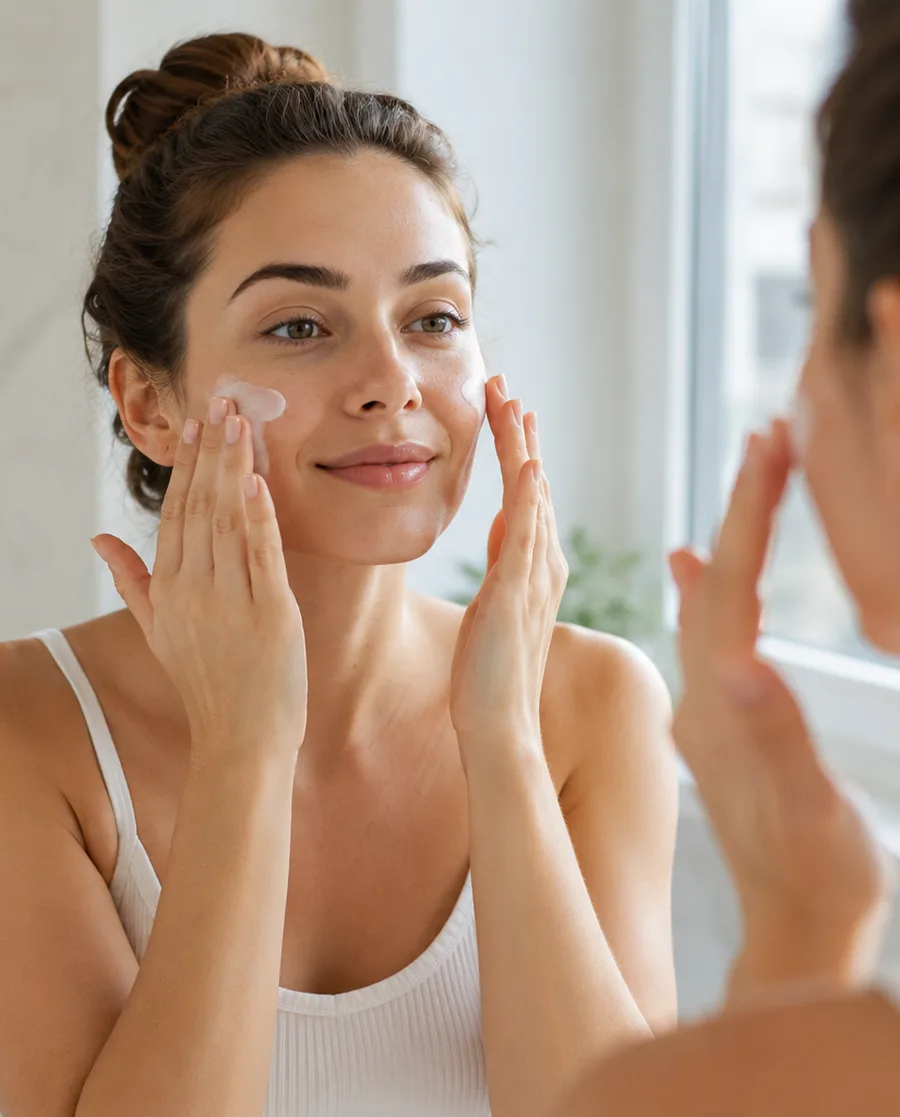
Step 2 — Moisturizer. Apply while skin is still slightly damp to help support hydration.
Step 3 — Broad-spectrum SPF 30+. Apply as the final step, especially on days with daylight exposure.
Quick summary
Cleanse/Rinse
Moisturize
Protect
This morning skincare routine for sensitive skin is intentionally short. Fewer steps generally means fewer opportunities for a product to trigger a reaction.
Nighttime Skincare Routine for Sensitive Skin
Step 1 — Remove makeup or sunscreen, if applicable. Use a gentle approach rather than scrubbing to get everything off in one pass.
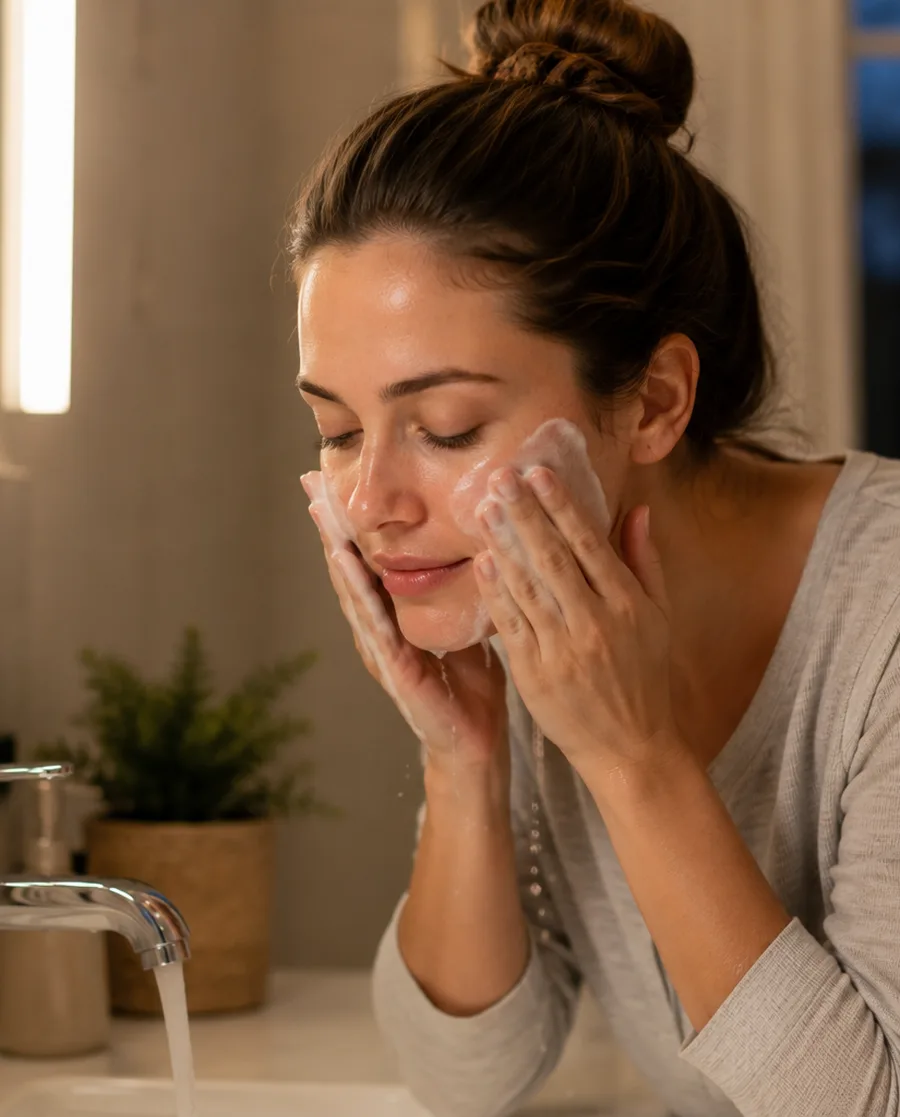
Step 2 — Gentle cleanser. This step removes the day’s buildup without needing to be harsh to be effective.
Step 3 — Moisturizer. Apply evenly to help support your skin barrier overnight.
Quick summary
Cleanse
Moisturize
Any treatment step — a soothing serum, a prescribed topical, or anything else — stays optional and depends entirely on your specific skin concerns and what your skin can currently tolerate. This nighttime skincare routine for sensitive skin works perfectly well as just these two steps.
How to Patch Test a New Skincare Product
Patch testing is a practical way to get a sense of how your skin might react to a new product before applying it to your whole face.
A few general principles:
Introduce one new product at a time when practical. This makes it much easier to identify what caused a reaction if one happens.
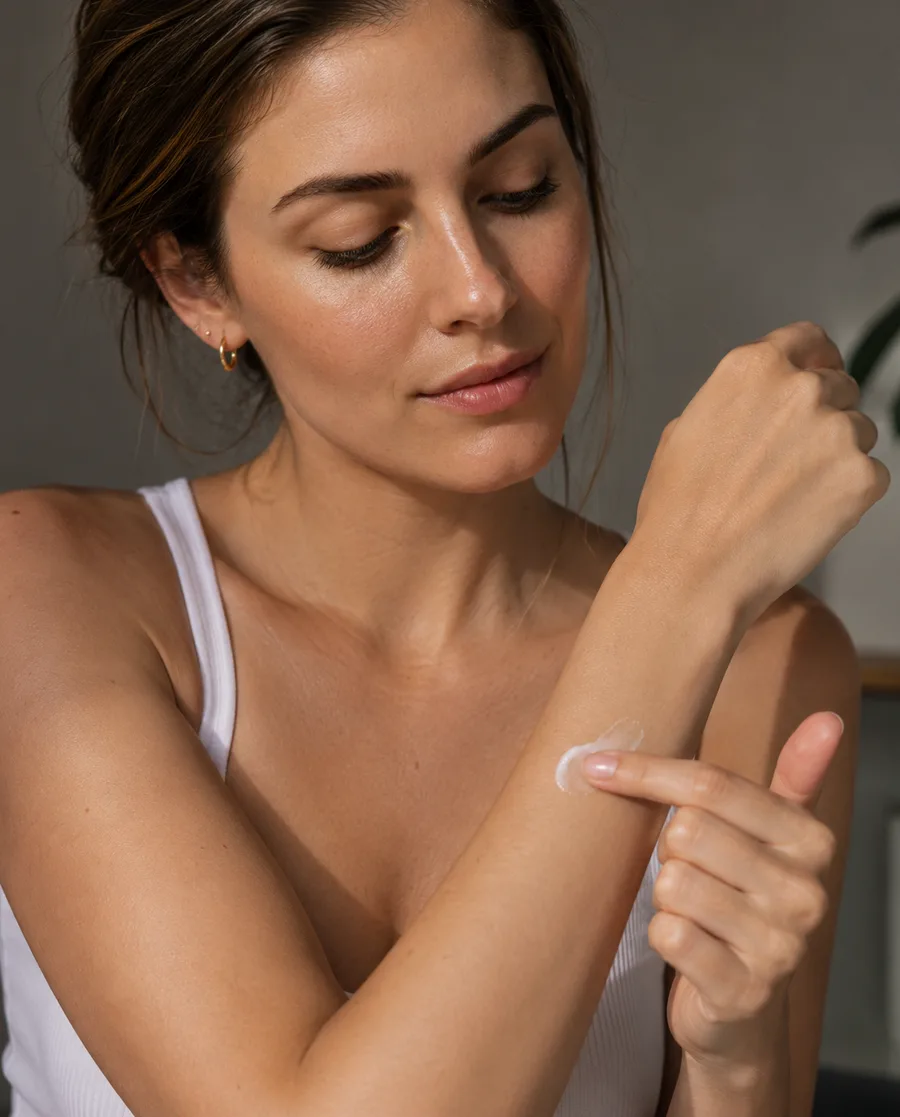
Apply a small amount to a discreet area — like your inner forearm or behind your ear — and follow the product’s own directions for how long to wait before checking for a reaction.
Watch for redness, itching, burning, or bumps during the waiting period the product recommends.
Understand that patch testing isn’t a guarantee. A product that seems fine on a patch test can still occasionally cause a reaction when used more broadly or over a longer period, since facial skin often behaves differently than skin elsewhere on the body.
This isn’t a foolproof system, but it’s a reasonable, low-risk way to reduce your odds of a bad reaction, especially with a new product you’re not sure about.
Exfoliation for Sensitive Skin
Exfoliation is optional for sensitive skin, and plenty of people do perfectly well without it. It’s not a required step, and skipping it entirely isn’t a mistake.
If you do choose to exfoliate, more isn’t better — aggressive exfoliation, whether physical or chemical, tends to increase irritation rather than improve your skin’s appearance. If you want to try it, introduce it cautiously, follow the specific product’s directions rather than a generic schedule, and pay close attention to how your skin responds. There’s no universal frequency that works for everyone here, and reducing or stopping exfoliation is the right move if you notice increased redness, stinging, or sensitivity.
Retinol, Retinoids, and Sensitive Skin
Retinoids are known for causing dryness and irritation, particularly when someone is just starting out, and this effect can be more pronounced for sensitive skin. They’re also not necessary for everyone — plenty of people build a perfectly effective routine without one.
If you want to try a retinoid, introducing it cautiously and following the specific product’s directions rather than a generic schedule tends to work better than diving in at full strength. Keeping up with a supportive moisturizer matters, since retinoids are drying by nature, and consistent sun protection becomes especially important while using one, since retinoids can increase sun sensitivity. A dermatologist can offer more personalized guidance, particularly for prescription-strength options.
Sensitive Skin + Acne
Yes, sensitive skin can absolutely experience acne too — the two aren’t mutually exclusive, and dealing with both at once can feel like a genuine balancing act.
The general approach that tends to work better is avoiding an overly aggressive acne routine that stacks multiple strong actives at once, since that combination is more likely to overwhelm sensitive skin and cause additional irritation without necessarily improving breakouts any faster. Introducing acne-focused ingredients one at a time, at a lower strength, and giving your skin barrier ongoing support with a gentle moisturizer tends to be a more sustainable approach. If acne is persistent or bothersome, a dermatologist can help find a plan suited to your specific skin. Our skincare routine for acne-prone skin guide goes deeper on building a gentle, acne-focused routine.
Common Sensitive-Skin Mistakes
1
Using too many products
A long routine with lots of active ingredients increases the odds that something in there will cause irritation, and makes it harder to identify the culprit if it does.
2
Changing multiple products at once
Swapping your cleanser, moisturizer, and serum all in the same week makes it nearly impossible to know what caused a reaction if one shows up.
3
Over-cleansing
Washing your face too often, or using a stripping cleanser, can compromise your skin barrier and make sensitivity worse over time.
4
Over-exfoliating
More exfoliation doesn’t mean better results — for sensitive skin, it’s one of the fastest ways to trigger irritation.
5
Ignoring irritation
Pushing through stinging or redness because a product is supposed to work eventually often makes things worse rather than better.
If a scented product keeps causing issues, switching to a fragrance-free alternative is usually the simpler fix.
7
Skipping moisturizer
Some people assume less product means less irritation, but skipping moisturizer altogether can leave your skin barrier under-supported.
8
Skipping sun protection
Sensitive skin still needs daily SPF — the fix for an uncomfortable sunscreen is usually a different formula, not going without one.
Makeup Tips for Sensitive Skin
Look for comfortable, minimal-ingredient formulas. Simpler formulations tend to reduce the number of potential triggers in your routine.
Introduce new makeup cautiously. Treat a new foundation or concealer the same way you’d treat a new skincare product — one at a time, watching for a reaction.
Remove makeup gently. Scrubbing or tugging at your skin to get makeup off can cause irritation on its own, separate from the makeup itself.
Avoid unnecessary layers. Every additional product — primer, setting spray, powder — is another potential source of irritation, so it’s worth asking whether each one is actually adding value.
Replace old or expired makeup. Products that have passed their shelf life can harbor bacteria or become less stable, which may increase the chance of a reaction.
When to See a Dermatologist
Basic, gentle skincare works for a lot of people with sensitive skin, but some situations call for professional input. Consider reaching out to a dermatologist if you’re experiencing:
Persistent or significant redness
Ongoing burning or stinging that doesn’t resolve
Recurring itching
A rash or unusual texture changes
Swelling
Painful acne
Reactions that keep happening even after you’ve simplified your routine
This article is meant for general information and isn’t a diagnosis. A dermatologist can evaluate your specific skin and history to figure out what’s actually going on and recommend an approach suited to you.
Simple Sensitive-Skin Routine (At a Glance)
AM
Cleanse/Rinse
Moisturize
SPF 30+
PM
Cleanse
Moisturize
Add treatments only when there’s a specific reason and your skin can tolerate them.
The best routine keeps things simple: a gentle, fragrance-free cleanser, a barrier-supporting moisturizer, and daily broad-spectrum SPF 30+ sunscreen. Treatments are optional and should be added one at a time, based on your specific skin concerns and how well your skin tolerates new ingredients.
Signs include products that frequently sting or burn, recurring redness without an obvious cause, discomfort after cleansing, and reactions to fragrance or certain ingredients. These patterns are helpful observations, not a formal diagnosis — a dermatologist can offer a more complete picture if you’re unsure.
Ceramides, glycerin, hyaluronic acid, panthenol, and colloidal oatmeal are commonly used in gentle formulas because they tend to hydrate and support the skin barrier without a long list of potentially irritating additives. Individual tolerance still varies from person to person.
Yes. A supported skin barrier tends to be more resilient against irritation, and skipping moisturizer doesn’t reduce sensitivity — it can leave skin feeling less comfortable. A fragrance-free, barrier-supporting formula is usually a good starting point.
Fragrance, including natural fragrance, may irritate some people with sensitive skin, even in small amounts. It isn’t automatically a problem for everyone, but fragrance-free formulas are generally a safer starting point if you’re not sure how your skin will react.
Some people with sensitive skin can tolerate salicylic acid, particularly at lower concentrations or used in a targeted way, while others find it too irritating. Introducing it gradually and watching how your skin responds is the more cautious approach.
Retinol can cause more noticeable dryness or irritation for sensitive skin, especially when first introduced. It isn’t necessary for everyone, but if you want to try it, introducing it gradually and keeping up with moisturizer and sunscreen can help; a dermatologist can offer more personalized guidance.
Exfoliation is optional, and plenty of people with sensitive skin do fine without it. If you choose to exfoliate, start slowly, follow the product’s directions, and reduce or stop if you notice increased redness or irritation — there’s no universal frequency that works for everyone.
Apply a small amount of the new product to a discreet area, like your inner forearm, and follow the product’s recommended waiting time while watching for redness, itching, or burning. Patch testing reduces risk but doesn’t guarantee the product won’t cause a reaction when used more broadly.
Consider seeing a dermatologist if you’re experiencing persistent redness, ongoing burning or itching, a rash, swelling, painful acne, or reactions that keep happening even after simplifying your routine. A dermatologist can evaluate your specific skin and recommend an approach suited to you.
Read our Review Policy for a plain explanation of what our review process does — and doesn't — mean for health-adjacent content.
Sources & Further Reading
Medical Disclaimer: This article is for general educational purposes only and isn’t a substitute for professional medical advice, diagnosis, or treatment. If you have persistent, severe, painful, or worsening skin symptoms, consider speaking with a dermatologist or other qualified healthcare professional.