Quick answer: Vanicream Daily Facial Moisturizer is a fragrance-free, dye-free lotion built around five ceramides, hyaluronic acid, and squalane, with no botanical extracts or essential oils. It’s a reasonable, well-formulated option if your skin is sensitive, reactive, or prone to eczema and you want a short, minimal ingredient list without niacinamide or other actives added in. It’s not marketed as an acne treatment, it contains no SPF, and some independent sources suggest it may not be rich enough on its own for very dry skin in harsh winter conditions. This is not a first-hand product trial — the breakdown below separates what Vanicream states directly, what independent ingredient sources report, and what’s still anecdotal or unconfirmed.
In This Guide
- Vanicream Daily Facial Moisturizer at a Glance
- What Is Vanicream Daily Facial Moisturizer?
- Key Ingredients and What They Do
- Is It Good for Sensitive Skin?
- Is It Good for Oily Skin?
- Is It Suitable for Acne-Prone Skin?
- Is It Enough for Dry Skin?
- Texture, Finish, and Makeup Layering
- How to Use Vanicream Daily Facial Moisturizer
- Pros and Cons
- Vanicream Daily Facial Moisturizer vs. CeraVe PM Facial Moisturizing Lotion
- Vanicream Daily Facial Moisturizer vs. Vanicream Moisturizing Cream
- Who Should Choose It — and Who Might Prefer Something Else?
- Final Verdict: Is Vanicream Daily Facial Moisturizer Worth It?
- Frequently Asked Questions
Vanicream Daily Facial Moisturizer at a Glance
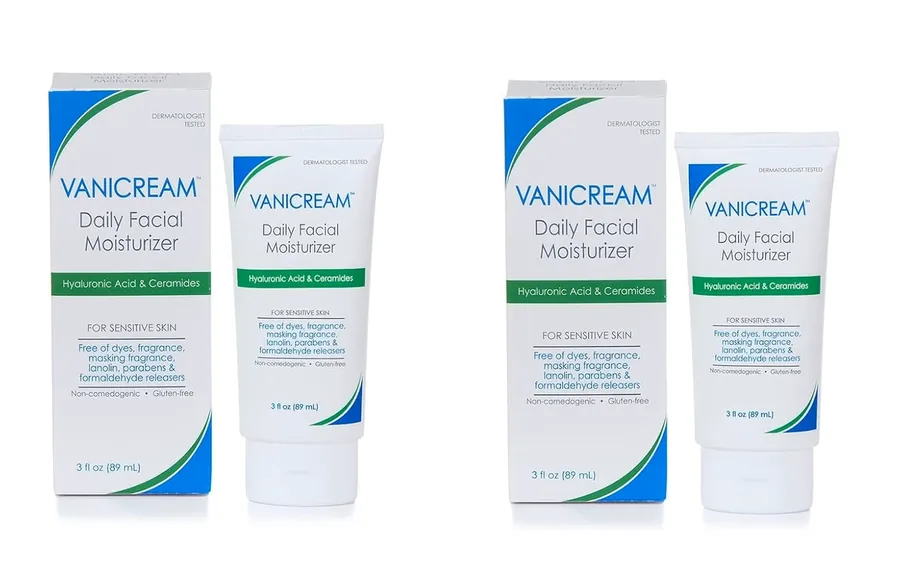
- Product: Vanicream™ Daily Facial Moisturizer for Sensitive Skin
- Key ingredients: Hyaluronic acid, five ceramides (EOP, NG, NP, AS, AP), squalane, glycerin, carnosine, phytosterols
- Texture: Lightweight lotion, described by the brand as non-greasy and quick-absorbing
- Brand-stated skin type fit: Formulated for sensitive skin; brand FAQ also lists it as suitable for oily, dry, and combination skin
- Time-of-day labeling: Day or night
- SPF: None — the brand points to its own SPF 30 moisturizer for sun-exposure days
- Fragrance: Fragrance-free (brand claim), no botanical extracts or essential oils
- Comedogenicity claim: Non-comedogenic (brand claim)
- Credential: National Eczema Association Seal of Acceptance
This article contains an affiliate link. See our affiliate disclosure for details.
Vanicream Daily Facial Moisturizer
View on Amazon (paid link)
What Is Vanicream Daily Facial Moisturizer?
Vanicream Daily Facial Moisturizer is a facial lotion from Vanicream, a brand that positions nearly its entire line around minimal-ingredient formulas for sensitive and reaction-prone skin. Per the brand’s own US product page, it’s built around hyaluronic acid and five named ceramides (EOP, NG, NP, AS, AP), along with squalane, glycerin, carnosine, and phytosterols. The brand states the formula contains no botanical extracts or essential oils — a deliberate choice, since those are among the more common triggers for people with reactive skin.
The product carries the National Eczema Association’s Seal of Acceptance, which is a real, independently listed credential (not just a brand claim) — it signals the formula meets NEA’s criteria as reasonable for people managing eczema-prone skin to consider, though it isn’t a guarantee of fit for any specific person.
Directions per the brand: apply as needed, day or night, after a serum and before makeup or sunscreen. On days with expected sun exposure, Vanicream’s own guidance points to its separate SPF 30 facial moisturizer rather than this one, since this formula contains no sun protection.
Key Ingredients and What They Do
- Hyaluronic acid — a humectant that helps draw and hold water in the skin’s outer layers. Vanicream doesn’t publish an exact concentration, which is typical for mass-market skincare.
- Ceramide EOP, NG, NP, AS, and AP — five types of ceramides, lipids that occur naturally in skin and are a well-established category in dermatology for supporting the outer skin barrier, the layer that helps keep moisture in and irritants out. Having five named ceramides rather than three (as in some competing formulas) isn’t by itself evidence of a better result — overall formulation and how the ingredients work together matter more than a higher ingredient count.
- Squalane — a lightweight emollient widely reported as well-tolerated across skin types, with a low comedogenicity rating in independent ingredient databases.
- Glycerin — a humectant with an extensive track record in dermatology and essentially no irritancy or comedogenicity flags in independent reviews.
- Carnosine — an antioxidant-type ingredient the brand includes for general skin conditioning. Independent ingredient sources describe the evidence for carnosine’s anti-aging effect as limited to moderate, not strongly established for fine lines or wrinkles specifically.
- Phytosterols — plant-derived compounds reported to support the skin barrier and help reduce irritation; one independent source also lists them as a possible mild irritant for a small subset of users, alongside pentylene glycol, caprylyl glycol, and 1,2-hexanediol elsewhere in the formula — all rated low-risk overall, not flagged as common allergens.
A fact-check worth flagging directly: Vanicream labels this product “preservative-free” on its own marketing materials, but the ingredient list includes pentylene glycol, caprylyl glycol, and 1,2-hexanediol — ingredients commonly used in cosmetic formulas specifically to support or boost preservation, and independent ingredient-review sources note the same tension. This likely reflects a “free of classic/traditional preservatives like parabens and formaldehyde-releasers” claim rather than a literal zero-preservative-system formula, but that distinction isn’t spelled out on the brand’s own page, so it’s worth knowing rather than taking the “preservative-free” label completely at face value.
Is It Good for Sensitive Skin?

This is the use case the brand built the product for, and the formulation choices back that up on paper: no fragrance, no botanical extracts or essential oils, no dye, and a relatively short ingredient list by mass-market standards. The National Eczema Association Seal of Acceptance is a genuine, independently awarded credential that supports the sensitive-skin positioning specifically.
That said, “sensitive skin” isn’t one uniform category, and no formula — however minimal — is universally non-reactive. A small number of ingredients in the formula (noted above) carry low-level irritancy flags in independent databases, and anyone with a history of reacting to multiple products should patch-test any new moisturizer, this one included, before applying it to the full face.
Is It Good for Oily Skin?
Vanicream’s own FAQ lists this product as suitable for oily skin, and the lightweight, non-greasy texture the brand describes is consistent with that claim on paper — it’s not a heavy, occlusive cream. Independent ingredient sources don’t flag any classically pore-clogging ingredients in the formula.
Where it’s worth being even-handed: “oily skin” covers a wide range of actual experiences, and a ceramide-and-squalane lotion, however lightweight, still adds oil-soluble emollients to the skin. Some oily-skin users do fine with it; others may prefer an even lighter gel-lotion or one that includes mattifying or sebum-regulating ingredients. There’s no universal answer here, just a reasonably good formulation fit on paper, consistent with how we’ve framed other lightweight moisturizers in this review series.
Is It Suitable for Acne-Prone Skin?
Vanicream labels this product “non-comedogenic,” meaning it’s formulated with pore-clogging risk in mind — a real, meaningful formulation claim, though non-comedogenic testing methods aren’t standardized industry-wide, so it’s best read as “formulated to reduce that risk,” not “guaranteed not to cause a breakout for anyone.” Independent ingredient-database analysis likewise found no commonly recognized comedogenic ingredients in the formula.
One narrower exception worth knowing: three ingredients in the formula (Polyglyceryl-2 Stearate, Glyceryl Stearate, and Stearyl Alcohol) are flagged by some independent fungal-acne and seborrheic-dermatitis communities as potential triggers specifically for those conditions — which are often confused with ordinary acne but have a different underlying cause (yeast overgrowth rather than clogged pores). If you suspect fungal acne rather than typical acne, that distinction is worth discussing with a dermatologist rather than assuming any “non-comedogenic” moisturizer will help.
This product is not formulated or marketed as an acne treatment. It contains no salicylic acid, benzoyl peroxide, or other acne-targeting active — its role in an acne-prone routine is hydration and barrier support alongside whatever actual treatment products you’re using, not a replacement for them.
Is It Enough for Dry Skin?
Here the brand’s “suitable for dry skin” FAQ claim gets some real pushback from independent commentary. Because this formula is built to be lightweight and quick-absorbing — reasonable for sensitive or combination skin — some independent sources describe it as not rich or occlusive enough on its own for genuinely dry skin, especially in harsh winter conditions or for skin affected by more significant barrier damage.
Vanicream’s own lineup actually addresses this directly: the brand’s heavier, petrolatum-based Moisturizing Cream is explicitly positioned for dry and eczema-prone skin, and some independent sources suggest layering the Daily Facial Moisturizer underneath a richer cream or ointment when skin needs more than this lotion alone provides. See the full comparison below.
Texture, Finish, and Makeup Layering
Independent sources and the brand consistently describe this as a lightweight, non-greasy, fast-absorbing lotion rather than a rich or occlusive cream. Vanicream states it’s suitable to wear under makeup, applied after serum and before sunscreen or foundation.
As with any moisturizer, whether it pills under makeup or sunscreen depends on more than the moisturizer alone — how much product is applied, how long you wait between layers, the order of application, and how the specific products you’re layering interact with each other. No specific, verified pilling complaints turned up in the sources checked for this review; if pilling does happen in your own routine, the usual troubleshooting is applying less product per step and waiting longer between layers before the next one.
How to Use Vanicream Daily Facial Moisturizer
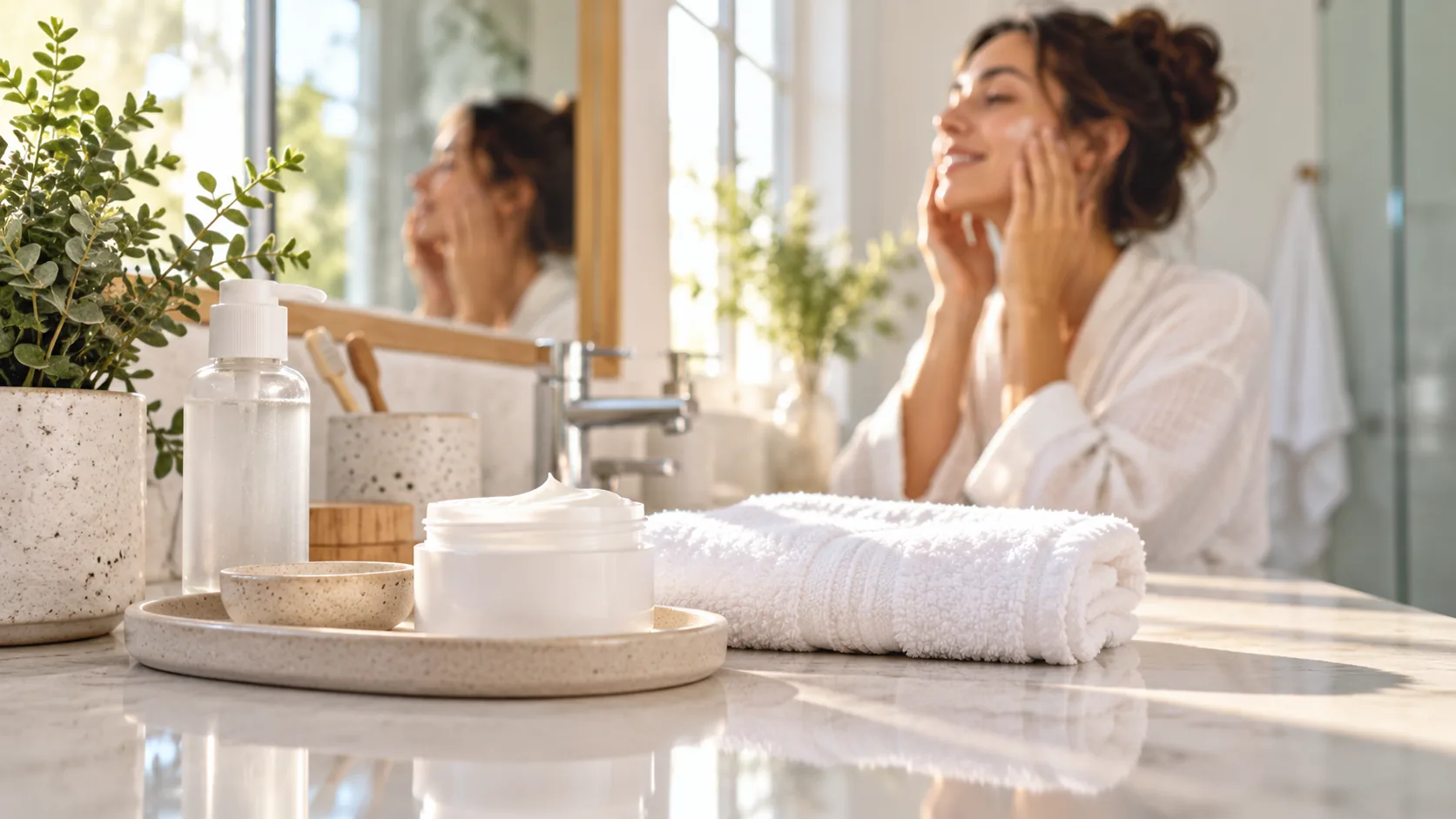
Per the brand’s own directions: apply as needed, morning and/or night, after cleansing and any serums, and before makeup or sunscreen. Because this formula contains no SPF, daytime use still requires a separate, dedicated broad-spectrum sunscreen — the moisturizer step and the sun-protection step are not interchangeable.
If you’re using a retinoid or an exfoliating acid, applying a ceramide-based moisturizer like this one afterward is a reasonable way to add back some hydration and barrier support, a general layering strategy also covered in our guide to layering skincare products.
Pros and Cons
Pros:
- Short, minimal ingredient list with no fragrance, dye, botanical extracts, or essential oils
- Five ceramides plus hyaluronic acid and squalane for barrier support and hydration
- National Eczema Association Seal of Acceptance — a verifiable, independently awarded credential
- Non-comedogenic by brand claim, with no classically pore-clogging ingredients identified independently
- Lightweight texture suitable to wear under makeup
Cons:
- No SPF, so daytime use still needs a separate sunscreen
- Not formulated or marketed as an acne treatment
- May not be rich enough on its own for genuinely dry or eczema-prone skin in harsh conditions
- The “preservative-free” label sits awkwardly next to preservative-supporting ingredients in the formula (see Key Ingredients section)
- Contains no niacinamide, if that’s an ingredient you’re specifically looking for
Vanicream Daily Facial Moisturizer vs. CeraVe PM Facial Moisturizing Lotion
Both are lightweight, fragrance-free, ceramide-based lotions aimed at a similar job — a facial moisturizer that isn’t a heavy cream — but they’re built from different formulation philosophies. CeraVe PM adds niacinamide to its three-ceramide-and-hyaluronic-acid base and is labeled by the brand “PM Only,” with a separate AM lotion sold for daytime. Vanicream Daily Facial Moisturizer skips niacinamide entirely, lists five ceramide types instead of three, and is labeled for use day or night rather than being restricted to nighttime.
Neither formulation choice makes one product objectively superior — a longer ceramide list doesn’t by itself translate to better performance, and niacinamide, while broadly well-tolerated, isn’t something every sensitive-skin user wants added to their routine. If you specifically want niacinamide, or you’re comfortable with a brand’s “PM Only” labeling, CeraVe PM is worth considering — our full CeraVe PM Facial Moisturizing Lotion review covers it in detail, including our guide to niacinamide if you want to understand that ingredient on its own. If you’d rather avoid niacinamide altogether and want a day-or-night formula with the shortest possible ingredient list, Vanicream is the more minimal pick of the two.
Vanicream Daily Facial Moisturizer vs. Vanicream Moisturizing Cream
These two are easy to confuse since they’re from the same brand and share some ingredient language, but Vanicream’s own site is explicit that they’re built for different jobs. The Moisturizing Cream contains no ceramides or hyaluronic acid at all — it’s a heavier, petrolatum-based formula positioned for dry, eczema-prone skin, intended for face, hands, and body, and the brand’s own FAQ directs ceramide-seeking customers to the Daily Facial Moisturizer instead.
In practical terms: the Daily Facial Moisturizer is the lighter, faster-absorbing option that’s more comfortable for daily facial use, including under makeup, and it’s the formula with ceramides and hyaluronic acid built in. The Moisturizing Cream is the richer, more occlusive option better suited to significantly dry skin, body use, or colder months when a lotion alone isn’t holding up. Some independent sources also suggest layering the Moisturizing Cream over the Daily Facial Moisturizer on the face during harsh winter conditions, rather than treating the two as interchangeable. We cover the Moisturizing Cream’s CeraVe counterpart in our CeraVe Moisturizing Cream review, which is a useful side-by-side if you’re trying to decide between a lightweight daily lotion and a richer cream in general, regardless of brand.
Who Should Choose It — and Who Might Prefer Something Else?
Likely a good fit if you:
- Have sensitive, reactive, or eczema-prone skin and want a minimal, fragrance-free formula
- Want ceramides and hyaluronic acid without niacinamide or other actives added in
- Want one lotion you can use morning or night, not restricted to one time of day
- Are comfortable patch-testing any new product, as a precaution, before full-face use
Probably worth trying something else if you:
- Have genuinely dry or eczema-prone skin and need a richer, more occlusive formula on its own (consider Vanicream’s own Moisturizing Cream, or layering it over this lotion)
- Specifically want niacinamide included in your moisturizer (CeraVe PM is worth comparing)
- Are looking for an acne treatment rather than a moisturizer — this product doesn’t treat acne, it only supports hydration and barrier function alongside your actual treatment products
- Suspect fungal acne or seborrheic dermatitis rather than typical acne, given the formula’s three flagged ingredients for those specific conditions
Final Verdict: Is Vanicream Daily Facial Moisturizer Worth It?
For its intended audience — sensitive, reactive, or eczema-prone skin that wants a short, minimal ingredient list without fragrance, botanicals, or added actives like niacinamide — Vanicream Daily Facial Moisturizer is a well-formulated, reasonably priced option built from ingredients with real standing in dermatology, backed by a genuine, independently awarded NEA credential.
Where it’s worth being careful is exactly where the brand’s broader “suitable for oily, dry, and combination skin” FAQ claim gets tested by independent, real-world commentary: if your skin runs genuinely dry, this lightweight lotion may not be enough on its own, and if you’re dealing with suspected fungal acne specifically, a couple of its ingredients are worth knowing about. It’s also not an acne treatment and carries no SPF, so it needs to sit alongside, not replace, the rest of a complete routine. Whether it’s “worth it” comes down to whether a minimal, ceramide-and-hyaluronic-acid lotion without niacinamide is actually what your skin is asking for.
Vanicream Daily Facial Moisturizer
View on Amazon (paid link)
Frequently Asked Questions
More In Product Reviews

Why You Can Trust This Guide
Read our Review Policy for a plain explanation of what our review process does — and doesn't — mean for health-adjacent content.