
Quick Answer
A simple skincare routine for dehydrated skin focuses on a few reliable habits: gentle cleansing, a hydrating step if you want one, a moisturizer that supports your skin barrier, and daily broad-spectrum sunscreen. Dehydration is about a lack of water in the skin, not a fixed skin type, which means it can show up in people with oily, dry, combination, sensitive, or normal skin. You don’t need a long list of products to address it — you need the right few, used consistently, along with a little attention to habits (like hot showers or over-exfoliating) that can pull moisture away faster than your skin can hold onto it.
What Is Dehydrated Skin?
Dehydrated skin generally refers to reduced water content in the outermost layers of the skin. It is usually considered a temporary concern rather than a fixed skin type. It’s different from a skin type — it’s more like a condition your skin can move in and out of depending on your environment, habits, and routine. This is an important distinction, because “dry skin” and “dehydrated skin” often get used interchangeably, even though they describe two different things.
Dehydration can develop for a variety of reasons, and no single cause applies to everyone. Common contributing factors include dry or cold weather, indoor heating or air conditioning, long stretches on airplanes, over-cleansing or using cleansers that strip the skin, very hot water, excessive exfoliation, some in-office or at-home skin treatments, and simply not giving skin enough of a hydrating and barrier-supportive routine. Because it’s tied to these external and habit-related factors, dehydration can often improve once the underlying cause is addressed and the skin barrier has a chance to recover.
Signs You May Have Dehydrated Skin
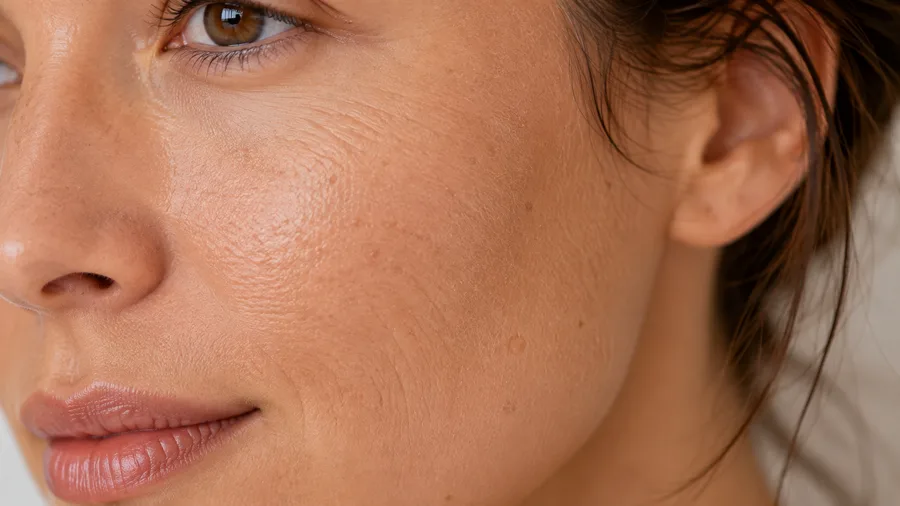
These signs are common patterns people notice, not a checklist for self-diagnosis. If several of these sound familiar, a simple hydration-focused routine is a reasonable place to start.
- A tight or uncomfortable feeling, especially after cleansing
- Skin that looks dull or a little flat rather than plump — dehydration is one of several possible causes, and our skincare routine for dull skin guide covers the others
- Fine lines that seem more noticeable than usual, particularly by the end of the day
- A rougher or less supple texture when you touch your skin
- Makeup that settles into fine lines or looks patchy shortly after application
- Skin that feels tight even though it still looks shiny or oily
- Increased sensitivity or reactivity in some people, especially if the barrier is also compromised
Dehydrated Skin vs Dry Skin
This is one of the most common points of confusion in skincare, so it’s worth spelling out clearly. Dehydrated skin is a water-related concern. Dry skin is a skin-type and oil-related concern. They’re not the same thing, though they can absolutely occur together.
| Feature | Dehydrated Skin | Dry Skin |
|---|---|---|
| What’s lacking | Water | Oil/lipids |
| Skin type or temporary condition | Temporary condition | Skin type |
| Can affect oily skin? | Yes | Not typically |
| Common feel | Tight, dull, sometimes still shiny | Flaky, rough, consistently tight |
| Typical approach | Hydrating ingredients, barrier support | Richer moisturizers, barrier support |
| Can it change over time? | Comes and goes with habits and environment | Tends to be more consistent |
In practice, dehydration can affect people with oily skin who still feel tight and look a little dull, and it can affect people with naturally dry skin, too — in fact, dry skin is often more prone to becoming dehydrated because it already has less oil to help slow water loss. The two concerns frequently overlap, which is part of why a routine built around both hydration and barrier support tends to work well regardless of your underlying skin type. If flaking and persistent tightness are your main, ongoing concern rather than something that comes and goes, our guide to a skincare routine for dry skin may be a more direct fit.
The Simple Dehydrated-Skin Routine
Here’s the core routine at a glance. Each step is explained in more detail below.
| Step | Morning | Night | Purpose |
|---|---|---|---|
| 1 | Gentle cleanser | Gentle cleanser | Cleans without stripping moisture |
| 2 | Optional hydrating serum/essence | Optional hydrating treatment | Helps draw water into the skin |
| 3 | Moisturizer | Moisturizer | Supports the skin barrier and helps seal in hydration |
| 4 | Sunscreen SPF 30+ | Optional facial oil | Daily protection / helps reduce water loss overnight |
Morning Skincare Routine for Dehydrated Skin

A morning routine for dehydrated skin doesn’t need to be elaborate — a few consistent steps go a long way.
1. Gentle Cleanser
Start with a mild cleanser that removes overnight buildup without leaving skin feeling tight or squeaky. Overly foaming or stripping cleansers can pull away more moisture than necessary, which can make dehydration feel worse rather than better. Lukewarm water is generally more comfortable than hot water for this step.
As an Amazon Associate I earn from qualifying purchases.
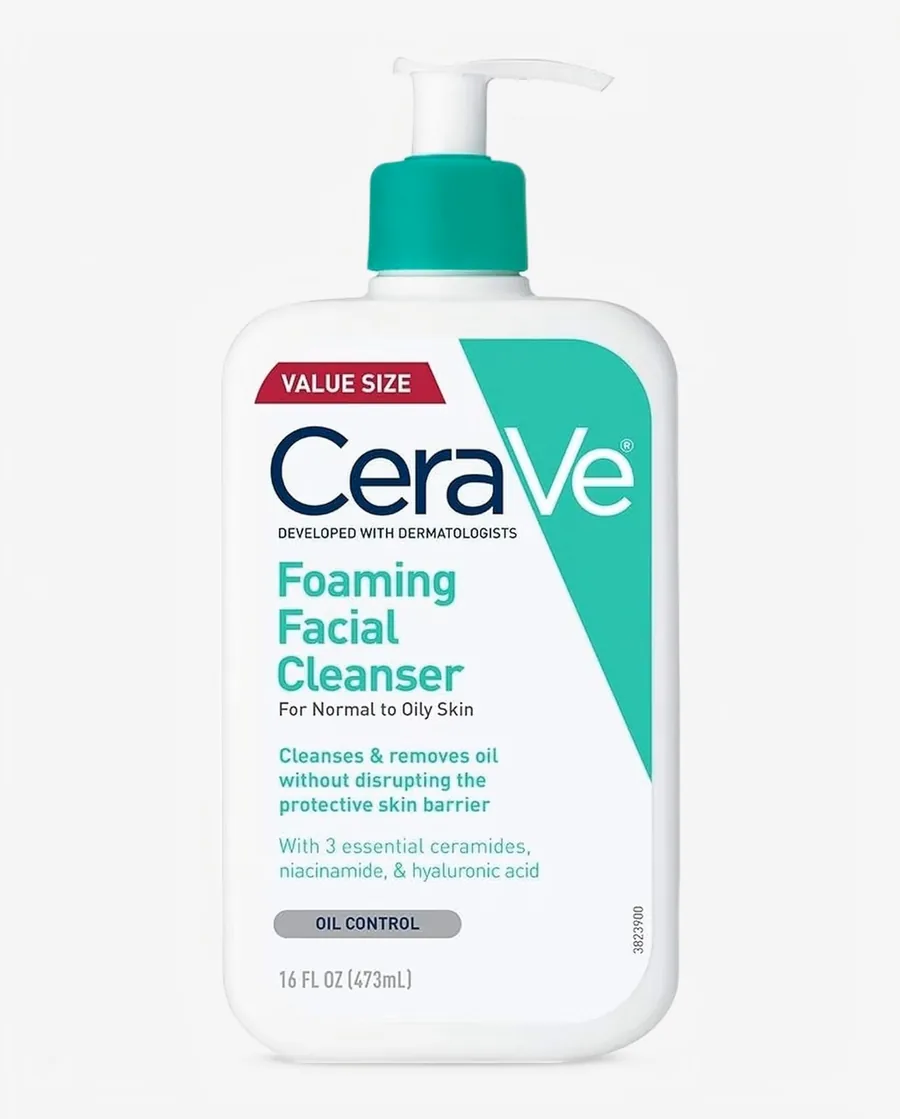
If you would like a specific product to try here, the CeraVe Foaming Facial Cleanser is a gentle, non-stripping cleanser that may be suitable for a dehydrated-skin routine. (paid link)
2. Hydrating Serum or Essence
This step is optional, not mandatory. If you choose to use one, look for a lightweight formula built around humectants like glycerin or hyaluronic acid, which are designed to help attract and hold water in the skin. Applying this kind of product to slightly damp skin can help it work more effectively. A simple routine without this step can still be effective — it’s an add-on, not a requirement.
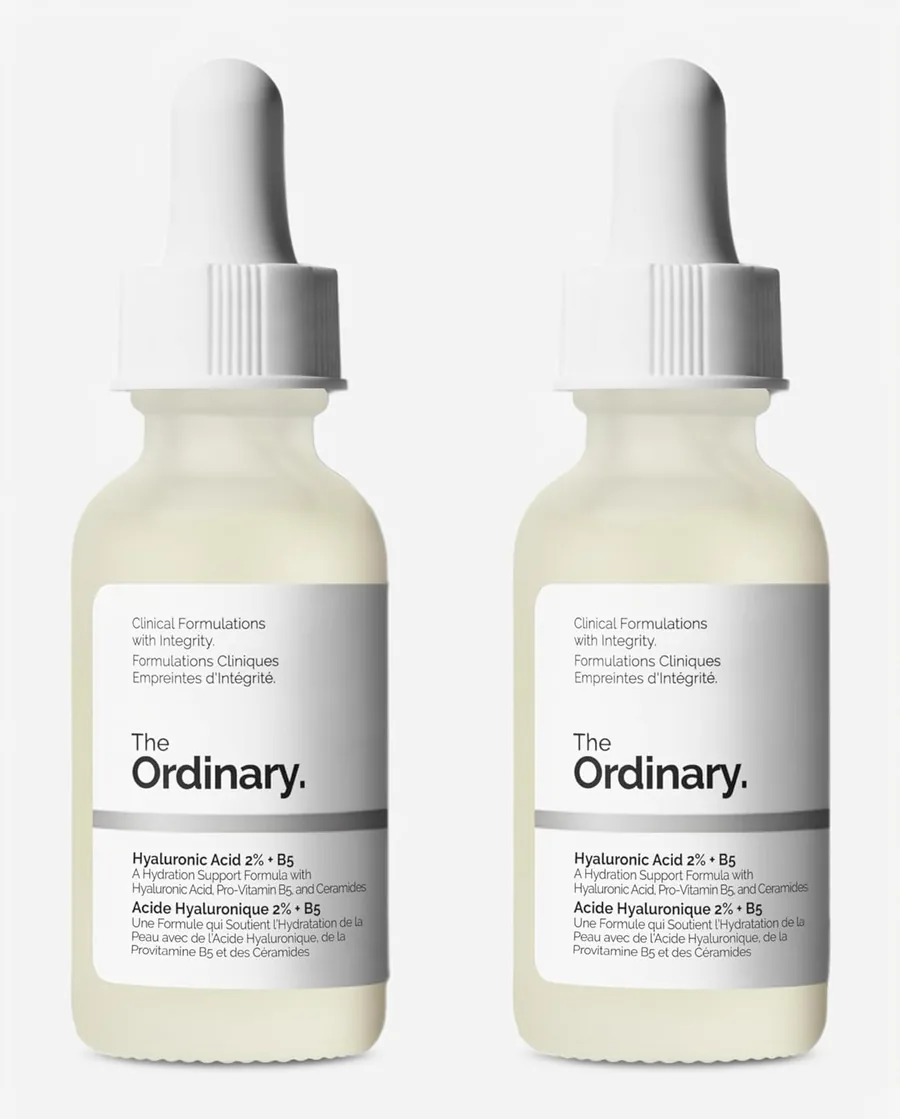
This step remains optional. If you would like to try a hyaluronic-acid option, The Ordinary Hyaluronic Acid 2% + B5 is a lightweight, humectant-based serum some people add here — individual tolerance varies, and a simple routine without it can still be effective. (paid link)
3. Moisturizer
Moisturizer is where a lot of the barrier-support work happens. Look for formulas with ingredients like ceramides, fatty acids, or squalane that help maintain the skin’s outer barrier. The right texture depends on your underlying skin type — lighter gel-creams for oilier skin, richer creams for drier skin — but the goal is the same: help the skin hold onto the hydration you’ve just applied.
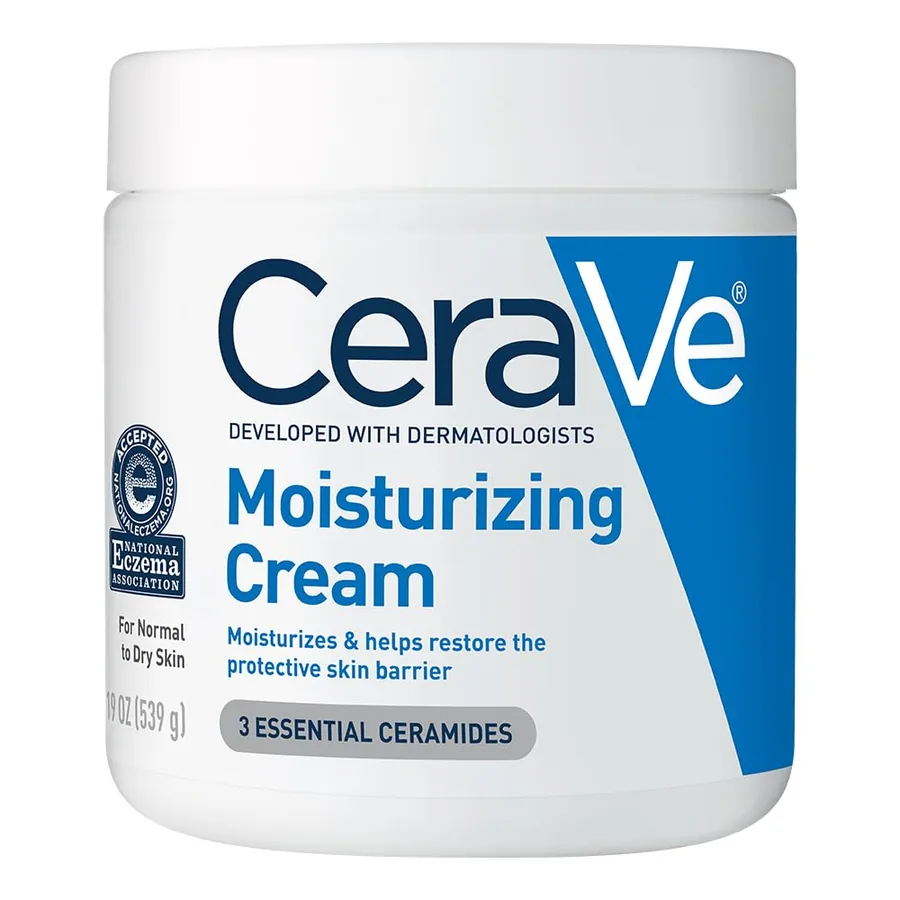
For a moisturizer option, the CeraVe Moisturizing Cream can be an option to help support the skin barrier — as always, individual results can vary. (paid link)
4. Sunscreen
Finish every morning with a broad-spectrum sunscreen SPF 30 or higher. Sun protection remains important even when dehydration, not sun damage, is your main concern — daily SPF is a foundational habit for skin health at any stage, and unprotected UV exposure can make skin feel more compromised and prone to moisture loss over time.
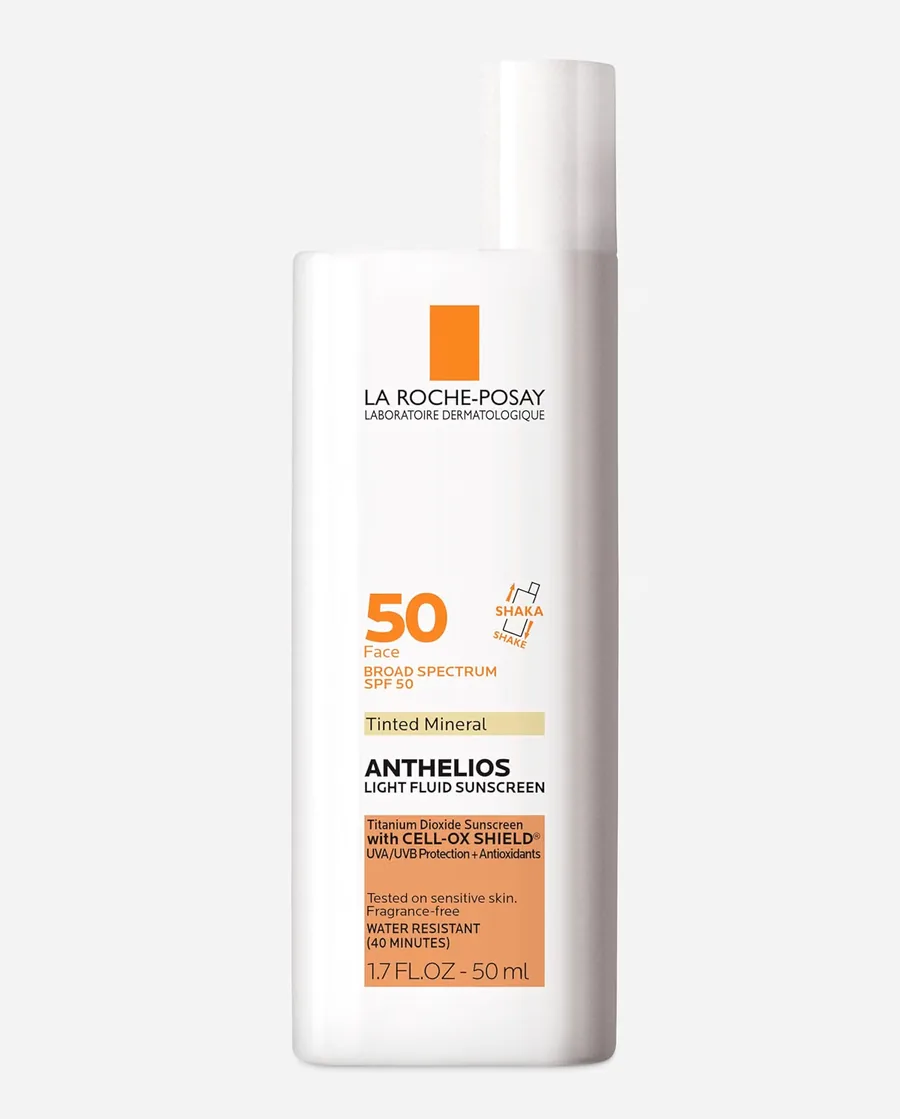
For daily sun protection, the La Roche-Posay Anthelios Sunscreen may be suitable for finishing off a dehydrated-skin morning routine. (paid link)
Nighttime Skincare Routine

Evenings are a good opportunity to remove the day’s buildup and give your skin a chance to recover overnight.
1. Gentle Cleanser
Use a gentle cleanser to remove sunscreen, makeup, sweat, and the day’s buildup. If you wear heavier makeup or sunscreen, a light pre-cleanse (like a balm or oil) followed by your regular cleanser can help you avoid needing to scrub, which is gentler on a barrier that’s already struggling to hold onto moisture.
2. Hydrating Treatment
Also optional. Some people like using a hydrating serum, essence, or sheet mask in the evening, particularly if their skin has felt tight or dull that day. This isn’t a required step, and skipping it doesn’t mean your routine is incomplete.
3. Moisturizer
Apply a barrier-supportive moisturizer to help lock in whatever hydration is already on your skin. Many people find it comfortable to use a slightly richer formula at night than they do in the morning, since there’s no need to layer sunscreen or makeup afterward.
4. Optional Facial Oil
A facial oil is entirely optional. It’s worth understanding what it actually does: a facial oil is generally an emollient or occlusive-type product, meaning it helps smooth the skin’s surface and slow down water loss — it doesn’t add water to the skin the way a humectant does. For some people, layering a light facial oil over moisturizer on especially dry or dehydrated nights can feel comfortable, but it isn’t a substitute for a hydrating step or moisturizer itself.
Best Ingredients for Dehydrated Skin
No single ingredient works the same way for everyone, and none of the ingredients below guarantee a specific result. They’re commonly discussed in skincare because of the general role they play.
| Ingredient | What It Does | Where It May Fit |
|---|---|---|
| Glycerin | A humectant that helps attract and hold water in the skin | Cleansers, serums, moisturizers |
| Hyaluronic acid | A humectant known for holding many times its weight in water | Serums, moisturizers |
| Panthenol (pro-vitamin B5) | Can help support comfort and the look of hydrated skin | Serums, moisturizers |
| Ceramides | Lipids that help maintain and support the skin barrier | Moisturizers |
| Squalane | A lightweight emollient that helps smooth and soften skin | Serums, moisturizers, facial oils |
| Niacinamide | May help support an even-looking tone and a more comfortable barrier | Serums, moisturizers |
| Urea (cosmetic concentrations) | A humectant that can also help soften rough texture | Moisturizers, targeted treatments |
| Aloe vera | Can feel soothing on the skin for some people, when appropriate | Gels, after-sun products |
| Occlusive ingredients (e.g., petrolatum, dimethicone, shea butter) | Help form a layer that reduces water loss from the skin | Moisturizers, balms, facial oils |
Humectants vs Emollients vs Occlusives
Understanding these three categories makes it much easier to build a hydrating routine that actually works.
Humectants help attract and hold water — think of them as water magnets. Glycerin, hyaluronic acid, and urea are common examples. Humectants help attract and hold water, but they are usually most useful as part of a complete routine that also includes a moisturizer to help reduce water loss.
Emollients help smooth and soften the skin’s surface by filling in tiny gaps between skin cells. Squalane and many plant oils fall into this category. They improve texture and comfort but don’t add water on their own.
Occlusives sit on top of the skin and form a barrier that slows down water loss (also called transepidermal water loss). Ingredients like petrolatum, dimethicone, and shea butter are common occlusives. They’re especially useful as a final step, sealing in whatever hydration and moisturizer you’ve already applied.
Most well-formulated moisturizers combine all three categories, which is part of why moisturizer — rather than any single “hydrating” product — tends to do the heaviest lifting in a dehydrated-skin routine.
Choosing a Moisturizer for Dehydrated Skin
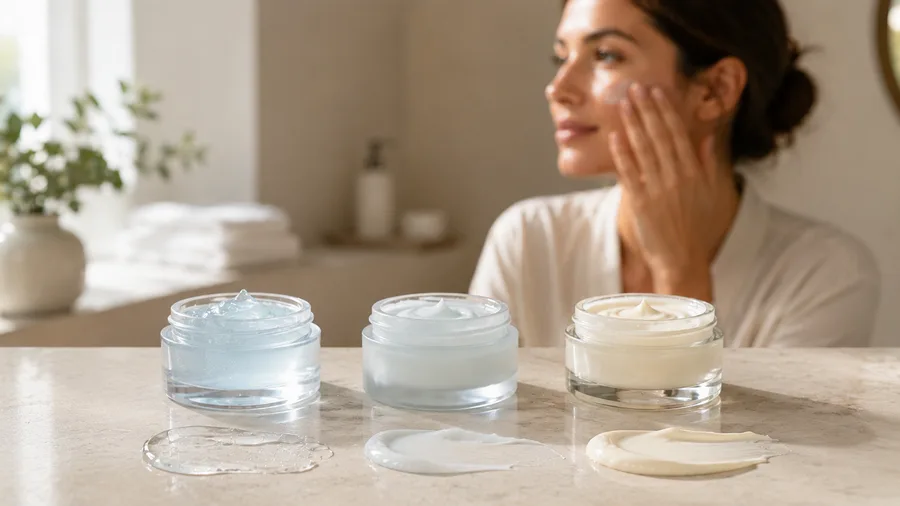
There’s no single moisturizer that works for everyone with dehydrated skin, because the right formula depends heavily on your underlying skin type.
If your skin is oily but dehydrated, a lightweight gel or gel-cream moisturizer with humectants and a modest amount of emollient can feel comfortable without adding excess shine. If your skin is dry and dehydrated, a richer cream with both humectants and occlusive ingredients can help address both concerns at once. If your skin is sensitive and dehydrated, look for simpler formulas without added fragrance, and introduce anything new gradually. Not everyone with dehydration needs a heavy cream — the goal is a formula that feels comfortable on your specific skin, not the richest product available.
Dehydrated Oily Skin
It’s entirely possible to have oily skin — visible shine, a tendency toward clogged pores — and still experience dehydration. This combination confuses a lot of people, since “oily” and “dry” sound like opposites, but oil level and water level are separate things.
If this sounds like your skin, resist the urge to skip moisturizer altogether or to reach for heavy oils to compensate. A lightweight, non-comedogenic, hydration-focused moisturizer is generally a better fit than an occlusive-heavy formula, which can feel uncomfortable and potentially contribute to clogged pores for some people. Gel-based hydrating serums and gel moisturizers are often a comfortable starting point.
Dehydrated Sensitive Skin
Sensitive skin that’s also dehydrated benefits from a simplified approach. Introduce one new product at a time so you can identify what your skin tolerates well, and consider fragrance-free formulas if your skin tends to react to scented products — though not everyone with sensitive skin reacts the same way, so this is a general consideration rather than a rule. If irritation develops, it’s often more useful to strip your routine back to the basics (gentle cleanser, simple moisturizer, sunscreen) than to add more products to try to fix it.
Dehydrated Skin and Acne
Acne-prone skin can absolutely become dehydrated, particularly for people using acne treatments that are known to be drying, such as certain over-the-counter or prescription options. When this happens, over-cleansing or over-exfoliating on top of an already-drying treatment can make the skin feel worse rather than better. A gentle cleanser and a lightweight, non-comedogenic moisturizer can help support comfort alongside an acne routine. If you’re managing an active acne treatment plan, your dermatologist or prescribing provider is the best resource for adjusting it — this article isn’t a substitute for that guidance. For general routine-building, our guide to a skincare routine for acne-prone skin covers gentler approaches in more depth.
Dehydrated Skin and Exfoliation
Over-exfoliation is one of the more common contributors to dehydration, since it can disrupt the skin barrier that normally helps hold moisture in. There’s no single universal exfoliation schedule that works for everyone — the right frequency depends on your skin’s tolerance, the strength of the product, and what else is in your routine. If your skin already feels tight, irritated, or uncomfortable, it’s reasonable to pause exfoliation altogether until things settle, then reintroduce it gradually and adjust based on how your skin responds.
What Can Make Dehydrated Skin Worse?
A number of everyday habits can pull moisture away from the skin faster than it can be replaced:
- Harsh, stripping cleansers
- Very hot water during cleansing or showering
- Excessive or too-frequent exfoliation
- Using too many active ingredients at once
- Frequently switching products before giving them time to work
- Skipping moisturizer, especially after cleansing
- Skipping sunscreen
- Very dry environmental conditions (low humidity, wind, indoor heating or AC)
- Rubbing or scrubbing the skin too vigorously with a towel or applicator
Dehydrated Skin in Different Seasons
Summer: Humidity, sweating, and time outdoors can change how your skin feels day to day. Some people find their skin feels less dehydrated in humid weather and prefer a lighter moisturizer texture, while air conditioning indoors can still pull moisture away. Daily broad-spectrum sunscreen remains an important part of a skincare routine throughout the year.
Winter: Cold outdoor air combined with indoor heating tends to dry out the air around you, which can make dehydration more noticeable. Many people find a richer moisturizer or an added facial oil helpful during colder months, and it’s often worth reducing exfoliation frequency if your skin feels more reactive than usual.
Across both seasons, the core routine doesn’t need to change dramatically — it’s mostly the richness of your moisturizer and how often you exfoliate that may need to flex with the weather.
Dehydrated Skin vs Over-Exfoliated Skin
Because over-exfoliation can cause many of the same sensations as dehydration — tightness, dullness, rough texture, increased sensitivity — it’s easy to mistake one for the other. If your skin feels off and you’ve recently increased how often you’re exfoliating or added a new acid or retinoid, that’s a reasonable first thing to scale back. Simplifying your routine to a gentle cleanser, a basic moisturizer, and sunscreen for a week or two can help your skin recover and make it easier to tell what’s actually going on before reintroducing other products one at a time.
Common Dehydrated-Skin Skincare Mistakes
- Assuming dehydration means you have dry skin, and shopping for products accordingly
- Layering multiple hydrating serums without ever using a moisturizer to seal them in
- Over-cleansing, especially with hot water or a stripping cleanser
- Exfoliating too frequently or with products that are too strong for your skin’s current tolerance
- Adding several new products at once, making it hard to tell what’s helping or hurting
- Using strong active ingredients while the skin barrier is already irritated
- Skipping sunscreen because dehydration feels like the bigger concern
- Expecting an overnight transformation from a single new product
How Long Does It Take to Improve Dehydrated Skin?
There’s no universal timeline, and results vary from person to person. Some people notice their skin feeling more comfortable within a few days of simplifying their routine and adding consistent hydration and moisturizer, while for others — especially if the barrier has been compromised for a while — it can take longer. Consistency and product tolerance both matter more than trying to speed things up with more products or stronger ingredients. If your skin doesn’t feel any more comfortable after a few weeks of a simple, consistent routine, it may be worth having it evaluated by a professional.
Not every dehydrated-skin concern requires a dermatologist visit, but it’s worth making an appointment if you experience persistent redness, burning, severe itching, cracking, a persistent rash, or any unusual or unexplained changes to your skin — particularly if these symptoms don’t improve after simplifying your routine. A dermatologist can help rule out underlying conditions that can resemble or contribute to dehydration and provide guidance tailored to your specific skin and health history.
Dehydrated-Skin Routine at a Glance
- Cleanse gently, morning and night
- Add a hydrating serum or essence if you’d like one
- Moisturize to support your barrier and lock in hydration
- Wear broad-spectrum sunscreen SPF 30+ every morning
- Use a gentle cleanser again at night
- Moisturize before bed, with an optional facial oil if your skin needs it
- Avoid over-exfoliating, especially while skin feels compromised
- Adjust your routine based on how your skin actually responds
Simple Shopping Checklist
- Gentle, non-stripping cleanser
- Hydrating serum or essence (optional)
- Moisturizer suited to your underlying skin type
- Broad-spectrum sunscreen, SPF 30 or higher
- Facial oil (optional)
- A gentle treatment product, introduced one at a time (optional)
Frequently Asked Questions
Related reading: if you’re building out the rest of your skincare knowledge, you may also find it helpful to read our guides to a skincare routine for beginners, a skincare routine for oily skin, a skincare routine for dry skin, a skincare routine for combination skin, a skincare routine for sensitive skin, a skincare routine for acne-prone skin, a skincare routine for normal skin, and a skincare routine for mature skin. For more general skincare and beauty guidance, visit our beauty section.