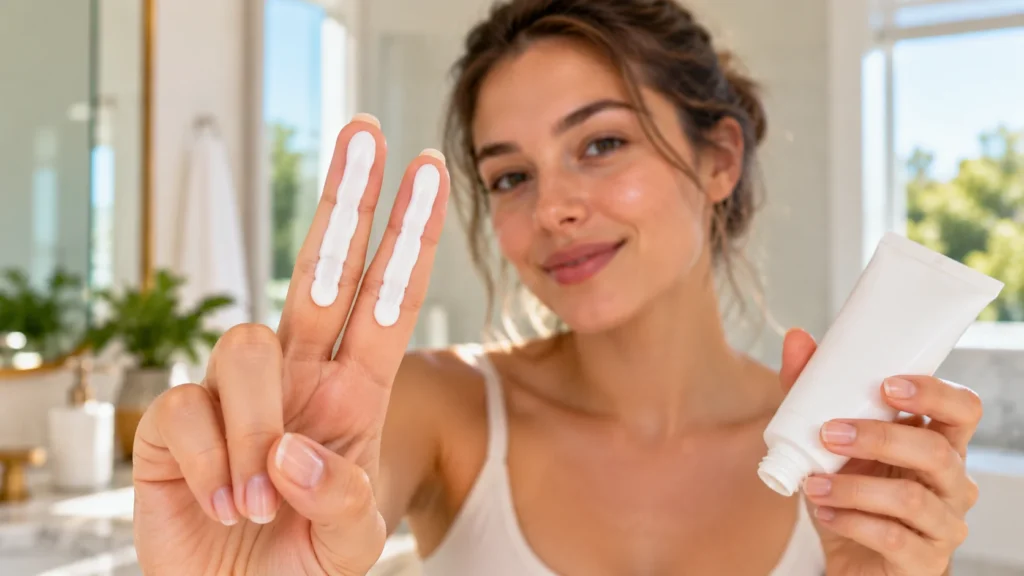
Most people who wear sunscreen every day are still probably applying too little of it. That’s one of the most consistently repeated findings in dermatology research, and it means the SPF number on your bottle often isn’t the protection you’re actually getting. This guide isn’t about which sunscreen to buy or why SPF matters — AvaFitCare’s sunscreen for beginners guide already covers choosing a formula, broad-spectrum protection, and mineral versus chemical filters. This guide answers one specific question in depth: how much sunscreen actually belongs on your face, where the common measurement rules come from, and how much you can trust them.
In This Guide
- Quick Answer
- At-a-Glance: Sunscreen Amount by Area and Situation
- How Much Sunscreen Should You Use on Your Face?
- Face vs. Face + Neck: Why the Distinction Matters
- What Is the Two-Finger Rule?
- Is 1/4 Teaspoon of Sunscreen Enough?
- Why Applying Enough Sunscreen Matters
- SPF 30 vs. SPF 50: Does Higher SPF Mean You Can Use Less?
- How to Apply Sunscreen Evenly
- Facial Sunscreen Options for Daily Use
- When Should Sunscreen Go in Your Morning Routine?
- How Long Before Going Outside Should You Apply Sunscreen?
- How Often Should You Reapply Sunscreen?
- Do You Need to Reapply Sunscreen Indoors?
- How to Reapply Sunscreen Over Makeup
- Does Moisturizer with SPF Count?
- Is Makeup with SPF Enough?
- Are You Missing Your Ears, Neck, or Hairline?
- Can You Use Too Much Sunscreen?
- Common Sunscreen Amount Mistakes
- Simple Real-Life Examples
- Frequently Asked Questions
- Bottom Line
- Why You Can Trust This Guide
- Sources & Further Reading
- Affiliate Disclosure
- Medical Disclaimer
Quick Answer
The American Academy of Dermatology’s guidance is specific: use at least 1 teaspoon of sunscreen on your face — roughly what it takes to cover the length of your index and middle fingers laid side by side. That’s the best-sourced number available for the face specifically. There isn’t an equally well-sourced number for “face plus neck” as one combined amount, since sources define that area differently. The more reliable approach is a full teaspoon for your face, plus a separate, visibly adequate amount for your neck.
At-a-Glance: Sunscreen Amount by Area and Situation
| Area / Situation | Practical Guidance |
|---|---|
| Face only | At least 1 teaspoon (AAD), roughly a line of product covering your index and middle fingers |
| Face + neck | No single precise combined figure is well-sourced; apply a full amount to the face, then a separate visible, even layer on the neck |
| Ears, hairline, lips | Commonly missed; a light but deliberate pass of sunscreen (and an SPF lip balm) is worth adding |
| Whole exposed body | About 1 ounce, roughly enough to fill a shot glass (AAD) |
| Outdoor reapplication | Every 2 hours during continuous outdoor exposure |
| After swimming or heavy sweating | Reapply immediately, even with a water-resistant formula |
| Over makeup | Practically harder; a full liquid/cream reapplication is more reliable than powder or mist alone |
| Genuinely away from windows most of the day | Not an official AAD/FDA/CDC rule, but a low-exposure day; one thorough morning application is a reasonable approach |
| Extended time near sunny windows or commuting | Treat more like partial outdoor exposure; sources that address this don’t agree on one exact interval, so periodic reapplication is the more cautious choice |
This table is a starting point — the sections below explain the reasoning and the real uncertainty behind each row.
How Much Sunscreen Should You Use on Your Face?
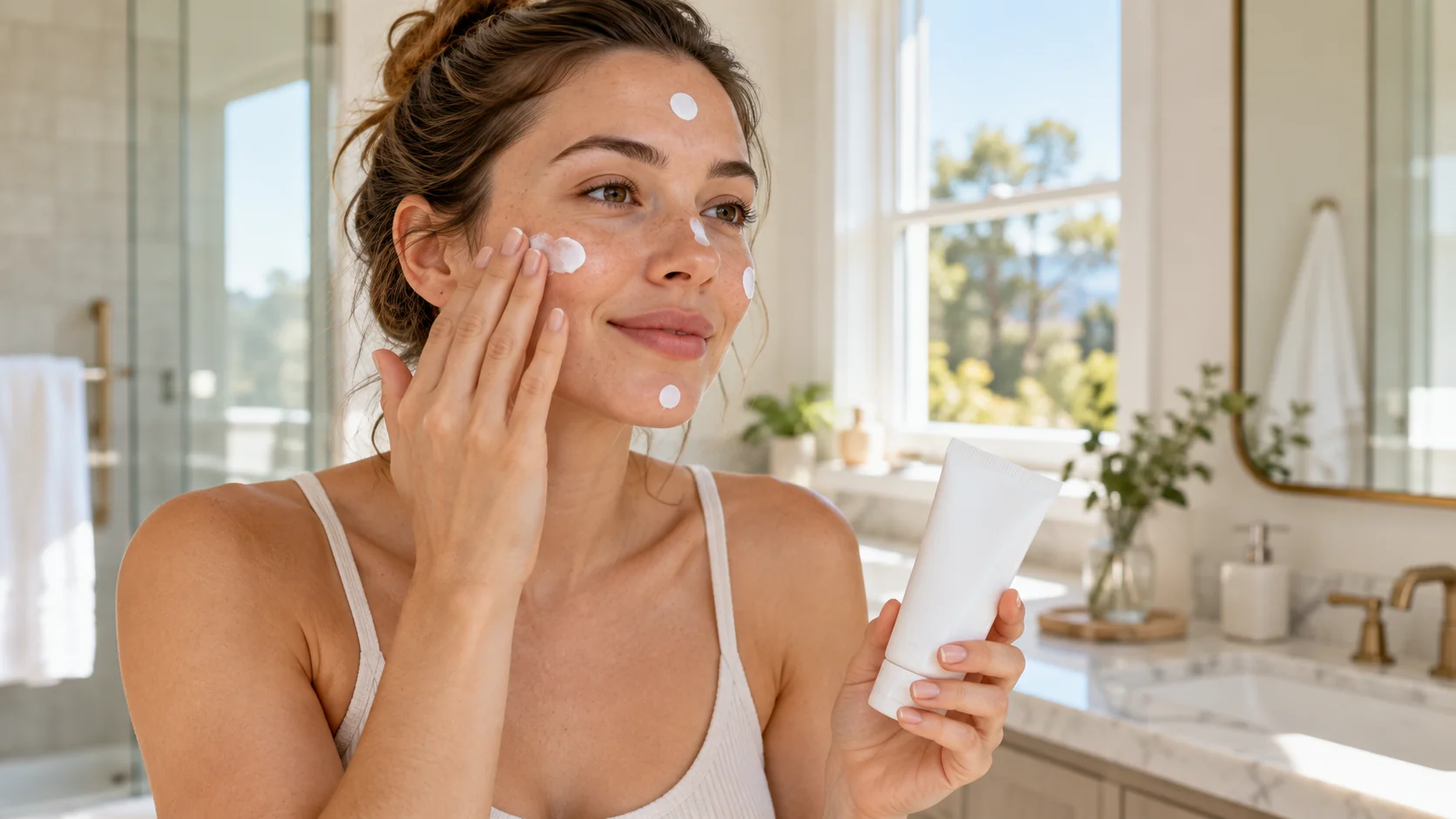
The clearest, most specific guidance available comes from the American Academy of Dermatology: apply at least 1 teaspoon of sunscreen to your face, an amount the AAD describes as approximately what’s needed to cover the length of your index and middle fingers. This is a face-specific recommendation, not a whole-body one, and it’s the number this guide treats as the primary, evidence-based answer.
For context, the AAD separately recommends about 1 ounce of sunscreen — roughly enough to fill a shot glass — to cover all the exposed skin on an average adult’s body. That whole-body figure isn’t meant to be divided mathematically into a face-only number; the teaspoon guidance is a separate, specific recommendation on its own.
Most people apply substantially less than this in practice — dermatology research puts it at often a quarter to half of the tested amount — which means real-world protection frequently falls short of what’s printed on the label. Using “at least a teaspoon” as your working target, rather than a thin, quick swipe, is the single biggest lever most people have for closing that gap.
Face vs. Face + Neck: Why the Distinction Matters
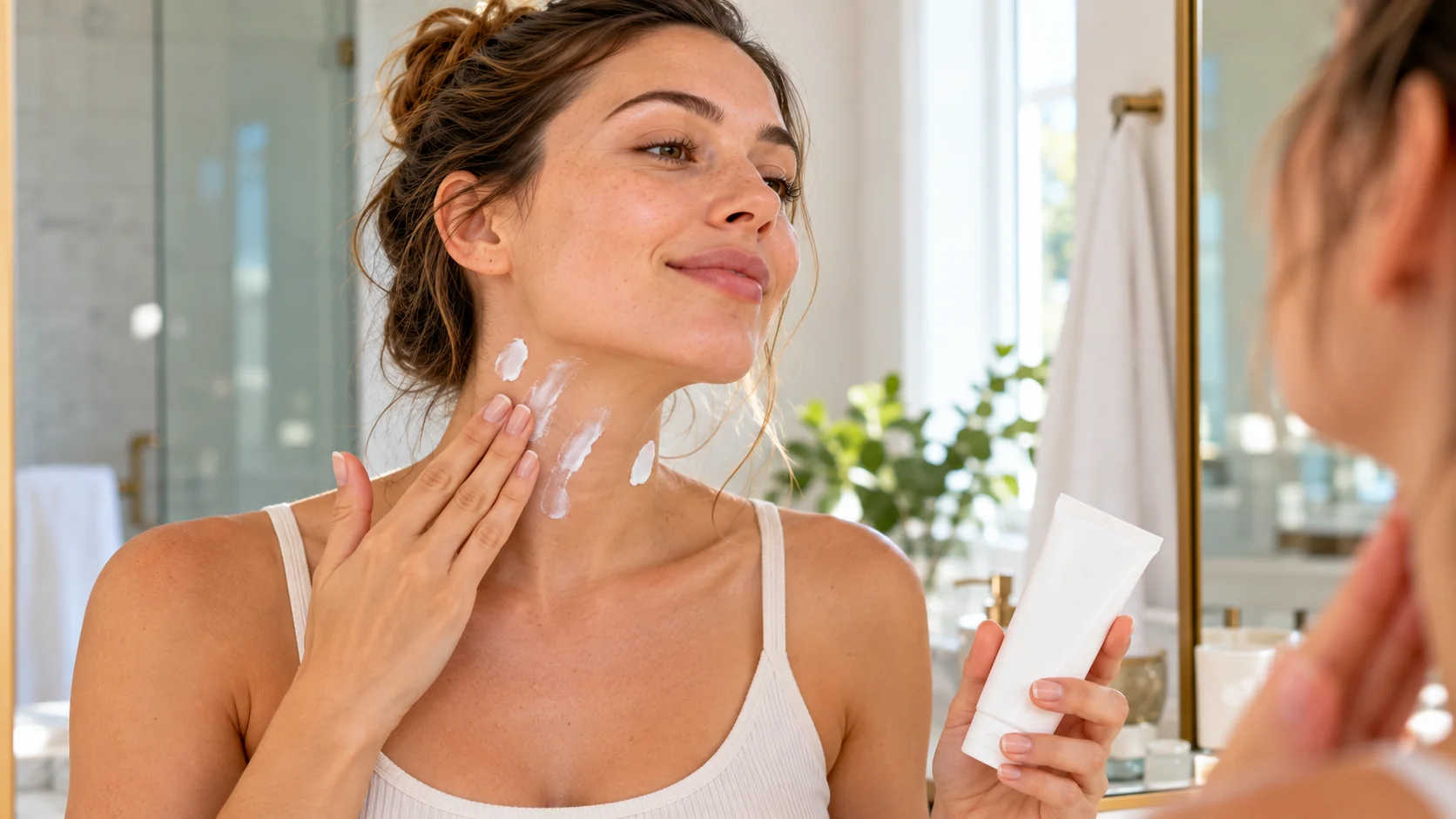
This distinction gets blurred constantly in casual sunscreen advice, and it’s worth being precise about it. The American Academy of Dermatology’s 1-teaspoon recommendation is specifically for the face. It does not explicitly include the neck as part of that same teaspoon.
Some other sources describe a smaller amount — a quarter teaspoon, for example — as sufficient for “face and neck” combined, but this guide did not find that specific figure tied to a primary source like the AAD, FDA, or a peer-reviewed study in the way the face-only teaspoon figure is. Different sources also define “face” differently: some mean face alone, some quietly fold in the neck, and some include the ears. When an amount isn’t clearly tied to a specific, defined area, it’s hard to know what it’s actually telling you.
The practical takeaway: treat “1 teaspoon” as a face-only target, and treat your neck as its own area that needs its own visible, even layer of product — not a portion carved out of the same teaspoon. Your neck can also receive substantial sun exposure, especially the back and sides, and it’s one of the areas people often under-treat.
What Is the Two-Finger Rule?
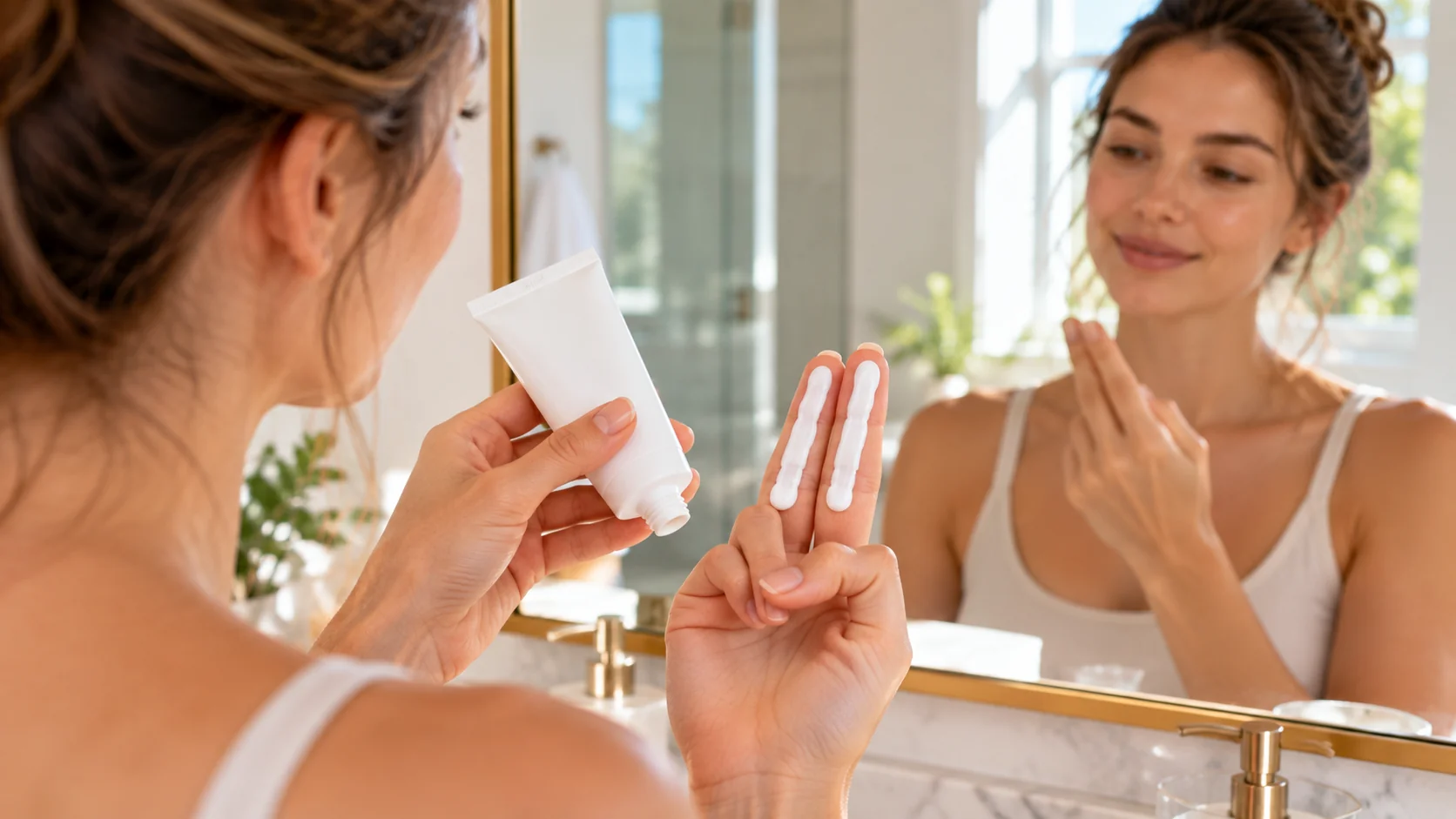
The “two-finger rule” is one of the most repeated sunscreen tips online, but its actual origin is more specific — and more whole-body — than most versions of it suggest. It traces back to a 2002 letter by dermatology researchers Steven Taylor and Brian Diffey, published in the British Medical Journal, which proposed dividing the body into 11 sections (including a combined head-and-neck-and-face section) and applying enough sunscreen to each section to span the length of your index and middle fingers laid together. That’s different from “two fingers of sunscreen on your face,” which is how the rule often gets simplified: the original method is a whole-body technique, and the “two fingers” describes a line of product for each of 11 separate zones, not two finger-pads’ worth used only on the face.
The AAD’s own facial guidance overlaps with this idea but isn’t identical to it: it ties “1 teaspoon for the face” to a line of product covering the length of your index and middle fingers, specifically for the face. No available source ties this current AAD wording historically back to the Taylor and Diffey letter, so this guide treats it as AAD’s own, separate finger-length visualization for facial application rather than describing it as an adaptation of the original rule — similarity in the idea (finger-length lines of product) isn’t evidence that one was derived from the other. It’s also not something the AAD explicitly brands as “the two-finger rule.” Both point in the same direction (use more than a light dab), but neither is a perfectly precise measurement — finger size and how thickly product sits on your fingers both affect the actual volume delivered.
Is 1/4 Teaspoon of Sunscreen Enough?
You’ll see this figure — often described as “about the size of a dime” — in a fair amount of consumer sunscreen content, usually attached to “face and neck” rather than face alone. This guide looked for a primary source (FDA, AAD, or a peer-reviewed study) tying that specific quarter-teaspoon figure to a clearly defined area, and didn’t find one with the same direct sourcing as the AAD’s face-only teaspoon recommendation. That doesn’t make it wrong for every situation, but it isn’t the figure this guide treats as its evidence-based anchor. When you see a specific fractional-teaspoon number for sunscreen, it’s worth asking exactly what area it’s describing before assuming it applies to your whole face and neck.
Why Applying Enough Sunscreen Matters
This isn’t a chemistry lecture, but it helps to know what’s actually being tested. FDA regulations that govern SPF testing (21 CFR 352.72) specify that both the test product and the reference standard be applied at 2 milligrams per square centimeter of skin — a fixed, regulatory application density, not a suggestion. Nobody needs to weigh their sunscreen at home to hit that figure; practical guidance like the AAD’s finger-length rule exists so people don’t have to.
What matters is the gap between that tested amount and what people actually use. Applying meaningfully less than the tested amount measurably reduces the real-world SPF you get, even though the number on the bottle doesn’t change — a sunscreen labeled SPF 50, applied too thinly, can end up behaving more like a much lower SPF in practice. This is the main reason “how much” matters as much as “which SPF.”
SPF 30 vs. SPF 50: Does Higher SPF Mean You Can Use Less?
No — and this is a genuinely common and understandable point of confusion. SPF measures how well a sunscreen blocks UVB rays when applied at the tested amount, not how long a single application lasts or how much product you need to use. According to figures cited by MD Anderson Cancer Center, SPF 30 blocks about 97% of UVB rays and SPF 50 blocks about 98% — a real but modest difference, not a doubling of protection. Higher SPF numbers aren’t harmful to choose, but they don’t compensate for a thin application, and they don’t mean you can reapply less often. The amount of product and the timing of reapplication matter the same way regardless of which SPF number you’re using.
How to Apply Sunscreen Evenly
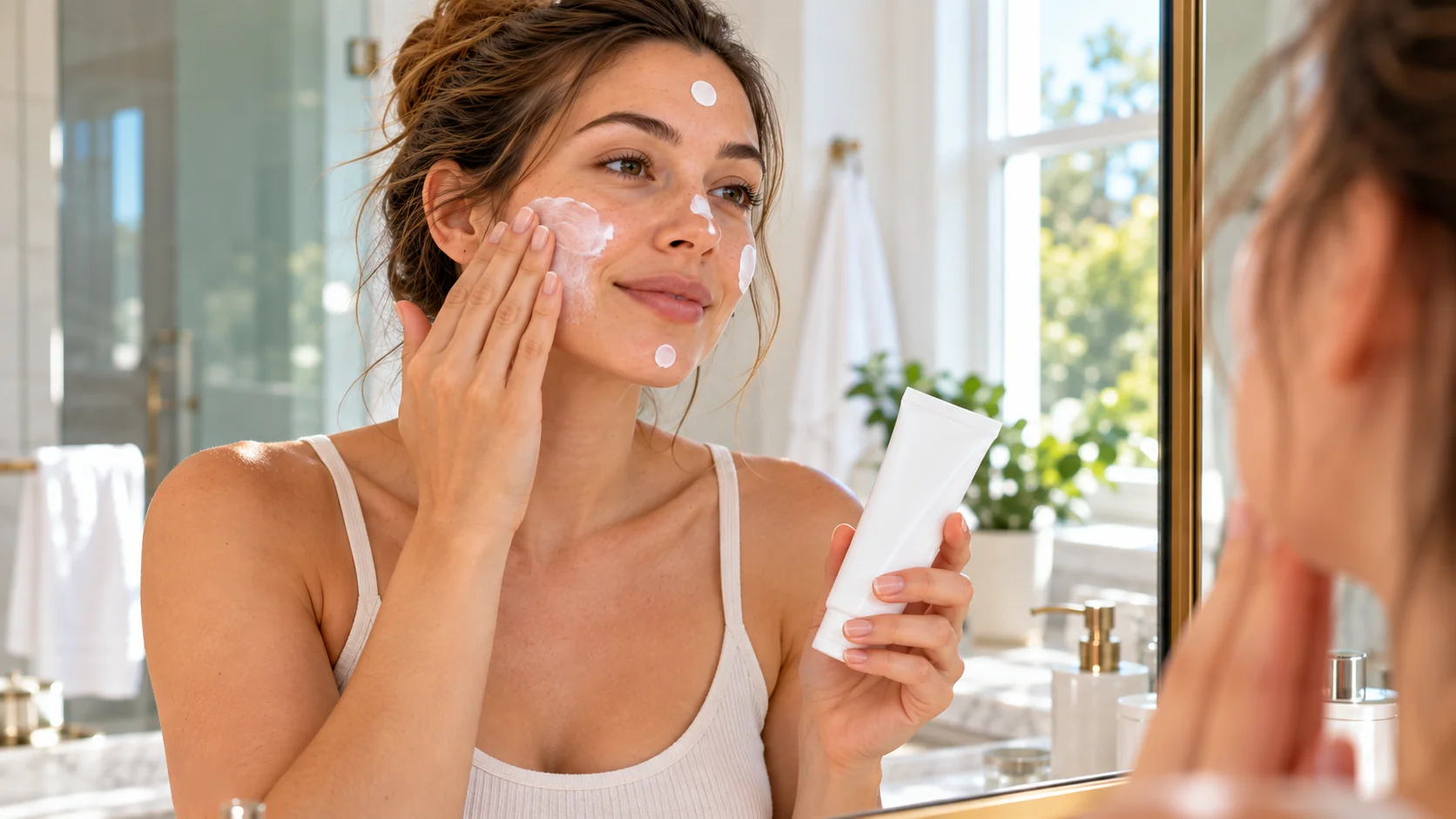
The technique matters less than most people expect — there’s no special rubbing motion or secret trick — but a few practical points make a real difference:
- Lotion or cream sunscreen: Apply your full amount (at least a teaspoon for the face) in dots across your forehead, cheeks, nose, and chin, then spread it evenly rather than rubbing it all in from one spot, which tends to leave some areas thicker and others nearly bare.
- Stick sunscreen: The American Academy of Dermatology recommends applying about four passes back and forth over each area, then rubbing it in afterward for an even layer — a single swipe generally isn’t enough to deliver a comparable amount of product.
- Spray sunscreen: Don’t spray it directly onto your face. The AAD recommends spraying it into your hands first, then applying it to your face the same way you would a lotion — this avoids inhaling the product and helps you see and control how much you’re actually applying. Avoid using sprays on windy days, since wind makes it hard to apply enough evenly and increases how much you might inhale, and never use spray sunscreen near an open flame or while smoking, since the aerosol can be flammable.
Whichever format you use, the underlying goal is the same: an even, complete layer with no gaps, applied in roughly the amount described above — not a specific ritual beyond that.
Facial Sunscreen Options for Daily Use
The amount and application guidance above applies no matter which sunscreen you use. If it’s helpful to see what that looks like in practice, here are three facial sunscreens readers may come across in different formats — these are examples to illustrate the formats discussed above, not a ranked or exclusive list.
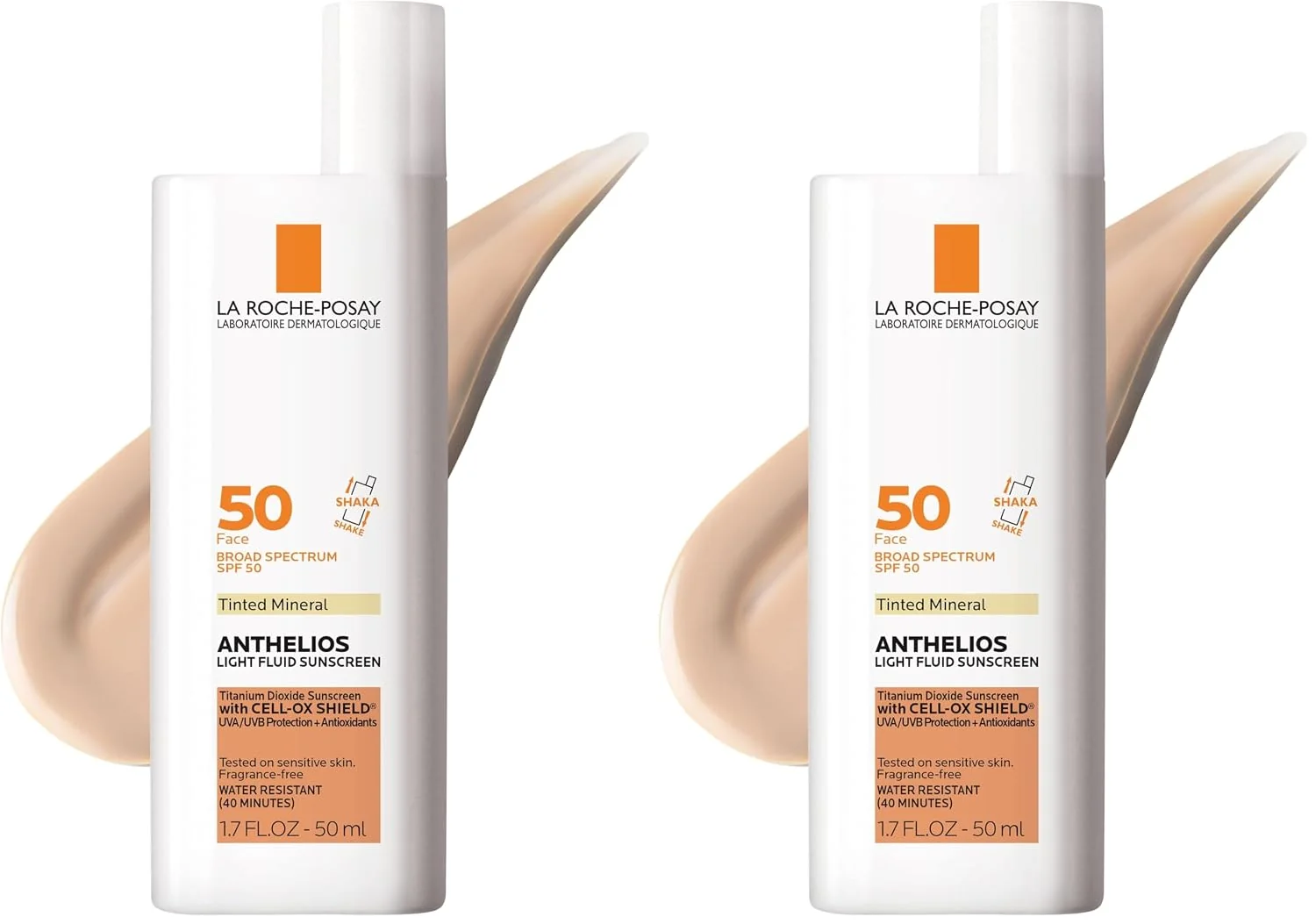
La Roche-Posay Anthelios 50 Mineral Tinted Ultra Light Sunscreen Fluid
A mineral, SPF 50 facial sunscreen with a tinted, ultra-light fluid texture, from La Roche-Posay’s Anthelios line.
View on Amazon (paid link)
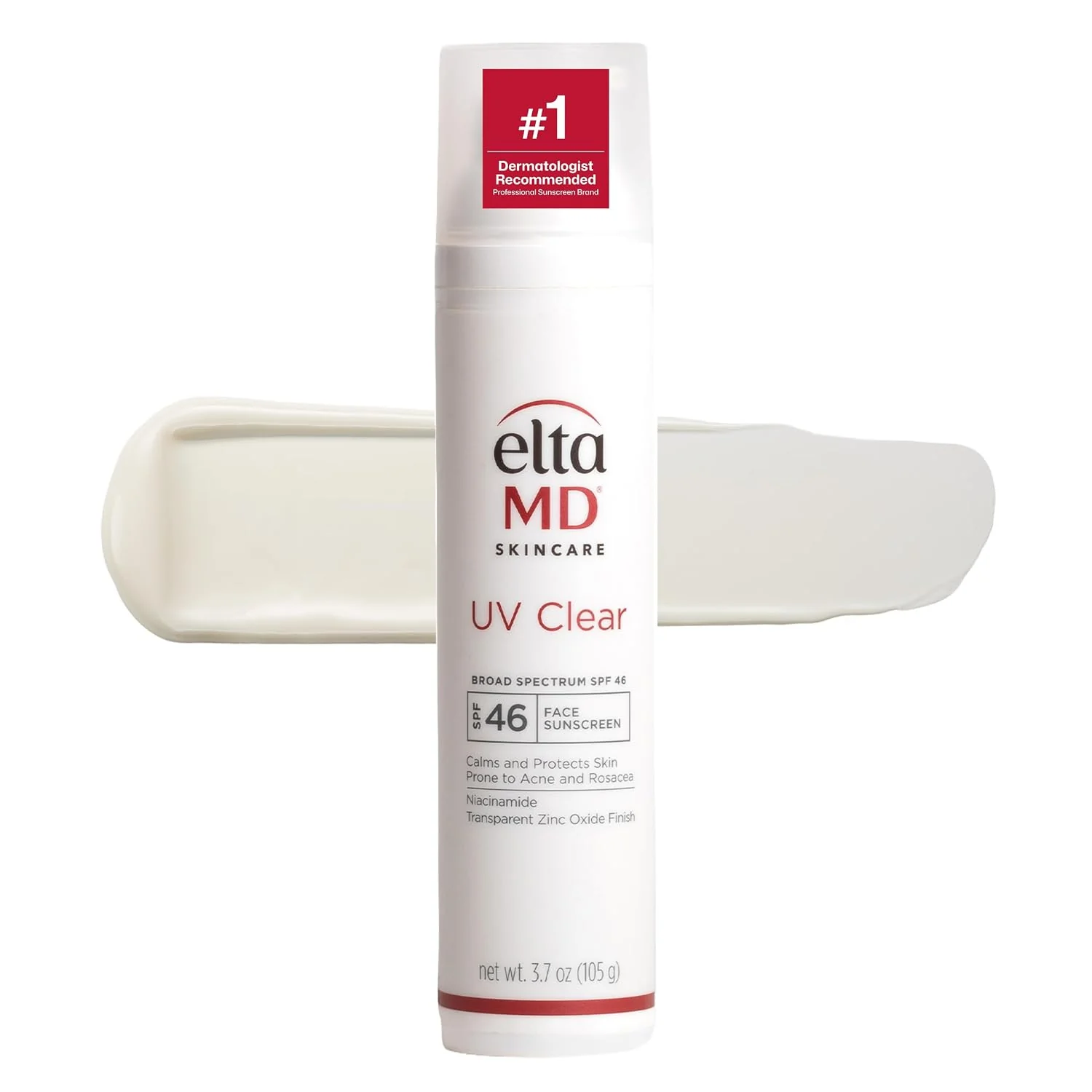
EltaMD UV Clear Face Sunscreen with Zinc Oxide, Oil-Free, SPF 46 / SPF 50
An oil-free facial sunscreen formulated with zinc oxide, from EltaMD’s UV Clear line, available in SPF 46 and SPF 50 versions.
View on Amazon (paid link)
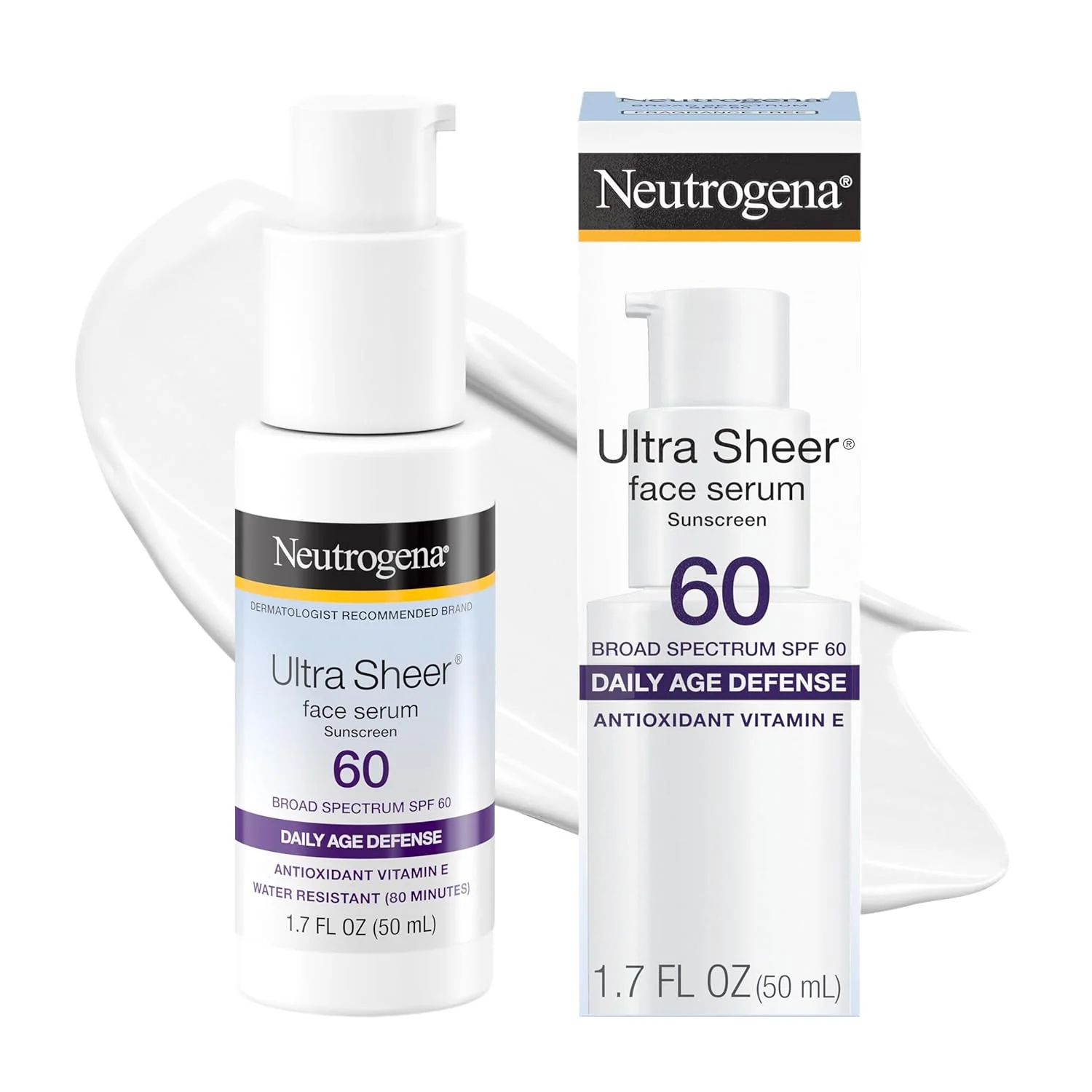
Neutrogena Ultra Sheer Sunscreen Serum SPF 60
An SPF 60 facial sunscreen with a serum texture, from Neutrogena’s Ultra Sheer line.
View on Amazon (paid link)
When Should Sunscreen Go in Your Morning Routine?
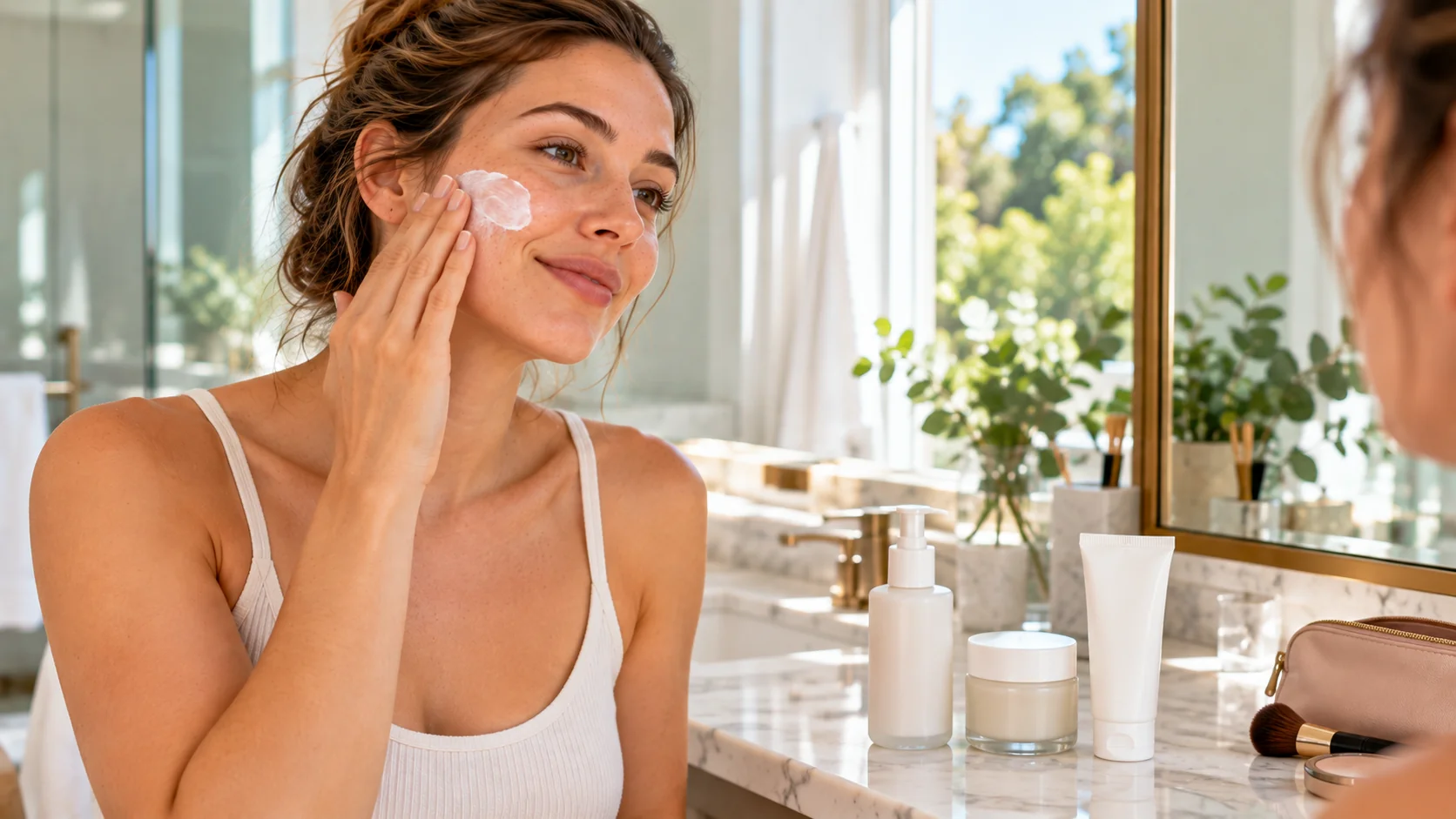
Sunscreen goes on as the last step of your morning skincare routine — after moisturizer has had a minute or two to absorb, and before makeup. AvaFitCare’s guide to layering skincare products covers the full morning and night order in detail; the short version for sunscreen specifically is that it shouldn’t be mixed into your moisturizer or applied earlier in your routine, since applying it as its own separate layer makes it much easier to know you’ve actually used enough.
How Long Before Going Outside Should You Apply Sunscreen?
Both the FDA and the American Academy of Dermatology recommend applying sunscreen about 15 minutes before heading outdoors, to give it time to fully settle on your skin. You’ll sometimes see claims that mineral sunscreen works “instantly” while chemical sunscreen needs time to absorb — but neither the FDA’s nor the AAD’s general guidance draws that distinction; both organizations recommend the same 15-minute window regardless of formula type. Following the general 15-minute guidance for any sunscreen you use is the more conservative, better-supported approach.
How Often Should You Reapply Sunscreen?

The general guideline — reapply every two hours — is specifically for continuous or extended outdoor exposure: a day at the beach, a hike, yard work, or similar. Neither the AAD, the FDA, nor the CDC publishes a separate rule for indoor days; their reapplication guidance is written for people who are actually outdoors. For someone who’s genuinely away from windows for most of the day, real UV exposure is low, and treating a single thorough morning application as sufficient is a reasonable, low-risk approach — though it’s a reasonable inference from the outdoor-specific guidance, not a rule these sources state directly. Swimming, heavy sweating, and toweling off are triggers to reapply immediately, regardless of how much time has passed — toweling off physically removes product, even if you haven’t gone in water.
“Water-resistant” on a label means the sunscreen was tested to maintain its SPF for a specific duration — 40 or 80 minutes, per FDA labeling rules — while swimming or sweating. It does not mean waterproof: the FDA doesn’t allow “waterproof” or “sweatproof” claims at all, because no sunscreen meets that bar. When you reapply, aim to restore a full, even layer — the available guidance doesn’t support using less on reapplication than you did the first time.
Do You Need to Reapply Sunscreen Indoors?

It depends on your actual exposure, not a blanket rule. UVA rays pass through most window glass, so time spent near sunny windows, commuting, or driving can add up to real exposure even without stepping outside. Neither the AAD, the FDA, nor the CDC publishes a specific rule for indoor reapplication — their published guidance covers continuous outdoor exposure, not indoor conditions, so there isn’t an authoritative source to point to either way. If you’re genuinely away from windows for most of the day, actual UV exposure is low, and treating your morning application as sufficient is a reasonable, low-risk approach, even though it isn’t a rule any of these three sources states outright. If a meaningful part of your day involves sitting near sunny windows, commuting, or stepping in and out, that’s a reasonable cue to reapply periodically rather than assume you’re covered all day — the dermatology sources that specifically address window exposure don’t agree on one exact interval, with recommendations ranging from roughly every two hours to every four to six hours, so treat that part of your day more like a partly-outdoor one than a fixed number. AvaFitCare’s sunscreen for beginners guide goes into more depth on cloudy-day and winter sun exposure specifically, if you want the fuller picture.
How to Reapply Sunscreen Over Makeup
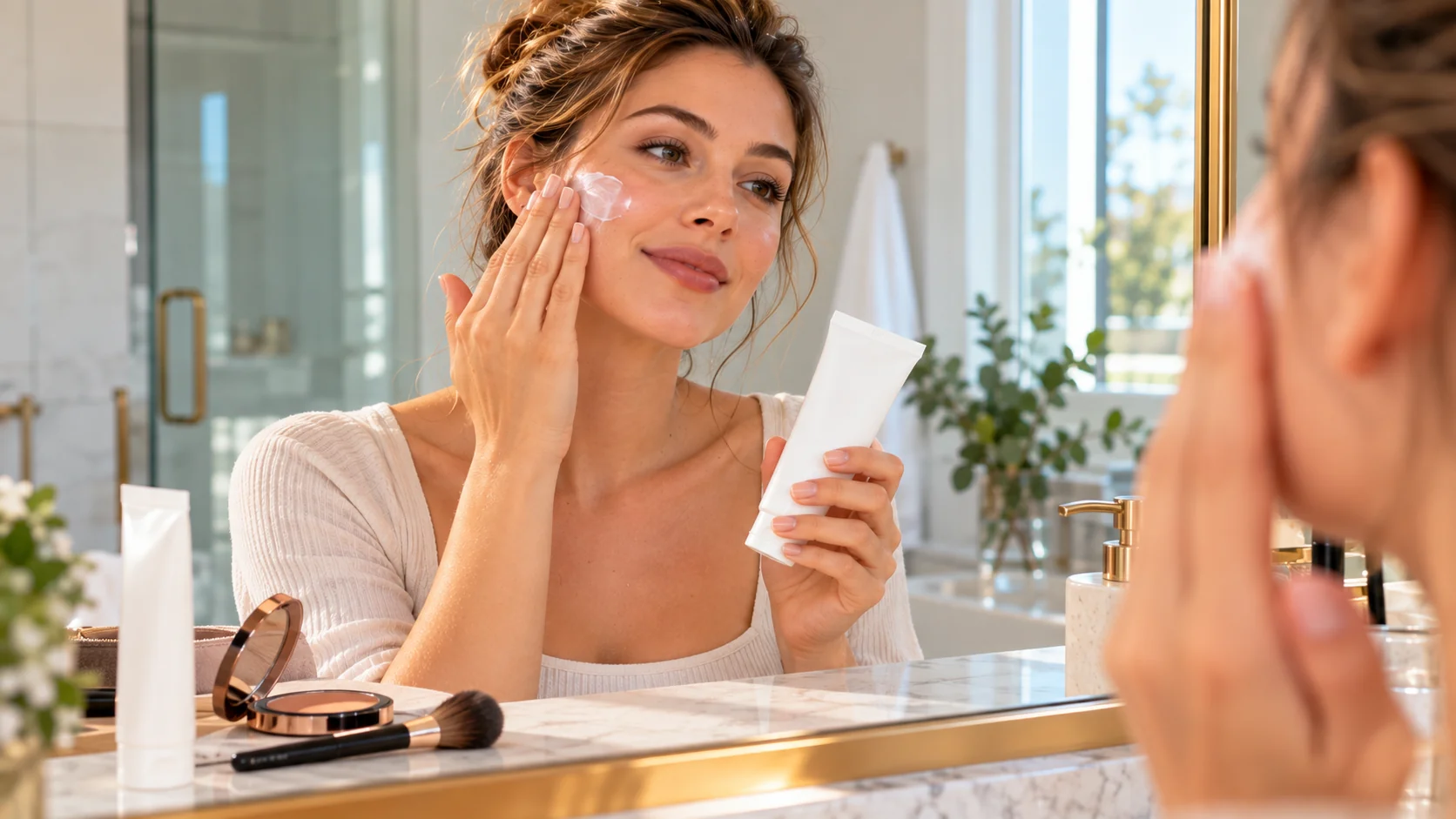
This is a genuinely practical challenge, not just a minor inconvenience. A full lotion or cream reapplication is the most reliable way to restore your original protection level, but it’s not always realistic over a full face of makeup. SPF setting powders and facial mists are more convenient, but be realistic about what they deliver: reaching the SPF listed on a powder or spray’s label generally requires more product than a quick dusting or a light mist provides, and there isn’t good evidence that a casual, thin application of either one reliably delivers the labeled SPF. If you’re spending extended time outdoors with makeup on, a heavier, more deliberate application of an SPF powder — genuinely enough to see and feel on your skin, not just a quick pass — is a more realistic goal than assuming a light touch-up is doing the same job as your morning application. Even so, treat that heavier powder application as a meaningful supplemental touch-up rather than a guaranteed way to restore your original labeled SPF — there isn’t solid evidence that any amount of powder reapplication reliably matches a full liquid or cream reapplication, which remains the more defensible benchmark whenever it’s practical.
Does Moisturizer with SPF Count?
It can, with two real caveats. First, confirm the label actually says broad-spectrum and SPF 30 or higher — not every moisturizer with some SPF number meets that bar. Second, and just as important: people generally don’t apply the same amount of facial moisturizer that they’d apply of a dedicated sunscreen, and using less product than the tested amount reduces your real-world protection the same way it would with any sunscreen. A moisturizer with adequate SPF, applied generously and evenly, can reasonably replace a separate sunscreen step — but if you’re only using a thin, moisturizer-sized amount out of habit, you’re likely getting less protection than the label suggests, not because the product is inadequate, but because the amount is.
Is Makeup with SPF Enough?
Generally, no — not on its own, and not because SPF-containing makeup is a bad product. The issue is the same one that comes up with moisturizer: getting the labeled SPF from foundation, tinted moisturizer, or BB cream requires applying it in an amount most people don’t use for makeup, since makeup is typically applied thinly and unevenly for a cosmetic finish, not for coverage density. This isn’t a reason to feel like you’re doing something wrong if you wear SPF makeup — it’s simply more realistic to treat it as a modest addition on top of a proper sunscreen application, rather than a replacement for one.
Are You Missing Your Ears, Neck, or Hairline?
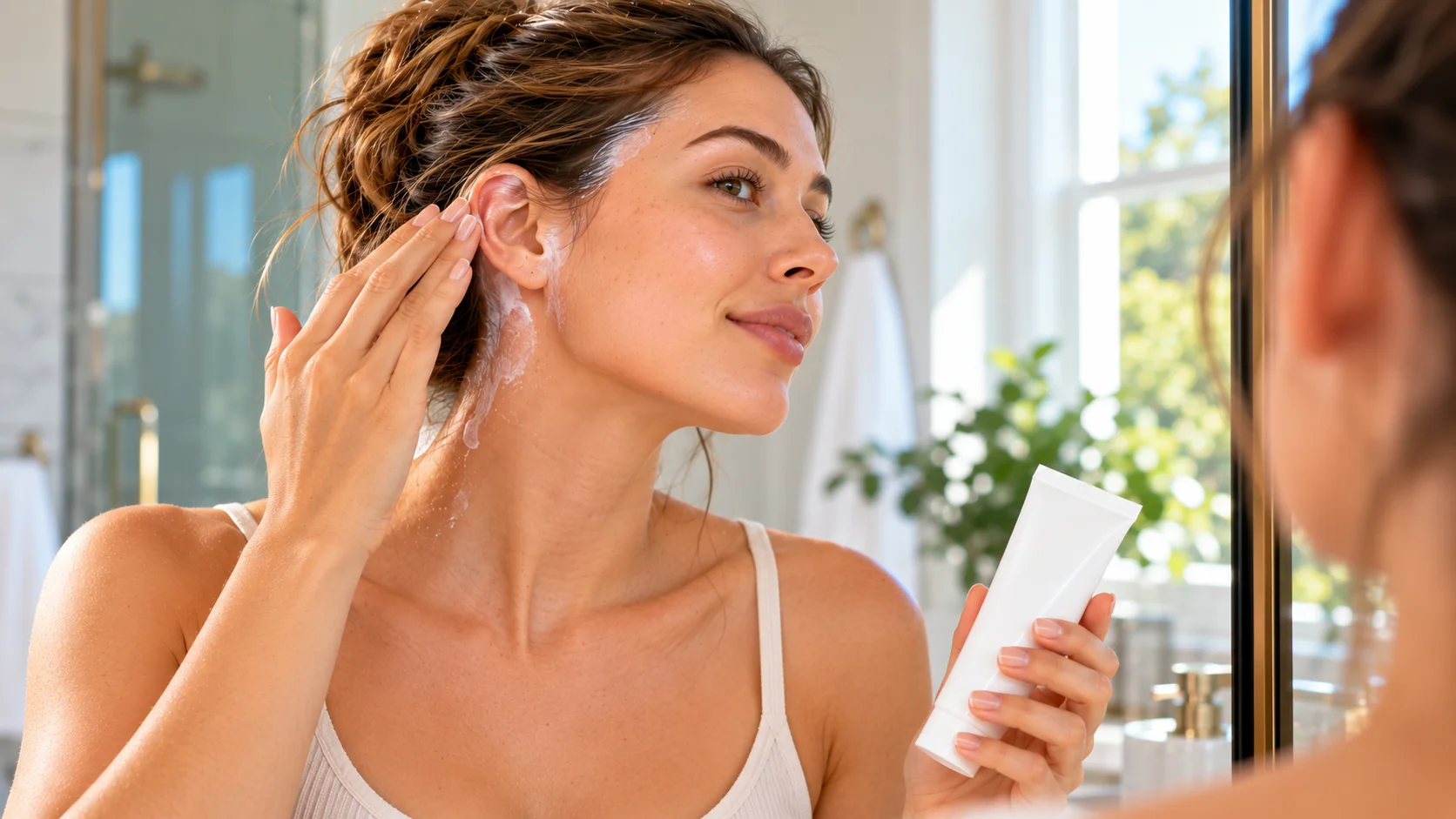
Ears, the back and sides of the neck, and the hairline are among the most commonly missed spots when applying facial sunscreen, largely because they’re easy to forget rather than hard to reach. Lips are also frequently exposed and frequently skipped; a lip balm formulated with SPF is a simple way to cover them without adding an extra step to your routine. None of these areas need a separate measurement system — the goal is the same as everywhere else: a deliberate, visible pass of product rather than an afterthought.
This guidance applies the same way regardless of skin tone. Dermatologists recommend sun protection for people of all skin tones, since UV exposure affects everyone’s skin, even though visible sunburn and some UV-related outcomes can look different depending on skin tone. If you’re specifically managing dark spots or an uneven tone, consistent daily sun protection is one of the more foundational habits for not making that concern worse — AvaFitCare’s skincare routine for dark spots covers that in more detail.
Can You Use Too Much Sunscreen?
Using a full, label-appropriate amount isn’t something to worry about — but it’s worth being precise about what the evidence actually says. The American Academy of Dermatology states that current sunscreen ingredients available in the U.S. haven’t been shown to be harmful to human health, while also noting that the FDA continues to study how a handful of specific ingredients are absorbed into the body and what, if anything, that means long-term. That’s a statement about ingredient safety — it isn’t a specific finding that any quantity of sunscreen, however large, is risk-free, and no source this guide found has studied “how much is too much” as its own question. In practice, the concerns people actually run into with a heavier layer are about comfort and convenience, not that ingredient-safety question: it can feel greasier, take longer to absorb, or sting if it gets into your eyes, and an unusual reaction like a rash or persistent irritation is worth mentioning to a dermatologist rather than pushing through it. Following a specific product’s label directions, rather than layering on multiple different sunscreens at once, is the practical guidance that actually applies here. Given how consistently people under-apply relative to the tested amount, erring toward a full, generous, label-appropriate application is a reasonable habit for most people — a narrower and more defensible claim than saying there’s no upper bound worth thinking about.
Common Sunscreen Amount Mistakes
The patterns that come up again and again: a thin, quick swipe instead of a full teaspoon; forgetting ears, the back of the neck, hairline, and lips; relying on SPF makeup or powder as your only protection; applying unevenly and leaving thin patches; assuming a higher SPF makes up for less product; treating “water-resistant” as “waterproof”; and applying sunscreen right as you walk out the door instead of 15 minutes beforehand. None of these require buying anything new — just adjusting how much and how you apply what you already have.
Simple Real-Life Examples
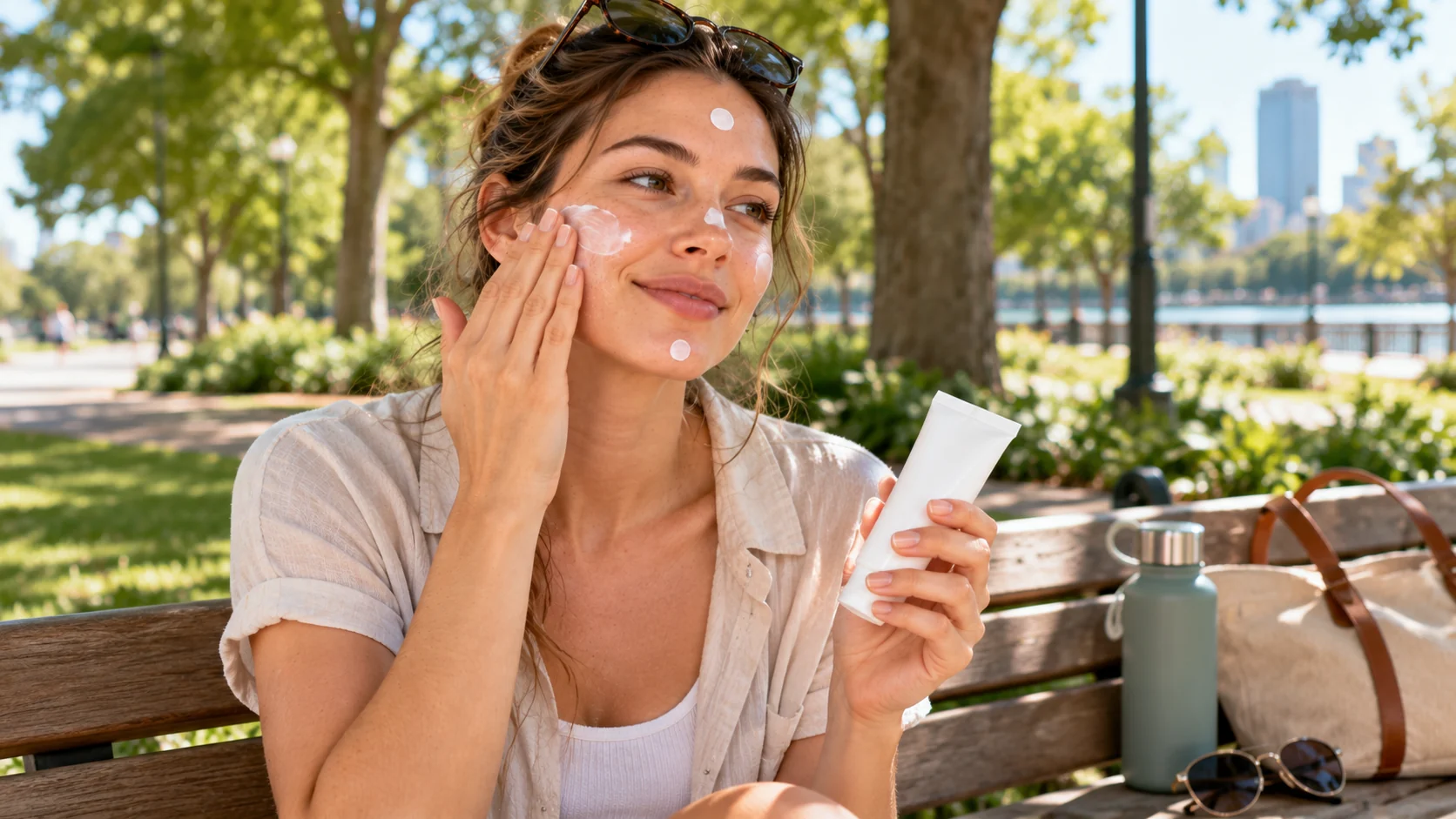
Normal workday with a commute: A full teaspoon on your face plus a separate layer on your neck, about 15 minutes before heading out. If a meaningful part of your day involves sitting near windows or being outdoors, reapply periodically rather than assuming one application covers you; if you’re genuinely away from windows for most of the day, one morning application is a reasonable, low-exposure approach, even though it isn’t an official AAD/FDA/CDC rule.
Outdoor day (beach, hike, yard work): Apply the full amount before heading out, then reapply every two hours, plus immediately after swimming, heavy sweating, or toweling off — regardless of whether two hours have passed.
Makeup day: Apply sunscreen as the last skincare step, before makeup. For extended outdoor time later, plan on a genuinely thorough SPF powder touch-up (or reapplying liquid sunscreen if practical) rather than assuming a light dusting matches your morning application.
Frequently Asked Questions
At least 1 teaspoon, according to the American Academy of Dermatology — roughly the amount needed to cover the length of your index and middle fingers laid together.
No. The finger-length guidance describes a line of product spanning two fingers, not two full finger-pads piled with product — it’s meant to help you visualize roughly a teaspoon, not to suggest you’re overdoing it.
The original concept, from a 2002 BMJ letter, was a whole-body method covering 11 sections, including a combined head-and-neck-and-face zone. The AAD’s related teaspoon guidance is specifically for the face. Neither ties one finger-length measurement to “face and neck” as a single area.
This guide didn’t find that figure tied to a primary source for a clearly defined area. The better-supported figure for the face is at least 1 teaspoon.
There isn’t a single, well-sourced combined figure. Apply a full teaspoon to your face, then a separate, visible layer to your neck.
No. SPF reflects protection at the tested application amount, not how much product you need or how long it lasts.
Every two hours during continuous outdoor exposure, and immediately after swimming, heavy sweating, or toweling off. Neither the AAD, FDA, nor CDC states a separate rule for indoor days; if you’re genuinely away from windows for most of the day, one morning application is a reasonable, low-exposure approach, though it’s an inference rather than an official rule.
There’s no official AAD/FDA/CDC rule for this specific question. If you’re away from windows with limited direct sun exposure, one morning application is a reasonable approach. Real time near sunny windows or commuting is a reasonable cue to reapply periodically instead — sources that address window exposure specifically don’t fully agree on one exact interval — so treat that part of your day more like a partly-outdoor one.
A full liquid or cream reapplication is most reliable. SPF powders and mists are more convenient but need a genuinely thorough application, not a light dusting, to approach their labeled SPF.
It can be, if it’s labeled broad-spectrum SPF 30 or higher and applied generously and evenly — the same amount guidance applies here as to any sunscreen.
Generally no, since most people don’t apply enough to reach the labeled SPF. It’s a reasonable addition on top of sunscreen, not a replacement for it.
Yes. They’re commonly missed and get meaningful sun exposure, so they need their own deliberate application.
Bottom Line
The best-sourced answer to “how much sunscreen for your face” is at least 1 teaspoon, per the American Academy of Dermatology — roughly a line of product covering the length of your index and middle fingers. Your neck deserves its own separate, visible layer rather than a portion carved out of that same teaspoon, and commonly missed spots like ears, hairline, and lips are worth a deliberate pass rather than an afterthought. A higher SPF number doesn’t let you use less product or reapply less often, and popular shortcuts like a quarter-teaspoon rule or a light dusting of SPF powder generally deliver less protection than they seem to promise. If you want the fuller picture on choosing a sunscreen formula and where it fits in a complete routine, see AvaFitCare’s sunscreen for beginners guide and guide to layering skincare products.
Why You Can Trust This Guide
This guide was developed using current guidance from the FDA, the American Academy of Dermatology, and CDC sun-safety resources, along with relevant research and reputable academic-medical-center commentary on sunscreen application amounts, combined with current U.S. search-intent research and a review of AvaFitCare’s existing skincare and sunscreen coverage to avoid repeating what’s already covered elsewhere on the site. Quantitative claims were checked against their original source and area of coverage rather than repeated because they’re common online, and figures that couldn’t be traced to a clearly defined source and body area were presented as uncertain rather than stated as fact. This article has not been reviewed by a dermatologist or other medical professional, and AvaFitCare has not conducted independent clinical or laboratory testing. It’s for general educational purposes and isn’t a substitute for individualized advice from a board-certified dermatologist.
Affiliate Disclosure
This article contains affiliate links. AvaFitCare may earn a commission from qualifying purchases made through these links, at no additional cost to you.
More In Skincare



Why You Can Trust This Guide
Sources ProvidedReal citations you can check yourself, listed below.
Research-InformedGrounded in established, mainstream guidance — not trends.
Editorial ProcessSee how we write and review guides.
Medical Disclaimer IncludedClearly marked below — this guide is educational, not personalized medical advice.
Read our Review Policy for a plain explanation of what our review process does — and doesn't — mean for health-adjacent content.
Sources & Further Reading
How to Apply SunscreenHow to Select a SunscreenHow to Use Stick and Spray Sunscreens5 Common Sunscreen Mistakes — and How to Avoid ThemIs Sunscreen Safe?Sun ProtectionQuestions and Answers: FDA Announces New Requirements for Over-the-Counter (OTC) Sunscreen Products Marketed in the U.S.Sun SafetyShould You Use Very High SPF Sunscreen?21 CFR 352.72, General testing proceduresPMCAsk the Expert: How Often Do I Need to Reapply Sunscreen If I’m Indoors All Day?How Often to Reapply Sunscreen
This guide was researched and fact-checked following our Editorial Guidelines and Review Policy.
Medical Disclaimer
This article is for general educational purposes only and does not constitute medical advice. It is not a substitute for professional diagnosis or treatment. Sunscreen reduces but does not eliminate UV-related risk, and no sunscreen provides complete protection. If you have a persistent skin reaction, an unusual mole or spot, or concerns about sun sensitivity related to a medication or health condition, talk to a board-certified dermatologist or other qualified healthcare provider.