Stand in the sunscreen aisle for more than a minute and you’ll start seeing numbers everywhere — SPF 15, 30, 50, 70, 100 — plus terms like “broad-spectrum,” “mineral,” “chemical,” and “water-resistant” stacked on every bottle. It’s easy to walk out with whatever’s cheapest or whatever a friend mentioned once, without really knowing if it’s doing what you think it’s doing.
Here’s the reassuring part: sunscreen doesn’t have to be complicated. For most people, the key things to look for on the label are broad-spectrum protection, SPF 30 or higher, and water resistance — plus using enough of it, often enough, to actually get the protection the label promises. That’s this guide: what SPF actually means, how to pick a sunscreen for your skin, how much to use, when to reapply, and the mistakes that quietly cancel out even a good sunscreen.
Sunscreen works by absorbing, reflecting, or scattering ultraviolet (UV) radiation from the sun before it can damage the skin. UV radiation reaches skin in two main forms that matter for everyday protection: UVB rays, which are the main cause of sunburn, and UVA rays, which penetrate more deeply and are linked to premature skin aging — and, unlike UVB, UVA rays pass through clouds and window glass.
Daily sunscreen use is one of the most consistently recommended habits in dermatology, largely because cumulative, everyday UV exposure — not just the occasional bad sunburn — is a major driver of visible skin aging and a known skin cancer risk factor over time. That’s worth sitting with for a second: sunscreen isn’t primarily a beach-day product. It’s a daily-habit product, more like brushing your teeth than like packing sunglasses for a trip.
It’s also worth being upfront about what sunscreen can’t do. No sunscreen blocks 100% of UV rays, no matter how high the SPF number climbs, and sunscreen is one part of sun protection, not the entire strategy. Shade, protective clothing, and timing your outdoor time all play a role too — more on that later in this guide.
SPF Explained: What the Numbers Actually Mean
SPF stands for Sun Protection Factor, and it specifically measures protection against UVB rays — the ones responsible for sunburn. In simple terms, SPF is a rough measure of how much longer it would take your skin to burn with the sunscreen on, compared to no protection at all, under controlled testing conditions.
Here’s the part that surprises a lot of beginners: SPF numbers don’t scale in a straight line. In terms of the percentage of UVB rays filtered out:
SPF Level
Approximate UVB Rays Filtered
SPF 15
About 93%
SPF 30
About 97%
SPF 50+
Higher protection than SPF 30, but no sunscreen blocks 100%
The jump from SPF 30 to SPF 50 is smaller than it looks on the bottle, and no sunscreen — regardless of the number — filters out 100% of UVB rays. That’s why the American Academy of Dermatology recommends SPF 30 or higher as the practical everyday standard, rather than chasing the highest number on the shelf. A higher SPF isn’t harmful, and it can offer a small additional margin, but it’s not a substitute for applying enough sunscreen and reapplying on schedule — a thin layer of SPF 50 will underperform a properly applied layer of SPF 30.
It’s also worth knowing that SPF testing happens under specific lab conditions using a thicker amount of product than most people actually apply. In everyday, real-world use, most people apply far less than the tested amount, which is one reason the actual protection you get often falls short of the number on the bottle — and why the application amount discussed later in this guide matters just as much as the SPF number itself.
Why Broad-Spectrum Matters as Much as the SPF Number
SPF only tells part of the story, because it only measures UVB protection. That’s where the term “broad-spectrum” comes in — it means a sunscreen has been tested and shown to protect against both UVB and UVA rays, not just UVB.
This distinction matters because UVA and UVB damage skin differently. UVB is the primary cause of sunburn and plays a major role in skin cancer risk. UVA penetrates more deeply into the skin, contributing to premature aging — fine lines, loss of elasticity, and worsening of existing dark spots — and it can reach skin through clouds and windows, which is part of why sun protection matters even on overcast days or during a long indoor commute.
A sunscreen can technically have a high SPF number without being broad-spectrum, which means it could protect well against sunburn while offering little defense against UVA-related aging and pigmentation. The American Academy of Dermatology’s standing recommendation is to choose a sunscreen that is both broad-spectrum and SPF 30 or higher for daily use — the two label terms work together, and neither one on its own tells you the whole picture.
Remember: Broad-Spectrum + SPF 30 or Higher
Mineral vs Chemical Sunscreen: What’s the Difference?
Sunscreens generally fall into two categories based on their active ingredients, and the difference comes down to how they handle UV rays once they’re on your skin.
Mineral sunscreens (sometimes called physical sunscreens) use active ingredients like zinc oxide and titanium dioxide, which form a protective layer on the skin. Like other sunscreens, they work primarily by absorbing UV radiation, and mineral filters can also reflect some UV radiation. They’re generally considered a gentler option for sensitive or reactive skin, since they’re less likely to cause stinging or irritation. The tradeoff is texture — mineral formulas have historically left more of a visible white or gray cast, though modern tinted and micronized formulas have narrowed that gap considerably.
Chemical sunscreens use ingredients such as avobenzone, octocrylene, or oxybenzone, which absorb UV radiation and convert it into a small amount of heat that’s released from the skin. They tend to apply more like a lotion, without the white cast associated with older mineral formulas, and they’re often preferred for makeup-wearers and daily use under other products. Some sunscreen formulas may irritate sensitive skin. If a product stings or causes a reaction, consider a fragrance-free formula designed for sensitive skin or ask a dermatologist for guidance.
Neither category is a wrong or unsafe choice for most people — this is genuinely a preference and skin-type decision, not a case of one being “better” across the board. If you have sensitive, reactive, or acne-prone skin, a mineral sunscreen is usually the safer place to start. If you want a lighter, more cosmetically elegant daily formula and your skin tolerates it well, a chemical sunscreen may feel more comfortable under makeup or moisturizer. Some sunscreens also combine both mineral and chemical filters in one formula.
As an Amazon Associate I earn from qualifying purchases.
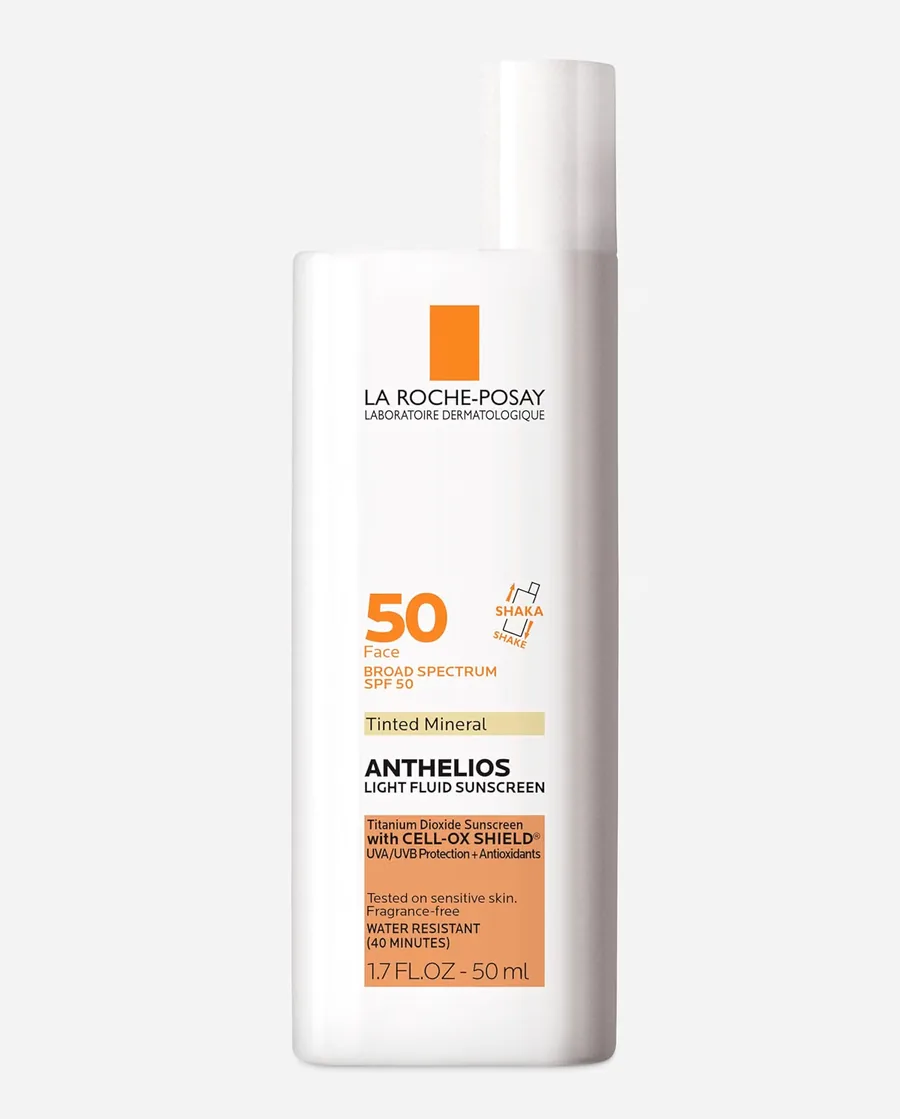
La Roche-Posay Anthelios Sunscreen
If you’re comparing sunscreen types, this is one widely available option some readers use while deciding between mineral and chemical formulas.
A dedicated Sunscreen by Skin Type guide is planned for this Sun Care series.
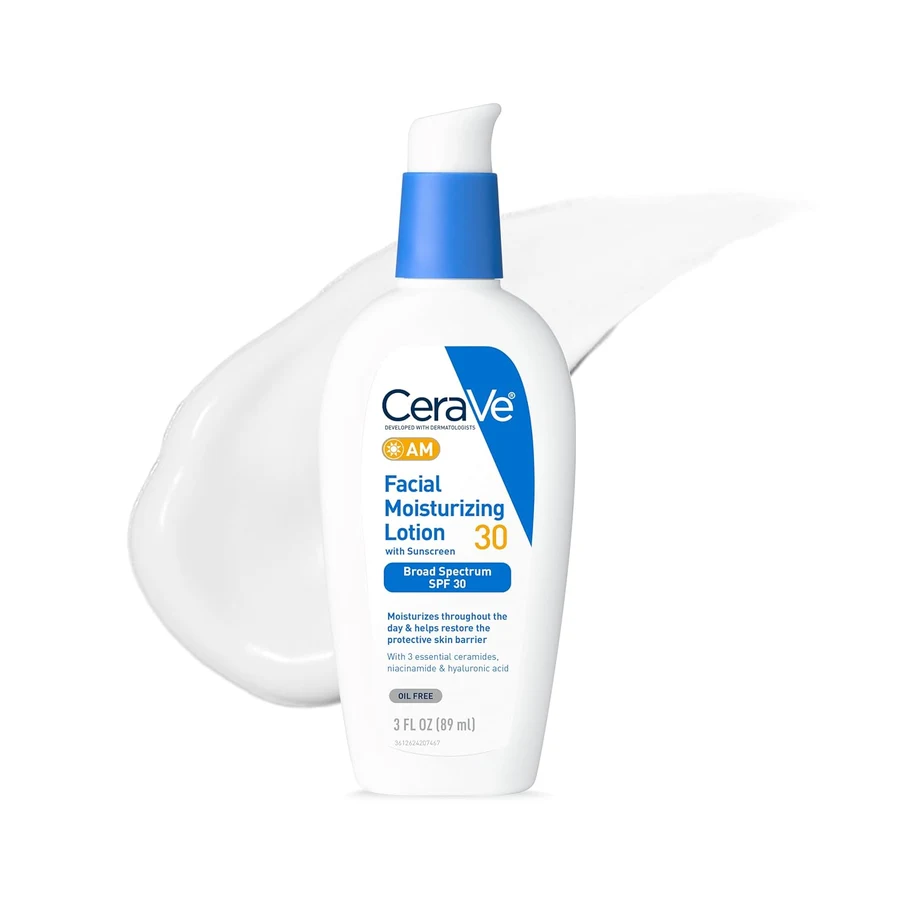
CeraVe Facial Moisturizing Lotion SPF 30
For beginners who want a straightforward, everyday moisturizer with built-in broad-spectrum SPF, this is one option worth considering as a starting point.
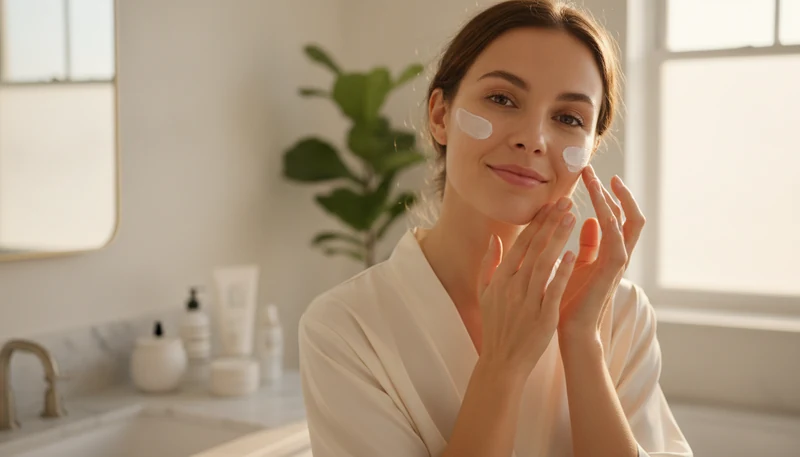
This is the step most people get wrong, and it’s arguably more important than which SPF number you choose. The American Academy of Dermatology recommends about one ounce — roughly enough to fill a shot glass — to cover the entire exposed body for adults, and at least 1 teaspoon when applying sunscreen to the face.
Most people apply far less than this in practice, sometimes a quarter or less of the tested amount. Applying too little sunscreen can significantly reduce the level of protection you actually receive compared with the SPF shown on the label. If you’re not sure whether you’re using enough, err toward more rather than less — sunscreen isn’t a product where a small dab does the job.
How to Apply Sunscreen Correctly
01
Apply It as the Last Step of Your Morning Routine
Sunscreen goes on after moisturizer (once it’s absorbed) and before makeup, as the final layer of your skincare routine.
02
Cover Every Exposed Area
Face, neck, ears, and the back of the hands are the most commonly missed spots. If you’re wearing short sleeves or shorts, don’t forget arms and legs.
03
Use the Full Recommended Amount
At least a teaspoon for the face, about an ounce for the rest of the exposed body — don’t stretch a small dab across your whole face.
04
Give It Time to Work Before Heading Outside
Apply sunscreen at least 15 minutes before going outdoors, following the directions on the product label.
05
Don’t Forget Commonly Skipped Spots
Lips (a lip balm with SPF helps here), ears, hairline, the tops of feet if you’re in sandals, and the back of the neck are easy to miss.
That’s the entire technique — there’s no special rubbing motion or secret trick beyond applying enough, everywhere, and doing it consistently.
When Should You Reapply Sunscreen?
A single morning application doesn’t last all day, regardless of the SPF number. The general guideline is to reapply every two hours when you’re outdoors for an extended period, and immediately after swimming, sweating heavily, or toweling off, even if the product is labeled water-resistant.
“Water-resistant” on a label means the sunscreen has been tested to maintain its SPF level for a specific amount of time — typically 40 or 80 minutes — while swimming or sweating, not that it lasts indefinitely in water. No sunscreen is labeled “waterproof,” because no sunscreen actually is; reapplication after water exposure or heavy toweling is still necessary.
For an ordinary day spent mostly indoors with limited direct sun exposure, one thorough morning application is generally enough. The two-hour reapplication guideline is specifically for continuous or extended outdoor exposure — think a day at the beach, a hike, or yard work, not a walk to the mailbox.
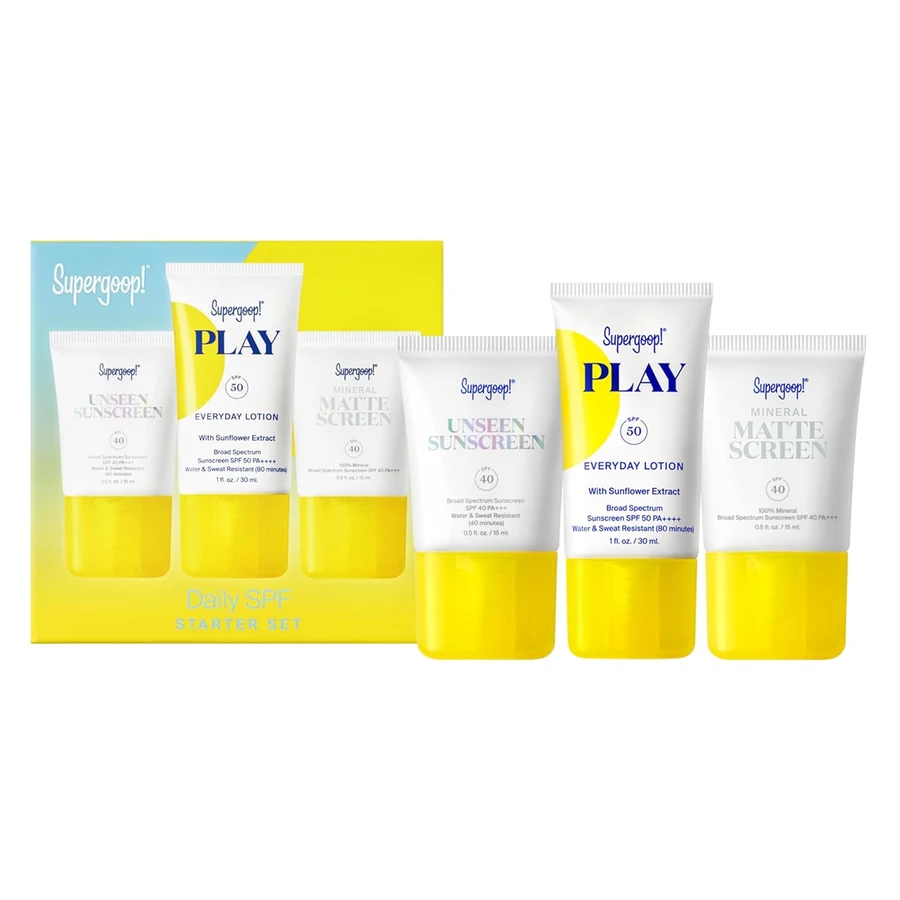
Supergoop! Daily SPF Starter Set
For people who spend a lot of time outdoors, exercise, or travel often, a reapplication-friendly starter set like this can make the two-hour habit easier to stick to.
Sunscreen is always the last step of a morning skincare routine, applied after moisturizer and before makeup. If you’re building out a full routine from scratch, our skincare routine for beginners guide covers the complete order — cleanser, treatment, moisturizer, then sunscreen — in more detail.
A few common questions come up here. If you’re using a separate moisturizer and sunscreen, apply the moisturizer first and let it absorb for a minute or two before layering sunscreen on top. If your moisturizer already contains SPF, that can work as a simpler combined step, but it’s worth confirming the label says broad-spectrum SPF 30 or higher, since not all moisturizer-SPF combinations meet that standard, and many people don’t apply enough facial moisturizer to reach the tested SPF amount either.
Your Sunscreen Routine at a Glance
Step
What to Do
1. Choose
Broad-spectrum, SPF 30 or higher, formula suited to your skin type
2. Apply
Last step of your AM routine — at least 1 teaspoon for the face
3. Cover
Face, neck, ears, hands, and any other exposed skin
4. Wait
At least 15 minutes before heading outside, per label directions
5. Reapply
Every 2 hours outdoors, or immediately after swimming/sweating
6. Repeat
Every day — not just sunny or beach days
Common Sunscreen Mistakes Beginners Make
1
Applying too little
This is the single biggest gap between the SPF on the label and the protection you actually get. Use the full recommended amount, not a thin dab.
2
Skipping sunscreen on cloudy or cool days
UVA rays pass through cloud cover, and UV exposure isn’t limited to hot, sunny weather.
3
Only wearing it at the beach
Daily, cumulative UV exposure — the commute, the walk to lunch, the drive with the window down — adds up over time and is part of why dermatologists recommend a daily habit, not an occasional one.
4
Forgetting to reapply
A single morning application doesn’t hold up through hours of outdoor exposure, no matter the SPF number.
5
Missing spots
Ears, the back of the neck, hands, and lips are the most commonly skipped areas.
6
Assuming a higher SPF makes up for a thin application
Applying too little sunscreen can significantly reduce your actual protection, regardless of the SPF number on the bottle.
7
Relying only on SPF makeup or moisturizer
Most people don’t apply enough of either product to reach its tested SPF level — treat these as a bonus layer, not your primary sunscreen.
8
Assuming “water-resistant” means it lasts all day in water
Water resistance is tested for a specific window (commonly 40 or 80 minutes) and still requires reapplication after swimming or heavy sweating.
Do You Still Need Sunscreen Indoors, on Cloudy Days, or in Winter?
It depends on your actual exposure — and this is one of the more common points of confusion for beginners. UVA rays pass through clouds and through window glass, which means sun exposure isn’t limited to bright, sunny days spent outside. People who spend significant time near sunny windows, drive frequently, or will be outdoors during the day can benefit from daily sun protection. People who remain indoors away from windows with little or no direct sun exposure may have less need for sunscreen on those particular days.
Winter UV exposure is generally lower than summer exposure, but it isn’t zero, and UV can also reflect off snow, increasing exposure during winter outdoor activities like skiing. Cloud cover reduces visible brightness more than it reduces UV transmission, so a gray, overcast day can still deliver meaningful UV exposure.
The practical takeaway: think about your actual exposure for the day — time near windows, time driving, time you’ll spend outside — rather than assuming sunscreen is either always necessary or never necessary. These indoor, cloudy-day, and winter-specific scenarios each get a fuller, dedicated breakdown elsewhere in this Sun Care series.
When Should You See a Dermatologist?
General sunscreen guidance is meant for everyday prevention, not for diagnosing or treating existing skin damage. Some situations are worth a dermatologist’s attention rather than more trial and error with over-the-counter products:
A mole or spot that’s new, changing in size, shape, or color, or that’s bleeding
Sunburns that are severe, blistering, or accompanied by fever or chills
Persistent skin reactions or irritation from sunscreen that don’t improve after switching formulas
Concerns about sun damage, pigmentation, or skin cancer risk based on personal or family history
Photosensitivity — unusual reactions to sun exposure, which can sometimes be linked to certain medications
A dermatologist can also help you choose a sunscreen suited to a specific skin condition, medication, or personal risk profile in a way that general guidance can’t.
Frequently Asked Questions
Broad-spectrum SPF 30 or higher is the standard recommendation for daily use. Higher SPF numbers aren’t harmful, but the difference in real-world protection is smaller than the numbers suggest, and applying enough product matters more than chasing the highest SPF on the shelf.
Neither is universally “better” — it depends on your skin. Mineral sunscreen (zinc oxide, titanium dioxide) is generally gentler for sensitive or reactive skin, while chemical sunscreen tends to apply more like a lightweight lotion without a white cast. Many people do well with either.
At least a teaspoon for the face alone, per American Academy of Dermatology guidance. Most people apply noticeably less than this, which is one of the main reasons real-world sun protection often falls short of the SPF listed on the bottle.
It depends on your exposure. If you spend time near sunny windows, drive frequently, or will be outside during the day, daily sunscreen is worth the habit, since UVA rays pass through windows and clouds. If you stay indoors away from windows with little direct sun exposure, your need is lower on those particular days.
Every two hours during extended outdoor exposure, and immediately after swimming, sweating heavily, or towel-drying — even with a water-resistant formula. For an ordinary indoor day, one thorough morning application is generally enough.
It can work as a simpler combined step if it’s labeled broad-spectrum SPF 30 or higher, but confirm you’re applying enough of it to reach that level. A dedicated sunscreen is usually the more reliable choice for guaranteed coverage.
No. SPF measures the level of protection, not how long a single application lasts. Reapplication timing is the same regardless of SPF number.
Yes. UV exposure is generally lower in winter, but not zero, and it can reflect more strongly off snow. Daily broad-spectrum SPF 30+ is generally recommended as a year-round habit rather than a seasonal one.
Bottom Line
Choosing and using sunscreen doesn’t need to be complicated: look for broad-spectrum protection with SPF 30 or higher, pick a mineral or chemical formula based on how your skin tolerates it, apply a generous amount as the last step of your morning routine, and reapply every two hours when you’re outside for a while. The habit matters more than the exact product — a sunscreen you’ll actually wear every day beats a “perfect” one sitting unused in a drawer. If you’re building a full skincare routine around this habit, our skincare routine for beginners guide walks through where sunscreen fits alongside cleanser and moisturizer, and our skincare routine for dark spots guide covers why daily sun protection matters even more if pigmentation is a concern.
This article is intended for general educational purposes and isn’t a substitute for personalized advice from a board-certified dermatologist or other qualified healthcare provider. It doesn’t diagnose, treat, cure, or prevent any skin condition, sunburn, or skin cancer. Sunscreen reduces but does not eliminate UV-related risk, and no sunscreen provides complete protection. If you have a persistent skin reaction, an unusual mole or spot, or concerns about sun sensitivity related to a medication or health condition, please consult a dermatologist or healthcare provider.
Get New Guides in Your Inbox
No spam, no filler — just new articles as we publish them.