If you’ve ever stared at a new breakout and wondered what you did wrong, the honest answer is probably: nothing in particular. Acne isn’t a punishment for a bad skincare routine or a sign that you’re not washing your face enough — it’s a skin condition with a specific, well-studied biological cause, plus a handful of things that can make it worse once it’s already happening. Understanding that difference is the most useful thing you can take away from this guide.
This article focuses specifically on the why — what’s actually happening under your skin, what genuinely causes breakouts, and what just makes them worse. If you’re looking for a step-by-step routine to actually treat acne-prone skin, AvaFitCare already has a dedicated skincare routine for acne-prone skin guide for that — this one isn’t here to repeat it, just to explain the cause first.
Acne happens when hair follicles become clogged with excess oil (sebum) and dead skin cells, and acne-related bacteria trigger inflammation in that clogged follicle. Among the clearest root drivers of why this happens to some people more than others are hormones (especially androgens, which increase oil production) and genetics — if your parents had acne, you’re more likely to get it too, according to the Mayo Clinic. Stress, certain foods, friction, and some skincare or hair products don’t cause acne on their own, but they can make existing acne worse. Dirty skin and poor hygiene are not a cause — in fact, over-washing or over-scrubbing tends to make breakouts worse, not better, per the American Academy of Dermatology.
How Does Acne Develop Under the Skin?
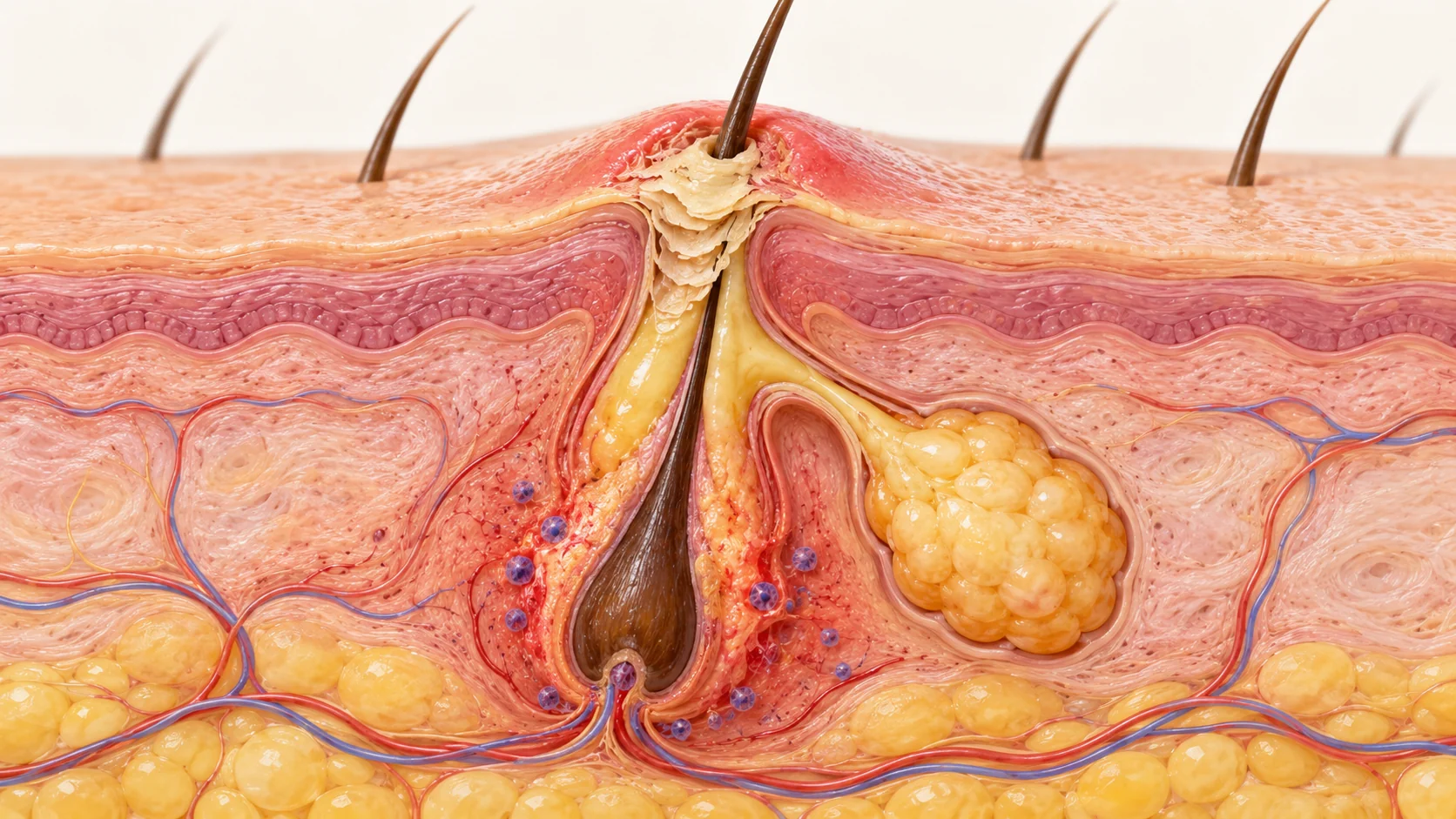
Every hair on your body grows out of a follicle that’s connected to a sebaceous (oil) gland. Those glands normally produce sebum — an oily substance that keeps skin and hair lubricated. Acne starts when that normal process goes a little sideways, through four factors that typically act together rather than one at a time, per Mayo Clinic and Cleveland Clinic. The American Academy of Dermatology describes the same starting point more simply, as pores becoming clogged — “pore” here refers to the visible opening of the same follicle described above — though its overview doesn’t go into the bacterial or inflammatory steps below:
1
Excess oil production
The sebaceous glands make more sebum than usual.
2
A clogged follicle
That extra oil mixes with dead skin cells that haven’t shed normally, forming a plug inside the follicle.
3
Bacterial involvement
Cutibacterium acnes (formerly known as Propionibacterium acnes), a bacterium that lives on everyone’s skin normally, can multiply inside a clogged follicle.
4
Inflammation
The combination of trapped oil, dead skin cells, and bacterial activity triggers your immune system’s inflammatory response — which is what actually produces the redness, swelling, and pain of an inflamed pimple.
What that plug looks like on the surface depends on how it forms. If the follicle stays open at the surface, the trapped material oxidizes and darkens, forming a blackhead. If it closes over, it bulges as a whitehead. Deeper, more inflamed blockages form the firmer, more painful bumps people describe as cystic or nodular acne.
One detail worth understanding early: the same amount of excess oil doesn’t produce the same result in every person. Some people with noticeably oily skin get very few breakouts, while others with less visible oil get frequent ones — individual sensitivity to these four factors varies a lot from person to person, which is part of why acne isn’t simply a matter of “more oil equals more acne” (WebMD).
What Are the Main Causes of Acne?
Given that mechanism, the “causes” of acne really break down into the things that push those four factors into motion in the first place:
Hormones, primarily androgens, which signal the sebaceous glands to produce more oil — covered in detail in the next section.
Genetics. If your parents had acne, you’re statistically more likely to develop it too — Mayo Clinic notes that if both of your parents had acne, you’re likely to develop it as well — and the American Academy of Dermatology separately notes that having a parent or other close blood relative whose acne was severe enough to leave scars raises your own risk of developing severe, scarring acne too.
Excess sebum production itself, independent of any single trigger, since some people’s skin — including skin that runs on the oilier end of the spectrum — simply produces more oil than others’.
Normal skin bacteria (C. acnes) multiplying inside a clogged follicle, which is a normal, universal skin bacterium rather than a sign of uncleanliness.
The body’s own inflammatory response to that bacterial activity, which is what turns a clogged pore into a visible, often painful pimple.
It’s worth being precise about something several sources are careful to note: dermatology research still describes the exact combination and sequence of these factors as not fully understood in every case (WebMD), and the National Institutes of Health’s NIAMS program specifically lists the genetic and biologic basis of acne, the skin’s inflammatory process, and even a possible gut-microbiome connection as active areas of ongoing research — not settled questions. That’s a meaningful distinction from some of the other factors covered below (diet, stress, friction), which research is clearer about placing in the aggravating, not root-cause, category.
Can Hormones Cause Acne?
Yes — hormones, specifically androgens like testosterone, are one of the best-established drivers of acne. During puberty, rising androgen levels signal the sebaceous glands to enlarge and produce significantly more sebum, which is the main reason acne is so common starting in the early-to-mid teen years (Mayo Clinic; AAD).
Hormonal acne isn’t limited to puberty, though. Hormone levels — and acne along with them — can shift at other points too:
The menstrual cycle. Many women notice flares in the days before their period — a pattern Mayo Clinic specifically notes, alongside its broader point that hormonal changes contribute to acne in women.
Pregnancy and midlife hormone changes, which can trigger new or worsening breakouts independent of puberty (Mayo Clinic).
Polycystic ovary syndrome (PCOS) and related conditions involving androgen excess. A 2020 study of 120 women aged 25 and older with acne found elevated markers consistent with androgen excess (including anti-Müllerian hormone and 17-hydroxyprogesterone) in a meaningful share of participants, and polycystic ovarian features in roughly a quarter of them — the study’s authors argue this supports androgen excess as a real driver worth evaluating in adult women with persistent acne (Bansal et al., Indian Dermatology Online Journal, 2020).
If you suspect your acne is hormonally driven — for example, if it clusters around your jawline and chin, flares predictably with your cycle, or comes with other symptoms like irregular periods — that’s a reasonable, specific thing to bring up with a doctor or dermatologist, since hormonal acne sometimes responds to different treatment approaches than other types.
Why Do Adults Get Acne?
Acne is often thought of as a teenage condition, but it’s genuinely common in adults too — Cleveland Clinic notes that adult acne is more common in women than men (Cleveland Clinic), and the American Academy of Dermatology notes that about 20% to 40% of women with adult acne develop it for the first time as an adult, rather than carrying it over from the teenage years (AAD).
A few things make adult-onset or adult-persistent acne distinct from the teenage version:
Hormonal fluctuations continue well past puberty — the menstrual cycle, pregnancy, perimenopause, and conditions like PCOS can all trigger adult breakouts, as covered above.
Stress is a more frequently reported trigger in adult populations. A cross-sectional study of 144 female medical students in Saudi Arabia found a statistically significant, though weak, correlation between perceived stress levels and acne severity — a correlation, not proof that stress causes acne — and the study’s authors proposed, without confirming, that chronic stress might raise cortisol and related hormones in a way that could influence oil production (Zari & Alrahmani, Clinical, Cosmetic and Investigational Dermatology, 2017).
Accumulated product and routine factors — including cosmetics, hair products, and skincare — can contribute to adult acne, alongside ongoing hormonal changes and other individual factors.
New medications, since several common prescriptions (covered below) are more likely to be introduced in adulthood.
If adult acne shows up suddenly rather than gradually, that’s specifically covered in Why Am I Suddenly Breaking Out? below.
What Can Make Acne Worse?
These factors generally don’t start acne on their own in someone who wasn’t already prone to it, but they can meaningfully worsen existing acne or trigger flares in someone who already has the underlying tendency.
Stress. Stress doesn’t directly cause acne the way hormones do, but multiple sources are consistent that it can worsen existing breakouts — Cleveland Clinic lists stress as a trigger that raises the hormone cortisol (Cleveland Clinic), and the 2017 stress study described above found a modest correlation between stress and acne severity in its sample, though its cortisol/oil-production explanation was the study authors’ own proposed interpretation, not something the study itself proved (Zari & Alrahmani, Clinical, Cosmetic and Investigational Dermatology, 2017).
Diet. This is one of the more actively debated areas. Mayo Clinic notes some evidence that carbohydrate-rich foods (bread, bagels, chips) may worsen acne but says more research is needed before specific dietary restrictions can be confidently recommended (Mayo Clinic). Cleveland Clinic separately notes some studies linking skim milk, whey protein, and high-sugar diets to acne (Cleveland Clinic). Chocolate specifically has not been shown to be directly linked, despite the popular myth (WebMD). The honest summary: diet is a plausible aggravating factor for some people, not a proven universal cause, and not something to treat as a strict rule without seeing how your own skin responds.
Friction and pressure (sometimes called “acne mechanica”). Repeated rubbing or pressure from phones, helmets, tight collars, chinstraps, or backpack straps can contribute to breakouts in the areas where that contact happens (Mayo Clinic).
Skincare, hair, and cosmetic products. Oily or heavily occlusive products can contribute to clogged pores, and the American Academy of Dermatology specifically names using products that clog pores, sleeping in makeup, and sharing makeup or applicators as habits that can worsen acne (AAD). Choosing noncomedogenic, oil-free formulas — and being consistent about removing makeup before bed — is a reasonable way to reduce this factor. AvaFitCare’s guide to choosing a moisturizer for your skin type covers how to read a label for this, and ingredients like salicylic acid are commonly used specifically because they help keep pores clearer rather than clogging them further.
Medications and medical conditions. A number of prescription medications can cause or worsen acne as a side effect, including oral, injected, or topical corticosteroids; testosterone (including in gender-affirming hormone therapy); certain older-generation birth control formulations; lithium; and some antiseizure medications like phenytoin and lamotrigine (GoodRx). If you suspect a medication is contributing to your acne, do not stop taking it on your own — talk to the prescribing doctor first, since abruptly stopping medications like lithium or hormone therapy can carry its own real risks, and your doctor may be able to adjust the dose, switch medications, or add an acne treatment alongside it instead.
Does Dirty Skin Cause Acne? Common Myths Explained
No — acne is not caused by dirty skin, and it isn’t a hygiene problem. This is one of the most persistent myths about acne, and it’s worth addressing directly because believing it often leads people toward habits that make acne worse, not better.
The American Academy of Dermatology specifically lists several well-intentioned habits that can backfire, including washing your face too often, scrubbing your skin, drying it out with astringents or alcohol-based products, and roughly rubbing sweat off during workouts (AAD). Over-cleansing and harsh scrubbing can irritate the skin and disrupt its barrier without actually clearing a clogged follicle, since the blockage forms inside the follicle, not on the surface where a cleanser can reach it.
That doesn’t mean washing your face doesn’t matter at all — a consistent, gentle routine is still worthwhile, just not as a “the more you scrub, the less acne you’ll have” strategy. AvaFitCare’s guide to how often you should wash your face covers a reasonable baseline if you’re unsure how much is enough.
This article contains affiliate links. If you buy through them, AvaFitCare may earn a commission at no extra cost to you. See our Affiliate Disclosure for details. Our editorial judgment isn’t influenced by affiliate relationships.
If you’re looking for a gentle, non-foaming cleanser that won’t over-strip your skin, CeraVe Hydrating Facial Cleanser is one widely available option.
A few related myths worth clearing up briefly: the chocolate-and-acne myth is addressed above under Diet; and acne isn’t contagious — but sharing makeup, brushes, or applicators can transfer oil, dead skin cells, and acne-associated bacteria from someone else’s skin, which is a real (if different) reason to avoid sharing them (AAD).
Why Am I Suddenly Breaking Out?
If your skin was relatively clear and you’re now dealing with a sudden new breakout, a few specific triggers are worth thinking through, since “sudden” often points to a specific recent change rather than a mystery:
A new product. A new moisturizer, sunscreen, foundation, or hair product — especially anything heavier or more occlusive than what you were using — is one of the most common identifiable causes of a sudden flare.
A hormonal shift. Starting or stopping birth control, a new phase of your menstrual cycle, pregnancy, or a broader hormonal change can all trigger a sudden breakout even without any change to your routine.
A new or changed medication. As covered above, several prescription medications are linked to drug-induced acne — if your breakout coincided with starting something new, that timing is worth mentioning to whichever doctor prescribed it.
A stressful period. Given the research above linking stress to worsened acne severity, a genuinely stressful stretch of time is a plausible contributor, especially if the timing lines up.
Increased friction or occlusion, like a new mask, sports equipment, or a change in how often you’re touching your face.
If none of these obviously apply — or if the breakout is unusually severe, painful, or came on very suddenly as an adult — that’s a reasonable signal to get it evaluated rather than guess, since Mayo Clinic specifically notes that sudden, severe acne in older adults can occasionally point to an underlying medical condition that needs evaluation (Mayo Clinic).
When Should You See a Dermatologist?
Most mild-to-moderate acne can reasonably be managed with a consistent, gentle routine and over-the-counter ingredients, which AvaFitCare’s skincare routine for acne-prone skin guide covers in detail. But it’s worth seeing a dermatologist or other healthcare provider if:
Your acne is painful, cystic, or nodular (deep, firm bumps under the skin), since these forms carry a higher risk of scarring and typically need prescription-strength treatment.
Breakouts persist despite a reasonable routine, or keep recurring in the same pattern.
Acne appears suddenly and severely, especially as an adult, since this can occasionally signal an underlying hormonal or medical condition worth ruling out.
You suspect a medication is contributing to your acne — see your prescribing provider before changing anything on your own.
Acne is affecting your mood, confidence, or quality of life, which is a legitimate reason on its own to seek care, not something to downplay until the physical symptoms get “bad enough.”
You’re pregnant or breastfeeding and need guidance on which acne treatments are safe to use.
If you’ve read this far to understand why you’re breaking out and you’re ready to actually build a routine around it, AvaFitCare’s skincare routine for acne-prone skin guide is the natural next step.
Frequently Asked Questions
Acne is primarily caused by excess oil production combined with clogged hair follicles, bacterial activity from Cutibacterium acnes, and the resulting inflammation. Hormones (especially androgens) and genetics are among the best-established reasons this happens more to some people than others.
No. Acne forms inside the hair follicle, where surface cleansing can’t reach, and over-washing or scrubbing can actually irritate skin and make acne worse rather than better.
Not directly — stress hasn’t been shown to cause acne on its own. But one 2017 study of 144 female medical students in Saudi Arabia found a modest correlation between higher stress levels and worse acne severity, and its authors proposed, without confirming, that chronic stress might raise cortisol and related hormones in a way that could affect oil production (Zari & Alrahmani, Clinical, Cosmetic and Investigational Dermatology, 2017). A correlation like this shows the two tend to track together in that study’s sample — it doesn’t prove that stress causes breakouts.
Diet is better described as a possible aggravating factor than a proven direct cause. Some research links carbohydrate-rich foods to worse acne (Mayo Clinic), and other research links skim milk, whey protein, and high-sugar diets to acne in some people (Cleveland Clinic) — but evidence isn’t strong enough yet to support firm dietary rules for everyone.
Yes, at least partly — having a parent with a history of acne is associated with a higher likelihood of developing it, and research has linked having a parent or close blood relative with severe, scarring acne to a higher risk of developing severe, scarring acne yourself.
Ongoing hormonal fluctuations (menstrual cycle, pregnancy, PCOS, perimenopause), stress, certain medications, and accumulated product or routine factors can all contribute to acne well past the teenage years — it’s genuinely common, not a sign something is wrong with your routine.
Corticosteroids, testosterone, certain older-generation birth control formulations, lithium, and some antiseizure medications are among the medications linked to drug-induced acne. Never stop a prescribed medication without talking to your doctor first.
They can contribute, especially heavier, oily, or occlusive formulas, or habits like sleeping in makeup. Choosing noncomedogenic, oil-free products and removing makeup consistently before bed can help reduce this factor.
A new product, a hormonal shift, a new medication, a stressful period, or new friction/occlusion (like a mask or sports gear) are the most common identifiable triggers. If none of those fit, or the breakout is unusually severe, it’s worth having it evaluated.
If your acne is painful, cystic, persistent despite a reasonable routine, appeared suddenly and severely (especially as an adult), seems medication-related, or is affecting your quality of life — any of these is a reasonable reason to get it evaluated rather than wait it out.
Medical Disclaimer: This article is for informational purposes only and is not medical advice. It doesn’t diagnose any skin condition or replace personalized care. Talk with a board-certified dermatologist about acne that’s painful, persistent, or affecting your quality of life.