Introduction
Walk down almost any skincare aisle or scroll through almost any beauty feed right now, and “peptides” shows up on bottle after bottle — serums, eye creams, moisturizers, even lip treatments. Part of that is real science: peptides are a genuine, studied category of skincare ingredients, not a fad invented by marketing teams. But part of it is exactly that — marketing. The word “peptide” on a label tells you almost nothing on its own. It doesn’t tell you which peptide, how much of it is in the formula, whether it’s the main active or an afterthought, or whether the finished product has ever actually been tested on skin.
This article separates what topical peptides may realistically do from what’s still uncertain, and draws a distinction most skincare content skips entirely: a peptide serum you apply and a collagen peptide powder or capsule you drink have different evidence bases, and one doesn’t prove the other works.
Quick Answer
Peptides are short amino-acid chains — the same building blocks as collagen and elastin in your skin. Some topical peptides, especially signal peptides, have limited but real small-study evidence for collagen production, firmness, and fine lines; other categories, like enzyme-inhibiting peptides, have very little human evidence at all. Oral collagen peptide supplements are a separate, larger evidence base — improving skin hydration and elasticity, but not wrinkle depth — and that doesn’t prove a topical peptide serum produces the same results. Retinoids (including over-the-counter retinol) remain more established than any peptide category for visible photoaging, and “contains peptides” on a label guarantees nothing.
What Are Peptides in Skincare?
Peptides are short chains of amino acids. Link enough amino acids together and you get a protein — collagen and elastin, the two proteins most associated with firm, youthful-looking skin, are both built this way. Peptides are smaller fragments of that same basic chemistry.
The theory behind putting peptides in skincare is that a full collagen molecule is too large to do anything meaningful on the skin’s surface, but a smaller peptide fragment might get further in and act as a chemical “signal” — telling skin cells to behave as though collagen has broken down, prompting them to produce more. That’s the proposed mechanism, not a demonstrated, universal outcome.
A few things are worth being clear-eyed about from the start:
- Not all peptides work the same way. “Peptide” is a chemistry category, not a single ingredient with one effect. A product containing a neurotransmitter-inhibiting peptide and a product containing an enzyme-inhibiting peptide are doing, at least in theory, completely different things.
- Not all peptides penetrate skin equally well. Molecule size, formulation, and delivery affect how much actually gets where it needs to go — for some ingredients, that’s still a genuinely open question.
- A peptide on the ingredient list doesn’t establish that the finished product works. It could be present at an untested concentration or pH, or buried far down the list in a trace amount. The individual peptide and the finished formula aren’t the same thing.
How Do Peptides Work for Skin?
It helps to separate four different kinds of claims that tend to get blended together in peptide marketing:
Established biology:
Proposed mechanism:
Laboratory/cell-culture findings:
Demonstrated human clinical outcomes:
Types of Peptides in Skincare
Peptide ingredients are usually grouped into a few functional categories. The human evidence behind them isn’t equivalent — some have a fair number of small trials, others almost none — and a plausible mechanism isn’t the same thing as a demonstrated clinical outcome.
Signal Peptides
Signal peptides — ingredients like palmitoyl pentapeptide-4 (commonly sold as Matrixyl) and related palmitoyl- or acetyl-prefixed peptides — are proposed to mimic the fragments produced when collagen naturally breaks down, signaling skin cells to ramp up collagen and elastin production in response.
This is the category with the largest number of published human studies — still a modest evidence base by retinoid-research standards. A 2017 review of the topical peptide literature compiled dozens of small trials on signal peptides, most with 10 to 90 participants over roughly 4 to 12 weeks, measuring wrinkle depth, skin thickness, or elasticity by various instrumental or photographic methods; several reported improvements versus a placebo or vehicle.[3] But the same review flagged real limitations: many results came from finished multi-ingredient products rather than the peptide alone, sample sizes were consistently small, several studies were manufacturer-sponsored, and some results appeared only in technical/trade literature rather than independently repeated in peer-reviewed journals.[3]
Bottom line for this category: a plausible mechanism and the most human data of any peptide category, but still mostly small, short, and often confounded by other ingredients — not strong enough to call “clinically proven” in the way that phrase is sometimes used in marketing copy.
Copper Peptides
Copper peptides — most often copper tripeptide, commonly referred to by the lab shorthand GHK-Cu — are a type of carrier peptide. Rather than (or in addition to) acting as a direct signal, carrier peptides are proposed to help deliver trace minerals like copper into skin, where copper itself is thought to play a role in several skin-repair processes, including collagen-related activity and antioxidant effects.
Human research on copper peptides is also limited in scale: small studies, generally 20 to 70 participants over roughly one to three months, have reported changes in collagen-related biopsy findings, skin elasticity, or skin thickness versus a placebo or active comparator.[3] Some of this data comes from pilot studies or conference-level reporting rather than large, independently replicated trials, which limits how much weight any single figure deserves.
One practical note: copper peptides are sometimes specifically called out in product directions as something not to combine with other actives. AvaFitCare’s own Azelaic Acid article documents that at least one over-the-counter azelaic acid product’s label advises against layering it with copper peptides, direct acids, direct vitamin C, and retinoids. That’s specific to that product’s directions — not a universal rule that copper peptides and azelaic acid, or copper peptides and retinol, can never be combined. Always check what your specific product actually says.
Neurotransmitter-Inhibiting Peptides
This category — acetyl hexapeptide-8 (widely sold under the brand name Argireline) is the best-known example, alongside related peptides like pentapeptide-18 — is proposed to work differently from signal or carrier peptides. The theory is that these peptides partially interfere with the signaling process involved in triggering small facial muscle contractions, in a way that’s conceptually similar to (but far more limited than) how injectable botulinum toxin works.
To be direct: topical neurotransmitter-inhibiting peptides are not equivalent to Botox — a surface-applied ingredient isn’t reaching muscle tissue the way an injection does, and no reputable source suggests comparable results. Published human studies on this category tend to be small (often around 10 to 60 participants) and short (around 4 weeks), measuring wrinkle or fold depth in areas like the eye area or forehead versus a placebo.[3] One such trial — a 60-participant, 4-week study of topical Argireline on periorbital wrinkles in Chinese subjects — reported a subjective total anti-wrinkle efficacy rating of 48.9% in the Argireline group versus 0% in the placebo group; that figure is a subjective efficacy rating, not a measured percentage reduction in wrinkle depth.[8] A separate, objective measure in the same study — comparing silicone skin replicas before and after treatment — found decreased skin-roughness parameters in the Argireline group, with no comparable decrease in the placebo group.[8] This trial is also one of only two topical trials included in the 2026 Frontiers in Medicine review discussed in the next section, making it one of the few topical-peptide results ever pooled into a larger systematic review.[1,3,8] Some percentage improvements cited for this category trace back to manufacturer patents rather than independently published trials, and a reviewing researcher has noted the same headline figures are sometimes cited inconsistently across secondary sources[3] — reason for caution before treating any single number as settled fact.
Enzyme-Inhibiting Peptides
This is a smaller, less-marketed category — ingredients like soy-derived oligopeptides, silk fibroin peptide, and rice peptides, proposed to work by inhibiting enzymes involved in breaking down collagen, or by providing some antioxidant/UV-related protection.
This category has, by a wide margin, the thinnest human evidence of the four. A 2017 literature review found silk fibroin peptide and rice peptides had essentially no published human (in vivo) efficacy data, while soy oligopeptide research was limited to a handful of very small studies (9–10 participants).[3] Confident anti-aging marketing for this category is running well ahead of the independently published human evidence.
Across all four categories, the same general caution applies: a plausible mechanism, or even a positive small study, isn’t the same as a well-established, independently replicated clinical effect. Signal and copper peptides have more to point to than enzyme-inhibiting peptides do — but none currently sit in the same evidence tier as a well-studied retinoid.
Topical Peptides vs. Oral Collagen Peptide Supplements
This is one of the most commonly blurred distinctions in peptide marketing — the research base for “peptides you put on your skin” and “collagen peptides you swallow” is genuinely different.
Oral collagen peptide supplements — the hydrolyzed collagen powders and capsules marketed for skin, joints, and hair — have been studied in far more human trials than topical cosmetic peptides. A 2026 systematic review and meta-analysis in the Journal of Cosmetic Dermatology pooled 35 RCTs (2,534 participants) and found oral collagen peptides significantly improved skin hydration, elasticity, and transepidermal water loss (barrier function) — benefits that depended more on duration than dose, with elasticity/barrier improvements generally requiring at least 12 weeks.[2] Importantly, apparent improvements in wrinkle depth, roughness, and dermal density didn’t hold up once outliers and heterogeneity were accounted for — the authors describe oral collagen’s benefit as closer to a “functional moisturizer” effect than proven structural anti-aging.[2]
Topical cosmetic peptides, by contrast, have been studied far less in large, pooled analyses. A separate 2026 systematic review and meta-analysis in Frontiers in Medicine set out to evaluate both oral and topical peptides for skin aging together, and pooled 19 randomized controlled trials covering 1,341 participants in total — but of those 19 trials, 17 involved oral peptide formulations and only 2 involved topical formulations.[1] Those two topical trials were not tests of collagen-building signal peptides like Matrixyl, or of copper peptides like GHK-Cu: one tested a topical neurotransmitter-inhibiting peptide (Argireline/acetyl hexapeptide-3, for periorbital wrinkles — the same trial discussed above), and the other tested a topical defensin-peptide formulation (alpha-defensin-5 and beta-defensin-3) for superficial wrinkles and pore appearance — a different peptide category from the signal and copper peptides most commonly sold as “anti-aging peptide serums.”[1,8] In other words, this review’s topical findings don’t actually speak to the specific peptide types most people picture when they buy a peptide serum. And with only two topical trials of any kind included, the review’s own authors were explicit that no firm conclusion about topical peptide efficacy could be drawn from their analysis — they note that better-optimized topical formulations could plausibly offer localized benefits, but say this isn’t something their included trials demonstrated.[1] This review cannot be used to establish that commercial topical cosmetic peptide serums, as a category, are effective.
The practical takeaway: a claim about “peptides and skin” that cites a large, favorable study is worth checking — was it actually testing a drinkable collagen supplement, or a topical defensin/neurotransmitter formulation, rather than the signal- or copper-peptide serum on your shelf? Oral collagen’s own evidence (limited as it is, see above) shouldn’t be treated as proof that a topical peptide serum produces the same hydration or elasticity results — the delivery route, dose, and formulation are different, and the small, mismatched topical evidence base doesn’t currently support that substitution either.
Benefits of Peptides for Skin
Based on the small human trials that do exist (mostly concentrated in the signal-peptide and copper-peptide categories described above), topical peptides are most plausibly associated with:
- The appearance of fine lines. Several small studies on signal peptides reported reduced wrinkle depth or roughness versus a placebo over several weeks, though effect sizes vary by study and formulation, and results don’t consistently extend to deeper, more established wrinkles.[3]
- Skin firmness and elasticity. A frequently reported outcome across both signal-peptide and copper-peptide studies, though measured by instrumental methods that aren’t always directly comparable to each other.[3]
- Hydration and barrier-support claims — which, as explained above, mostly rest on oral collagen research, not topical peptide trials.[2] Worth remembering if a topical product’s marketing leans on “proven to hydrate” language.
- Product-dependent cosmetic effects that vary considerably based on the specific peptide, its concentration, the rest of the formula, and how consistently it’s used — the same way results vary for most cosmetic actives.
What the evidence does not support: dramatic or guaranteed collagen rebuilding, eliminating existing wrinkles, a skin-tightening effect comparable to a cosmetic procedure, or identical results regardless of which product you choose. Small positive trials support cautious optimism about some peptide categories — not a guarantee about any specific product.
Peptides vs. Retinol
Peptides and retinol are sometimes marketed as competing anti-aging choices, but they aren’t really interchangeable — they work through different mechanisms, have different evidence bases, and tend to suit somewhat different situations.
| Peptides | Retinol | |
|---|---|---|
| Main proposed purpose | Signal skin cells to support collagen/elastin production (varies by peptide type); some categories target other mechanisms (muscle-contraction signaling, enzyme inhibition) | Normalize skin cell turnover and support collagen production via a well-characterized retinoid pathway |
| Strength of human evidence | Limited and inconsistent; small trials, often on finished multi-ingredient products, concentrated mostly in signal and copper peptide categories | Considerably more established; retinoids (including prescription forms) have a long-running research base for fine lines, texture, and photoaging |
| Potential benefits | Possible support for firmness, elasticity, and the appearance of fine lines, varying by peptide type and product | Texture, fine lines, and photoaging-related changes, with the most supporting research among anti-aging topical ingredients |
| Irritation/tolerability | Generally considered well tolerated in the studies reviewed here; allergic reactions are possible but appear uncommon | Can cause dryness, flaking, or irritation, especially when starting out — see our Retinol for Beginners guide for how to introduce it gradually |
| Who might prefer this | Someone who doesn’t tolerate retinoids well, or who wants a gentler addition alongside an existing routine | Someone prioritizing the ingredient with the strongest current evidence for photoaging, and who can tolerate a gradual introduction |
| Can they be used in the same routine? | Often yes, in the same general routine — but check the specific product’s own directions, since some formulations advise against combining certain actives (see the copper peptide note above) | Same — compatibility depends on the specific products involved, not a blanket rule either way |
Peptides and retinol aren’t a strict either/or choice for most people — many routines use a well-tolerated retinoid as the primary, evidence-backed step, with a peptide product layered in as a secondary, lower-risk addition. That’s a reasonable approach, not a scientifically required one.
Are Peptide Serums Worth the Cost?
There’s no single answer here, because “worth it” depends on more than the presence of a peptide on the label. A few factors that actually matter when you’re deciding whether a specific product is worth its price:
- Which peptide(s) it actually contains — signal and copper peptides have more evidence behind them than enzyme-inhibiting ones.
- Where the peptide sits on the ingredient list — with a caveat. Under FDA cosmetic-labeling rules, ingredients above 1% are generally listed in descending order of concentration, but ingredients at 1% or less may appear in any order after those — so a peptide’s position on the list doesn’t reliably reveal its exact concentration.[7]
- The rest of the formulation — other actives like niacinamide, hyaluronic acid, or antioxidants have their own evidence and could be contributing to any results you notice.
- Whether evidence exists for the finished product itself, versus the raw peptide in a lab setting or a different formulation.
- Packaging — some peptides are sensitive to air and light, so opaque, airless packaging can matter for shelf-life stability, though that’s a formulation detail, not a guarantee of efficacy.
- The rest of your routine. A peptide serum is one input among several; it’s not a substitute for the basics.
A high price doesn’t guarantee better performance, and an inexpensive product isn’t automatically ineffective. A peptide product is a reasonable, low-risk thing to try if you’re curious, but current evidence doesn’t support buying one with high confidence of a specific, guaranteed result.
Peptide Serums to Consider
The examples below are commercially available peptide formulations the owner has pre-approved for mention here — they’re examples of how the peptide categories discussed above show up in real products, not a ranking, a “best overall” pick, or a guarantee that any of them will work for you. Ingredient information below comes from each brand’s own official product listing (or, where noted, a major retailer’s listing of the brand’s stated ingredients); nothing here is independently clinically tested evidence for the finished product — that distinction matters, since everything earlier in this article about study data refers to individual peptide ingredients tested in research settings, not to these specific commercial formulas.
Affiliate disclosure: AvaFitCare may earn a commission from qualifying purchases made through the links below, at no additional cost to you.
The Ordinary Multi-Peptide + Copper Peptides 1% Serum
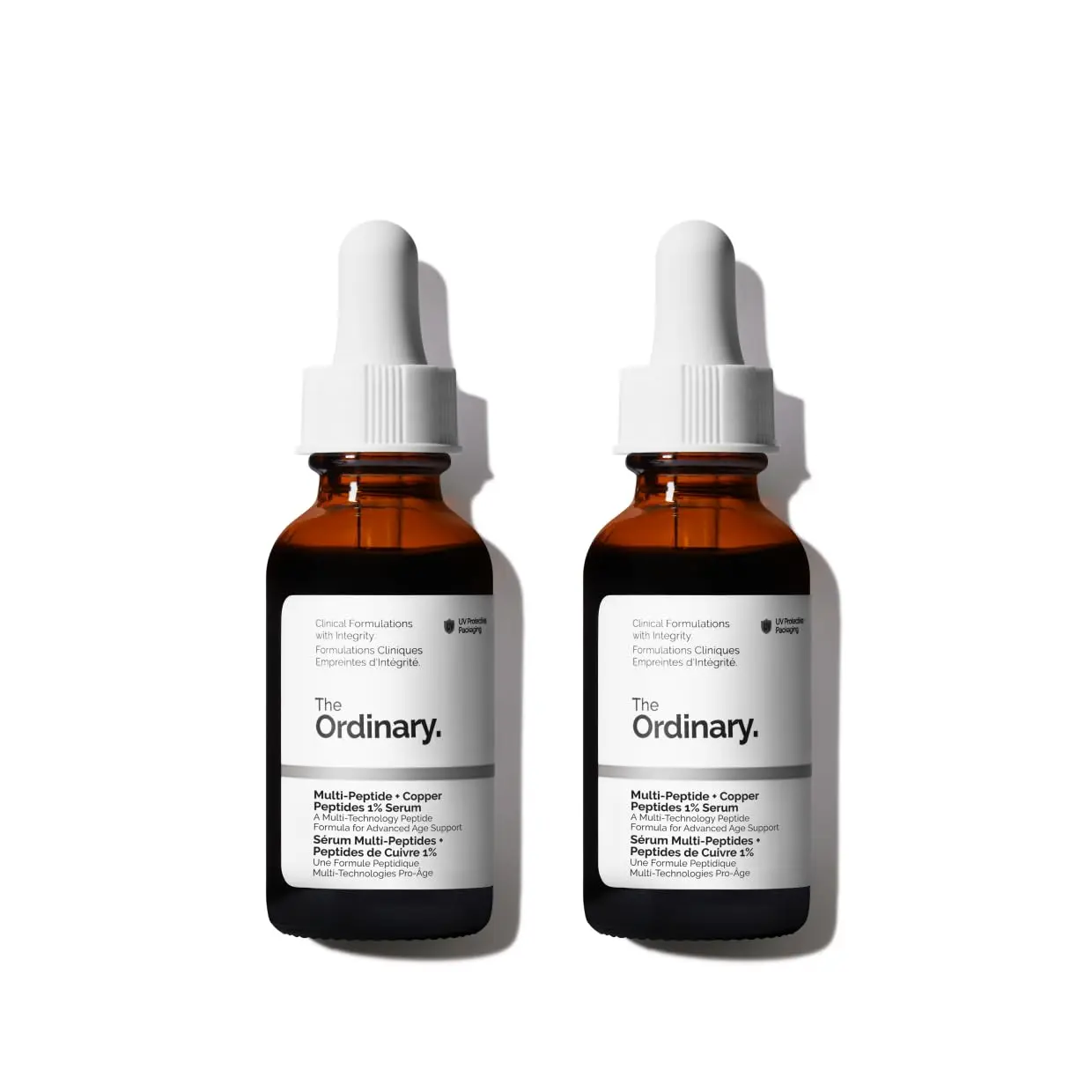
Per the brand’s official ingredient listing, this serum combines several peptide types in one formula: copper tripeptide-1 (a copper/carrier peptide), acetyl hexapeptide-8 and pentapeptide-18 (neurotransmitter-inhibiting peptides, the same general category as Argireline), and several palmitoyl-prefixed signal peptides (palmitoyl tripeptide-1, palmitoyl tetrapeptide-7, palmitoyl tripeptide-38). Because it spans three of the categories discussed earlier rather than one, it may appeal to someone curious about sampling multiple peptide types at once — though combining categories in one product isn’t established to multiply any category’s individual effects. The brand’s own usage guidance cautions against combining this product, in the same routine, with direct acids, direct vitamin C, retinoids, or other strong actives — worth checking against your existing routine before adding it. No finished-product clinical trial data was identified for this specific formula.
View on Amazon → (paid link)
Naturium Multi-Peptide Advanced Serum
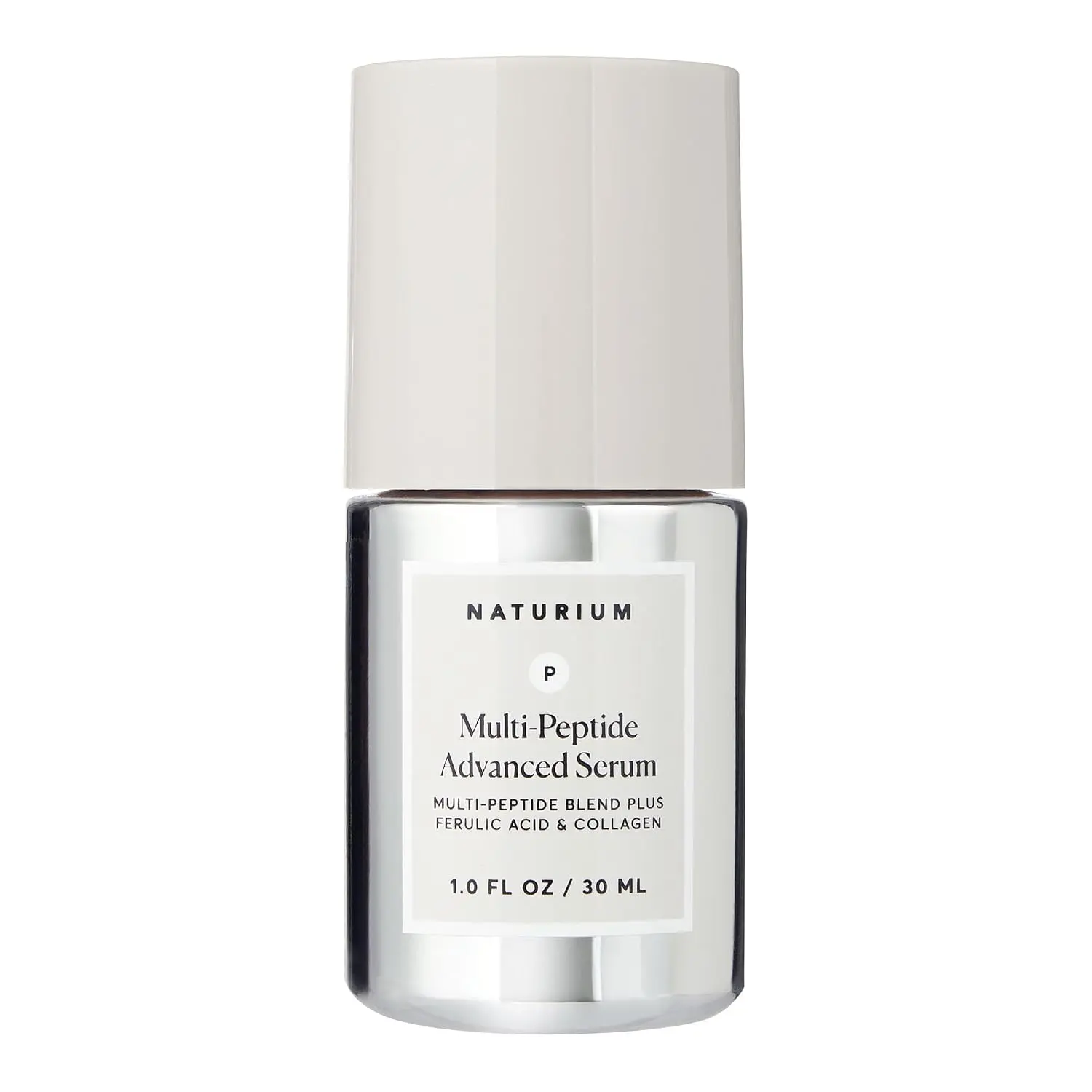
Per the brand’s official ingredient listing, this serum’s peptide ingredients are copper palmitoyl heptapeptide-14 (a copper/carrier peptide), acetyl hexapeptide-8 (marketed as “Argireline® Amplified,” a neurotransmitter-inhibiting peptide), and palmitoyl sh-hexapeptide-13 serine SP amide (a signal-type peptide) — alongside ferulic acid (an antioxidant) and hydrolyzed collagen. One distinction worth flagging: this hydrolyzed collagen is a topical ingredient in a leave-on serum, not an oral supplement — the oral collagen peptide research discussed earlier in this article does not apply to a topical collagen ingredient, and no topical hydrolyzed collagen clinical evidence specific to this formula was identified. The brand positions this for twice-daily (AM/PM) use after cleansing and toning, before moisturizer and sunscreen. Anyone also considering Product 1 above should note that it specifically advises against combining with ferulic acid — relevant if using more than one of these three in the same routine. No finished-product clinical trial data was identified for this specific formula.
View on Amazon → (paid link)
Good Molecules Super Peptide Serum
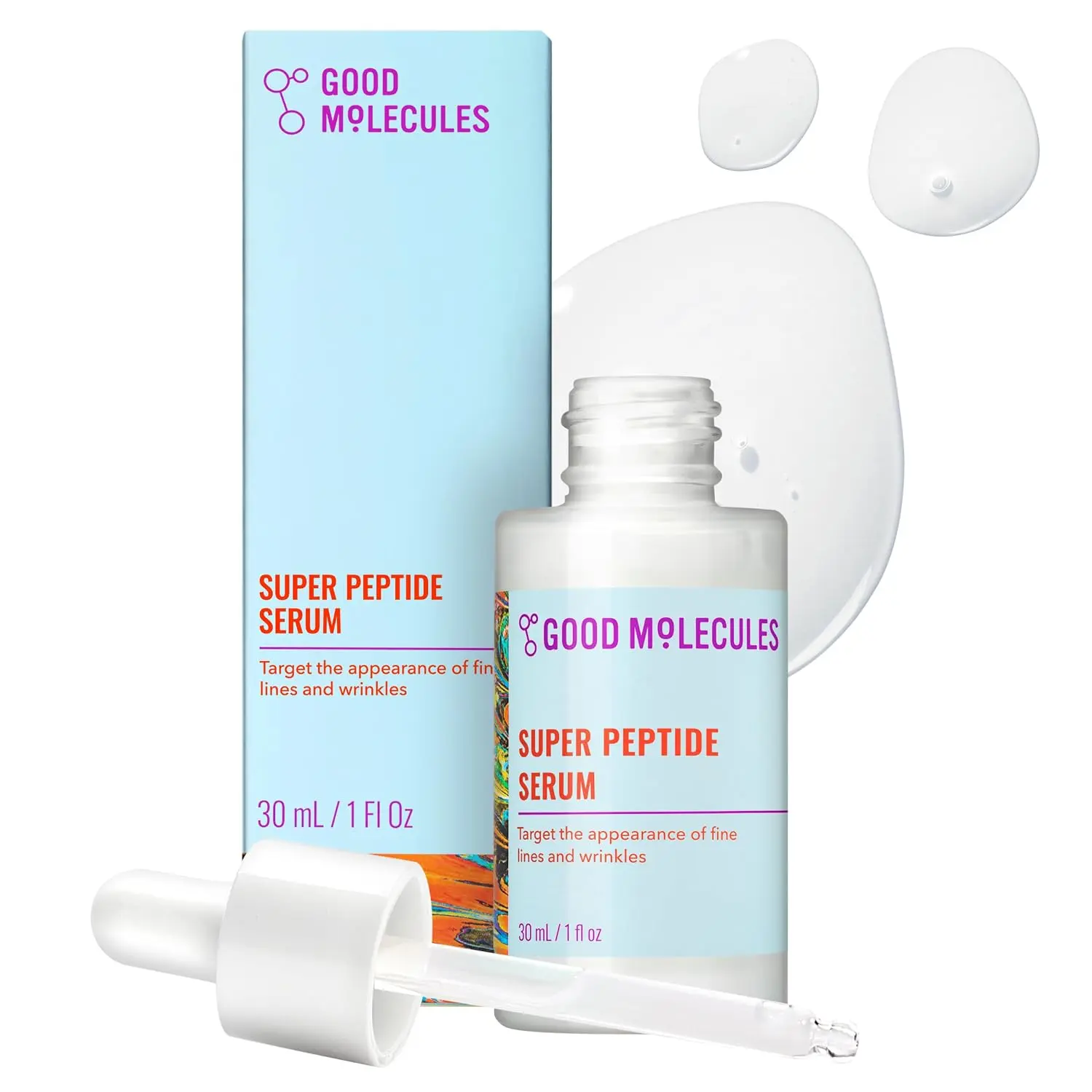
The brand’s own product page did not display a full ingredient list, so this serum’s peptide ingredients are drawn from Ulta Beauty’s official retail listing of the product, cross-checked against the independent ingredient database SkinSort: acetyl hexapeptide-8 and acetyl octapeptide-3 (both neurotransmitter-inhibiting peptides, the same general category as Argireline) and copper tripeptide-1 (a copper/carrier peptide), alongside sodium hyaluronate. Unlike the two products above, this formula doesn’t include a palmitoyl-prefixed signal peptide — the category with the largest published human-study base discussed earlier — so it leans entirely on the neurotransmitter-inhibiting and copper-peptide evidence covered above, including the same “not a Botox substitute” caveat. As with the pricing question discussed earlier in this article, price on its own isn’t a reliable signal of evidence quality — no current prices were verified for any of the three products here, so none are compared. No finished-product clinical trial data was identified for this specific formula.
View on Amazon → (paid link)
As with any peptide product, check the full ingredient list on your actual unit (formulas can change over time) and patch-test before regular use.
How to Use a Peptide Serum
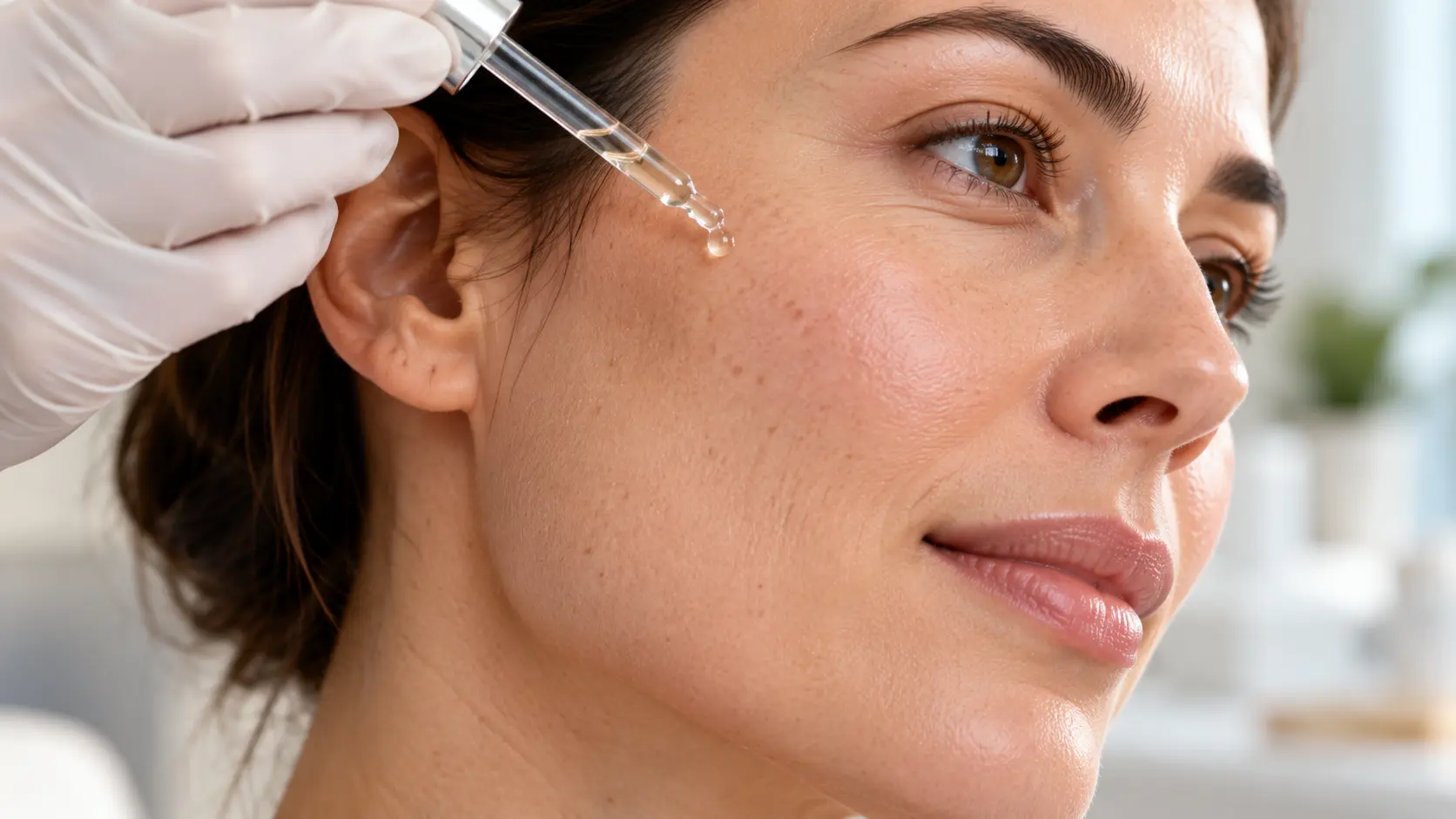
Peptide products vary enough in formulation that there’s no single universal set of directions — the most reliable instructions are the ones printed on your specific product. That said, some general, practical guidance applies to most leave-on peptide products:
- Follow the product’s own directions first — frequency, amount, and AM/PM timing vary by formulation, so check the label rather than assuming.
- Introduce new products gradually alongside other actives — especially a retinoid or exfoliating acid — so it’s easier to identify what’s causing any reaction.
- A peptide serum generally fits into a routine after cleansing and any lighter, water-based products, and before heavier creams or moisturizers — though some peptide products are themselves creams or moisturizers, so this is a starting point, not a fixed rule for every product.
- Morning and evening use are product-specific — some peptide products suit any time of day, others are positioned for nighttime. If unspecified, once daily while watching your skin’s response is a reasonable start.
- Moisturizer and daytime sunscreen remain the basics of any routine, peptide-containing or not. See our Morning Skincare Routine for Beginners and Night Skincare Routine for Beginners guides for where a serum step like this generally fits into a full routine, and our Best Moisturizers for Beginners guide if you’re still choosing a moisturizer to pair it with.
- Watch for irritation. If you notice persistent redness, stinging, burning, or a new rash after introducing a peptide product, stop using it and consider talking to a dermatologist, especially if the reaction doesn’t resolve on its own.
There’s no single “correct” concentration, frequency, or wait time across every product — these vary by formulation, and the manufacturer’s own directions beat a generic internet rule.
What Can You Use Peptides With?
Peptides are commonly layered with other skincare ingredients without a specific, universal conflict — but “generally fine” isn’t “always fine for every product,” so check your specific product’s own directions.
- Retinol/retinoids: Often used in the same overall routine (frequently at different times of day, such as retinoid at night and a peptide product in the morning, or vice versa), though specific product directions should be checked. See Retinol for Beginners for how to introduce a retinoid gradually if you’re adding one alongside a peptide product.
- Niacinamide: Commonly paired without a widely reported conflict; see our Niacinamide guide for more on how it fits into a routine.
- Hyaluronic acid: Frequently layered together, since hyaluronic acid is primarily a humectant working on hydration rather than something that typically interferes with peptide activity; see our Hyaluronic Acid guide.
- Vitamin C: Often used together, though as with any combination, introducing one new active at a time makes it easier to spot irritation if it happens.
- AHAs and other direct acids: This is the pairing most likely to come with a specific caution: some sources note certain acids may reduce specific peptides’ effectiveness, and individual product directions sometimes advise against combining a particular peptide with direct acids (see the copper peptide note above). This is a product-specific caution, not a universal rule for every peptide and every acid.
- Copper peptide products specifically: As documented in AvaFitCare’s Azelaic Acid article, at least one specific azelaic acid product’s label advises against combining it with copper peptides, direct acids, direct vitamin C, and retinoids. That caution is specific to that product’s directions — not evidence that copper peptides broadly conflict with azelaic acid, vitamin C, or retinoids as categories. Always defer to your specific product’s own instructions.
When in doubt, introduce one new active at a time and check your specific products’ directions rather than assuming a rule you read somewhere applies to every formulation.
Peptides for Sensitive Skin

Topical peptides are generally considered low-risk, partly because very little is thought to be absorbed into the body — one dermatologist describes serious risk from well-formulated topical peptides as something she hasn’t observed in practice, with irritation or an individual rash reaction being the main realistic concern.[4]
That general reassurance comes with real caveats, though:
- A peptide ingredient does not guarantee that a complete product will suit sensitive skin. Fragrance, preservatives, solvents, and other active ingredients in the same formula can all cause irritation independently of whether the product also contains a peptide.
- “Generally well tolerated” isn’t “safe for every skin condition.” At least one dermatologist is cautious about recommending peptide products for compromised skin like eczema or active rashes, reserving them mainly for general anti-aging use rather than barrier repair.[4]
- Allergic reactions, while described as uncommon, are possible with any skincare ingredient, peptides included, and individual responses vary.
If you have a sensitive-skin condition, a diagnosed skin disorder, or a history of reacting to new products, patch-test and introduce gradually — or check with a dermatologist first — rather than assuming “peptide” automatically means “gentle.”
How to Choose a Peptide Serum
If you’ve decided a peptide product is worth trying, a few practical checks can help you choose more deliberately than just picking whatever says “peptide” on the front of the bottle:
- Identify the actual peptide ingredient(s) where you can. Names like palmitoyl pentapeptide-4, copper tripeptide, and acetyl hexapeptide-8 tell you more than the generic word “peptide,” and let you connect the product to a specific category discussed above.
- Consider the complete formulation, not a single marketing claim on the front label. Under FDA cosmetic-labeling rules, ingredients above 1% are generally listed in descending order of concentration, while ingredients at 1% or less may appear in any order after those — so a peptide’s position on the list doesn’t reliably reveal its exact concentration, and the full formulation matters more than where one ingredient sits.[7]
- Check for fragrance and other ingredients that commonly cause irritation, especially with sensitive skin or several new products at once.
- Read the manufacturer’s own usage instructions rather than assuming a generic routine, since formulations (and directions) genuinely differ.
- Packaging can matter for some peptides’ stability — opaque, airless packaging is sometimes preferred for light- or air-sensitive ingredients — but it’s a formulation detail, not a reason to choose one product over another.
- Set realistic expectations. Based on the evidence above, a reasonable expectation is a possible, gradual, modest improvement in firmness or fine lines with consistent use — not a dramatic or guaranteed transformation.
This is a framework for evaluating any peptide product you’re considering, not a ranked list of products to buy.
Bottom Line
Peptides are a legitimate, studied ingredient category — but “legitimate” doesn’t mean “proven” the way that word gets used in marketing. Signal and copper peptides have the most (still limited) human evidence; neurotransmitter-inhibiting peptides have some data but aren’t a Botox substitute; enzyme-inhibiting peptides have very little evidence at all. Oral collagen supplements are a separate, somewhat larger evidence base showing real but non-structural benefits (hydration, elasticity) — evidence that doesn’t carry over to topical serums, and the only large systematic review to pool topical trials included just two, neither of which tested the signal- or copper-peptide serums most commonly sold today.
If you’re prioritizing the ingredient with the strongest current evidence for visible photoaging, retinoids remain better established than any peptide category discussed here. Adding a peptide product alongside that — or instead of it, if you can’t tolerate a retinoid — is reasonable, as long as you go in with realistic expectations about what a small, modest body of evidence can actually promise.