Strength Training for Beginners: A Complete Guide to Getting Stronger
September 18, 2026
How heavy should you lift? How many reps are you supposed to do? Which exercises should you even start with — and do you need a gym membership, a rack of dumbbells, or an hour a day to see any results?
If those questions have kept you standing in front of a dumbbell rack feeling stuck, you’re not alone, and you’re not missing some obvious piece of knowledge everyone else already has. Strength training looks complicated from the outside because it comes with its own vocabulary — sets, reps, RPE, progressive overload — and because gyms can feel designed for people who already know what they’re doing.
Here’s the good news: strength training doesn’t require lifting extremely heavy weights, training seven days a week, or mastering a long list of exercises before you’re “allowed” to start. A simple, well-chosen routine performed two or three times a week is enough to build real strength, and it adjusts to fit almost any body, schedule, or equipment situation.
This guide to strength training for beginners covers what strength training actually is and exactly how to start: which exercises to learn first, how much weight to use, how many sets and reps to do, how long to rest, how often to train, and how to know you’re making progress — a complete, realistic framework you can start using this week.
Strength training — also called resistance training — is any exercise where your muscles work against a force that resists their movement. That resistance can come from several different sources, none inherently better than the others; they’re just different tools for the same job.
Common forms of resistance include:
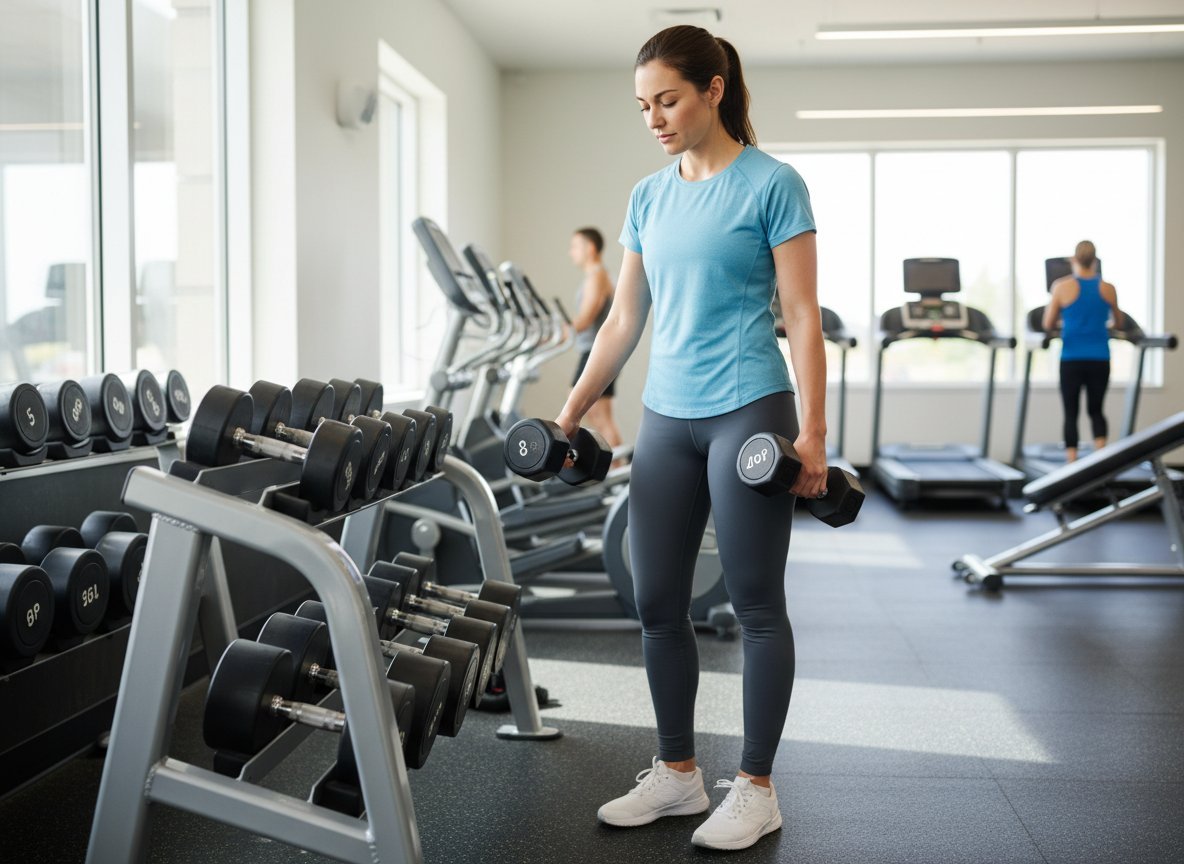
Free weights, like dumbbells and barbells, which you hold and move through space
Weight machines, which guide your body through a fixed path of motion
Resistance bands, which create tension through elastic stretch instead of gravity
Bodyweight exercises, like push-ups, squats, and planks, which use your own body as the resistance
When you challenge a muscle with resistance it isn’t used to, your body adapts: connective tissue and muscle fibers gradually get better at handling that load. Over time, this is what lets you lift more weight, do more reps, or handle daily tasks — carrying groceries, climbing stairs, lifting a suitcase — with less effort.
Strength training is often discussed alongside cardio (walking, running, cycling — activities that primarily challenge your heart and lungs), but the two aren’t competing categories where one is “better.” Cardio largely builds cardiovascular endurance, while strength training builds and maintains muscle and the strength you rely on for everyday movement. Most well-rounded routines include some of both.
Benefits of Strength Training
In short: Strength training builds and maintains muscle, supports bone health, and makes everyday physical tasks — carrying, lifting, climbing stairs — noticeably easier over time.
Beyond the obvious goal of getting stronger, resistance training offers a set of benefits that are especially relevant if you’re just starting out:
Increased muscular strength — the most direct effect; your muscles get better at producing force.
Maintaining and building muscle mass, which tends to decline gradually with age if it isn’t actively used.
Easier everyday activities — carrying groceries, lifting a bag overhead, or getting up from the floor all become less taxing.
Bone health support. Weight-bearing and resistance exercise places mechanical stress on bone, which is commonly cited in exercise science as a supportive factor for bone health — though the strength of the evidence and individual results vary, and this isn’t a guarantee for any specific person.
Better balance and stability, from strengthening the muscles around your joints, particularly in the legs and core.
Support for healthy body composition — combined with adequate nutrition, it helps maintain or build muscle while managing body fat.
More confidence with physical tasks — a practical, everyday payoff of moving your own body with less strain.
It’s worth being clear about what strength training is not: it isn’t a guaranteed cure or prevention for any specific disease. The benefits above are about building capacity and supporting overall health — real and well-supported, but general rather than a substitute for individualized medical guidance.
Is Strength Training Good for Beginners?
Yes — strength training for beginners is simply strength training scaled to where you’re starting from, which makes it appropriate from day one. A few common worries tend to hold people back, so it’s worth addressing them directly.
“I’m too weak to start.” There’s no strength threshold to hit first — every exercise here can be scaled down with lighter weight, fewer reps, or an easier variation.
“I need to get fit before I start lifting.” Strength training is itself a way to build fitness. Beginners often see some of the fastest early progress precisely because they’re new to it.
“I’ll get bulky immediately.” Building a large amount of visible muscle takes sustained, deliberate training over months or years, plus specific nutrition choices. A couple of beginner sessions a week will gradually build muscle and strength long before it meaningfully changes your size.
“Strength training is only for young people.” Resistance training is used across a wide age range, and maintaining muscle and bone strength matters more, not less, as people get older — the exercises simply scale to the individual.
“I need expensive equipment.” A few dumbbells, a resistance band, or just your bodyweight are enough for a complete beginner program.
The common thread: resistance, exercise selection, and pace are all adjustable. Strength training scales to you — you don’t need to scale up to it first.
How to Start Strength Training as a Beginner
Getting started doesn’t require a complicated plan. Here’s a simple framework to follow.
1
Choose 2–3 training days per week
This lines up with CDC and HHS guidance to work all major muscle groups at least two days a week, and it’s manageable without a daily time commitment.
2
Start with basic movement patterns
Rather than memorizing individual exercises, think in terms of the core patterns that show up across almost all effective strength programs:
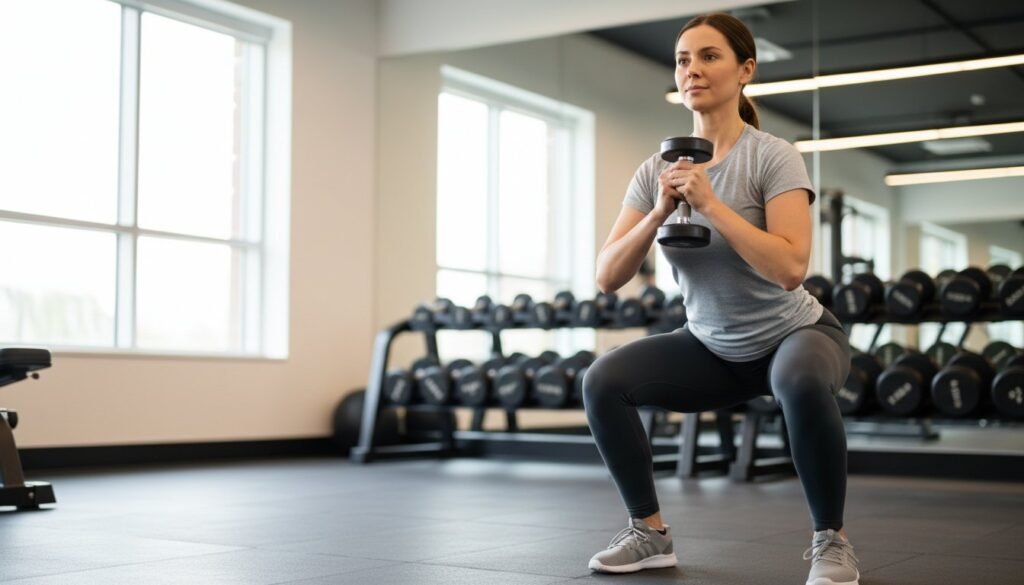
Squat — bending at the hips and knees to lower and raise your body (e.g., a goblet squat)
Hinge — bending primarily at the hips with a flat back, like picking something up off the floor (e.g., a Romanian deadlift)
Push — pressing something away from your body (e.g., a chest press or push-up)
Pull — drawing something toward your body (e.g., a row or lat pulldown)
Carry — walking while holding a weight (e.g., a farmer carry)
Core/bracing — stabilizing your trunk against movement (e.g., a plank or dead bug)
Covering each pattern gives you a well-rounded routine without needing dozens of exercises.
3
Learn technique before chasing heavier weight
In the first few weeks, your main job is learning what good form feels like — not seeing how much weight you can lift.
4
Select a manageable resistance
Choose a weight that lets you complete your target reps with control (more on exactly how in the section below).
5
Track your workouts
Write down the exercises, weights, sets, and reps each session — a notes app or notebook works fine — so “was that easier or harder than last time?” becomes an answer you can check.
6
Progress gradually
As exercises feel easier, increase the challenge — more reps, slightly more weight, or an extra set (more in the progressive overload section below).
The Best Strength Exercises for Beginners
These aren’t the only exercises that work — they’re a practical, well-rounded starting list covering every major movement pattern with minimal equipment.
Movement
Beginner Exercise
Main Muscles
Equipment
Squat
Goblet squat (or bodyweight chair squat)
Quads, glutes, core
Dumbbell (or none)
Hinge
Dumbbell Romanian deadlift
Hamstrings, glutes, lower back
Dumbbells
Push (horizontal)
Dumbbell chest press
Chest, shoulders, triceps
Dumbbells, bench or floor
Push (horizontal, bodyweight)
Incline or modified push-up
Chest, shoulders, triceps
None (or a bench/counter)
Pull (horizontal)
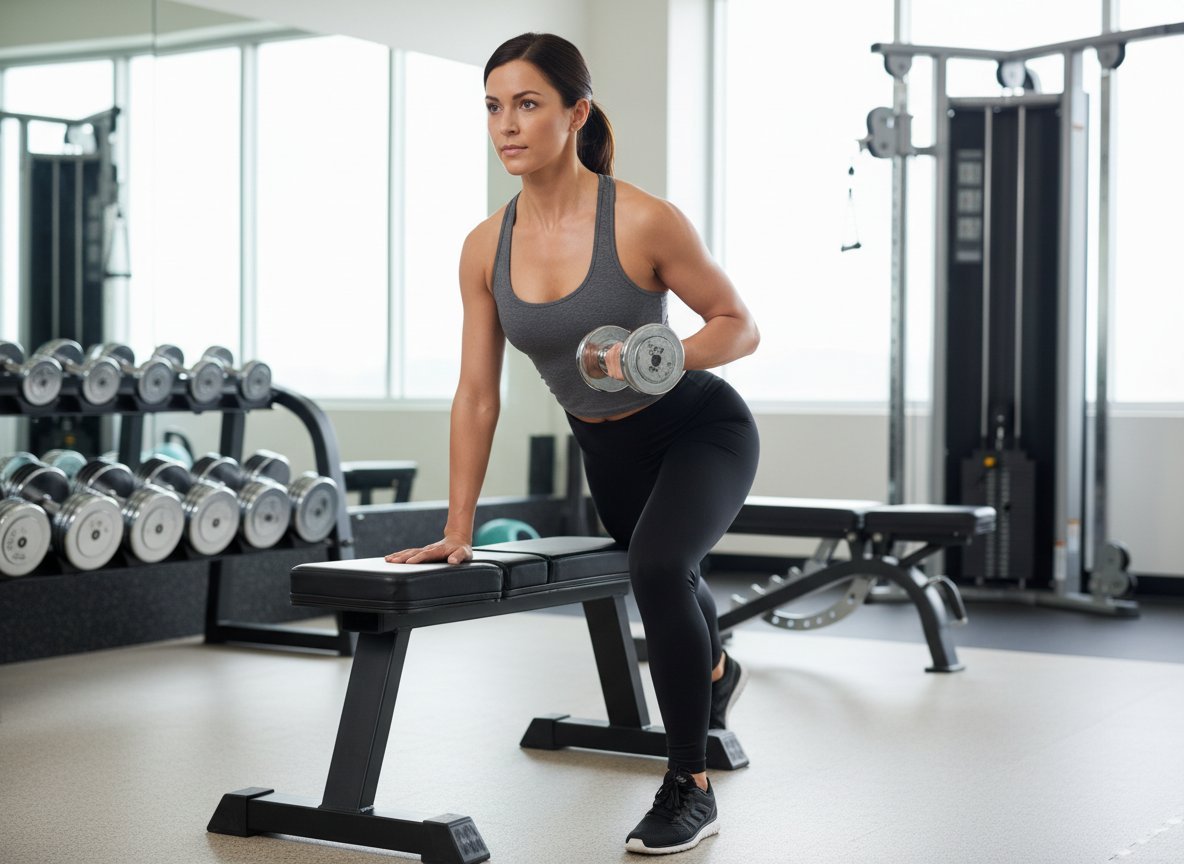
One-arm dumbbell row
Back, biceps
Dumbbell, bench
Pull (vertical)
Lat pulldown
Back, biceps
Cable machine
Push (vertical)
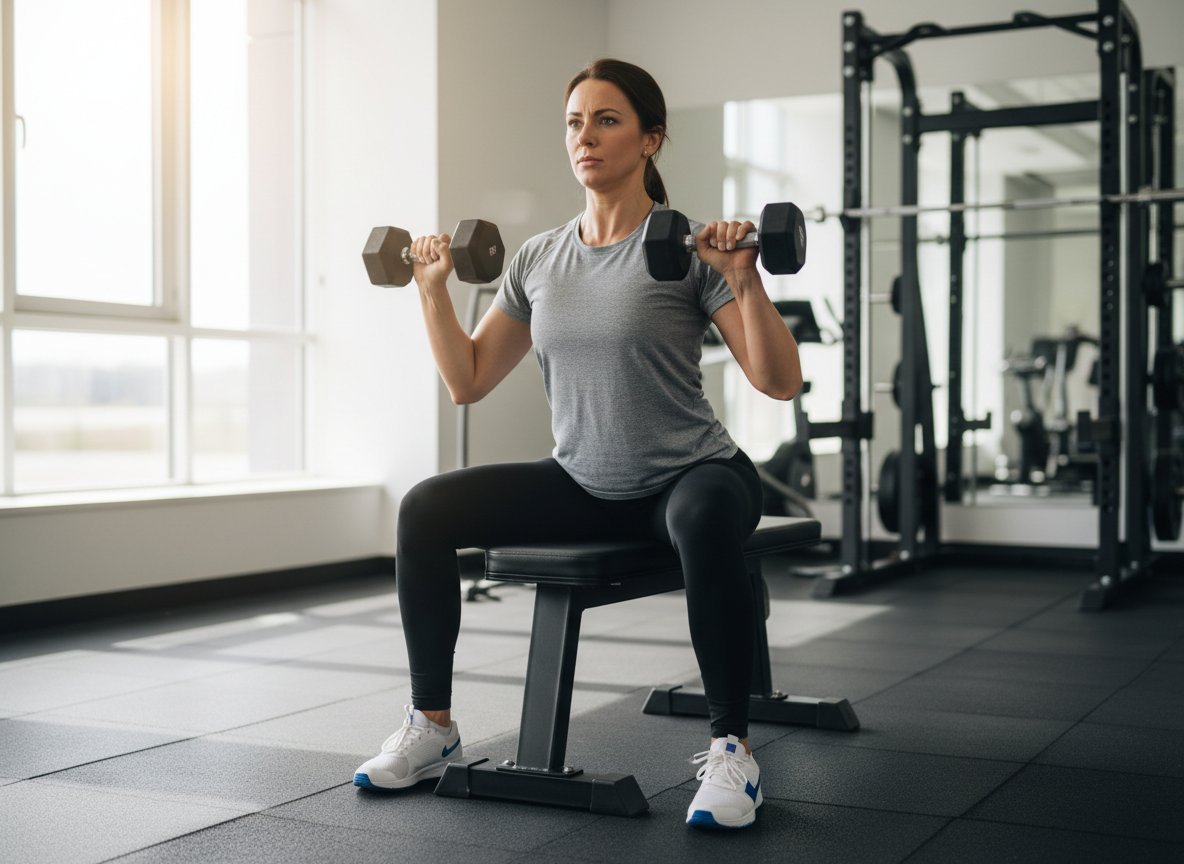
Dumbbell overhead press
Shoulders, triceps
Dumbbells
Hip extension
Glute bridge
Glutes, hamstrings
None
Carry
Farmer carry
Grip, core, shoulders, legs
Dumbbells or kettlebells
Core
Dead bug or plank
Deep core, spine stability
None
If you’re training at home without a lat pulldown machine, a resistance band anchored overhead or a band pull-apart can stand in for the pulling movement. The goal is covering the pattern, not matching this list exactly.
Beginner Full-Body Strength Workout
Here’s an example of what a first full-body session might look like — a template to adapt, not a fixed prescription.
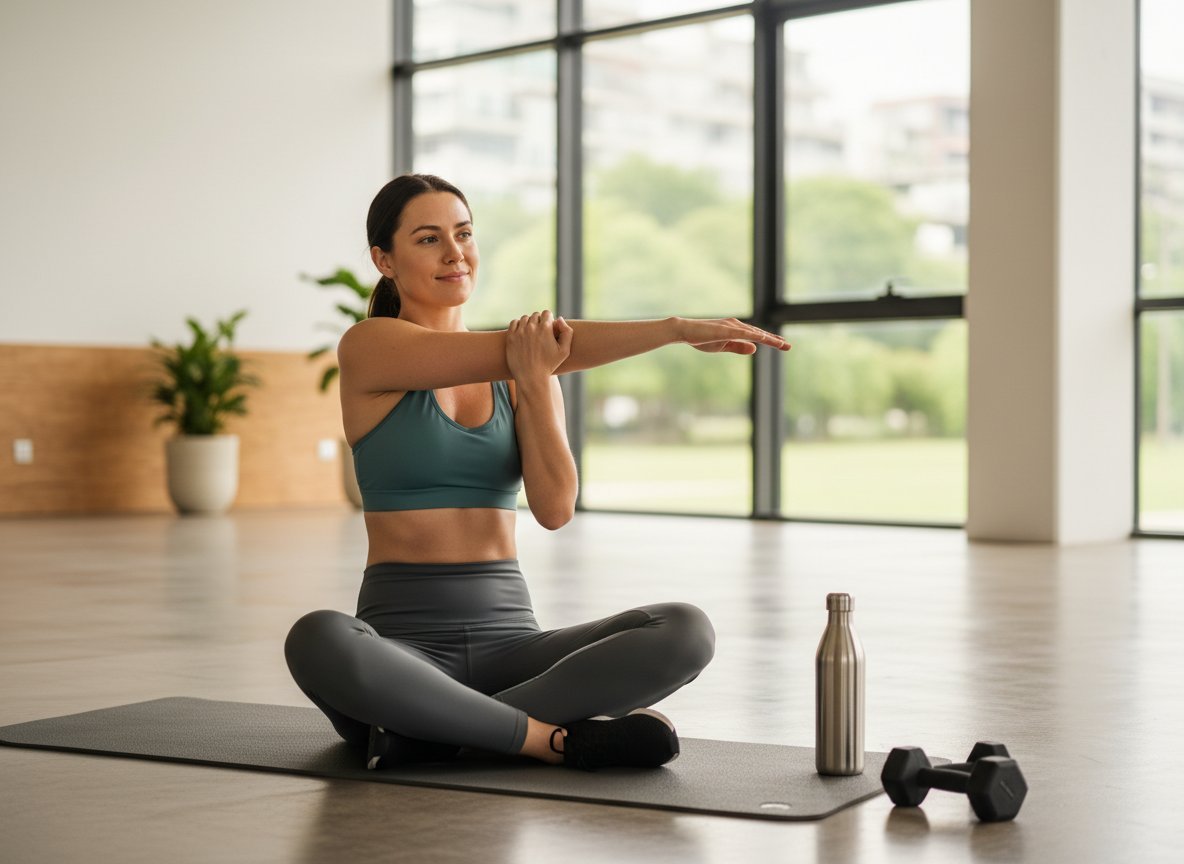
Warm-up (5 minutes): Light cardio (brisk walking or marching in place) followed by a few bodyweight squats, arm circles, and hip swings to get your joints moving before adding load.
Workout:
Goblet Squat — 2 sets × 8–12 reps
Dumbbell Chest Press — 2 sets × 8–12 reps
Dumbbell Romanian Deadlift — 2 sets × 8–12 reps
One-Arm Dumbbell Row — 2 sets × 8–12 reps each side
Dumbbell Overhead Press — 2 sets × 8–12 reps
Dead Bug — 2 sets × 6–10 reps each side
Notice this routine uses two sets per exercise rather than three or four — a reasonable, effective starting point, with a third set to add later once the routine feels manageable.
This is one example of a beginner full-body workout, not an individualized program. Your ideal exercise selection, order, and volume can vary based on your goals, any physical limitations, and available equipment.
Disclosure: This article contains affiliate links. If you purchase through one of these links, AvaFitCare may earn a commission at no additional cost to you.
Beginner Equipment Pick
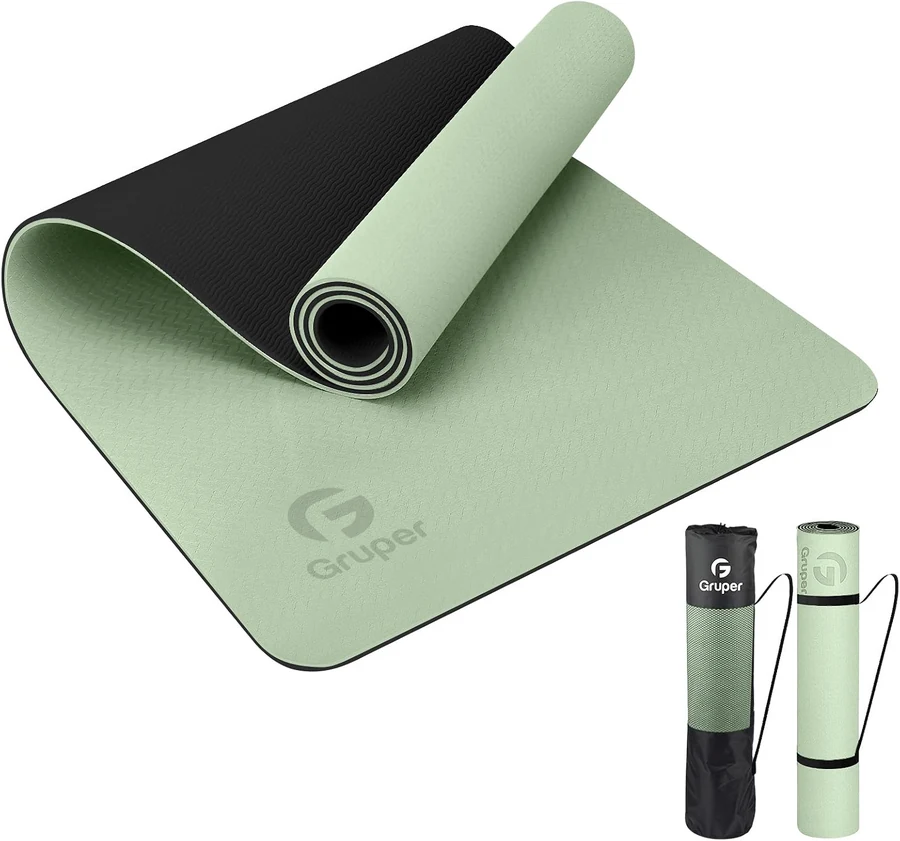
Gruper Yoga Mat Non Slip, Eco Friendly Exercise Mat with Carrying Strap
Floor-based moves like the dead bug above are more comfortable with a defined mat surface underneath you, and it also gives you a consistent spot for stretching or warming up before your sets.
Non-slip surface for floor-based exercises
Eco-friendly materials, as stated in the product name
Includes a carrying strap for easy transport and storage
In short: There’s no single “right” starting weight — the right amount is whatever lets you complete your target reps with good form while the last couple of reps feel genuinely challenging.
Rather than a universal number in pounds, think about weight selection in terms of effort. A useful concept is RPE (Rate of Perceived Exertion), or its close cousin RIR (Reps in Reserve) — an honest estimate of how many more good-quality reps you could have done at the end of a set.
As a practical starting point: if you finish a set feeling like you could still do about 2–3 more reps with solid form, that’s a reasonable level of effort for a beginner working in an 8–12 rep range.
Here’s how to tell where you land:
Too light: You reach the end of your set — say, 12 reps — and could easily keep going. This won’t do much to challenge your muscles.
Appropriate: The last 2–3 reps require real effort and focus, but your form stays solid throughout — the sweet spot for a beginner.
Too heavy: You can’t complete your target reps with good form, you’re straining or using momentum, or your technique breaks down before the set ends.
It’s completely normal to guess wrong on your first attempt with a new exercise — simply adjust the weight next set or next session. That’s part of the normal process of finding what works for your body, not a mistake to avoid.
Beginner Equipment Pick
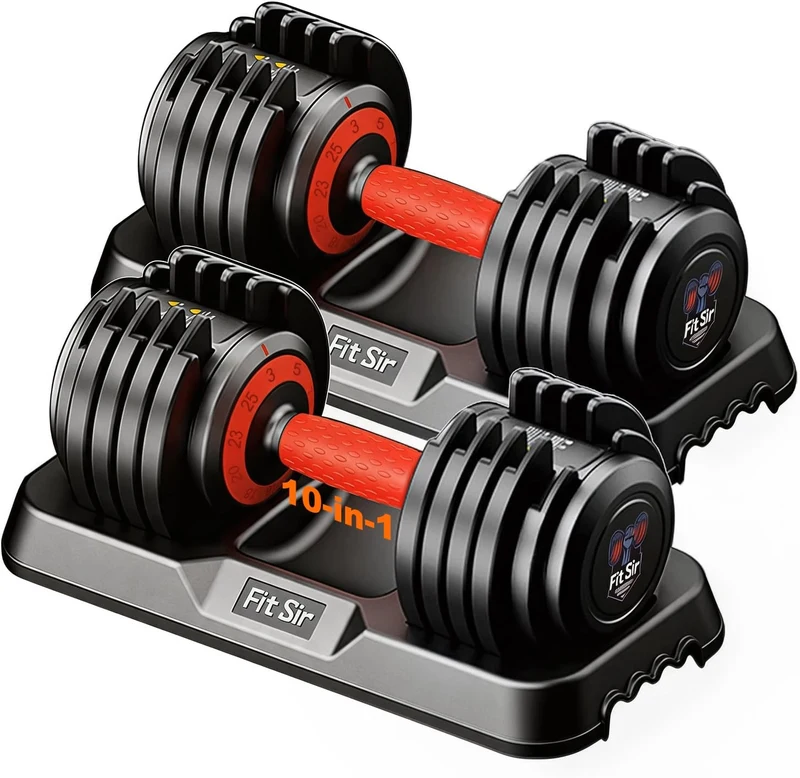
Adjustable Dumbbell Set, 10-in-1 25LB/50LB/90LB Adjustable Dumbbells with Safe Locking System
If you’d rather not collect a full set of fixed dumbbells while you find the right weight, an adjustable set like this lets you change the resistance on one pair as you progress. It’s an optional equipment choice, not something you need in order to make progress.
10-in-1 adjustable design, so one pair can cover a range of weights instead of buying several fixed dumbbells
Available in 25 lb, 50 lb, or 90 lb options
Includes a locking system for securing your selected weight, as noted in the product name
A rep (repetition) is one complete movement of an exercise — one full squat, one full push-up. A set is a group of consecutive reps performed without stopping to rest.
For beginners, a commonly used range is 8–12 reps per set, for 1–3 working sets per exercise. This isn’t a magic formula — it’s practical: high enough to build comfort and control, short enough to keep sessions a reasonable length, and moderate enough in load to manage while you’re still learning technique.
A few things worth understanding about these ranges:
Even a low-volume routine can be a reasonable starting point for a beginner, especially in the first few weeks, although additional sets may be appropriate as you adapt and the movements feel more familiar.
8–12 reps isn’t the only range that works. Lower reps with heavier weight, or higher reps with lighter weight, can also build strength — this range is simply a convenient beginner-friendly starting place.
Different goals can call for different ranges as you progress; this guide focuses on a solid general-purpose starting range rather than sport-specific programming.
Rather than treating any single rep range as “correct,” think of it as a reasonable default you can adjust once you have more experience and a clearer sense of your goals.
How Long Should You Rest Between Sets?
Rest between sets gives your muscles and energy systems enough time to recover so you can perform the next set with good effort and form. Too little rest and your technique suffers on later sets; far more than necessary just makes the workout take longer without adding much benefit.
As general starting guidance:
Smaller or lighter exercises (a dead bug, band pull-apart, light isolation work): about 30–60 seconds is usually enough.
Moderate exercises (a dumbbell row, chest press, overhead press): 60–90 seconds tends to work well.
More demanding compound movements (a goblet squat or Romanian deadlift, using several large muscle groups at once): 90 seconds to 2 minutes often feels more appropriate.
These are starting ranges, not strict rules. If you still feel winded or shaky when the rest period ends, take a little longer — there’s no benefit to rushing back in just because a timer hit a specific number.
How Many Days a Week Should Beginners Strength Train?
In short: Two to three full-body strength sessions per week, with at least one rest or recovery day between sessions targeting the same muscles, is a practical and well-supported starting schedule for beginners.
This frequency is manageable for most schedules, gives your muscles time to recover, and lines up with guidance from major U.S. health authorities recommending muscle-strengthening activity at least two days a week for all major muscle groups.
Two example schedules:
2-day schedule:
Monday — Full Body
Thursday — Full Body
3-day schedule:
Monday — Full Body
Wednesday — Full Body
Friday — Full Body
Both leave at least one full day of rest between sessions. That gap matters: muscles don’t get stronger during the workout itself — they adapt afterward, as they repair and rebuild in response to the stress placed on them. Training the same muscles again before they’ve recovered can slow progress rather than speed it up, especially early on.
What Is Progressive Overload?
Progressive overload is the gradual process of asking your muscles to do slightly more over time than they’re used to — what drives ongoing strength and muscle gains.
Here’s what that looks like in practice, using a goblet squat:
Week 1: 15 lb dumbbell × 8 reps
A few sessions later: 15 lb dumbbell × 10 reps
A bit later: 15 lb dumbbell × 12 reps
Eventually: Move up to a 20 lb dumbbell and rebuild back toward 8 reps at the new weight
Progression doesn’t only mean adding weight. It can also come from more repetitions at the same weight, a slightly heavier weight once you’re comfortably hitting the top of your rep range, an additional set when schedule and recovery allow, better technique with more control and less compensation, a greater range of motion, or slower, more controlled reps.
A common misunderstanding is that you need to increase weight every single workout. That’s not necessary, and forcing it often means sacrificing form. Some sessions, simply repeating what you did last time with solid technique is the right call — progress doesn’t need to be linear week to week to still add up over months.
How Long Does It Take to Get Stronger?
It’s tempting to want a specific number of weeks, but honest expectations serve you better than a promise that may not hold for your situation.
Some of the earliest strength gains — often noticeable within the first several weeks — come partly from your nervous system getting more efficient at recruiting muscle fibers for a movement you’re still learning, rather than from the muscle itself changing size. This “neural adaptation” is a big part of why beginners often feel stronger before there’s any visible change in muscle size. Visible changes in muscle (hypertrophy) generally take longer, typically measured in months rather than weeks.
How quickly any of this happens varies widely from person to person, influenced by training history, consistency, nutrition (including protein and overall calorie intake), sleep, age, genetics, and how well-designed your program is.
Because of that variability, this guide won’t promise a specific timeline. What’s consistently true is that showing up regularly and progressing gradually, over a sustained period, is what produces results — not any particular number of days.
Strength Training at Home vs. the Gym
Both settings can support real progress. The right choice comes down to what fits your life, budget, and preferences.
Training at home:
Convenient — no commute, flexible timing
Dumbbells, resistance bands, and bodyweight exercises can support a complete beginner program
Typically a smaller range of equipment and weight options
Progressing further may eventually require buying additional or heavier equipment
Beginner Equipment Pick
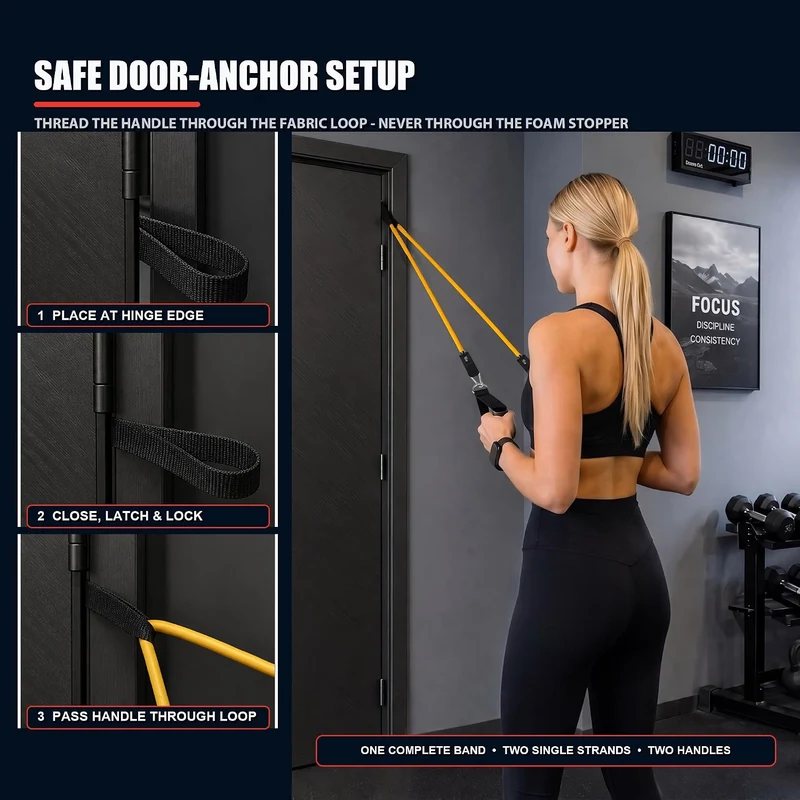
WHATAFIT Resistance Bands with Handles, 150 lb Exercise Bands Set
If you don’t have access to a full set of weights, a resistance band set like this is another way to add resistance to pulling and pressing movements at home.
Includes handles for a more comfortable grip during exercises
Set offers up to 150 lb of combined resistance, depending on how the bands are used
A portable, space-saving option for home strength training
Wider range of equipment, including machines that are useful for learning movement patterns
Easier access to heavier weights as you progress, without buying your own
Machines can offer more guided, stable movement for beginners still building confidence with free weights
Requires travel time and typically a membership cost
Neither is inherently superior. What matters more than location is whether you can train consistently and keep applying gradual progression — a home routine you actually do beats a gym membership you rarely use, and vice versa.
Common Strength Training Mistakes Beginners Make
Starting too heavy. Picking a weight you can barely lift for a couple of reps skips the technique-building phase and makes it harder to maintain good movement control — which can mean unnecessary strain rather than progress, though how much this matters depends on the exercise and the person.
Sacrificing form for weight. Using momentum or letting your back round just to move more weight reduces how well the target muscles are worked and can place unnecessary stress on joints and connective tissue — the weight should serve the movement, not the other way around.
Changing workouts constantly. Switching exercises every session prevents you from applying progressive overload to any single movement — you’re always back at square one instead of building on previous sessions.
Doing too much too soon. Jumping straight into daily training, or adding far more sets than your body is ready for, tends to backfire through excessive soreness and burnout rather than faster progress.
Training hard every day. Muscles adapt during recovery, not during the workout itself, so training the same muscles intensely without rest days can interfere with that process.
Ignoring recovery. Sleep, adequate food intake, and rest days aren’t optional extras — they’re part of what actually lets your training turn into strength gains.
Never tracking workouts. Without a record of what you did last time, it’s hard to tell whether you’re progressing or just repeating guesswork each session.
Increasing weight too quickly. Adding weight before your technique is solid at the current level tends to compromise form and stall progress rather than speed it up.
Comparing yourself with experienced lifters. Someone who’s trained for years has years of adaptation behind their numbers — comparing your week-one lifts to theirs sets an unfair, discouraging benchmark.
Treating soreness as proof of an effective workout. Soreness can happen with any new or harder-than-usual exercise, but it isn’t a required sign that a workout “worked” — chasing it isn’t necessary and can even signal you did more than your body was ready for.
Recovery, Protein, and Sleep
Training provides the stimulus for change; recovery is what lets your body adapt to it and come back stronger. Skipping this half of the equation is one of the most common reasons beginners feel like they’re working hard without seeing results.
A few pieces matter most:
Adequate food intake. Your body needs enough overall energy (calories) to support training, recovery, and daily life — consistently under-eating can blunt both, no matter how well-designed your workouts are. AvaFitCare’s TDEE Calculator can help you estimate your daily calorie needs.
Protein. Protein provides the building blocks your body uses to repair and build muscle tissue after training. Individual needs vary quite a bit based on body size, overall diet, activity level, and goals, so there isn’t one target that fits everyone. If you want a starting point tailored to you, AvaFitCare’s Protein Calculator can help you estimate your daily protein needs.
Hydration. Adequate fluid intake supports exercise performance and recovery.
Sleep.Consistent sleep supports recovery, training performance, and physiological processes involved in adaptation — consistently short or poor-quality sleep can undercut even a well-designed routine.
Rest days. Days without training the same muscle groups aren’t wasted time — they’re an active part of how strength is built.
None of these need to be perfect to see progress. Reasonably consistent food intake, sleep, and rest days, alongside consistent training, go a long way.
Beginner Strength Training Checklist
Save or screenshot this list as a quick reference:
Train 2–3 times per week
Focus on basic movement patterns (squat, hinge, push, pull, carry, core)
Start with a manageable resistance
Prioritize technique over how much weight you’re lifting
Record your sets, reps, and weight for each session
Progress gradually — more reps, a bit more weight, or an extra set over time
Allow at least one rest day between sessions working the same muscles
Eat adequately, with attention to protein intake
Get consistent, quality sleep
Be patient — strength builds over weeks and months, not days
When Should You Get Professional Help?
A certified personal trainer, strength coach, or physical therapist can be genuinely useful if you’d like hands-on feedback on your technique, help designing a program around a specific goal, or extra confidence while learning new movements. It isn’t a requirement to get started, but it can smooth the learning curve, particularly if you’re returning to exercise after a long break or unsure about your form on a specific lift.
If you have an injury, experience significant or unusual pain during exercise, have a relevant medical condition, are pregnant or postpartum, or are otherwise unsure whether strength training is appropriate for you, check in with a doctor, physical therapist, or other qualified healthcare professional before starting or changing a training program. This guide is intended for general education, not individualized medical advice.
Frequently Asked Questions
Two to three full-body sessions per week, with at least one rest day between sessions, is a practical and well-supported starting point for most beginners.
Choose a weight that lets you complete your target reps with good form while the last 2–3 reps feel genuinely challenging. The right amount varies by exercise and person, so expect to adjust after your first attempt.
Yes — a focused 20-minute session covering a few key movement patterns can be effective, especially while you’re building the habit. Consistency matters more than session length.
Yes. Dumbbells, resistance bands, or just your bodyweight are enough to run a complete beginner program covering all the major movement patterns.
No — it’s a convenient way to help meet protein needs, not a requirement. Whole food sources can fully cover most people’s needs; a supplement is about convenience, not necessity.
Many people benefit from both, since they support different aspects of fitness. How you balance them depends on your goals and preferences — there’s no requirement to choose only one.
Most beginners don’t need to train the same major muscle groups every day — muscles need time to recover between sessions. Two to three full-body sessions a week is a simple, practical structure to start with.
Many effective sessions fall in the 30–45 minute range including warm-up, but a well-structured 20-minute workout can also work — total time matters less than covering the key movement patterns.
Some soreness after a new or harder-than-usual workout is common and not a cause for concern. It isn’t required for a workout to be effective and should ease within a few days; sharp or lasting pain is different and worth attention.
When you can complete all your sets and reps with good form and the top of your rep range starts feeling noticeably easier across a couple of sessions, it’s a reasonable time to add a small amount of weight.
Final Thoughts
Strength training for beginners doesn’t need to start complicated. Start small, learn the basic movements, and train consistently a couple of times a week. Track what you do so you can see real progress instead of guessing. Increase the challenge gradually, and give your body the recovery it needs between sessions. None of this requires perfection — just showing up, adding a little more challenge over time, and letting your body adapt.
Why You Can Trust This Guide
This guide draws on established public health guidance — CDC and HHS recommendations on muscle-strengthening activity, and American College of Sports Medicine positions on resistance training — rather than trends or unverified claims. Citing these organizations reflects the evidence this guide is built on; it isn’t a claim that this article itself has been medically reviewed by them or by a clinician. Where evidence is nuanced or results vary by individual, this guide says so instead of overstating certainty. It’s written to give you a realistic, practical starting framework, not a promise of specific results.
This article is for general educational purposes only and is not a substitute for individualized medical or professional fitness advice. Always consult a qualified healthcare provider before beginning a new exercise program, especially if you have an injury, a medical condition, are pregnant or postpartum, or have any concerns about whether a particular type of exercise is appropriate for you.
Get New Guides in Your Inbox
No spam, no filler — just new articles as we publish them.