How to Build a Better Sleep Routine: A Beginner’s Guide
September 13, 2026
It’s 10:30 PM, and you told yourself you’d be asleep by now. Instead, you’re propped up against your pillows, thumb moving on its own, scrolling one more video, one more thread. By the time you put the phone down, it’s closer to midnight. The alarm is still set for 6:45 AM, and you already know how tomorrow is going to feel.
If that sounds familiar, you’re not doing anything unusual — and you don’t need an elaborate two-hour nighttime ritual to fix it. A sleep routine that actually works is usually pretty plain: a few habits, repeated often enough that your body starts to expect them.
This guide walks through what a sleep routine really is, why consistency matters more than any single trick, and how to build one step by step — starting with your mornings, not just the thirty minutes before bed.
A good sleep routine combines a consistent wake-up time, regular exposure to daytime light, mindful caffeine timing, and a short wind-down period before bed. It’s less about a rigid checklist and more about repeating a few realistic habits daily so your body knows when to expect sleep.
What Is a Healthy Sleep Routine?
A healthy sleep routine is the full pattern of habits — morning, daytime, evening, and bedtime — that shapes how well and consistently you sleep. It’s a broader idea than most people assume, and easy to mix up with two related but narrower terms.
A bedtime routine is the specific sequence of things you do right before sleep, like brushing your teeth or turning off the lights. A sleep schedule refers to what time you go to bed and wake up. A sleep routine includes both of those, plus everything else that influences your sleep during the day — when you get sunlight, how much you move, what and when you drink, and how you wind down after a long day.
That distinction matters because a lot of people focus entirely on the bedtime piece while ignoring habits earlier in the day that have just as much influence. Skipping morning light, drinking coffee at 4 PM, or sitting still all day can undercut even a great bedtime routine. A sleep routine that works treats the whole day as part of the equation, not just the final half hour.
Why Does a Consistent Sleep Routine Matter?
Your body runs on an internal clock, often called your circadian rhythm, that manages functions on roughly a 24-hour cycle — including when you feel alert and when you feel sleepy. According to NIH’s National Institute of Neurological Disorders and Stroke, specialized cells in your eyes detect light and signal your brain about whether it’s day or night.
When your sleep and wake times shift around a lot — early one night, very late the next, sleeping in on weekends — you’re essentially asking that internal clock to reset itself over and over. That’s part of why irregular schedules often leave people feeling groggy even after enough hours of sleep. Keeping your wake time and light exposure relatively steady helps your circadian rhythm stay predictable, which makes it easier to fall asleep and wake up without a fight. Your schedule doesn’t have to be identical every day — just consistent enough for your body to anticipate what’s coming next.
How Much Sleep Do Adults Need?
According to CDC guidance, most adults ages 18–60 need 7 or more hours of sleep per night. That recommendation shifts slightly with age: adults 61–64 are generally advised to get 7–9 hours, and adults 65 and older, 7–8 hours. These are general recommendations, not a strict target — individual circumstances, health conditions, and lifestyle can all shift what’s realistic for you.
Sleep duration isn’t the whole picture. Sleep quality and a reasonably consistent schedule matter too, alongside the total number of hours.
Step-by-Step: How to Build a Better Sleep Routine
Building a sleep routine works better as a series of small, specific changes than one big overhaul. Here’s a practical order to work through them.
1. Choose a Realistic Wake-Up Time
Most people trying to fix their sleep start by focusing on bedtime, but working backward from your wake-up time is often easier. Your wake-up time is usually dictated by something fixed — work, school, kids — which makes it a more reliable anchor than bedtime, which is easy to keep pushing back “just a little.”
For example, if you need to be out the door by 7:30 AM, waking up at 6:30 AM might give you enough time to get ready without rushing. Once that’s set, your ideal bedtime becomes a matter of counting backward from how much sleep you’re aiming for.
2. Keep Your Schedule Consistent
Once you’ve settled on a wake-up time, the next step is sticking with it — including on weekends, as much as realistically possible. This is often the hardest habit to build, and it doesn’t need to be perfect to help.
Sleeping in until 11 AM on Saturday after waking at 6:30 AM all week creates a mismatch that can make Monday feel like its own kind of jet lag. NHLBI notes that extra sleep on days off doesn’t fully make up for lost sleep during the week and can make it harder to wake up early again. That doesn’t mean you can never sleep in — aiming to stay within an hour or so of your weekday time, even on days off, is a realistic middle ground.
3. Get Light Earlier in the Day
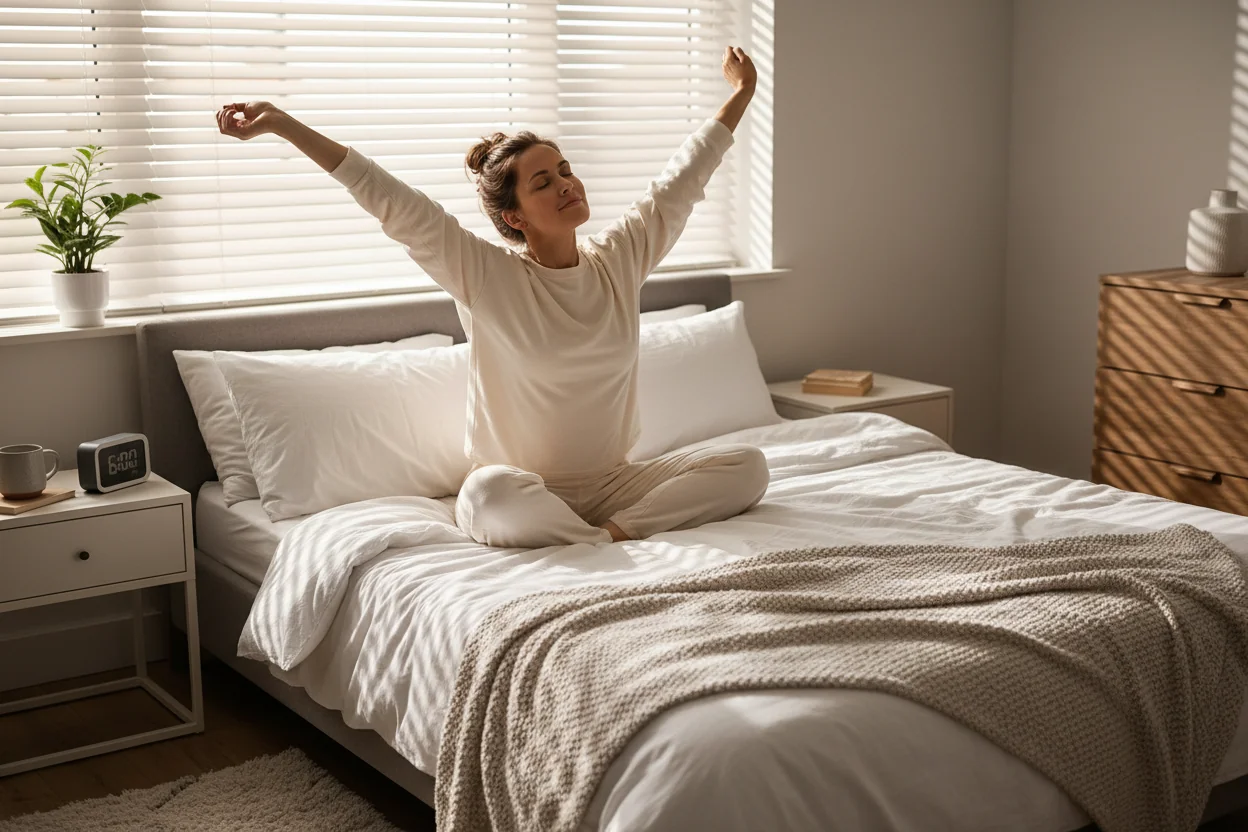
Light is one of the strongest signals your body uses to figure out what time it is. Getting natural light earlier in the day — a morning commute, a walk, or just sitting near a window with your coffee — helps reinforce a clear day-night pattern for your internal clock.
You don’t need to track exact minutes of sun exposure. The practical version of this habit is simply making an effort to get outside or open the blinds in the morning, rather than staying in dim indoor lighting until midday.
4. Be Strategic With Caffeine
Caffeine can stay in your system for hours. Research reviewed by the National Academies’ Institute of Medicine puts its average half-life at about five hours, although this varies considerably from person to person based on genetics, metabolism, and tolerance. A coffee at 3 PM may still have a meaningful amount of caffeine in your system well into the evening.
In practice, this shows up in common habits: an afternoon coffee run, an energy drink to push through a slow afternoon, a tea after lunch, or chocolate or soda later in the day. There’s no single cutoff time that works for everyone — some people can have coffee after dinner and sleep fine, while others feel it past noon. Paying attention to your own sensitivity is more useful than following a one-size-fits-all rule.
5. Stay Active During the Day
Regular physical activity is associated with better sleep quality, and the CDC lists improved sleep as one of the immediate benefits of a single session of moderate or vigorous exercise. You don’t need an intense workout program — a brisk walk, a bike ride, or a home workout can all count.
Timing and personal response vary. Some people sleep fine after an evening workout, while others find exercising too close to bedtime leaves them feeling wired. If you’re not sure how your body responds, morning or afternoon activity is a reasonable starting point.
6. Create a Wind-Down Period
A wind-down period is a transition between your active day and actual sleep, and it doesn’t need to check every box below. Pick a couple of options that realistically fit your evening:
Taking a shower
A simple skincare routine
Reading a few pages of something low-stakes
Light stretching
Laying out clothes for tomorrow
Jotting down tomorrow’s priorities so they’re not running through your head in bed
Dimming the lights around the house
Listening to a podcast, music, or another relaxing audio
You don’t need to do all of these every night, and you don’t need a fixed order. The point is giving yourself even 20 to 30 minutes where you’re not asking your brain to stay fully engaged with work, screens, or problem-solving.
7. Reduce Late-Night Screen Stimulation
Phones and screens factor into sleep in two overlapping ways: the light they emit and the content they show you. Screens emit blue-enriched light that can suppress melatonin and delay your body’s sleep signal somewhat, but the more obvious issue for a lot of people is what’s actually on the screen — TikTok, YouTube, a show you can’t stop watching, a stressful work email, a game that keeps your brain alert, or doomscrolling without really deciding to.
It’s not accurate to say blue light alone is responsible for poor sleep — the mental stimulation from an engaging app plays a real role too. If cutting out screens entirely isn’t realistic, some practical middle grounds include switching to less stimulating content, turning on night mode, or moving your phone out of arm’s reach once you’re in bed.
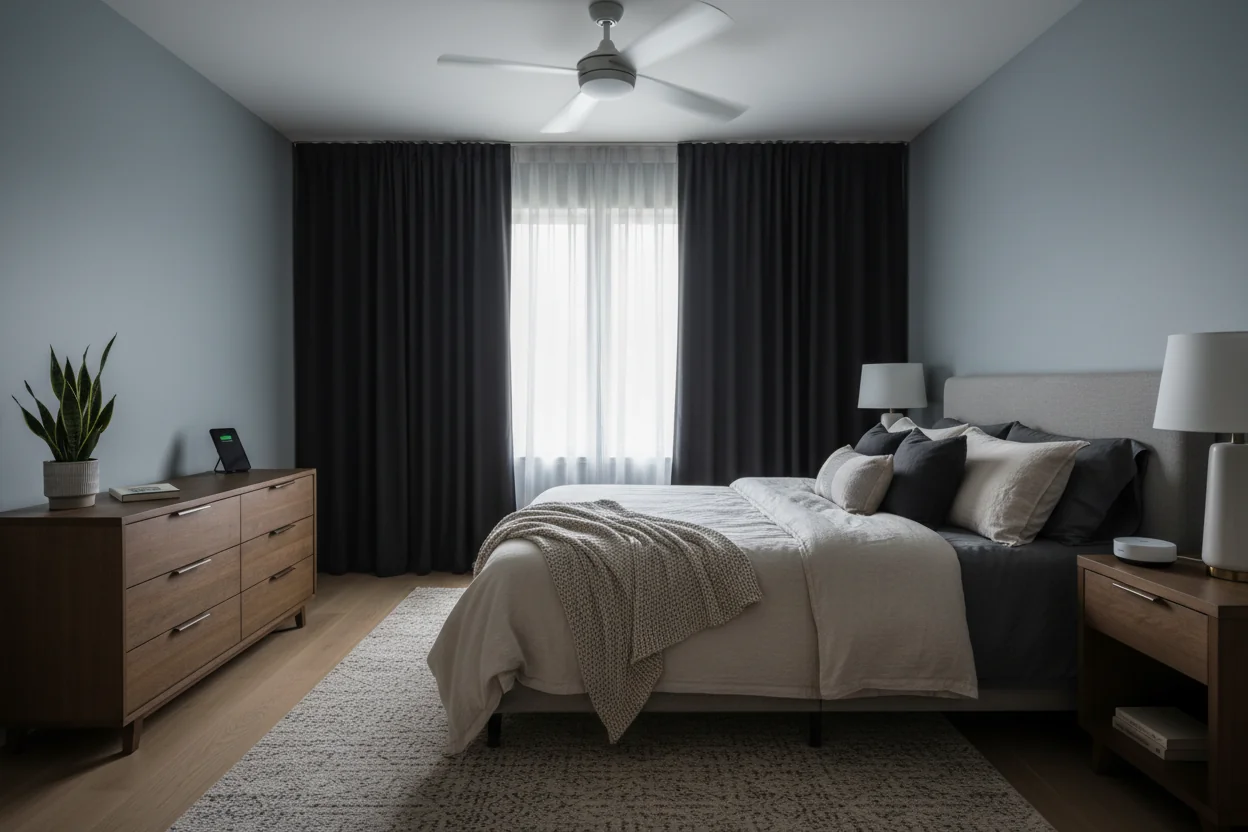
8. Make Your Bedroom Sleep-Friendly
Your bedroom environment plays a bigger role than people usually give it credit for:
Temperature:NHLBI guidance suggests you’ll generally sleep better with the room on the cooler side. Keep your bedroom comfortably cool — there’s no single perfect temperature for everyone, so choose a setting that feels comfortable and doesn’t leave you waking up hot or cold.
Darkness: Blackout curtains, an eye mask, or turning away from light sources like a TV standby light or streetlight can help.
Noise: A fan, white noise machine, or earplugs can block out unpredictable sounds.
Comfort: An old, worn-out mattress or pillow can quietly undercut everything else you’re doing right.
Phone placement: Keeping your phone across the room removes a lot of the temptation to check it overnight.
9. Go to Bed When You’re Ready for Sleep
Getting into bed well before you’re sleepy, or lying awake frustrated, can build a mental association between your bed and being awake and restless — which tends to make the problem worse over time. If you’ve been lying awake for a while, getting up briefly to do something calm in dim light and returning when you feel sleepier is generally more useful than staring at the ceiling.
This is general lifestyle guidance, not a diagnosis. If falling or staying asleep is a frequent, ongoing struggle, that’s worth bringing up with a healthcare provider.
10. Repeat the Routine Instead of Chasing Perfection
The habits above only help if they happen consistently, not because any single night looks flawless. A realistic sleep routine is closer to “most nights, roughly the same pattern” than a picture-perfect ritual you follow exactly every time.
Some nights won’t go as planned — you’ll stay up late for a good reason or skip the wind-down entirely. That’s normal. What actually builds a routine is returning to the same basic pattern the next night instead of treating one off night as a reason to abandon the whole thing.
A Simple Example Sleep Routine
Here’s what a realistic routine might look like for a typical U.S. weekday schedule. This is only an example — adjust the timing to your own work, family, and sleep needs.
6:30–7:00 AM — Wake up
Morning — Get some natural light and go through your normal morning routine
Daytime — Work, errands, or other regular activity
Early afternoon — Last caffeinated drink, if you’re having one
Evening — Dinner and normal evening activities
9:30 PM — Start winding down
10:00 PM — Cut back on stimulating activities
10:30 PM — Quiet bedtime routine
11:00 PM — Bed
There’s nothing special about these exact times. Someone who works an early shift or has young kids would shift all of this earlier or later while keeping the same basic structure.
7-Day Better Sleep Routine Starter Plan
This isn’t a seven-day sleep transformation — it’s a simple way to build habits one at a time instead of changing everything overnight.
Day 1: Pick a wake-up time you can realistically stick to most days, weekends included.
Day 2: Work on getting natural light earlier in your day.
Day 3: Note when you’re having caffeine, and whether it’s later than you realized.
Day 4: Adjust one thing about your bedroom — temperature, darkness, noise, or phone placement.
Day 5: Put together a short, 30-to-60-minute wind-down routine from Step 6’s options.
Day 6: Pick one late-night screen habit and scale it back.
Day 7: Review the week. Which changes actually helped, and which weren’t worth keeping?
Common Sleep Routine Mistakes
Changing bedtime dramatically from night to night. Going to bed at 10 PM one night and 1 AM the next keeps your internal clock guessing.
Sleeping very differently on weekends. Some flexibility on weekends is normal, but large shifts in sleep and wake times can disrupt the consistency you’ve built during the week.
Drinking caffeine too late for your personal sensitivity. What works for a friend or family member might not work for you.
Doomscrolling in bed. Beyond the light exposure, getting pulled into stressful or engaging content makes it harder for your brain to downshift toward sleep.
Trying to force sleep. Lying in bed willing yourself to fall asleep tends to backfire, since the frustration itself is stimulating.
Building an unrealistic nighttime routine. A routine with ten steps is easy to skip entirely on a tired night. A shorter version is more likely to actually happen.
Expecting immediate results. A new sleep routine usually takes more than a night or two to show a difference.
Focusing only on bedtime while ignoring daytime habits. Morning light, caffeine timing, and activity levels influence sleep just as much as anything you do in the last thirty minutes.
What If Your Sleep Routine Isn’t Working?
Lifestyle habits can meaningfully improve sleep for a lot of people, but they can’t resolve every sleep problem — some sleep difficulties have underlying causes that habit changes alone won’t fix. If you’ve been consistent with these habits for a reasonable stretch and you’re still struggling, that’s a sign to look beyond routine adjustments.
NHLBI guidance suggests talking with a healthcare provider if you regularly experience significant trouble falling or staying asleep, excessive daytime sleepiness, loud snoring or gasping noises during sleep, or sleep problems interfering with your work, relationships, or daily functioning. This article is general lifestyle guidance, not a substitute for a medical evaluation — it isn’t intended to diagnose any sleep condition, and sleep-hygiene habits alone aren’t a treatment for a diagnosed sleep disorder.
Frequently Asked Questions
There’s no exact, universally proven timeline. Most people notice their new schedule starting to feel more natural after a few weeks of consistency, though this varies based on how irregular your previous schedule was.
There isn’t one bedtime that’s healthiest for every adult. The more useful question is what time lets you get enough sleep before a wake-up time you need to hit consistently — for one person that might be 10 PM, for another 11:30 PM.
As close as realistically possible, yes, including most weekends. Occasional flexibility is normal, but a wake-up time that swings by several hours day to day makes it harder for your body to settle into a rhythm.
A simple example: dim the lights, put your phone across the room or on do-not-disturb, and do something low-stimulation like reading or light stretching. It doesn’t need to be more elaborate than that.
Not automatically, but it depends on what you’re doing on it. Checking the weather and setting an alarm is very different from an hour of stressful news or an engaging video feed. Stimulating, open-ended phone use is more likely to push your bedtime later than something brief and low-key.
Sleeping in occasionally can help you feel less run-down, but it doesn’t fully reverse a week of short sleep. NIH-funded research found that weekend recovery sleep didn’t prevent some metabolic effects of chronic sleep restriction. A consistent schedule most nights works better than relying on weekend catch-up.
Sleep duration is only one part of the picture — sleep quality, stress, diet, medical conditions, medications, and underlying sleep disorders can all contribute to feeling tired even after a full night in bed. If this is persistent rather than an occasional off day, it’s worth discussing with a healthcare provider.
The Bottom Line
A useful sleep routine doesn’t need to be complicated or Instagram-worthy. Start with a consistent wake-up time and a small handful of habits you can realistically repeat — some morning light, mindful caffeine timing, a short wind-down, and a bedroom that’s actually set up for sleep. Build one piece at a time, stay consistent more often than not, and give it a few weeks before judging whether it’s working.
Read our Review Policy for a plain explanation of what our review process does — and doesn't — mean for health-adjacent content.
Sources & Further Reading
This article is for general informational purposes only and isn’t medical advice. It doesn’t diagnose any sleep condition and isn’t a substitute for a healthcare provider’s evaluation. Sleep-hygiene habits alone aren’t a treatment for a diagnosed sleep disorder — talk with a healthcare provider if you have ongoing or significant trouble sleeping.