Meal Planning for Beginners: A Simple Step-by-Step Guide
September 17, 2026
It’s 6 p.m., you’re hungry, and you have no idea what’s for dinner. You open the fridge, stare at a half-used bag of spinach and some condiments, and end up ordering takeout again. Or maybe you did the opposite last weekend — bought a cart full of groceries with good intentions, and half of it went bad before you got around to using it.
That’s usually not a willpower problem. It’s a planning problem.
Meal planning for beginners doesn’t have to mean cooking every meal on Sunday, eating the same chicken-and-rice bowl five nights in a row, or following someone else’s rigid weekly menu. It just means deciding, ahead of time, roughly what you’re going to eat — so dinner isn’t a daily emergency. This guide walks through a simple, realistic system: looking at your week, choosing meals that fit it, building them around a balanced framework, shopping efficiently, prepping just enough to help on weeknights, and staying flexible when life doesn’t cooperate.
How can a beginner start meal planning? Start small: look at your week, pick a handful of meals that fit your schedule, build each one around a protein, a vegetable or fruit, and a grain or starch, then make a grocery list from those meals. You don’t need to plan every meal or track every calorie to get the benefit.
Meal planning is simply deciding in advance what you’re going to eat over a set period — usually a few days to a week — so you’re not figuring it out from scratch every day. It can be as simple as a short list on your phone (“Tuesday: tacos, Wednesday: leftovers, Thursday: sheet-pan chicken”) or as detailed as a full weekly calendar with recipes attached.
Meal planning is often confused with meal prepping, but they’re not the same thing. Meal prepping means physically preparing food ahead of time — cooking a batch of grains, portioning containers, chopping vegetables. Meal planning is the decision-making step that comes first: figuring out what you’re going to eat. You can meal plan without meal prepping at all — plenty of people plan their week in ten minutes and cook each meal from scratch the day of, and the planning alone still saves the daily “what’s for dinner” scramble and makes shopping more purposeful.
Why Meal Planning Can Make Healthy Eating Easier
Meal planning isn’t a magic fix, and it won’t guarantee weight loss or a specific amount of money saved — how much it helps depends on your starting habits, budget, and how consistently you use it. But for a lot of people, it removes friction that gets in the way of eating well:
Fewer last-minute decisions. Knowing what’s for dinner ahead of time makes it less likely you’ll default to whatever’s fastest.
More intentional grocery shopping. A list built from an actual plan means fewer impulse buys and fewer mid-week store trips.
Less food waste. Buying ingredients with a specific use in mind makes it less likely produce goes bad before you use it.
Easier balanced meals. Planning ahead makes it simpler to include protein, produce, and a grain or starch, instead of assembling whatever’s easiest.
Time saved on busy weeknights, since even a small amount of prep can cut down on cooking time.
Potentially less reliance on takeout, simply because there’s already a plan in place.
None of this requires perfection. A rough plan followed most of the time beats a detailed one abandoned by Wednesday.
How to Start Meal Planning for Beginners: Step by Step
This is the core of the process — the actual steps to build your first meal plan.
Step 1 — Look at Your Week
Before choosing a single meal, look at what your week actually looks like. Work schedules, school pickups, workout classes, social plans, and travel all affect how much time and energy you’ll realistically have for cooking on a given night.
If Tuesday and Thursday are packed, don’t plan an elaborate 45-minute recipe for those nights — save the more involved cooking for a day with more time, and keep busy-night meals simple. A common beginner mistake is planning seven ambitious dinners when you realistically only need to cook four nights and can rely on leftovers, a backup meal, or eating out for the rest. Be honest about your week, not the week you wish you had.
Disclosure: This article may contain affiliate links. If you make a purchase through one of these links, AvaFitCare may earn a commission at no additional cost to you.
Optional Meal-Planning Tool
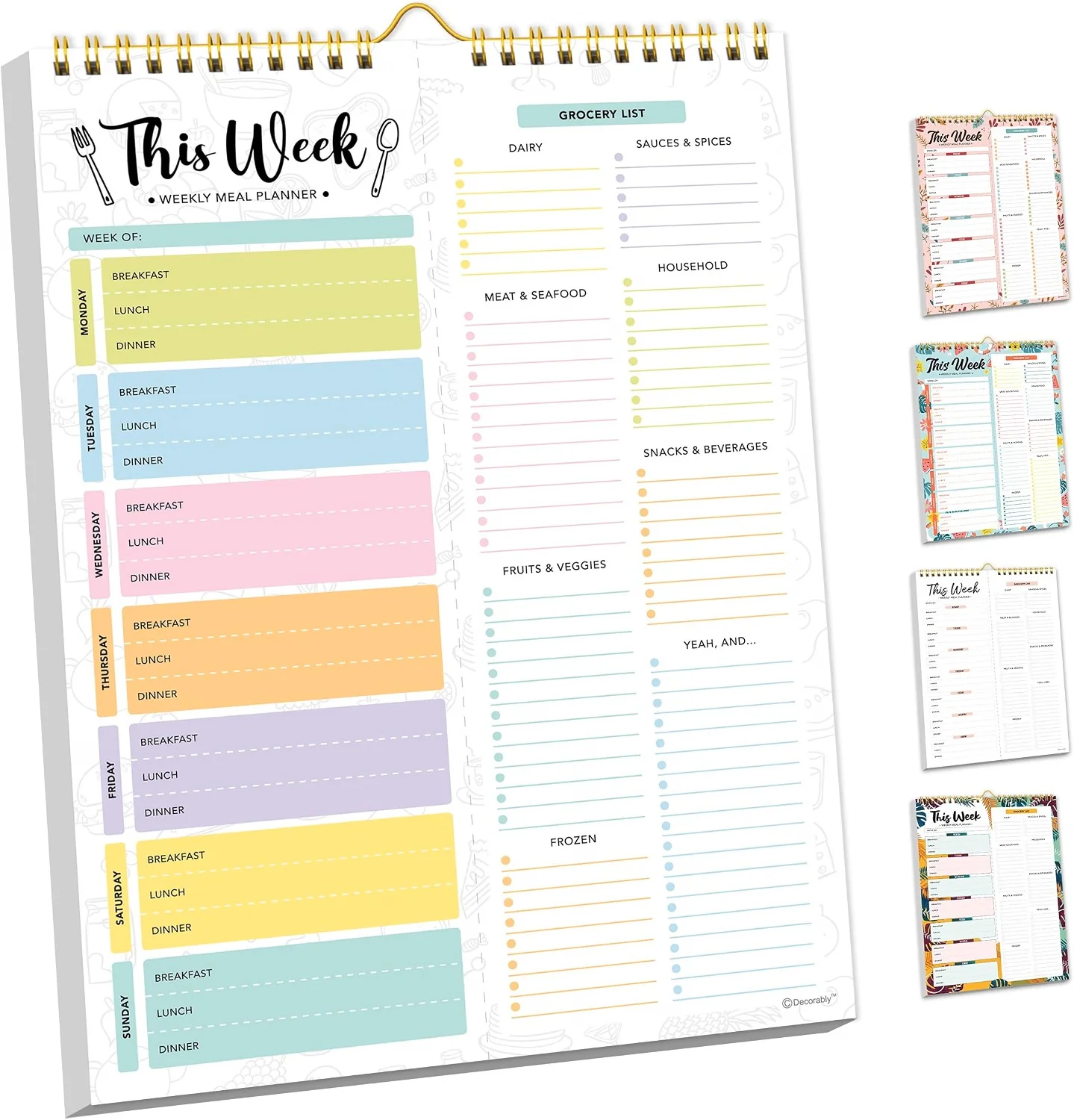
Decorably 52 Sheets Pastel Rainbow Undated Magnetic Weekly Meal Planner
If you prefer seeing your week at a glance, an undated magnetic meal planner can give you one simple place to map out meals before making your grocery list. A physical planner is completely optional — a notebook or phone note works just as well.
Step 2 — Decide Which Meals You Actually Need to Plan
Not everyone needs to plan breakfast, lunch, dinner, and snacks in full detail — think about which meals actually cause you friction.
Breakfast — Some people eat the same simple breakfast most days; others benefit from two or three go-to options.
Lunch — Worth planning if you’re packing it for work or school, since it’s easy to default to something less balanced without one.
Dinner — Usually benefits most from planning, since it takes the most time and decision-making.
Snacks — A short go-to list is often enough; snacks rarely need detailed planning.
If dinner is your main pain point, focus your planning energy there and keep breakfast and lunch simple and repetitive. You don’t need to plan every bite to get real value from this process.
Step 3 — Build Meals Around a Simple Balanced Framework
You don’t need a rigid formula to build a reasonably balanced meal. A useful, flexible framework — similar in spirit to the USDA’s MyPlate concept — is to build most meals around:
Vegetables and/or fruit — Aim to fill a good portion of the plate here. Fresh, frozen, or canned all count.
A protein source — Chicken, fish, eggs, beans, lentils, tofu, turkey, lean beef, or Greek yogurt are all accessible options.
A whole grain or other carbohydrate source — Brown rice, whole-wheat pasta, oats, quinoa, potatoes, or whole-grain bread.
Healthy fats where appropriate — Olive oil, avocado, nuts, or seeds, used in reasonable amounts.
This is a flexible starting point, not a rule that every single meal has to hit perfectly. Some meals will be more grain-heavy, some more protein-heavy, and that’s fine — what matters is the overall pattern across the week, not any one plate.
A few realistic examples using common American foods:
Oatmeal topped with berries and a side of Greek yogurt
Scrambled eggs with whole-grain toast and a piece of fruit
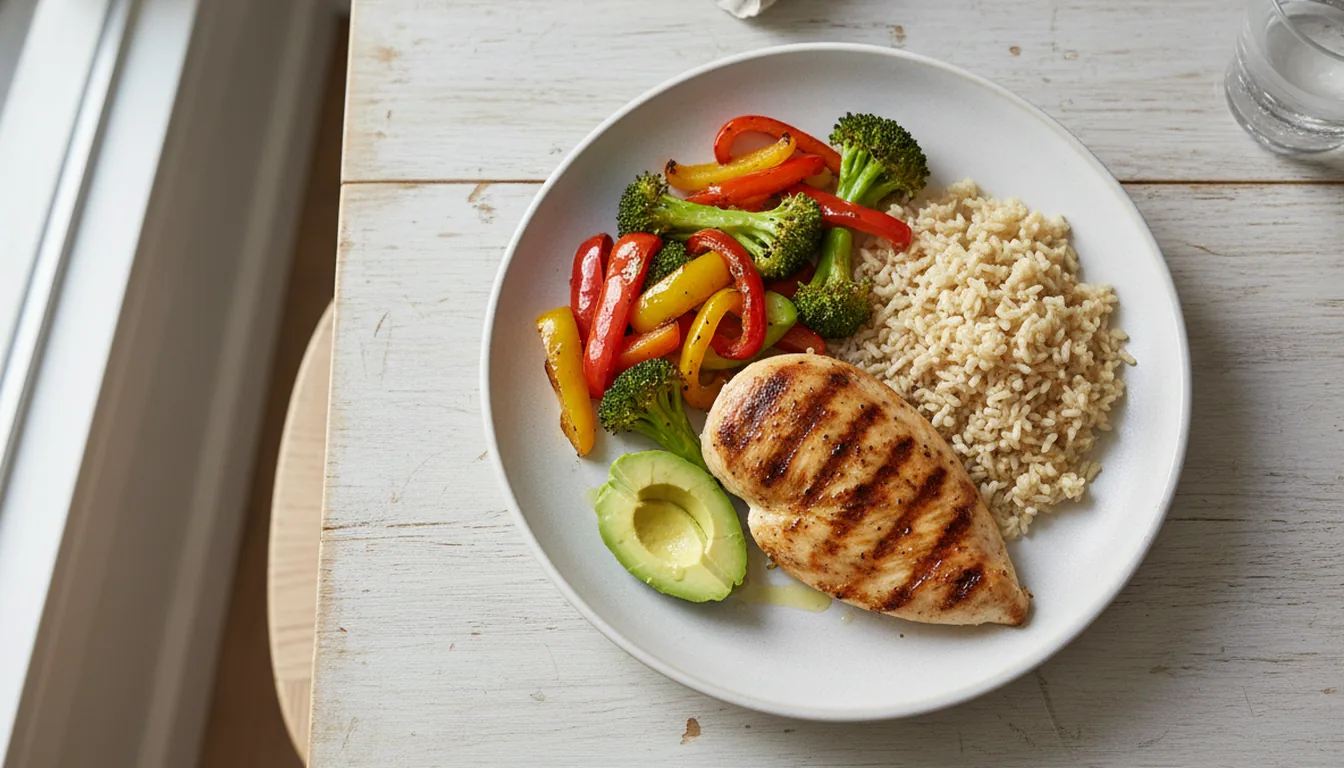
Grilled chicken, brown rice, and roasted vegetables
A turkey sandwich on whole-grain bread with baby carrots and an apple
Baked salmon with roasted potatoes and green beans
A bean and rice bowl with sautéed vegetables and avocado
You don’t need to get this exactly right from day one — the basic framework above is enough to start building balanced meals with confidence.
Individual calorie, protein, and nutrient needs vary based on age, body size, activity level, goals, and health circumstances, so treat this framework as a flexible starting point, not a fixed prescription. If you’d like a more personalized number to work from, AvaFitCare’s Calorie Calculator and TDEE Calculator can estimate a general daily target, and the Protein Calculator or Macro Calculator can help you break that down further. None of this is required, though — plenty of people meal plan successfully without tracking any numbers at all.
Step 4 — Choose Your Meals
Once you know which meals to plan and roughly how to build them, pick a manageable number for the week:
2–3 breakfast options
2–3 lunch options
4–5 dinners
A few go-to snacks
You don’t need seven unique meals for every category. Repeating a breakfast, or turning a big dinner into tomorrow’s lunch, cuts down on both cooking time and the ingredients you need to buy. Reusing a protein or grain across two or three meals — the same rotisserie chicken in a bowl one night and a sandwich the next — is one of the easiest ways to keep a beginner plan manageable.
Step 5 — Check What You Already Have
Before writing a grocery list, take a quick look through your refrigerator, freezer, and pantry. This single step prevents two common problems: buying duplicates of what you already have, and letting ingredients you own go to waste while new ones pile up. A quick glance is usually enough to notice the half-bag of rice, the vegetables that need using soon, or the chicken already in the freezer that could anchor a meal this week.
Step 6 — Make Your Weekly Grocery List
Once your meals are chosen and you know what you already have, build your grocery list from the meals themselves rather than shopping randomly. Organizing it by section makes the trip faster and helps you avoid impulse purchases:
Frozen foods — frozen vegetables, fruit, or proteins as backups
Snacks — whatever keeps you satisfied between meals
Stick close to your list. It’s fine to grab something that catches your eye, but a list built from an actual plan is what keeps the trip efficient and food waste down.
Step 7 — Decide What to Prep Ahead
Meal prep can be as minimal or involved as you want — it doesn’t mean cooking every meal in full on Sunday. Useful, low-effort prep tasks include:
Washing and chopping vegetables
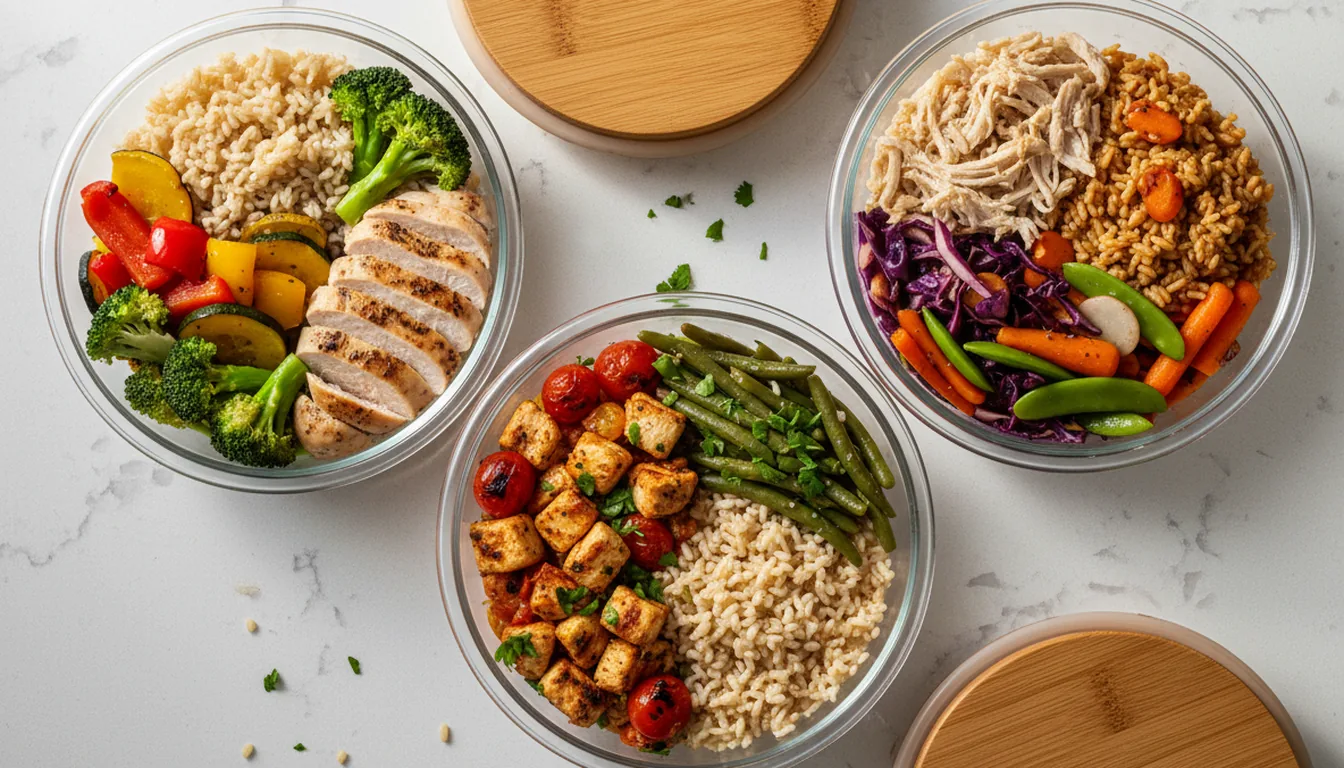
Cooking a batch of a grain like rice or quinoa
Cooking one protein you can use in multiple meals
Portioning out snacks into grab-and-go containers
Making a batch of overnight oats
Preparing a sauce or dressing you’ll use more than once
Cooking one larger “batch meal” that covers a couple of dinners
Whatever you prep ahead, basic food safety matters: refrigerate perishable food within two hours of cooking (one hour if it’s been sitting out somewhere hot), keep your refrigerator at 40°F or below, and use a food thermometer when reheating leftovers. For specifics on safe cooking temperatures, cooling, storage windows, and reheating, check current USDA and FoodSafety.gov guidance rather than general rules of thumb, since recommendations are periodically updated.
Helpful for Meal Prep
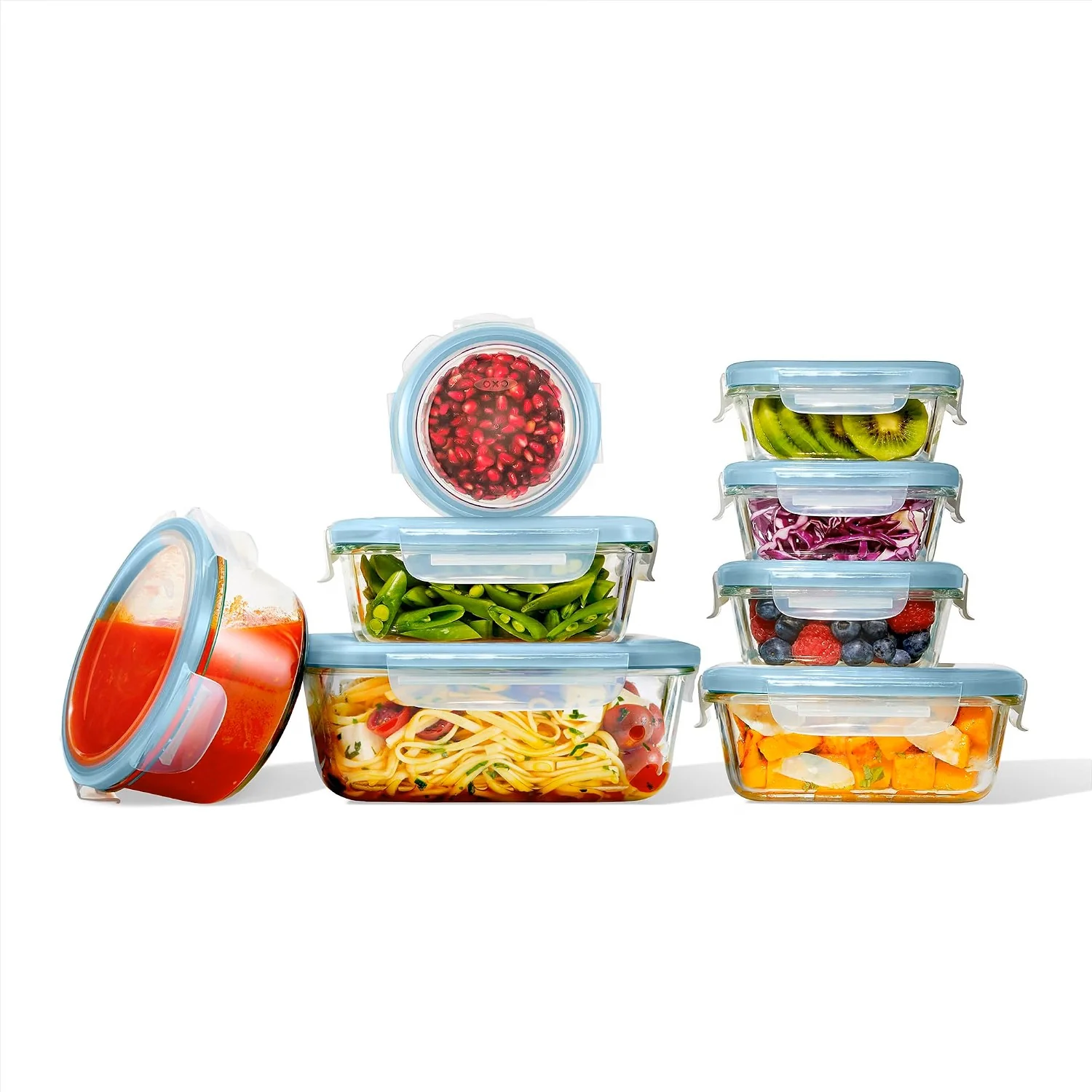
OXO Good Grips Smart Seal Glass Container Set
Reusable food-storage containers can make it easier to organize ingredients and portions you’ve prepared ahead of time. Glass containers are especially useful for storing things like cooked grains, chopped ingredients, and prepared meals.
A meal plan that can’t survive a schedule change isn’t especially useful, since real weeks rarely go exactly as planned. Build in flexibility from the start:
Unexpected dinners out — If your plan assumes you’ll cook every night, one dinner out can throw off the week. Plan for it instead.
Leftovers — Treat them as a real part of the plan. A dinner that makes extra portions is doing double duty as tomorrow’s lunch.
Busy or low-energy nights — Keep at least one night intentionally flexible — a “leftovers night” or “whatever’s easiest night” — so a long day doesn’t derail the whole plan.
Missing ingredients — Swap for something similar rather than abandoning the meal. Out of broccoli? Use whatever vegetable you have.
A plan that flexes with your actual week gets followed far more consistently than a rigid one.
The Simple Beginner Meal-Planning Formula
If you want one thing to remember, it’s this: Plan → Shop → Prep → Adjust.
Plan — Look at your week and pick a realistic number of meals that fit your schedule.
Shop — Build a grocery list from those specific meals, after checking what you already have.
Prep — Do whatever small amount of prep will make weeknights easier — this can be minimal.
Adjust — Let the plan flex when your week doesn’t go as expected, instead of abandoning it entirely.
That cycle repeats every week, and it gets faster and more intuitive the more you do it.
Sample 3-Day Beginner Meal Plan
This sample is meant to illustrate the process, not to prescribe an exact diet — portion sizes and specific foods should be adjusted to your own needs, preferences, and appetite. Notice how ingredients repeat across days to keep the grocery list manageable.
Day
Breakfast
Lunch
Dinner
Snack Ideas
Day 1
Greek yogurt with berries and a handful of nuts
Turkey sandwich on whole-grain bread with baby carrots and an apple
Baked chicken thighs, roasted broccoli, and brown rice
String cheese or apple slices with peanut butter
Day 2
Scrambled eggs with whole-grain toast and orange slices
Leftover chicken, brown rice, and broccoli, reheated with a squeeze of lemon
Baked salmon, roasted potatoes, and green beans
Greek yogurt with berries or a small handful of almonds
Day 3
Overnight oats with berries and Greek yogurt
Mixed greens salad with leftover salmon, cherry tomatoes, and a whole-grain roll
Bean and rice bowl with sautéed vegetables and avocado
Baby carrots with hummus or an apple
After the table: adjust freely. Someone with a higher appetite or activity level might add a larger grain portion or an extra snack; someone eating for a smaller household might halve the recipes. Swap salmon for another fish or protein you prefer, use a different vegetable if broccoli or green beans aren’t your thing, and change up the fruit based on what’s in season or on sale. The structure matters more than the exact foods.
Helpful for Leftovers
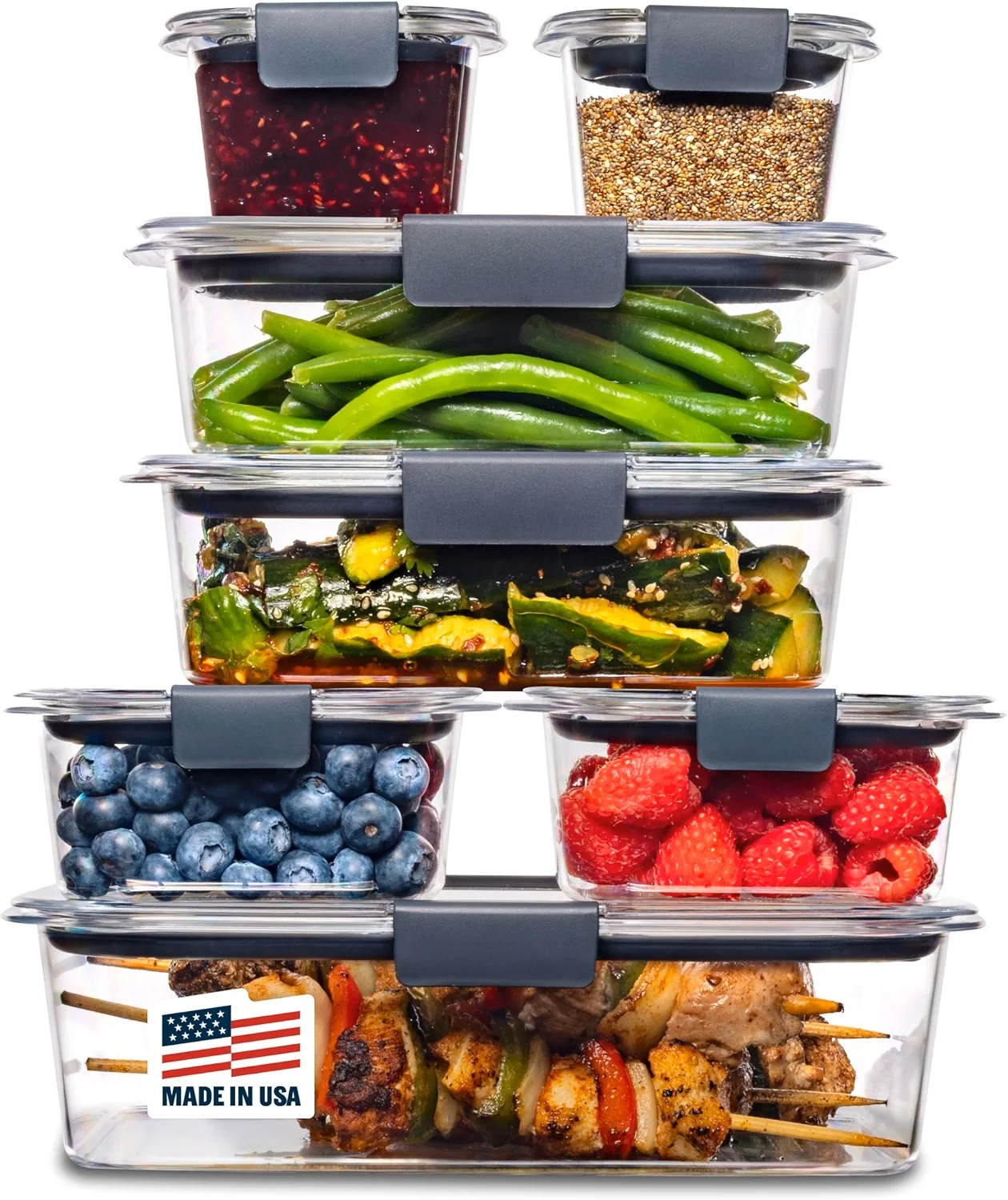
Rubbermaid Brilliance Food Storage Containers
Because the sample plan intentionally reuses ingredients and leftovers across multiple meals, having reusable containers can help keep prepared ingredients and leftover portions organized in the refrigerator.
This example grocery list is based largely on the three-day meal plan above, organized by supermarket section, with ingredients reused across multiple meals. Exact amounts will depend on household size, portions, preferences, and what you already have at home:
Produce: berries, bananas or apples, baby carrots, broccoli, green beans, potatoes, mixed salad greens, cherry tomatoes, avocado, lemon, oranges
Protein: chicken thighs, salmon fillets, eggs, sliced deli turkey, canned or dry black beans
Frozen Foods: frozen broccoli or green beans as a backup, frozen berries (optional)
Snacks: mixed nuts or almonds, hummus (already listed above)
This list isn’t exhaustive — you’ll likely already have some pantry staples on hand — but it shows how a handful of overlapping ingredients (Greek yogurt, berries, brown rice, chicken, broccoli) can cover multiple meals without requiring a huge shopping trip.
Meal Planning on a Budget
Meal planning and budget-friendly eating tend to go hand in hand, since planning ahead naturally reduces impulse purchases and food waste. A few practical strategies, without promising exact savings:
Compare unit prices, not just the sticker price, especially between package sizes and store brands.
Use beans and lentils as a lower-cost, versatile, shelf-stable protein source.
Compare fresh and frozen options — frozen produce can sometimes be a budget-friendly choice and may also help reduce food waste because it keeps longer.
Buy ingredients that work in more than one meal, like a bag of rice or a carton of eggs, rather than single-use items.
Use leftovers intentionally — build a lunch or second dinner around them on purpose.
Compare store-brand and name-brand options and choose based on price, ingredients, and your preferences.
Plan around what’s already at home before buying more.
Common Meal Planning Mistakes Beginners Make
Planning too many complicated recipes. Save elaborate cooking for one or two nights and keep the rest simple.
Buying ingredients without a plan. This is how produce ends up wasted — shop from your meal list, not inspiration alone.
Ignoring the weekly schedule. A plan that doesn’t account for your actual week won’t survive contact with it.
Preparing too much food. Smaller batches are easier to manage than committing to a week of identical meals right away.
Making the plan overly restrictive. Zero flexibility is a plan that’s likely to get abandoned the first time something unexpected comes up.
Forgetting leftovers. Not accounting for them as an actual meal means wasting them or scrambling to use them up.
Trying to overhaul eating habits overnight. Changing every meal and habit in the same week is a lot to sustain — start with a few meals and build from there.
Not keeping backup foods on hand. Without a few easy fallback options, one off night can derail the whole week.
Quick Backup Meals
Every meal plan needs a few reliable backups for the nights it falls apart — a long day, a missing ingredient, or just low energy. A few options using shelf-stable or freezer staples:
Scrambled or fried eggs with whatever vegetables you have, plus toast
Canned beans warmed with frozen vegetables and a drizzle of olive oil
Tuna mixed with a little mayo or Greek yogurt on whole-grain bread
Frozen brown rice (microwaveable pouches work well) topped with a fried egg and frozen vegetables
Rotisserie chicken with a quick side salad or steamed frozen vegetables
Greek yogurt with fruit and a handful of nuts for a light, fast option
Keep basic food-safety practices in mind here too — check that frozen and canned items are within their use windows, and follow safe reheating temperatures. If you have specific dietary needs, choose backup options that fit them rather than defaulting to whatever’s fastest.
Personalizing the Plan
Everything in this guide is a flexible starting framework, not a fixed prescription. How you meal plan should shift based on your own circumstances: activity level (more active people generally need more food), appetite (portions should reflect how hungry you actually are), food preferences (a plan built around foods you don’t enjoy won’t last), budget, cooking ability and available time, schedule, any dietary restrictions, and your own nutrition goals. A general sense of daily hydration can help too — the Water Intake Calculator gives a rough starting target.
If you have a medical condition, food allergy, a history of disordered eating, are pregnant, or have other circumstances that call for individualized nutrition guidance, it’s worth working with a registered dietitian or healthcare provider rather than relying solely on general guides like this one.
Frequently Asked Questions
Start small. Pick a few dinners for the coming week, build them around a protein, a vegetable or fruit, and a grain, and make a grocery list from those meals.
There’s no fixed rule, but three to five days at a time is often more realistic for beginners than committing to a full week right away.
No. Meal planning and calorie tracking are separate things. Some people find tracking helpful for a specific goal; plenty of people meal plan successfully around portion awareness instead.
No. Meal planning is deciding what you’ll eat ahead of time; meal prepping is physically preparing some or all of that food in advance. You can do one without the other, or combine them.
Plan smaller batches, or repurpose extra portions into a different-feeling meal — leftover chicken becomes a wrap the next day instead of an identical repeat.
Compare fresh and frozen produce, choose lower-cost proteins like beans and eggs, reuse ingredients across meals, and shop from a list based on your plan.
A few staples go a long way: eggs, canned beans, frozen vegetables, a grain like rice, canned tuna, and a couple of proteins in the freezer.
Yes. A meal plan is a starting structure, not a contract. Swapping meals, or substituting an ingredient you have for one you don’t, is a normal part of using a meal plan.
Bottom Line
Meal planning for beginners comes down to a simple, repeatable process: look at your actual week, choose a realistic number of meals, build them around protein, produce, and grains, make a grocery list from that plan, prep what will help on busy nights, and stay flexible when things change. None of it requires cooking every meal in advance or following someone else’s rigid weekly menu.
Start small — even planning three or four dinners for the coming week is a meaningful first step. For more structure as you go, explore AvaFitCare’s other nutrition and meal-planning resources to help you build on the basics covered here.
This article is for general educational purposes and isn’t a substitute for individualized medical or nutrition advice. If you have a medical condition, food allergy, a history of disordered eating, are pregnant or breastfeeding, or have other circumstances that call for personalized guidance, talk with a registered dietitian or healthcare professional before making significant changes to your eating pattern.
Get New Guides in Your Inbox
No spam, no filler — just new articles as we publish them.