Healthy Recipes for Beginners: Easy Meals to Start Eating Better
September 21, 2026
If you want to eat healthier but feel stuck the moment you open a recipe site, you’re not alone. A lot of “healthy” recipes assume you already own five specialty ingredients, know how to julienne a carrot, and have an hour free on a Tuesday night. That’s not realistic for most people, and it’s not where healthy cooking actually has to start.
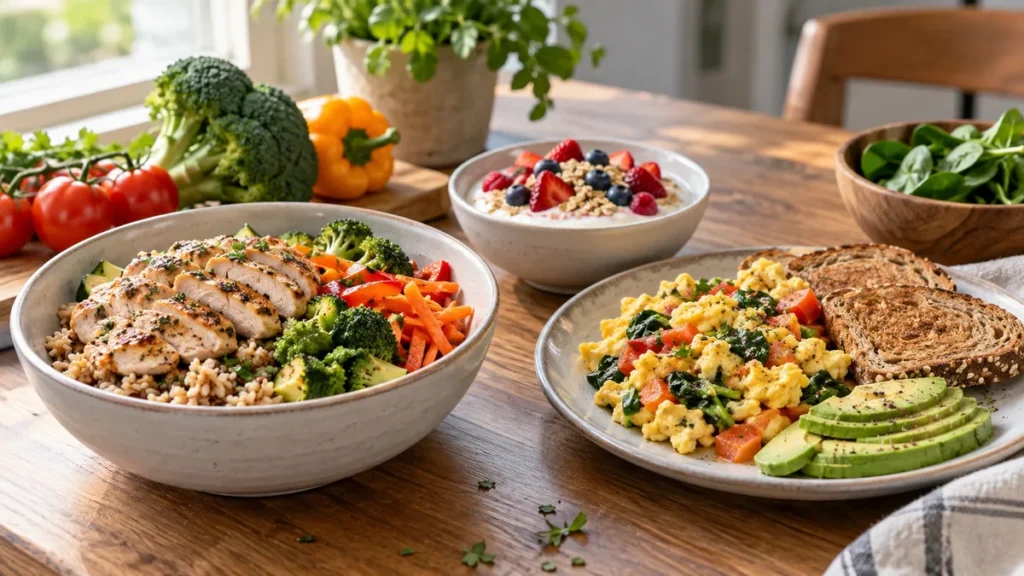
Healthy home cooking can begin with simple meals made from ingredients you can find at any regular grocery store, using skills you either already have or can pick up in one try. This guide is built around exactly that starting point, with healthy recipes for beginners who want something realistic to cook tonight, not a project. You’ll learn what actually makes a meal healthy (it’s simpler than you think), what to keep in your kitchen, a flexible formula for building your own meals, and six complete beginner recipes for breakfast, lunch, and dinner — plus snack ideas, time-saving shortcuts, and a simple plan for your first week.
There’s no single checklist that makes a meal “healthy” or “unhealthy” — and rigid rules tend to make cooking feel stressful instead of doable. A more useful way to think about it is in terms of what a meal is built from.
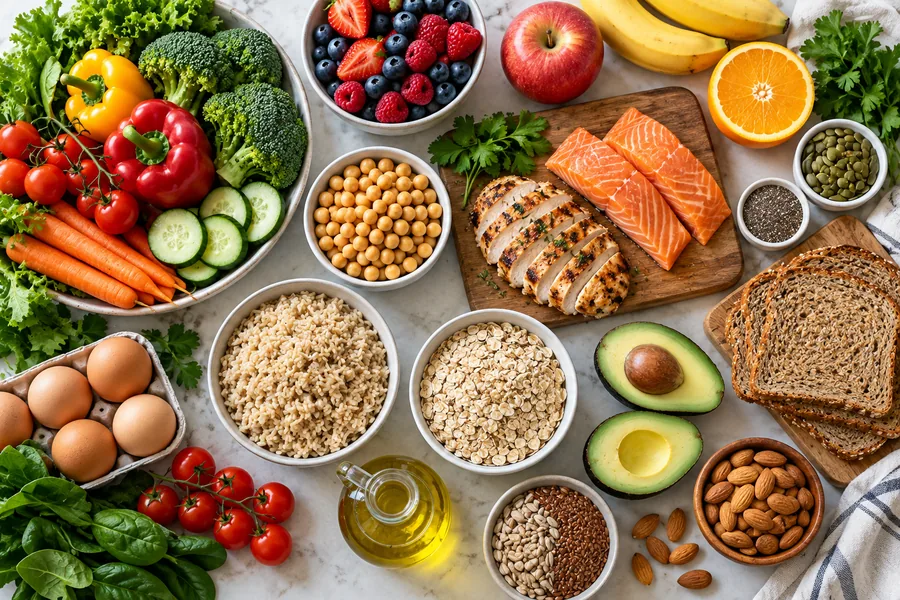
Most meals that leave you satisfied and well-nourished include some combination of:
Vegetables and/or fruit — for fiber, vitamins, and minerals
Protein — like chicken, eggs, beans, fish, tofu, or dairy, which helps you feel full and supports muscle and tissue repair
Whole grains or other carbohydrate sources — like brown rice, oats, potatoes, or whole-wheat bread, which provide energy
Healthy fats — like olive oil, avocado, or nuts, which help your body absorb certain vitamins and add flavor and satisfaction
Fiber-rich foods — often the same vegetables, fruits, whole grains, and legumes already mentioned, which support digestion
You don’t need all five in every single meal, and you don’t need to measure any of this precisely. Nutritional needs also differ from person to person based on age, activity level, health history, and personal goals — there’s no one-size-fits-all plate.
What matters more than any individual meal is your overall pattern of eating over days and weeks. One meal without vegetables or one dinner from a drive-through doesn’t undo anything, and one “perfect” meal doesn’t fix everything either. This guide will help you build meals that generally include a mix of the categories above, most of the time — not a rulebook to follow exactly.
For a deeper look at these food groups and how to build a balanced plate, see AvaFitCare’s Healthy Foods for Beginners guide.
Healthy Cooking for Beginners: What You Actually Need
Basic Kitchen Equipment
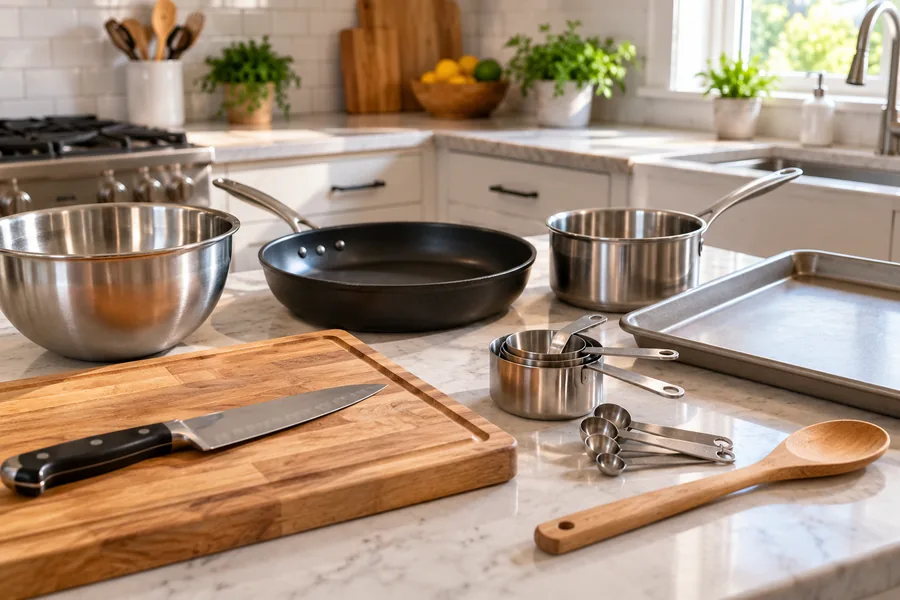
You don’t need a fully stocked gourmet kitchen to cook healthy meals. Here’s what actually covers nearly everything in this guide:
Essentials:
A chef’s knife (one decent, reasonably sharp knife will do)
A cutting board
A large skillet or frying pan
A medium saucepan (for rice, grains, or sauces)
A baking sheet (for roasting vegetables or sheet-pan dinners)
A mixing bowl
Measuring cups and spoons
A spatula or wooden spoon
Disclosure: This article contains affiliate links. If you purchase through these links, AvaFitCare may earn a commission at no additional cost to you.
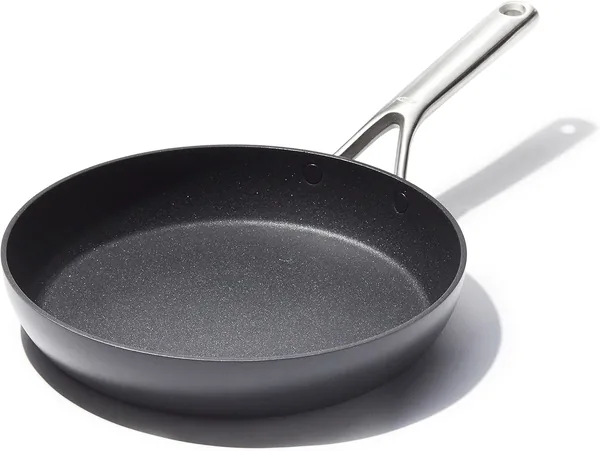
Helpful Kitchen Pick: OXO Professional 10″ Frying Pan Skillet
A dependable large skillet is one of the few tools you’ll use in almost every recipe in this guide, from scrambled eggs to stovetop chicken. A sturdy, evenly heating pan like this one can make everyday cooking tasks feel more consistent while you’re still building confidence in the kitchen.
You do not need an air fryer, a stand mixer, specialty knives, or any single “must-have” gadget to cook the recipes in this article or to eat well in general. If you already own extra kitchen tools, great — but don’t feel like you need to shop before you can start.
Beginner-Friendly Ingredients to Keep at Home
Having a few reliable ingredients on hand makes it much easier to throw together a healthy meal without a special grocery trip every time.
Proteins:
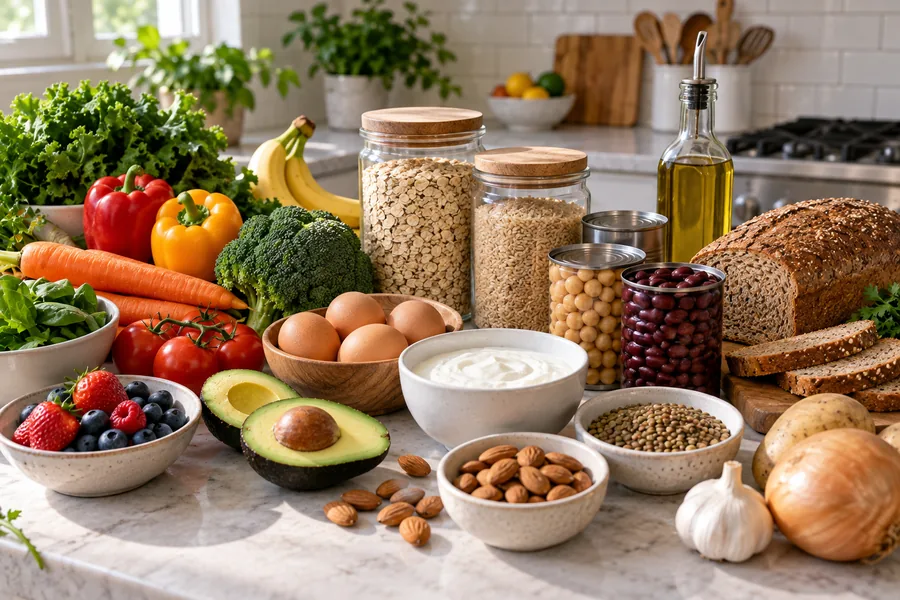
Eggs, chicken breast or thighs, canned tuna or salmon, canned or dried beans, lentils, Greek yogurt, tofu
Carbohydrates and grains:
Oats, brown rice, quinoa, whole-grain bread, potatoes (regular or sweet), whole-wheat tortillas
Produce:
Fresh vegetables you actually like eating, frozen vegetables, fresh or frozen fruit
Healthy fats and flavor:
Olive oil, avocado, nuts and seeds, fresh or dried herbs, spices, lemon or lime
Pantry staples:
Low-sodium canned beans, canned diced tomatoes, broth (chicken or vegetable), nut butter, basic seasonings (garlic powder, onion powder, black pepper, cumin, paprika, Italian seasoning)
A quick note on fresh versus frozen or canned: frozen vegetables and fruit are typically picked and frozen at peak ripeness, which helps them hold onto their nutrients — they’re a genuinely convenient, nutritious option, not a downgrade. The same goes for canned beans, tuna, or tomatoes. You don’t need everything to be fresh to be eating well; you just want to watch for added sodium or sugar on the label when it applies, which we’ll cover more later.
The Simple Formula Behind Healthy Recipes for Beginners
Once you have a few staple ingredients around, you can build most meals using a simple four-part formula instead of hunting down a new recipe every time:
1
A protein source
(chicken, eggs, beans, tofu, fish, Greek yogurt)
2
Vegetables and/or fruit
(fresh, frozen, or a mix)
3
A carbohydrate or whole grain
(rice, potatoes, bread, quinoa, tortillas)
4
A source of fat or flavorful topping
(olive oil, avocado, a simple dressing, nuts, cheese)
Mix and match based on what you have and what sounds good. A few quick examples:
OptionalChicken + brown rice + broccoli + olive oil and lemon
OptionalCanned tuna + whole-wheat tortilla + lettuce and tomato + a drizzle of olive oil
OptionalLentils + quinoa + roasted vegetables + a squeeze of lime
This isn’t a strict diet template — it’s a starting point you can adjust based on your appetite, your goals, and what’s actually in your fridge. Portion sizes and nutritional needs vary a lot from person to person, so don’t worry about matching any of this exactly.
Easy Healthy Breakfast Recipes for Beginners
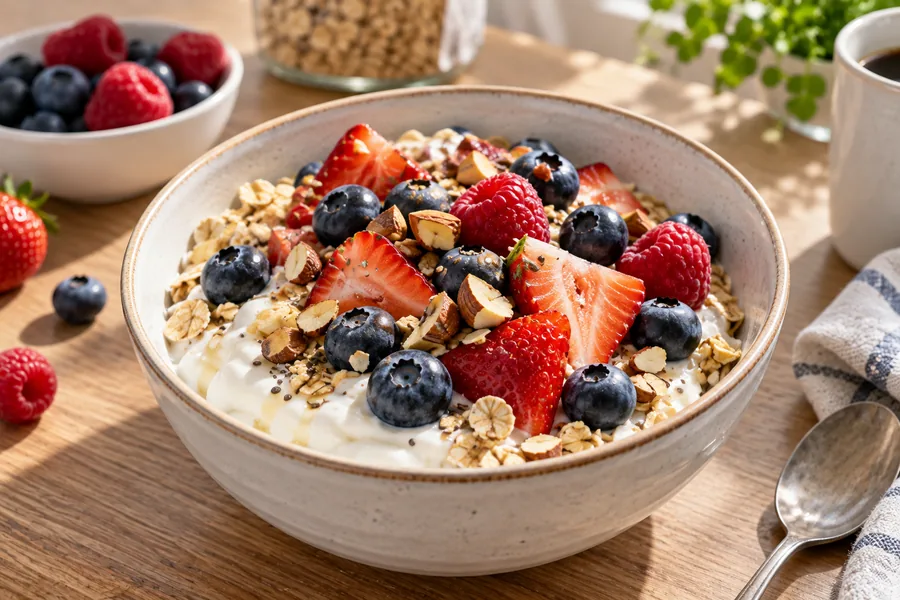
Greek Yogurt Berry Oat Bowl
A no-cook, make-in-five-minutes bowl that combines protein, fiber, and natural sweetness. Great for busy mornings or when you want something ready almost instantly.
1/2 cup mixed berries (fresh or frozen and thawed)
1 tablespoon honey or maple syrup (optional)
1 tablespoon chopped nuts or seeds (almonds, walnuts, chia, or flax)
Instructions:
Add the Greek yogurt to a bowl.
Stir in the oats and let sit for 2–3 minutes if you prefer a softer texture, or skip this step if you like more bite.
Top with the berries, nuts or seeds, and a drizzle of honey or maple syrup if using.
Serve right away.
Approximate Nutrition Per Serving (without the optional honey or maple syrup):
Calories: 340–380 | Protein: 28–32g | Carbohydrates: 38–42g | Fiber: 6–8g | Fat: 8–12g
Nutrition values are estimates and will vary based on the specific brands, quantities, and substitutions you use. If you add the tablespoon of honey or maple syrup, add roughly 60 calories and 17g of carbohydrate.
Easy substitutions: Swap Greek yogurt for a dairy-free yogurt alternative; use any fruit you have on hand, fresh or frozen; swap honey for a few dashes of cinnamon if you want less added sugar.
Beginner tip: Make this in a jar the night before and keep it in the fridge — the oats will soften overnight, giving you an overnight-oats texture with almost no morning effort.
Storage: Best eaten within a day if assembled with fresh berries; can be prepped up to 2 days ahead if kept in a sealed container in the fridge.
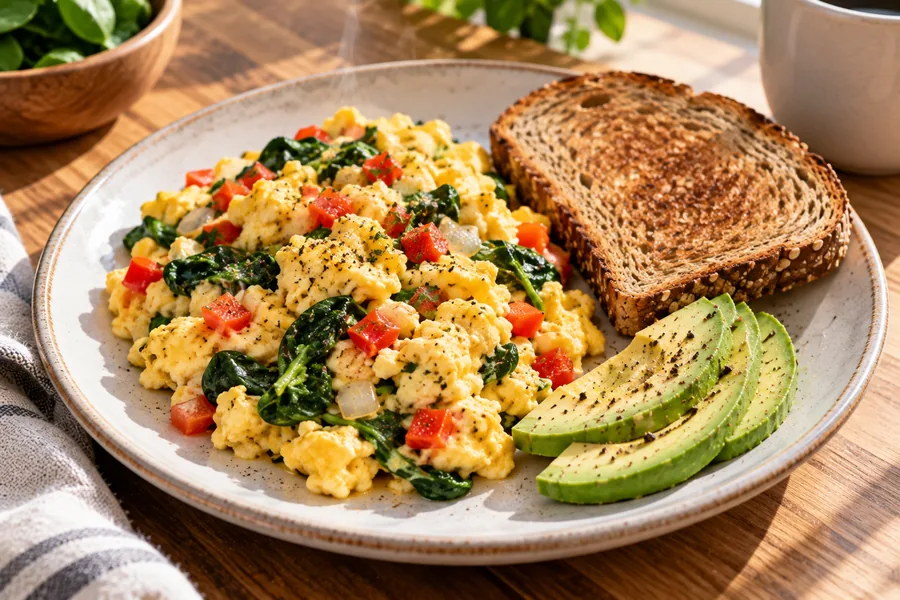
Veggie Egg & Whole-Grain Toast Plate
A warm, savory breakfast that’s easy to customize with whatever vegetables you have around.
Add the onion and bell pepper and cook for 2–3 minutes, stirring occasionally, until slightly softened.
Add the spinach and cook for another 30–60 seconds until just wilted.
Crack the eggs directly into the skillet with the vegetables. Scramble everything together, stirring gently, until the eggs are just set, about 2–3 minutes. Season with salt and pepper.
While the eggs cook, toast the bread.
Plate the eggs alongside the toast, and top with avocado slices if using.
Nutrition values are estimates and will vary based on the specific brands, quantities, and substitutions you use. Adding the optional 1/4 avocado brings this to roughly 340–360 calories, 22–25g carbohydrates, 6–7g fiber, and 20–22g fat.
Easy substitutions: Use any vegetables you have — mushrooms, zucchini, and tomatoes all work well. Swap eggs for a plant-based egg substitute if needed. Use gluten-free bread if that fits your needs.
Beginner tip: Dice your vegetables the night before and store them in the fridge so this comes together even faster in the morning.
Storage: Best eaten fresh, but leftover cooked eggs can be refrigerated for up to 2 days and reheated gently in a skillet or microwave.
Easy Healthy Lunch Recipes for Beginners
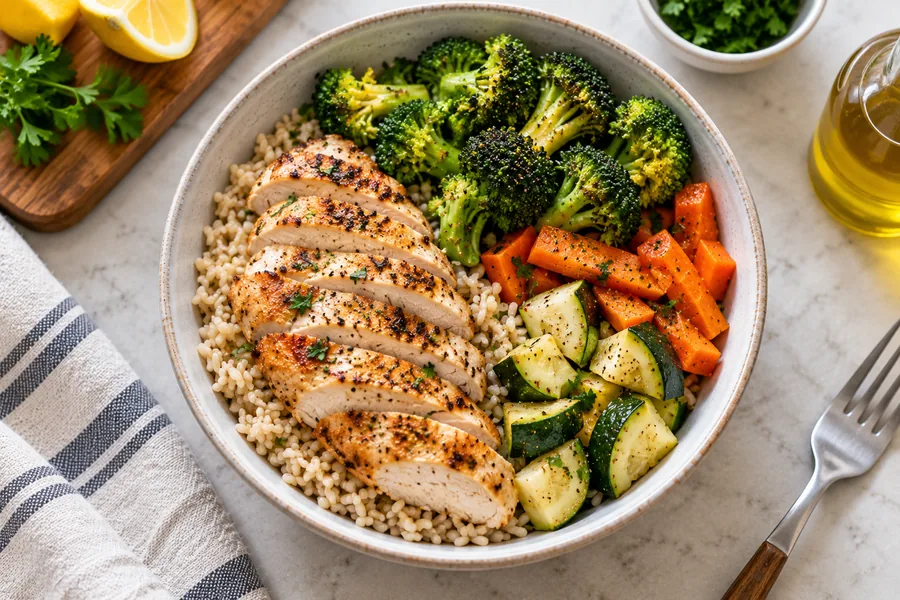
Chicken & Veggie Grain Bowl
A build-it-once, eat-it-for-days bowl that’s easy to prep ahead for the week.
2 boneless, skinless chicken breasts (about 6 oz each)
1 tablespoon olive oil, divided
1/2 teaspoon garlic powder
1/2 teaspoon paprika
Salt and pepper, to taste
1 1/2 cups cooked brown rice or quinoa
1 1/2 cups roasted or steamed vegetables (broccoli, carrots, or zucchini work well)
Juice of 1/2 lemon
Instructions:
Pat the chicken breasts dry and season both sides with garlic powder, paprika, salt, and pepper.
Heat 1/2 tablespoon of olive oil in a skillet over medium heat. Add the chicken and cook for 6–7 minutes per side, until golden and cooked through. Chicken is safe to eat once it reaches an internal temperature of 165°F (74°C) — check with a meat thermometer at the thickest part if you have one.
Remove the chicken from the skillet, let it rest for 5 minutes, then slice.
Divide the cooked rice or quinoa between two bowls. Top with the roasted or steamed vegetables and sliced chicken.
Drizzle each bowl with the remaining 1/2 tablespoon of olive oil and the lemon juice. Season with a little extra salt and pepper if needed.
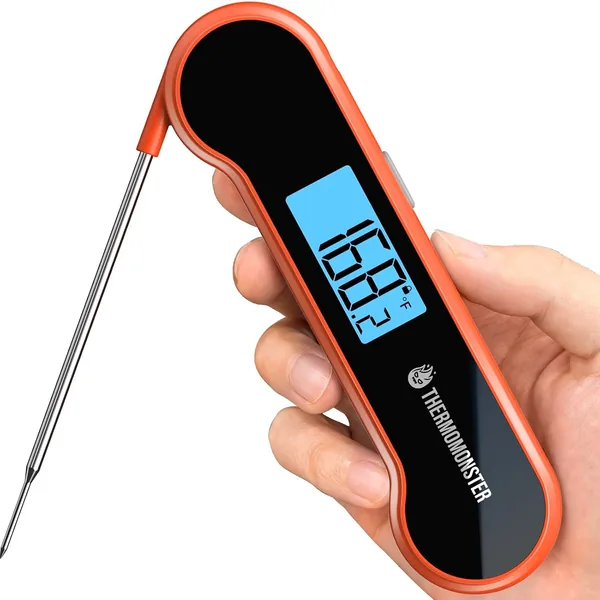
Helpful Tool: Instant-Read Meat Thermometer
Instead of guessing based on cook time alone, an instant-read thermometer lets you quickly check that chicken has reached a safe internal temperature. It’s a simple way for beginners to build confidence with doneness, though it’s still worth cooking chicken until it reaches 165°F (74°C) regardless of the tool you use.
Nutrition values are estimates and will vary based on the specific brands, quantities, and substitutions you use.
Easy substitutions: Use rotisserie chicken to skip the cooking step entirely. Swap brown rice for quinoa, farro, or even whole-wheat couscous. Any vegetable you like can replace the ones listed.
Beginner tip: Cook a double batch of chicken and grains at the start of the week so lunch is just an assembly job on busier days.
Storage: Keeps well in the fridge for up to 4 days in a sealed container. Reheat before eating.
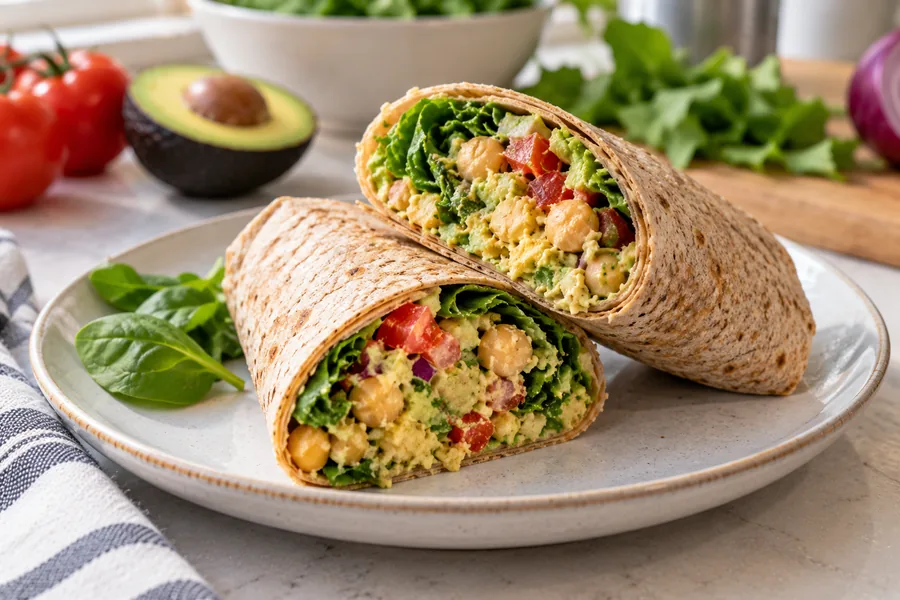
Chickpea Avocado Wrap
A no-cook lunch built around a simple mashed chickpea filling — quick, portable, and naturally high in fiber.
Nutrition values are estimates and will vary based on the specific brands, quantities, and substitutions you use. A full can of chickpeas split two ways makes this a higher-fiber, higher-carbohydrate lunch — that’s expected, not a mistake. Using mayonnaise instead of Greek yogurt adds roughly 45–90 calories and 5–10g of fat per serving, depending on how much you use.
Easy substitutions: Use hummus instead of mashing your own chickpeas for an even faster version. Swap the tortilla for a whole-grain wrap or pita. Add shredded carrots or cucumber for extra crunch.
Beginner tip: The chickpea filling can be made ahead and stored separately from the tortillas so your wrap doesn’t get soggy before lunchtime.
Storage: The chickpea filling keeps in the fridge for up to 3 days. Assemble the wrap just before eating for the best texture.
Easy Healthy Dinner Recipes for Beginners
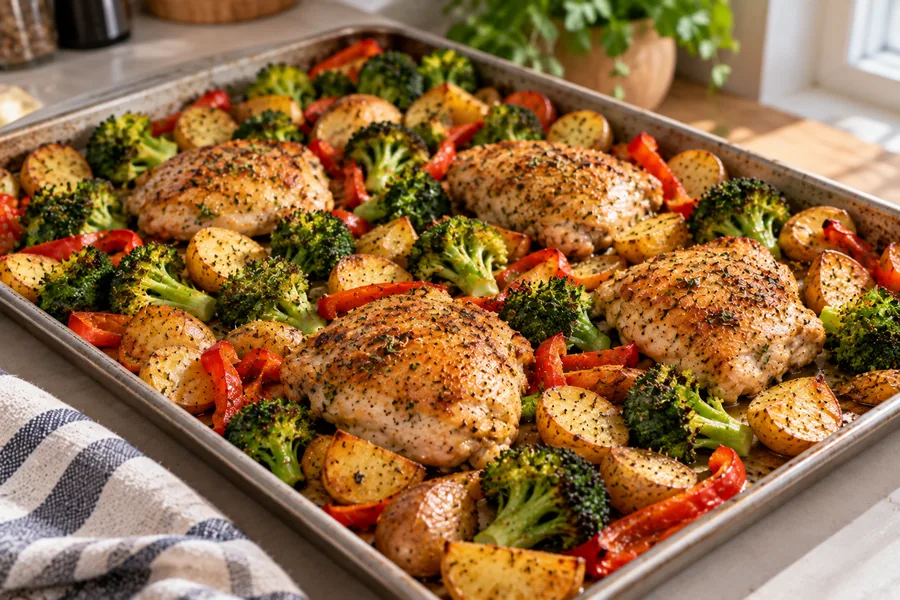
Sheet-Pan Chicken, Potatoes & Vegetables
One pan, minimal cleanup, and a full meal that mostly cooks itself in the oven.
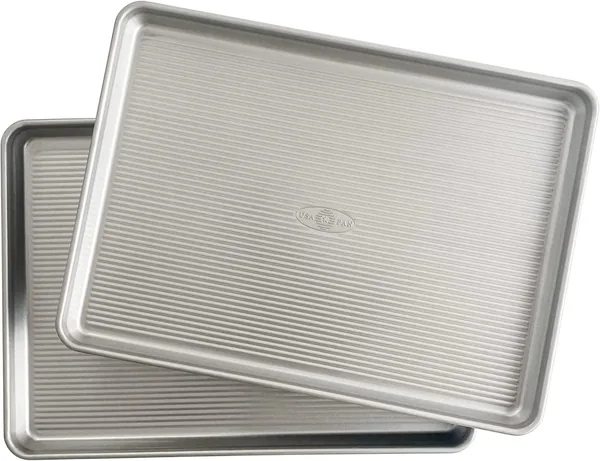
Helpful Kitchen Pick: USA Pan Half Sheet Pan
A roomy half sheet pan gives the chicken, potatoes, and vegetables enough space to roast in a single layer instead of overcrowding, which helps everything cook more evenly. Having two on hand also makes it easy to prep a second sheet-pan meal without waiting for one to cool and be washed.
Preheat the oven to 425°F (220°C). Line a large baking sheet with parchment paper or lightly grease it.
Toss the halved potatoes with 1 1/2 tablespoons of olive oil, half the garlic powder, salt, and pepper. Spread them on one side of the baking sheet.
Roast the potatoes alone for 10 minutes to give them a head start, since they take longer to cook than the chicken and other vegetables.
While the potatoes roast, toss the chicken thighs and the broccoli and bell pepper separately (or together) with the remaining olive oil, garlic powder, Italian seasoning, salt, and pepper.
After the potatoes have roasted for 10 minutes, add the chicken and vegetables to the baking sheet, arranging everything in a single layer as much as possible.
Roast for another 18–20 minutes, until the chicken reaches an internal temperature of 165°F (74°C) and the vegetables are tender. If your chicken pieces are thick, check the thickest part with a meat thermometer to confirm doneness.
Let the chicken rest for a few minutes before serving.
Nutrition values are estimates and will vary based on the specific brands, quantities, and substitutions you use.
Easy substitutions: Swap potatoes for sweet potatoes. Use any vegetables you like — zucchini, carrots, and Brussels sprouts all roast well. Chicken breasts can replace thighs, but breasts vary more in thickness and can cook faster or slower depending on size — rely on a meat thermometer and the 165°F (74°C) internal temperature rather than the timing above if you make this swap.
Beginner tip: Cutting the potatoes smaller (around 1-inch pieces) helps them finish roasting closer to the same time as the chicken and vegetables.
Storage: Leftovers keep in the fridge for up to 3–4 days. Reheat in a skillet or oven to help the vegetables stay from getting soggy, though a microwave works fine too.
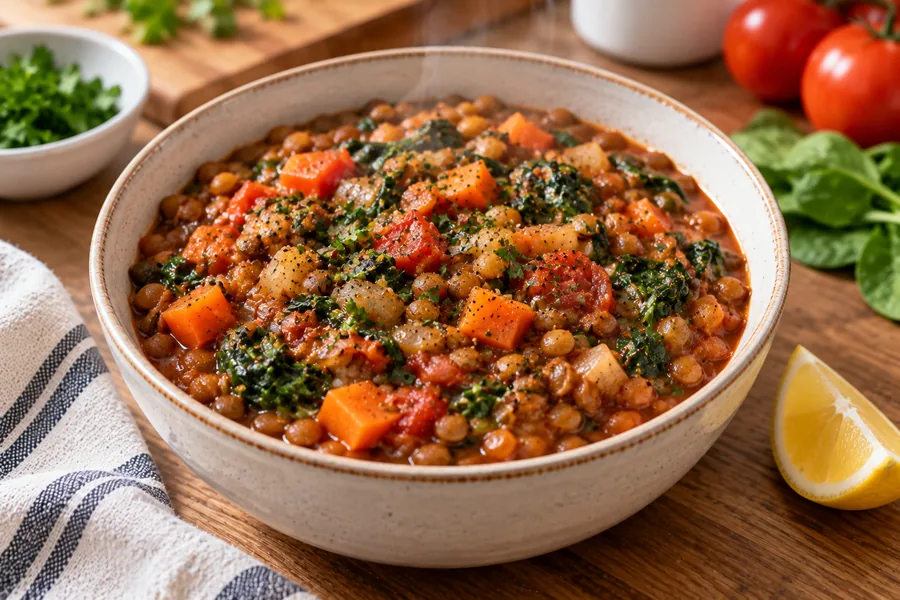
One-Pot Lentil Tomato Bowl
A hearty, budget-friendly vegetarian dinner that comes together in a single pot.
Heat the olive oil in a large pot over medium heat. Add the onion and carrot and cook for 4–5 minutes, until the onion softens.
Add the garlic and cook for another 30 seconds, until fragrant.
Stir in the lentils, diced tomatoes, broth, cumin, and paprika. Bring to a boil, then reduce the heat to low and simmer, uncovered, for 25–30 minutes, stirring occasionally, until the lentils are tender.
Stir in the spinach or kale and cook for another 1–2 minutes, until wilted.
Remove from heat, stir in the lemon juice, and season with salt and pepper to taste.
Nutrition values are estimates and will vary based on the specific brands, quantities, and substitutions you use.
Easy substitutions: Swap lentils for canned lentils to cut the cooking time significantly (add them in the last 10 minutes instead). Any leafy green works in place of spinach or kale. Add a diced bell pepper for extra vegetables.
Beginner tip: This freezes well, so it’s a good candidate for cooking a double batch and saving half for a night when you don’t feel like cooking at all.
Storage: Store leftovers in an airtight container in the refrigerator for 3–4 days. This recipe also freezes well for up to 3 months in a sealed, freezer-safe container.
Easy Healthy Snack Ideas
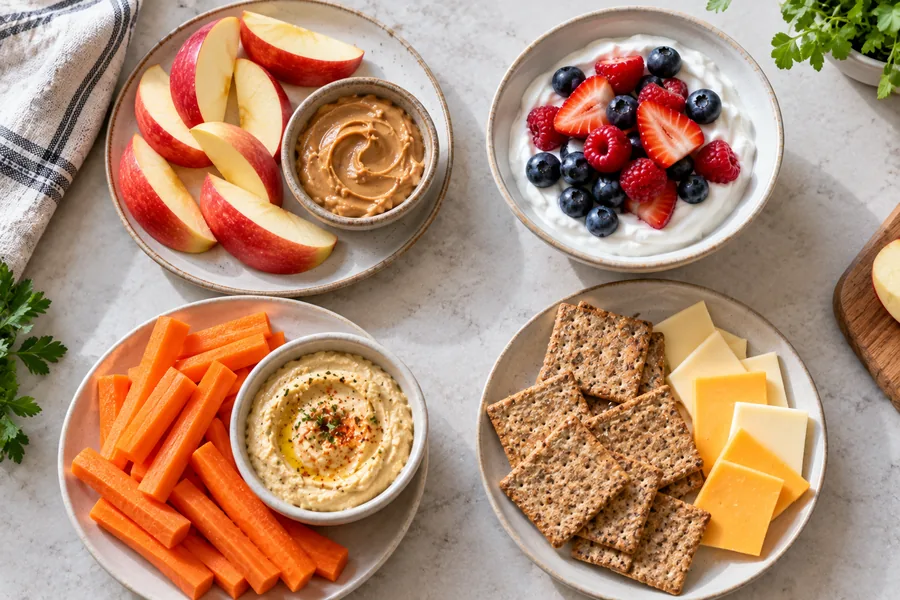
Not every part of eating well needs a full recipe. Simple pairings work well as snacks, especially when they combine protein, fiber, or fat — that combination tends to make a snack more satisfying than something eaten alone, like crackers by themselves.
A few easy combinations:
Apple slices + peanut butter
Greek yogurt + berries
Carrot sticks + hummus
Whole-grain crackers + cheese
Banana + a small handful of nuts
Cottage cheese + fruit
These are meant as convenient options, not a required list or a way to guarantee any particular outcome — a snack is just a snack, and how you use them depends on your own hunger and schedule.
How to Make Healthy Recipes Taste Better
One of the most common beginner mistakes is assuming healthy food has to taste bland or “diet-like.” It doesn’t — flavor mostly comes down to a handful of techniques anyone can use:
Herbs and spices. Fresh or dried herbs, cumin, paprika, chili powder, and Italian seasoning can transform a simple dish. Start with a small amount and adjust.
Garlic and onion. Both add depth to almost any savory dish, whether raw, sautéed, or roasted.
Citrus. A squeeze of lemon or lime at the end of cooking brightens up rice bowls, roasted vegetables, and proteins.
Vinegar. A splash of balsamic, apple cider, or red wine vinegar adds acidity that balances rich or heavy flavors.
Sauces and dressings. A simple olive oil and vinegar dressing, a yogurt-based sauce, or a drizzle of tahini can make a plain bowl feel finished.
Roasting vegetables. High heat (400–425°F) caramelizes the natural sugars in vegetables, making them taste noticeably better than boiling or steaming alone.
Browning your food properly. Let meat or vegetables sit in the pan without moving them too much — that golden-brown color adds real flavor.
Texture. Adding something crunchy (nuts, seeds, or crispy chickpeas) to a soft dish like a grain bowl or soup makes it more satisfying to eat.
You don’t need to use all of these in one meal — even one or two can make a noticeable difference.
How to Make These Meals Faster
Cooking healthy meals doesn’t have to eat up your evenings. A few shortcuts can save real time without cutting nutritional corners:
Frozen vegetables skip the washing and chopping step entirely and cook in minutes.
Canned beans are already cooked — just rinse and use. Look for low-sodium versions, or rinse regular canned beans under water to reduce sodium.
Pre-cooked grains (found in the rice aisle, often microwavable in 90 seconds) save the 20–40 minutes it usually takes to cook rice or quinoa from scratch.
Rotisserie chicken from the grocery store is a genuine time-saver for lunch bowls, wraps, or quick dinners.
Washing and chopping vegetables ahead of time, even just once at the start of the week, makes weeknight cooking much faster.
Cooking extra portions of proteins or grains means future meals are mostly assembly, not full cooking sessions.
Simple leftovers, reheated or repurposed into a new bowl or wrap, count as a completely legitimate meal.
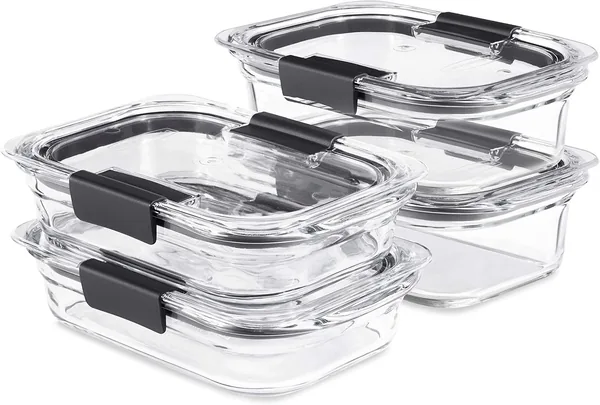
Helpful Meal-Prep Pick: Rubbermaid Brilliance Glass Food Storage Set
A matching set of clear containers makes it easier to see what’s already prepped and ready to grab, whether that’s cooked grains, chopped vegetables, or portioned leftovers. Staying organized in the fridge is a small thing that can make sticking with meal prep noticeably easier.
When you’re relying on convenience items like canned soups, broths, or pre-seasoned proteins, it’s worth a quick glance at the nutrition label for sodium content — not as a strict rule, just something useful to be aware of, especially if you’re using these items often.
Common Beginner Mistakes When Trying to Eat Healthier
Changing everything overnight.
Overhauling your entire diet in one week is hard to sustain and often leads to burnout. Start with one or two meals and build from there.
Choosing recipes with too many ingredients.
Long ingredient lists are intimidating and expensive. Stick to recipes with 5–8 ingredients while you’re building confidence.
Buying ingredients without a meal plan.
Random healthy-sounding groceries often go unused. Pick a few meals first, then shop for exactly what they need.
Forgetting protein or fiber-rich foods.
A meal of just carbohydrates (like pasta with plain sauce) tends to leave you hungry again quickly. Aim to include a protein or fiber source most of the time.
Assuming healthy cooking must be expensive.
Eggs, canned beans, frozen vegetables, oats, and rice are some of the most affordable staples at the grocery store, and they show up throughout this guide for that reason.
Making meals so restrictive that they’re hard to sustain.
Cutting out entire food groups or eliminating anything enjoyable usually backfires. Sustainable eating includes foods you actually like.
Expecting every meal to be nutritionally perfect.
One meal isn’t going to make or break your health. Consistency over time matters far more than any single dish.
A Simple One-Day Example for Beginners
Here’s what a day using recipes and ideas from this guide might look like. This is just one example, not a personalized meal plan or a calorie target you need to hit — your own needs will vary based on your body, activity level, and goals.
Breakfast: Greek Yogurt Berry Oat Bowl
Lunch: Chicken & Veggie Grain Bowl (using leftovers prepped earlier in the week)
Snack: Apple slices with peanut butter
Dinner: Sheet-Pan Chicken, Potatoes & Vegetables
Again — this is meant as an illustration of how these meals fit together in a normal day, not a prescription.
How to Start This Week
You don’t need to plan out seven fully different days of meals to get started. A simpler approach:
Choose:
1 breakfast
1 lunch
2 dinners
1–2 snacks
Pick recipes from this guide (or similar ones), build a grocery list based on exactly what they need, and repeat meals through the week if that’s convenient — there’s nothing wrong with eating the same lunch three days in a row if it works for you.
Once that feels manageable, you can start rotating in new recipes one at a time. Starting small and repeating meals is a completely normal, sustainable way to build a new habit, and it beats trying to cook something different every night and burning out by Thursday.
Frequently Asked Questions
Meals with short ingredient lists and simple techniques — scrambled eggs with vegetables, a yogurt and oat bowl, or a sheet-pan dinner — are great starting points because they’re hard to get wrong and don’t require advanced skills.
Start with something low-risk, like scrambled eggs or a grain bowl using pre-cooked rice and rotisserie chicken. Building confidence with one simple recipe makes the next one easier.
Yes. Staples like eggs, canned beans, lentils, frozen vegetables, oats, and rice are among the most budget-friendly items in a grocery store and appear throughout this guide.
Generally, yes. Frozen vegetables are typically frozen shortly after harvest, which helps preserve their nutrients, and they’re a convenient, affordable option — not a downgrade from fresh.
Lean on shortcuts like pre-cooked grains, rotisserie chicken, frozen vegetables, and canned beans. Cooking larger batches of proteins or grains once and reusing them across a few meals also saves significant time.
No — calorie tracking can be a useful tool for some people and some goals, but it isn’t required to build nutritious, balanced meals. Many people eat well simply by focusing on including protein, vegetables, whole grains, and healthy fats regularly.
Final Thoughts
Eating healthier doesn’t require complicated recipes, a spotless diet, or a full kitchen overhaul. Good healthy recipes for beginners start with a few simple meals, ingredients you can actually find and afford, and a little repetition while you build confidence.
Pick one or two recipes from this guide, try them this week, and go from there. Cooking skills and healthy habits both build the same way — gradually, one meal at a time.
This article is intended for general nutrition information and isn’t a substitute for personalized medical or dietary advice. If you have a medical condition, food allergy, dietary restriction, or are pregnant or managing a specific health concern, consult a doctor or registered dietitian for guidance suited to your individual needs.