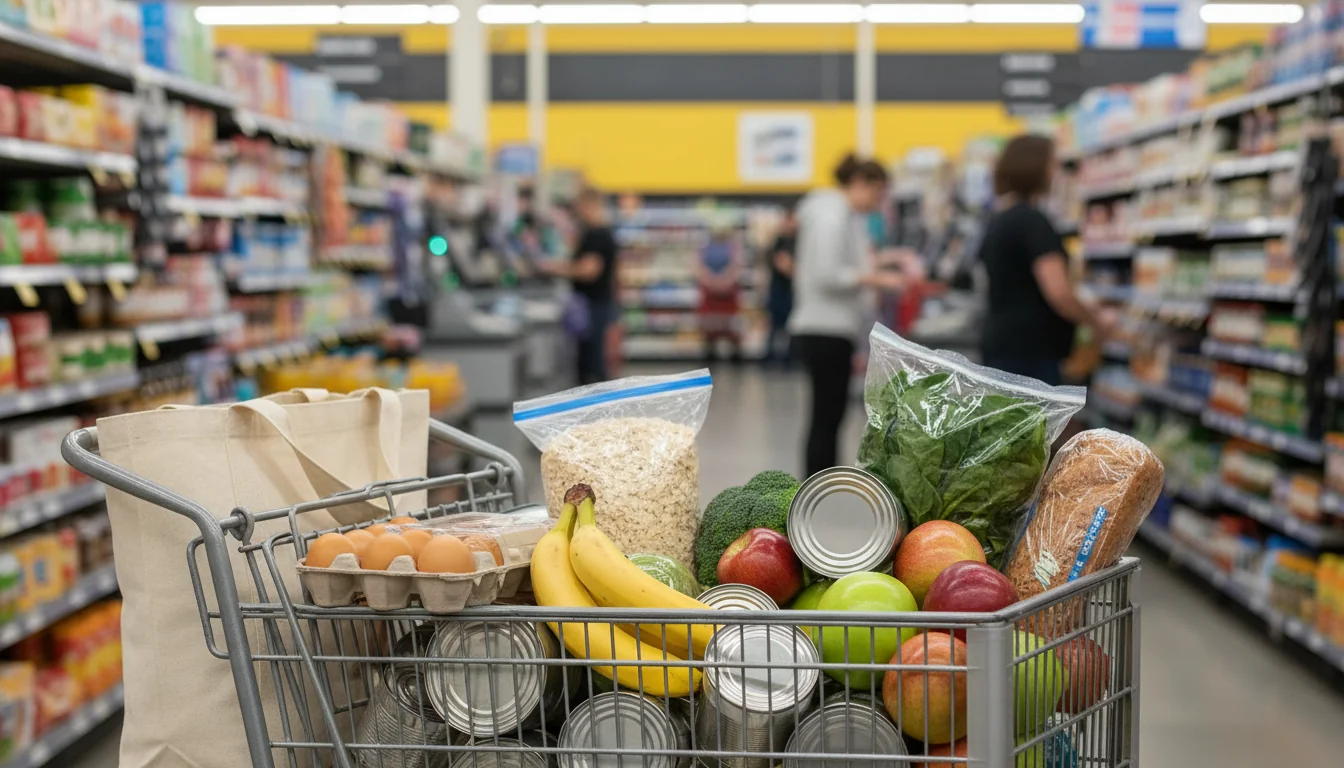
Healthy Foods for Beginners: A Simple Guide to Eating Better
September 13, 2026
Healthy eating gets made to sound a lot more complicated than it actually is. Between conflicting headlines, diet trends that contradict each other, and grocery stores full of products all claiming to be the better choice, it’s easy to feel like you need a nutrition degree just to fill your cart. You don’t.
Here’s the short version: healthy eating for beginners really comes down to a handful of habits — eating more fruits, vegetables, and whole foods; getting enough protein and fiber; choosing whole grains and healthy fats more often than not; and building meals that keep you satisfied rather than chasing perfect. That’s genuinely most of it.
This guide walks through what healthy foods for beginners actually looks like in practice: what to prioritize, how to combine foods into balanced meals, what a simple grocery list looks like, and how to start without overhauling your entire diet overnight. None of it requires cutting out food groups, memorizing numbers, or eating anything unfamiliar — just building on foods you can find at a normal U.S. grocery store.
One quick note before diving in: this article covers general nutrition education for healthy adults. If you’re managing a medical condition, a food allergy, a prescribed diet, pregnancy-related nutrition needs, or a history of disordered eating, the right next step is a conversation with a doctor or registered dietitian who knows your specific situation — general guidance like this isn’t a substitute for that.
Healthy foods are generally foods that contribute useful nutrients — such as protein, fiber, vitamins, minerals, and unsaturated fats — to an overall balanced eating pattern. It’s less about any single food and more about what that food adds to your diet as a whole.
A related idea worth knowing is “nutrient density” — how much nutrition a food provides relative to its calories. A food doesn’t have to be low-calorie to be nutrient-dense, and it doesn’t have to be exotic or expensive either; a can of black beans, a bag of frozen broccoli, and a carton of eggs are all solid, everyday examples.
It’s more useful to think about your overall pattern of eating than any single food in isolation. One meal or snack doesn’t make or break your nutrition — what matters more is what you eat most of the time, across days and weeks. That’s also why it doesn’t make much sense to label individual foods as strictly “good” or “bad.” A slice of birthday cake and a bowl of oatmeal aren’t competing in the same category; your overall pattern has room for both.
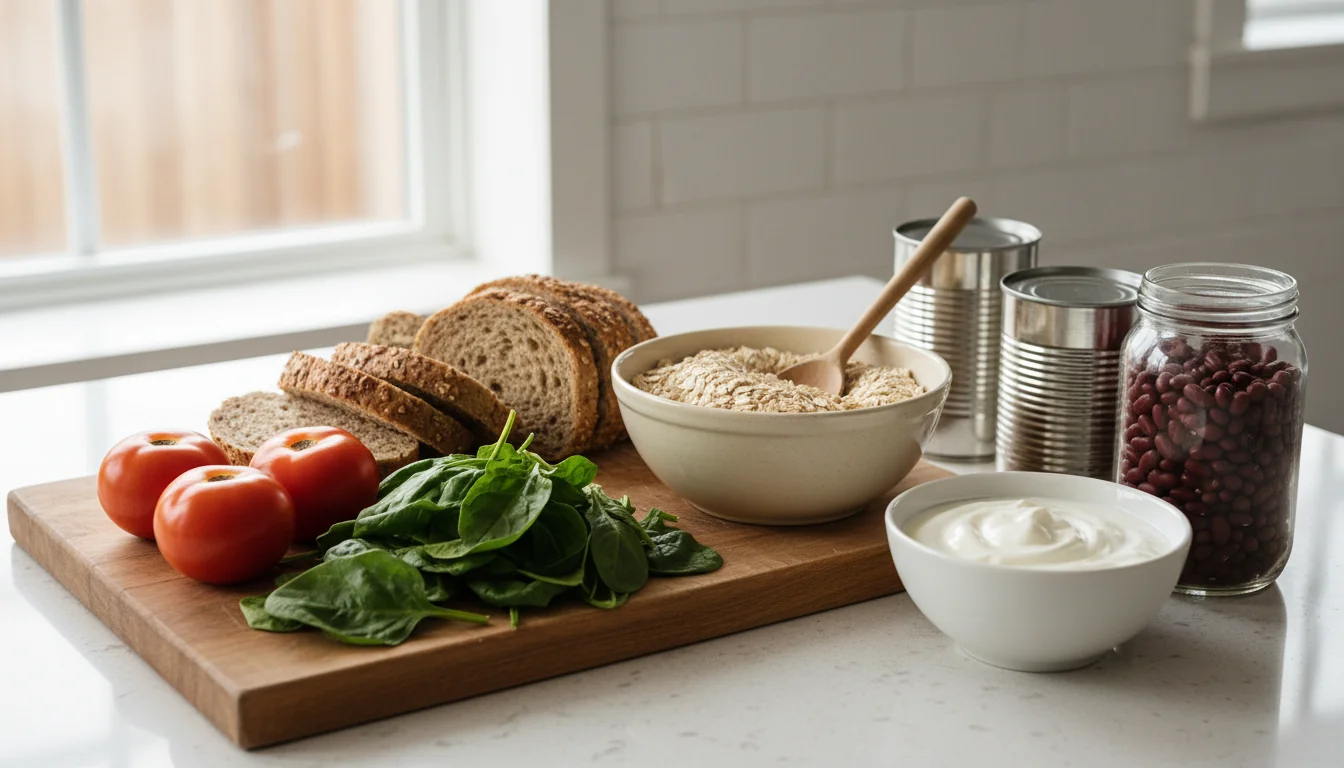
Minimally processed foods — close to their natural form, like fresh produce, plain oats, or grilled chicken — tend to be nutrient-dense and make a reasonable foundation. But “processed” doesn’t automatically mean unhealthy. Canned beans, frozen vegetables, plain Greek yogurt, whole-grain bread, and canned salmon are all processed to some degree, and all of them are practical, nutritious choices that make healthy eating for beginners far more realistic than only ever cooking from scratch. What actually matters is closer to how much a food has been altered and what’s been added to it — not whether it touched a factory at all.
Variety matters too. Different fruits, vegetables, proteins, and grains each bring their own mix of nutrients, so rotating what’s on your plate over a week does more for your nutrition than eating the same three foods on repeat. For more foundational nutrition guidance, explore AvaFitCare’s Nutrition Hub.
Healthy Foods for Beginners: What Should You Eat?
A practical starting point is to build most meals around four things: a source of protein, a serving of fruits or vegetables, a whole-grain or starchy carbohydrate, and a source of healthy fat. You don’t need to hit this combination perfectly every time — it’s a general shape to aim for, not a rule to enforce.
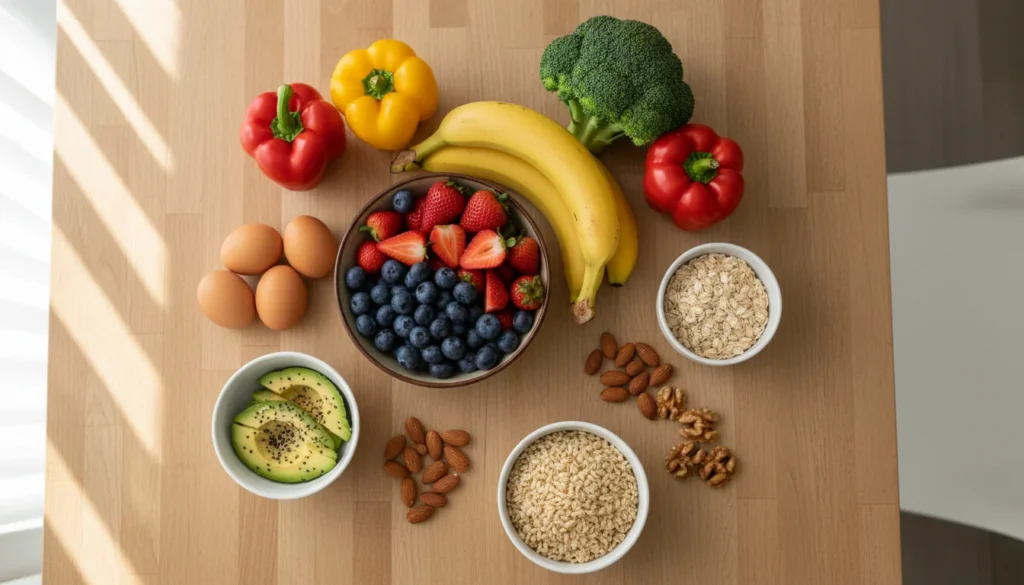
The food categories worth prioritizing as a beginner are the same ones nutrition professionals consistently point to: fruits and vegetables, protein foods (both animal and plant-based), whole grains and other healthy carbohydrate sources, healthy fats, and high-fiber foods. Each of these is covered in more detail below, along with familiar U.S. grocery examples and easy ways to work them into meals you’re already eating.
Fruits and Vegetables
Fruits and vegetables are worth prioritizing because they’re some of the most nutrient-dense, high-fiber foods available, and variety across colors and types means you’re getting a broader mix of vitamins and minerals. Different produce brings different nutrients to the table — a red bell pepper and a bag of spinach aren’t offering the same thing, which is part of why “eat a variety” is more useful advice than focusing on any single item.
Familiar options at most U.S. grocery stores include apples, bananas, oranges, berries, grapes, carrots, broccoli, bell peppers, spinach, cucumbers, tomatoes, green beans, and zucchini. You don’t need anything exotic to build a solid rotation.
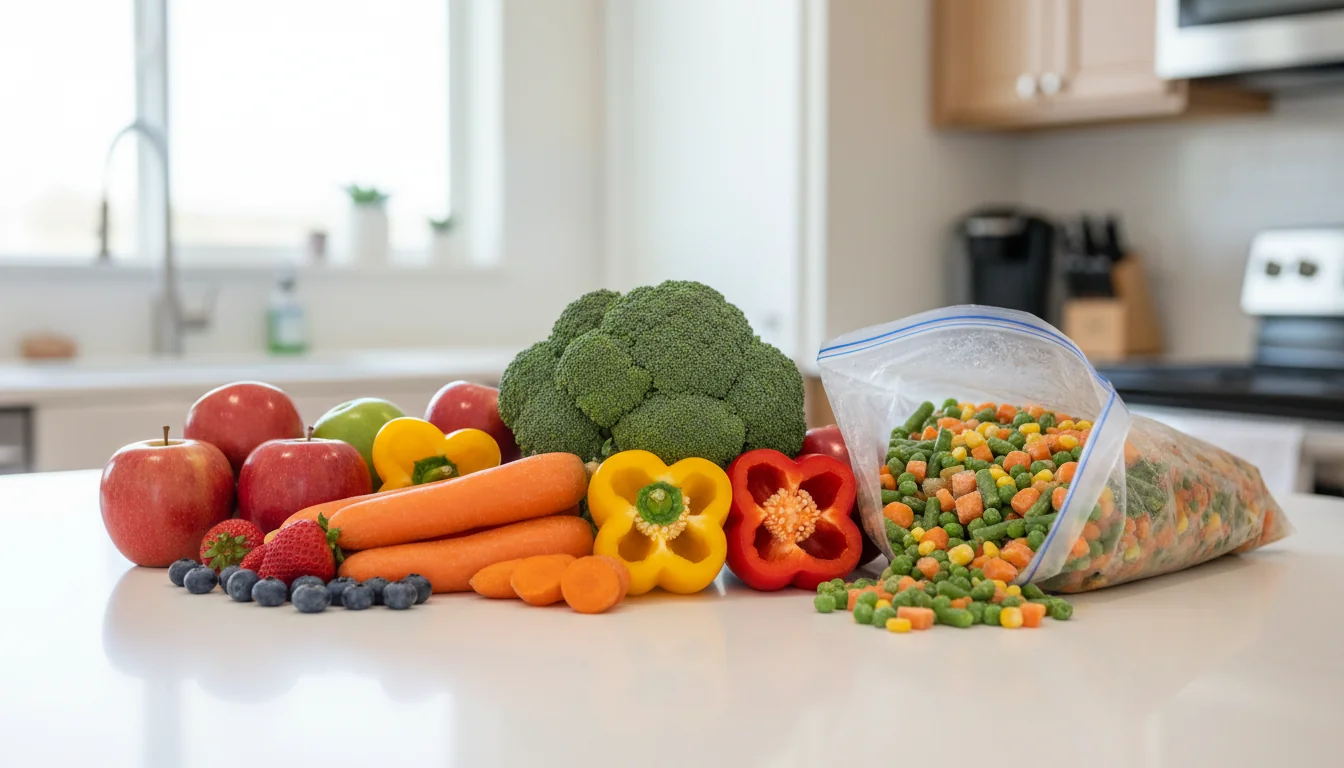
Fresh produce is great when it’s in season and within budget, but frozen and canned versions are just as legitimate. Frozen produce is typically flash-frozen at peak ripeness, which helps preserve nutrients, and it lasts far longer than fresh. For canned options, look for vegetables labeled “no salt added” or “low sodium,” and fruit canned in water or its own juice rather than syrup.
A few easy ways to add more produce without overhauling your meals: toss frozen spinach or mixed vegetables into soups, pasta, or rice dishes; keep baby carrots, cucumber slices, or apple slices ready as a grab-and-go snack; add bananas or berries to oatmeal or yogurt at breakfast; roast a sheet pan of vegetables once or twice a week to have on hand; and work extra vegetables into an omelet, quesadilla, or sandwich.
Protein Foods
Protein foods support muscle repair, help you feel satisfied after meals, and come from both animal and plant sources — you don’t need to eat meat at every meal or track grams to get enough. For most healthy adults, spreading protein across meals rather than loading it all into one sitting tends to be a practical approach, though individual needs vary by activity level, age, and other factors.
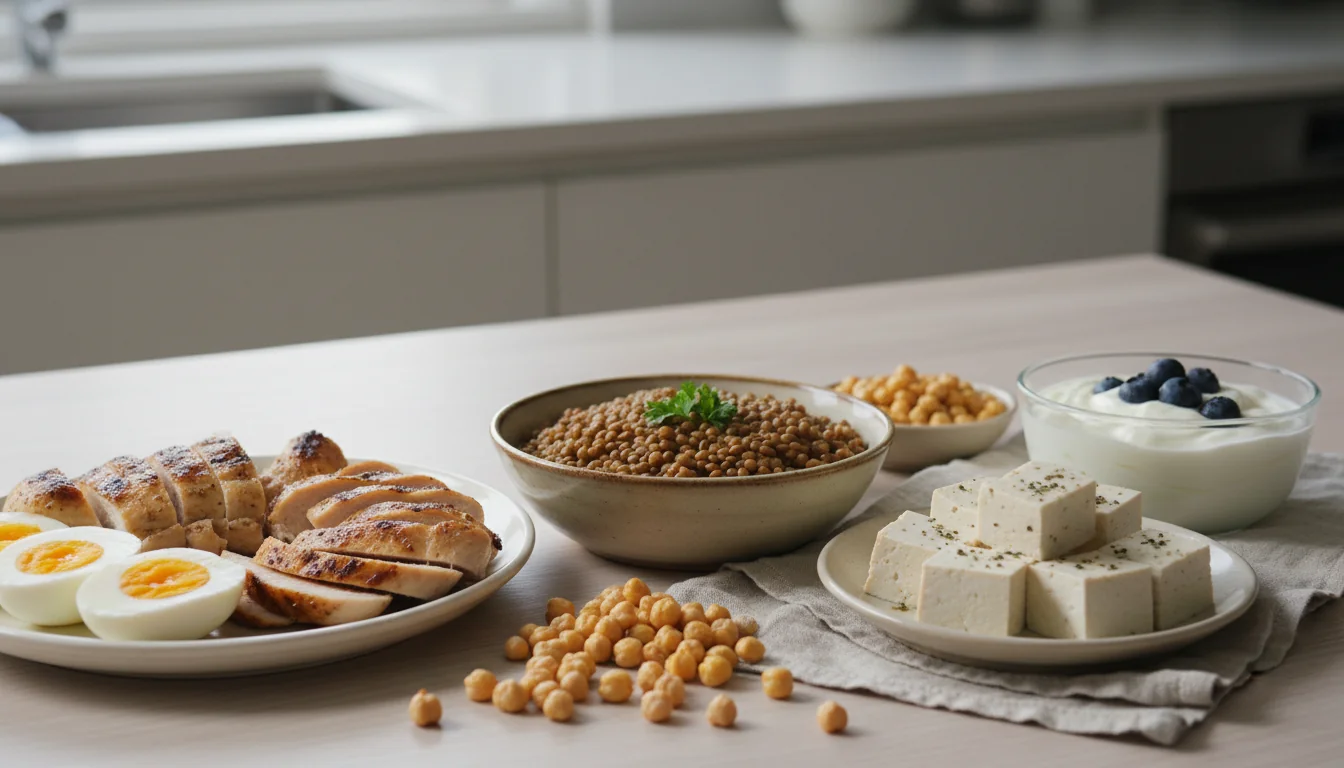
Animal-based options widely available in the U.S. include eggs, chicken breast and thighs, turkey, lean beef and pork, salmon and other fish, shrimp, Greek yogurt, and cottage cheese. Plant-based sources include beans, lentils, chickpeas, tofu, tempeh, edamame, and nut or seed butters. Both categories can anchor a healthy meal — the right mix comes down to preference, budget, and how your body feels with different foods, not a rule about one type being better than the other.
This isn’t about maximizing protein for muscle-building — that’s a different goal entirely. For general healthy eating, including a protein source at meals can make it easier to build a balanced eating pattern, since it tends to add staying power that carbohydrate-only meals don’t.
If you want a more specific, personalized protein target based on your body and activity level, AvaFitCare’s protein calculator can help.
Whole Grains and Healthy Carbohydrate Sources
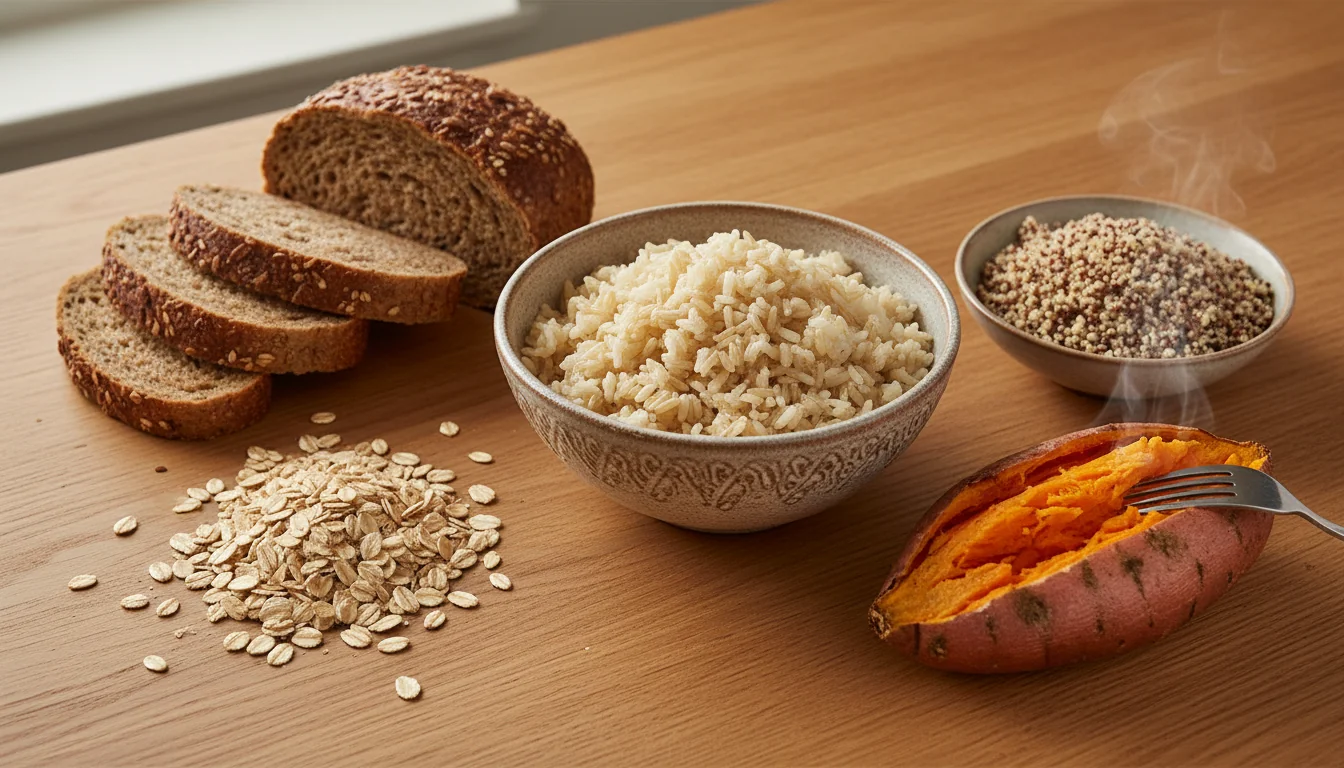
Carbohydrates are not something to fear — they’re one of the body’s main sources of energy, and whole, less-processed carbohydrate foods also bring fiber, B vitamins, and minerals that refined versions largely lose. Oats, brown rice, whole-grain bread, quinoa, potatoes, sweet potatoes, beans, and fruit are all useful carbohydrate sources with different nutrient profiles.
The main distinction worth understanding is whole grains versus refined grains. Whole grains — oats, brown rice, whole-wheat bread and pasta, quinoa — contain the entire grain kernel, including the fiber-rich bran and nutrient-dense germ. Refined grains, like white bread and white rice, have had those parts removed for a smoother texture, at the cost of fiber and naturally occurring nutrients. The Dietary Guidelines for Americans recommend making at least half of the grains you eat whole grains — a common, achievable target, not all of them, just about half.
Potatoes and sweet potatoes are also healthy carbohydrate sources, even though they sometimes get an unfair reputation. A baked potato with the skin on has fiber, potassium, and vitamin C; preparation — baked versus deep-fried — matters more than the vegetable itself.
Beginner-friendly swaps: white bread to whole-grain bread, white rice to brown rice a few times a week, a low-fiber cereal to oatmeal, and quinoa or farro as an occasional side dish.
Healthy Fats
Fats are an essential part of a balanced diet — they support hormone production, help your body absorb certain vitamins, and contribute to feeling satisfied after a meal — and the type of fat matters more than avoiding fat altogether. Foods like nuts, seeds, avocado, olive oil, and fatty fish provide unsaturated fats, which is the category most nutrition guidance encourages people to favor.
Practical examples: a drizzle of olive oil on roasted vegetables or a salad, a handful of almonds or walnuts as part of a snack, sliced avocado on toast or in a sandwich, and fatty fish like salmon, sardines, or trout a couple of times a week if that fits your preferences and budget.
Portions matter here more than with vegetables, simply because fats are calorie-dense — a tablespoon of olive oil or a small handful of nuts goes further than it looks. That doesn’t mean measuring everything to the gram; it just means being reasonably mindful rather than eating straight from a large container without much awareness of the amount.
High-Fiber Foods
Fiber is the part of plant foods your body can’t fully digest, and it plays a role in digestion, feeling full after meals, and supporting a healthy gut. The Dietary Guidelines for Americans list fiber as a “nutrient of public health concern,” meaning intake tends to fall short of recommendations for much of the population — which is part of why it’s worth paying deliberate attention to as a beginner. It comes in two general types, soluble and insoluble, and most fiber-rich foods contain a mix of both.
Beginner-friendly high-fiber foods include beans and lentils, oats, raspberries and pears, broccoli, whole-grain bread, chia seeds, and popcorn (air-popped, not the buttered movie-theater kind). Many of these foods overlap with the produce, whole-grain, and protein categories already covered — which is part of why building meals around those groups naturally increases fiber without extra effort.
One practical note from NIH’s MedlinePlus: if your current diet is fairly low in fiber, increasing it very quickly can cause temporary bloating, gas, or digestive discomfort. Adding fiber-rich foods gradually over a few weeks, along with drinking enough water, tends to be more comfortable than a sudden jump. If you want to keep an eye on your water intake as you increase fiber, AvaFitCare’s water intake calculator can help.
How to Build a Simple Balanced Plate
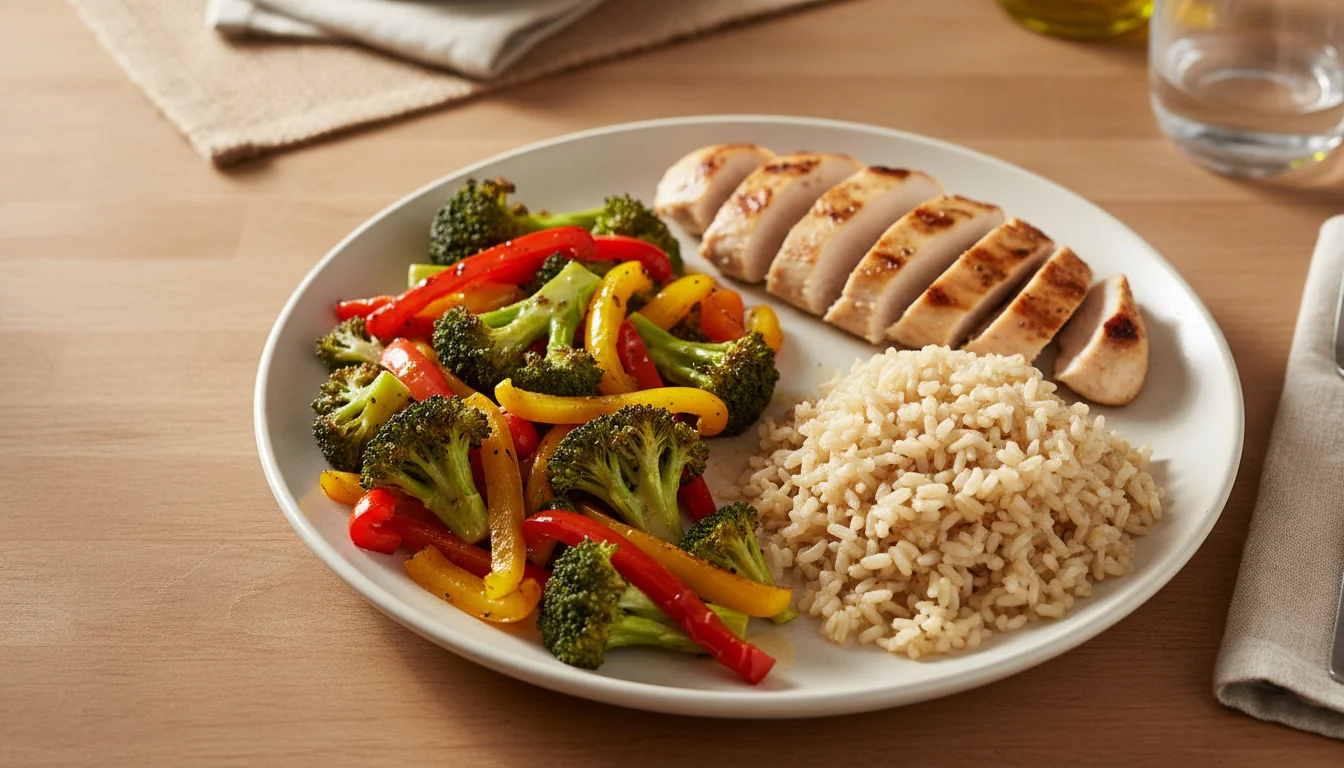
A practical way to build a balanced meal is to picture your plate in sections: about half filled with fruits and vegetables, about a quarter with a protein source, and about a quarter with a whole grain or starchy food, with a small amount of healthy fat included. This visual approach is based on USDA MyPlate, the federal government’s food-group guidance for building balanced meals, and it’s meant to be a flexible mental model — not a rule that every single meal needs to match exactly.
Some meals will naturally lean more toward protein, some more toward vegetables, and some — soups, stir-fries, grain bowls — mix everything together without splitting cleanly into sections at all. That’s fine; the plate model is a planning default, not a checklist to enforce at every meal.
A few realistic, U.S.-style examples:
Grilled chicken breast, roasted broccoli, and a scoop of brown rice, with olive oil drizzled over the vegetables.
A bean and vegetable burrito bowl with brown rice, black beans, sautéed peppers and onions, salsa, and a small amount of shredded cheese.
Baked salmon, roasted sweet potato wedges, and a side salad with olive oil and vinegar.
Whole-wheat pasta with ground turkey, marinara sauce, and a generous portion of sautéed spinach or a side salad.
A loaded sheet-pan dinner: chickpeas, broccoli, and bell peppers roasted with olive oil, served over quinoa.
Healthy Breakfast Ideas for Beginners
A balanced breakfast usually includes some protein and fiber, which tends to be more satisfying than a breakfast built mostly around refined carbohydrates and sugar. You don’t need a full recipe — just a combination that covers those bases.
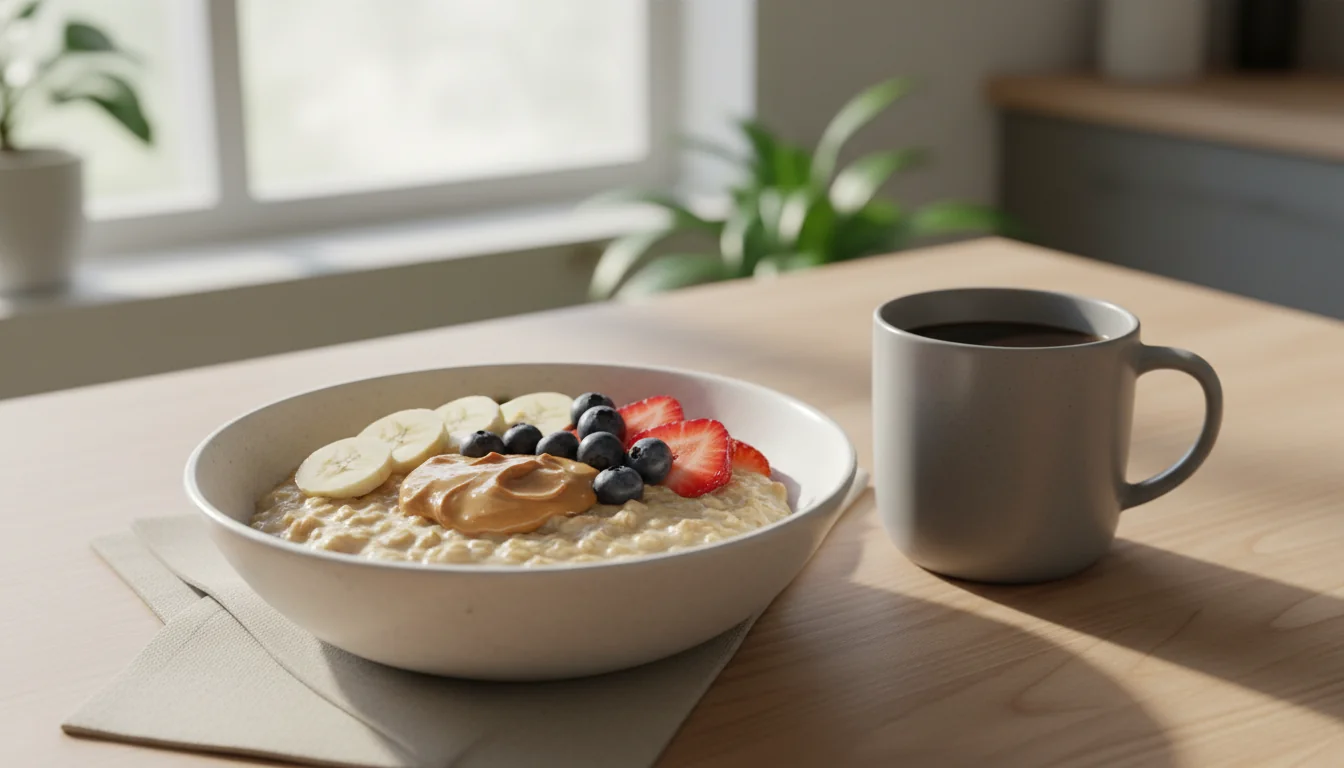
A few realistic options: oatmeal topped with berries and a spoonful of peanut butter; scrambled eggs with whole-grain toast and sliced avocado; plain or Greek yogurt with fruit and a sprinkle of granola or nuts; a vegetable omelet with a piece of fruit on the side; whole-grain toast with nut butter and banana slices; or a smoothie made with fruit, spinach, and Greek yogurt or milk.
Healthy Lunch and Dinner Ideas
Lunch and dinner tend to work well when they follow the same balanced-plate approach as any other meal — a protein, produce, and a whole grain or starchy carbohydrate, prepared in whatever way fits your schedule. These meals don’t need to look different from what you’re already eating; they just shift the proportions slightly.
Practical combinations include a grain bowl with brown rice, black beans, roasted vegetables, and salsa; a turkey or chicken sandwich on whole-grain bread with lettuce, tomato, and avocado, alongside a side of fruit or baby carrots; a stir-fry with chicken or tofu, mixed vegetables, and brown rice; a big salad with grilled chicken or chickpeas, a variety of vegetables, and an olive oil-based dressing; and a simple sheet-pan dinner with a protein and vegetables roasted together, served with a side of quinoa or a baked potato.
Healthy Snack Ideas
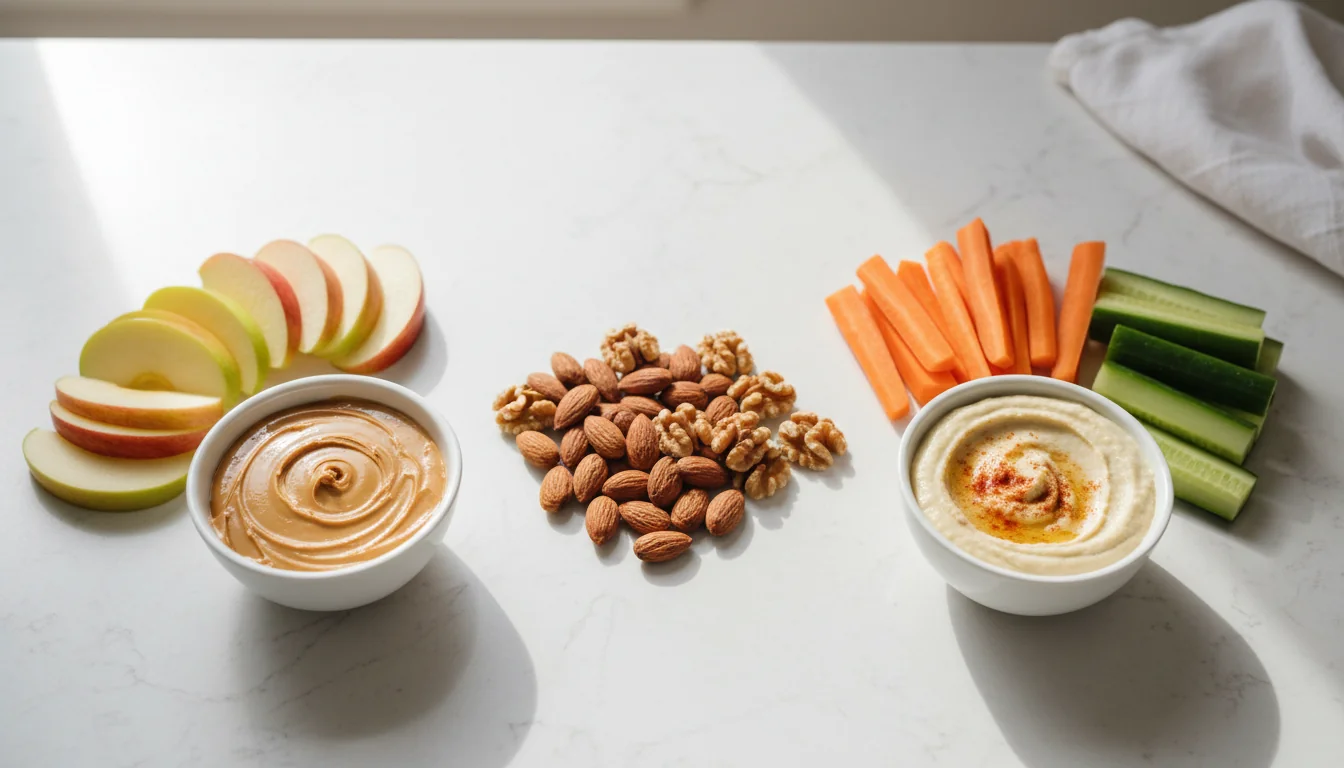
A satisfying snack usually pairs a carbohydrate with some protein or fat, which helps it hold you over better than a snack made of refined carbohydrates alone. A few realistic, grab-and-go-friendly combinations: apple slices with peanut butter; a small handful of almonds with a piece of fruit; plain or Greek yogurt with berries; whole-grain crackers with cheese or hummus; carrot and cucumber sticks with hummus; a hard-boiled egg with a piece of fruit; and cottage cheese with pineapple or berries.
Simple Healthy Grocery List for Beginners
A beginner-friendly grocery list doesn’t need to be long — a handful of reliable staples from each food category covers most of what you need to build balanced meals for the week. Here’s a practical starting list organized by category:
Produce: bananas, apples, berries, spinach, broccoli, bell peppers, carrots, onions, garlic, frozen mixed vegetables, frozen fruit for smoothies.
Protein: eggs, chicken breast or thighs, ground turkey, canned tuna or salmon, a bag of dried or canned beans, lentils, Greek yogurt, tofu.
Whole grains and starches: oats, brown rice, whole-grain bread, whole-wheat pasta, quinoa, sweet potatoes, potatoes.
Dairy or alternatives: milk or fortified soy milk, plain Greek yogurt, cheese, cottage cheese.
Healthy fats: olive oil, avocados, a bag of mixed nuts, natural peanut or almond butter, seeds like chia or flax.
Pantry and freezer staples: canned diced tomatoes, low-sodium broth, canned beans, marinara sauce, salsa, frozen vegetables, spices and herbs.
You don’t need to buy everything at once or overhaul your pantry in one trip. Picking a few items from each category and building from there is a realistic way to put a healthy grocery list into practice.
How to Read a Nutrition Label Without Overcomplicating It
You don’t need to analyze every number on a nutrition label — focusing on serving size, added sugars, sodium, fiber, and the ingredient list covers most of what matters for everyday decisions. The FDA’s Nutrition Facts label is designed for exactly this kind of quick comparison.
Start with serving size and servings per container at the top — every other number is based on that serving size, so it’s easy to underestimate what you’re actually eating if you skip it.
Added sugars are listed separately from total sugars, making it easier to spot how much was added during processing versus occurring naturally (like the sugar in plain milk or fruit). Sodium is a nutrient most Americans get more of than recommended, so comparing sodium between similar products — two brands of canned soup, say — is a useful, low-effort habit. Fiber and protein are worth looking for more of, especially in packaged breads, cereals, and snack foods, where amounts vary widely by brand. Saturated fat is worth watching too, particularly in packaged and fried foods.
The ingredient list is ordered by weight, most to least. Use the ingredient list to understand what a packaged food contains, but don’t judge a food’s nutritional quality solely by how short or familiar the ingredient list looks — plenty of nutritious packaged foods have longer lists due to added vitamins or minerals.
Rather than memorizing cutoff numbers, a practical habit is comparing similar products side by side — two yogurts, two loaves of bread — and choosing the one with more fiber or protein and less added sugar or sodium, when everything else is comparable.
Common Healthy-Eating Mistakes Beginners Make
Most beginner mistakes come from trying to change too much at once or from misunderstanding what “healthy” actually requires — not from a lack of willpower. A few of the most common ones:
Trying to change everything overnight. Overhauling your entire diet in one week is hard to sustain and often leads to burnout within a month. Gradual changes tend to stick better than dramatic ones.
Eliminating entire food groups without a clear reason. Cutting out carbohydrates, dairy, or fat across the board isn’t necessary for general healthy eating and just makes meals harder to plan for most people.
Assuming expensive foods are automatically healthier. Canned beans, frozen vegetables, oats, and eggs are inexpensive and nutrient-dense; price and nutrition quality don’t reliably track together.
Ignoring portions and overall eating patterns. Even nutrient-dense foods add up in large enough amounts — how much you eat matters alongside what you eat.
Relying on supplements instead of food. Supplements can fill specific gaps under a healthcare provider’s guidance, but they’re not a substitute for the fiber and nutrient combinations whole foods provide.
Treating one meal as a success or failure. A single meal that didn’t go as planned doesn’t undo your overall pattern — treating it that way tends to fuel all-or-nothing thinking instead of steady progress.
Buying “healthy” foods you realistically won’t eat. A bag of kale that ends up in the trash isn’t helping anyone. Choose nutritious foods you’ll actually use over an ambitious list that goes to waste.
How to Start Eating Healthier This Week
A realistic starting point is picking two or three small, specific actions rather than redesigning your entire diet at once. This isn’t a meal plan — AvaFitCare covers structured meal plans separately — just practical moves that fit your current routine.
A few to consider this week: add fruit or vegetables to one meal a day where they’re currently missing; upgrade one breakfast, like swapping a low-fiber cereal for oatmeal or eggs; pick one reliable protein source to keep on hand, such as a rotisserie chicken, hard-boiled eggs, or canned beans; compare the label on one packaged food you buy regularly against a similar option; and build a simple grocery list from the categories above before your next shopping trip.
None of this requires special equipment or a big block of free time. Picking even one or two of these is a legitimate way to start — it doesn’t need to be all of them at once.
Do You Have to Give Up Your Favorite Foods?
No — sustainable healthy eating generally includes room for the foods you enjoy, rather than requiring you to eliminate them. Most current nutrition guidance emphasizes overall dietary patterns rather than treating individual foods, including treats and favorites, as forbidden.
In practice, this looks like building most meals around nutrient-dense foods while still including what you genuinely enjoy — pizza, dessert, your favorite takeout — in a way that fits your overall pattern rather than sitting entirely outside it. Trying to eliminate every food you love tends to backfire, either through the diet feeling unsustainable or by swinging toward the opposite extreme later. A pattern you can actually keep up is worth more than a stricter one you abandon within a few weeks.
Frequently Asked Questions
There isn’t one single “healthiest” food, but a strong beginner list includes eggs, canned or dried beans, leafy greens, frozen mixed vegetables, oats, Greek yogurt, chicken breast, canned salmon or tuna, and whole-grain bread. These are widely available, affordable, and nutrient-dense.
Rather than overhauling everything, start with whichever meal is currently least balanced — often breakfast — and add a source of protein and some fiber to it. Small, specific changes are usually easier to stick with than trying to fix every meal at once.
Yes. Frozen produce is typically frozen shortly after harvest, which helps preserve nutrients, and it’s often more affordable and longer-lasting than fresh produce. It’s a legitimate, budget-friendly way to meet your fruit and vegetable intake.
No. Carbohydrates are one of the body’s main sources of energy. The more useful distinction is between whole, less-processed carbohydrate sources — like oats, brown rice, fruit, and beans — and heavily refined ones, rather than avoiding carbohydrates altogether.
Yes. Staples like eggs, canned beans, frozen vegetables, oats, rice, and seasonal produce are consistently among the more affordable options at most grocery stores, and they’re also some of the most nutrient-dense choices available.
Focusing on food quality and balance — building meals around protein, produce, whole grains, and healthy fats, and paying attention to hunger and fullness cues — is a realistic approach for many people who don’t want to track calories.
Not typically, for most healthy adults without a diagnosed deficiency. Supplements can be appropriate for specific needs, but that’s a conversation to have with a healthcare provider rather than a default starting point — whole foods provide fiber and nutrient combinations that supplements don’t fully replicate.
Gradually. Making one or two changes at a time and building on them over several weeks tends to be more sustainable than an abrupt, complete overhaul, which is harder to maintain long-term for most people.
Final Thoughts
Eating healthier doesn’t require a complete lifestyle overhaul, a long list of foods you’re no longer allowed to eat, or a perfect week to get started. It comes down to a handful of realistic habits — more fruits and vegetables, a reliable protein source, whole grains more often than not, and meals that leave you satisfied rather than restricted.
You don’t need to apply everything in this guide at once. Pick one or two changes, give them a few weeks to become normal, and build from there. Consistency over time matters far more than any single meal, and a pattern you can actually keep up is worth more than one that looks perfect on paper for a week and falls apart after that.
Read our Review Policy for a plain explanation of what our review process does — and doesn't — mean for health-adjacent content.
Sources & Further Reading
This article is for general educational purposes and is not a substitute for personalized advice from a doctor or registered dietitian. It doesn’t diagnose, treat, cure, or prevent any health condition, and it isn’t intended for weight-loss guidance. If you have a medical condition, food allergy, or specific dietary need, talk to a qualified healthcare provider before making significant changes to your diet.