Hair Care Routine for Beginners: A Simple Step-by-Step Guide
September 5, 2026
If you’ve never really had a hair care routine, you’re not behind — you just haven’t needed one until now. Maybe your hair looks a little more tired than it used to, maybe you’re tired of guessing which bottle to grab in the shower, or maybe you just scrolled past one too many 12-step routines and thought, “there’s no way I’m doing all that.” A solid hair care routine for beginners doesn’t require a bathroom shelf full of products. It requires a few basics, done consistently, and adjusted to your hair and scalp over time.
This guide walks through exactly how to build that routine from scratch — what to actually use, in what order, how often to wash, and how your specific hair type or scalp changes the details.
If you only remember one thing from this article, remember this sequence:
1
Figure out your hair and scalp needs
— texture, oiliness, dryness, and any chemical treatments all matter.
2
Shampoo your scalp
when it needs it, not on a fixed daily schedule.
3
Condition the mid-lengths and ends
, focusing away from the roots.
4
Detangle gently
, starting at the ends and working up.
5
Add leave-in conditioner or heat protectant
only if your hair type or styling habits call for it.
6
Protect your hair from everyday damage
— heat, tight styles, rough towels, sun, and chlorine.
7
Adjust the routine
based on how your hair actually responds, not a generic schedule.
That’s the whole framework. Everything below fills in the details.
What Is a Hair Care Routine?
A hair care routine is simply the repeated set of steps you use to clean, condition, and protect your hair and scalp. It’s not a fixed list of products — it’s a habit. And like most habits, it works better when it’s simple enough to actually stick with.
Two things matter more than people expect going in:
Consistency beats quantity. Using two or three well-chosen products regularly tends to do more for your hair than rotating through ten products inconsistently.
Scalp care and hair-length care are different jobs. Your scalp is skin — it produces oil and can get irritated or flaky. The lengths and ends of your hair are older and more fragile, and can’t repair themselves the way skin does. A good routine treats these two parts differently: cleansing is mainly about the scalp, while conditioning is mainly about the lengths and ends.
Because hair type, scalp condition, climate, and styling habits vary so much from person to person, there’s no single “correct” routine. What follows is a framework to adjust, not a rulebook.
How to Build a Hair Care Routine for Beginners
Understanding Your Hair and Scalp
Before choosing products, it helps to have a rough sense of two separate things: your hair’s texture and your scalp’s behavior. These aren’t the same axis, and it’s worth keeping them apart.
Hair texture is often grouped loosely into:
Straight
Wavy
Curly
Coily
Hair thickness is a separate quality — how much hair you have and how coarse each individual strand is. A person can have fine curly hair, thick straight hair, fine wavy hair, or coarse curly hair. Texture and thickness don’t determine each other, so it’s worth thinking about them separately rather than assuming, for example, that all curly hair is automatically thick.
Scalp condition is a third, separate factor:
Oily scalp
Dry scalp
Normal or combination scalp
Chemically treated or color-treated hair
You don’t need to run a formal “hair type test” to get started. The American Academy of Dermatology’s general guidance is simpler than that: learn the broad category your hair falls into, choose products described for that category, and adjust from there based on how your hair actually behaves (American Academy of Dermatology).
These categories also aren’t permanent. Hormonal changes, seasons, hair damage, and chemical treatments can all shift how oily, dry, or textured your hair feels — which is part of why a routine that worked a year ago might need a small update now.
If you have curly hair, see our guide to Curly Hair Routine. If your hair leans fine or thin, see our Fine Hair Care Guide.
Shampoo: Cleansing the Scalp
Shampoo’s main job is cleaning the scalp — removing oil, sweat, product buildup, and debris. It isn’t primarily meant to deep-clean the entire length of your hair; over-washing the lengths can leave hair feeling rough or “flyaway.”
In practice, scalp condition often matters more than hair texture when you’re deciding how often to cleanse — two people with similar hair texture can need very different washing routines if one has an oilier scalp than the other.
When choosing a shampoo, consider:
Whether it’s formulated for your general hair type (fine, curly, color-treated, etc.)
Whether you have specific scalp concerns like dandruff or oiliness
How your scalp and hair feel afterward — tight and squeaky-clean isn’t necessarily a good sign; it can mean the formula is too stripping for your hair
Avoid chasing whichever shampoo is trending online, and be skeptical of viral claims that a specific ingredient is universally dangerous — most of those claims aren’t well supported. If you have an ongoing scalp issue, that’s a better conversation for a dermatologist than a search engine.
If you’d like specific products for any of these steps, a few options are noted below — you don’t need all five to have a solid routine.
As an Amazon Associate I earn from qualifying purchases.
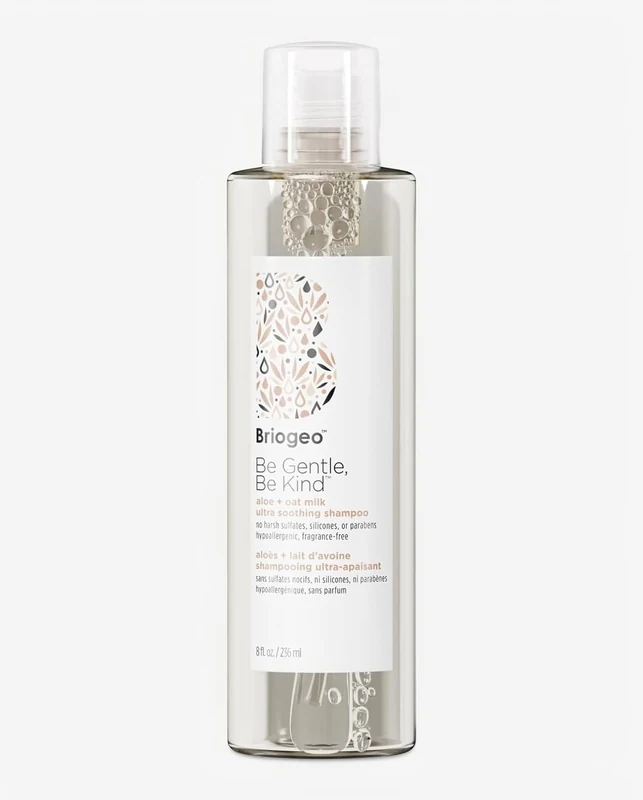
Briogeo Shampoo
A shampoo some readers pair with the scalp-cleansing step above.
Conditioner is meant to soften, smooth, and add moisture back into the hair, mainly along the mid-lengths and ends, where hair is oldest and most prone to dryness or damage.
A few practical points:
Apply conditioner mainly from the mid-lengths to the ends rather than the scalp, unless a product is specifically labeled for scalp use.
Fine or oily hair usually needs a smaller amount, applied further from the roots, to avoid looking weighed down.
Dry, coarse, or curly hair can sometimes tolerate conditioner applied a little closer to the roots — but this depends on your hair and scalp, so adjust based on what feels right for you.
Leave conditioner on for the time listed on the packaging; more time isn’t automatically better, and less time may mean it doesn’t do its job.
Skipping conditioner entirely tends to leave hair feeling rougher and more prone to tangling and static — it’s one of the few “extra” steps that’s genuinely useful for most people, not just a nice-to-have.
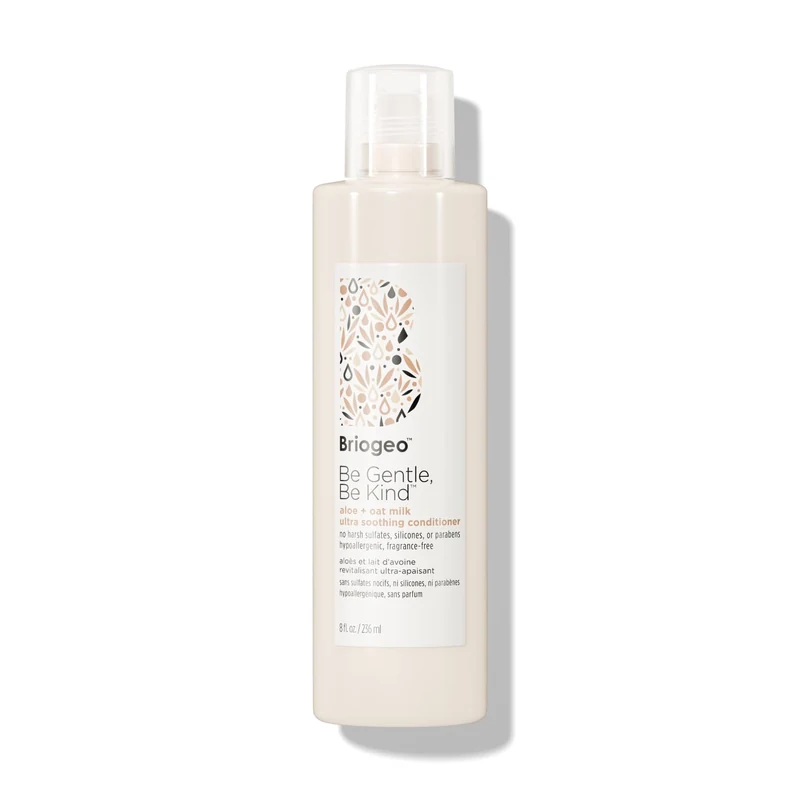
Briogeo Conditioner
A conditioner some readers use for the mid-lengths-and-ends step above.
Detangling matters most for longer, curlier, or drier hair, but it’s a good habit for most textures.
General approach:
Use a wide-tooth comb or a detangling brush rather than a fine-tooth comb.
Start at the ends and work upward in small sections, rather than starting at the roots and pulling downward through knots.
Apply light tension only — if you feel resistance, stop and work the knot loose in smaller pieces.
Whether wet or dry detangling works better depends on your hair. Curly and coily hair is often easier to manage when detangled with conditioner still in it, while some finer or straighter hair types detangle just as easily dry. Neither approach is universally correct — pay attention to what causes less breakage for your specific hair.
Leave-In Products: Optional, Not Required
A leave-in conditioner isn’t required for everyone, but it can help specific hair types manage moisture and frizz throughout the day. People who often benefit include those with:
Curly or coily hair
Dry hair
Frizz-prone hair
Chemically treated, color-treated, or heat-damaged hair
If your hair is naturally on the oilier side or fine and straight, a leave-in product may feel unnecessary or even weigh hair down. It’s entirely possible to build a complete beginner routine without one.
If you’d like to try a leave-in, here are two well-regarded options — you’d only need one, not both.
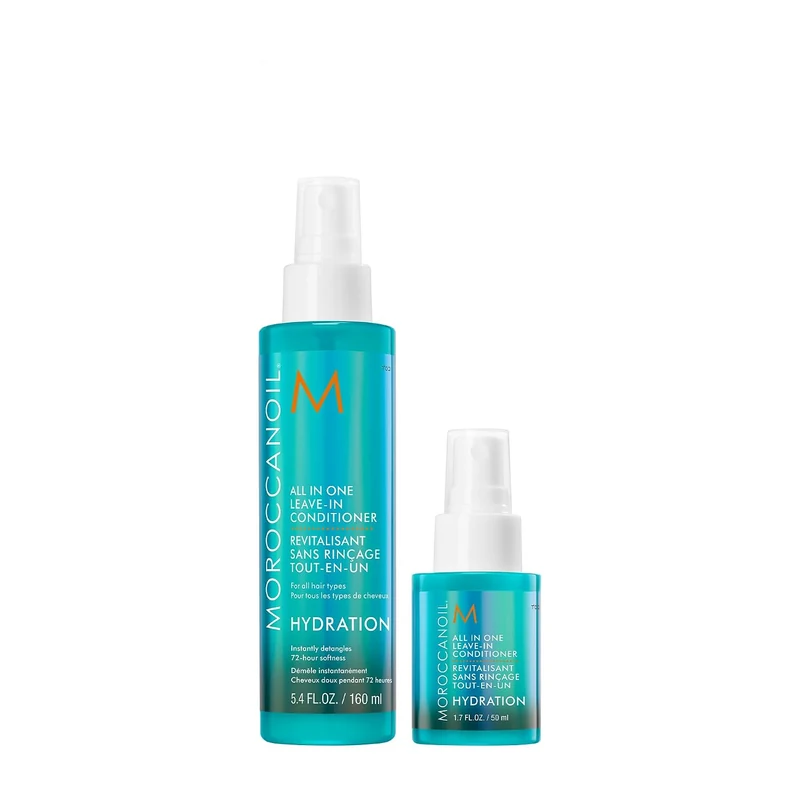
Moroccanoil All In One Leave-In Conditioner
One option for the optional leave-in step described above.
Blow dryers, straighteners, and curling irons can contribute to hair damage over time, mainly by drying out the hair shaft and, at high enough temperatures, weakening its structure.
Practical ways to reduce heat damage:
Use a heat protectant product before blow-drying or using styling tools.
Use the lowest effective temperature setting rather than defaulting to the highest.
Let hair air-dry partially before applying direct heat, when your schedule allows it.
Limit how often you use high-heat tools, especially on hair that’s already dry, damaged, or chemically treated.
There isn’t one universally “safe” temperature that applies to every hair type and tool, so rather than fixating on an exact number, focus on using the lowest setting that still works, along with a heat protectant.
See our Heat Protection Guide for Beginners.
Everyday Hair Damage
Beyond heat, several everyday habits quietly wear hair down over time:
Tight hairstyles (ponytails, buns, braids) worn constantly can pull on the hair shaft and hairline.
Rough towel-drying — vigorously rubbing wet hair — can roughen the hair cuticle and lead to frizz and breakage.
Aggressive brushing, especially on wet hair, which is more elastic and prone to snapping.
Frequent chemical processing (coloring, relaxing, perming) done back-to-back without recovery time.
Chlorinated pool water and prolonged sun exposure, both of which can dry out and weaken hair over a season.
Friction from certain fabrics, like standard cotton pillowcases, which some curl patterns catch on more easily.
None of these need to be avoided entirely — the goal is reducing unnecessary damage, not eliminating every hairstyle or trip to the pool.
How Often Should You Wash Your Hair?
There’s no universal washing schedule, and this is one of the most common places beginners overthink their routine. Instead of a fixed number of washes per week, it helps to start from a simple decision framework and adjust from there:
If your scalp gets oily quickly:
You may need to wash more frequently — for some people, that means daily or every other day.
If your scalp and hair stay comfortable for several days:
You may be able to wash less frequently without discomfort or visible oil buildup.
If your hair is dry, curly, coily, or chemically treated:
You may prefer less frequent washing, depending on your specific scalp and hair needs, since these hair types often hold onto moisture longer.
If you have dandruff or another scalp condition:
Follow appropriate scalp-treatment guidance — such as a medicated shampoo used as directed — rather than simply avoiding washing altogether (Mayo Clinic).
These are starting points, not medical rules. If you’re unsure, it’s reasonable to start in the middle and adjust every couple of weeks based on how your scalp and hair respond.
Signs you may need to wash more often: hair looks visibly greasy at the roots within a day, scalp feels itchy or uncomfortable from oil buildup, or a noticeable odor develops between washes.
Signs you may be washing too often or too aggressively: hair feels dry, rough, or straw-like; scalp feels tight or irritated after washing; color-treated hair fades unusually fast; or hair seems to break or tangle more than before.
See our How Often Should You Wash Your Hair? guide for a deeper breakdown by hair type.
If you wash less often, some people like a light refresh in between washes. This is optional, not a routine requirement.
K18 AirWash Dry Shampoo
An optional refresher for between washes — it isn’t a replacement for shampooing your hair.
A beginner-friendly morning routine doesn’t need to take long:
1
Refresh or restyle
hair as needed — this might mean re-wetting curls, brushing out bedhead, or simply finger-styling.
2
Detangle gently
if hair has knotted overnight.
3
Apply a leave-in product
, only if your hair type benefits from one.
4
Use a heat protectant
if you’re using any hot tools that day.
5
Style with minimal tension
— avoid pulling hair unnecessarily tight if you’re not going to wear it that way all day.
Not every step applies to every person. Someone with short, low-maintenance hair might only need step 1; someone with curly or color-treated hair might use all five.
Simple Night Hair Care Routine
An evening routine is mainly about protecting the work you’ve already done and reducing overnight friction:
Detangle gently before bed, especially if hair tends to knot overnight.
Loosen tight hairstyles rather than sleeping in a tight ponytail or bun.
Consider a protective style for curly or coily hair, such as a loose braid or pineapple style, if that’s part of your existing routine.
Keep things comfortable — an itchy or irritated scalp at night is worth addressing rather than ignoring.
Some people find that a satin or silk pillowcase, or a satin bonnet or scarf, reduces overnight friction that can lead to frizz and tangling, particularly for curlier and coilier hair textures. This isn’t a required step and isn’t a guaranteed fix — it’s a low-effort option some people find helpful.
Hair Care Routine by Hair Type
These are general starting points. Two people with the same texture can still need different routines depending on hair thickness, scalp condition, damage, and personal preference — texture alone doesn’t determine the whole routine.
Straight Hair
Main concern: Oil tends to travel down the hair shaft quickly, so straight hair can look greasy faster than other textures. Basic routine: Shampoo scalp as needed, condition lightly on the ends, avoid heavy leave-in products. Avoid: Overloading hair with rich, heavy products that can weigh it down.
Wavy Hair
Main concern: Balancing definition with frizz control. Basic routine: Gentle cleansing, conditioner focused on mid-lengths to ends, occasional lightweight styling product. Avoid: Heavy oils or creams that can flatten the natural wave pattern.
See our Wavy Hair Routine.
Curly Hair
Main concern: Dryness and frizz, since natural oils have a harder time traveling down the curl pattern. Basic routine: Less frequent shampooing, generous conditioner, gentle wet detangling, leave-in product as needed. Avoid: Rough towel-drying and frequent brushing when dry, which can disrupt curl pattern and cause frizz.
Coily Hair
Main concern: Coily hair is often the most prone to dryness and shrinkage, and can call for the most moisture-focused routine. Basic routine: Infrequent shampooing, deep conditioning, detangling with conditioner in the hair, regular moisturizing between washes. Avoid: Over-manipulation, harsh detangling, and excessive heat.
Fine Hair
Main concern: Fine hair can look flat or oily quickly and shows product buildup easily. (Remember: fine refers to strand thickness, not curl pattern — fine hair can be straight, wavy, curly, or coily.) Basic routine: Lightweight shampoo and conditioner, applied conditioner mainly to the ends, minimal heavy styling products. Avoid: Rich oils and heavy creams applied near the roots.
Thick Hair
Main concern: Thick hair can take longer to fully clean, condition, and dry, and may tangle more if not detangled regularly. Basic routine: Thorough but not excessive shampooing, generous conditioner throughout the mid-lengths and ends, regular detangling. Avoid: Skipping conditioner, which can leave thick hair feeling rough and hard to manage.
See our Thick Hair Care Guide.
Hair Care Routine for Common Hair Concerns
Dry Hair
Dry hair often looks dull, feels rough, and may be prone to static or breakage. A routine focused on moisture — a gentler shampoo, a richer conditioner, and reduced heat exposure — tends to help.
Frizz often comes from a combination of dryness, humidity, and hair cuticle damage. Moisturizing products, reduced heat, and gentler drying methods — like patting hair with a microfiber towel instead of rubbing with a regular one — can help manage it.
Hair Breakage
Breakage differs from hair loss: it usually shows up as short, uneven strands rather than thinning at the scalp. Common contributors include aggressive brushing, excessive heat, tight styles, and chemical over-processing. Reducing these factors and increasing conditioning can help reduce new breakage over time.
Dandruff and Flaking
Dandruff is a common, non-contagious scalp condition that causes flaking, and it’s considered a mild form of a related condition called seborrheic dermatitis (Mayo Clinic). Mild dandruff can often be managed with a gentle daily shampoo, and more persistent cases may respond to a medicated dandruff shampoo (Mayo Clinic). If flaking doesn’t improve with regular use of an anti-dandruff shampoo, that’s a reasonable point to check in with a doctor or dermatologist.
See our Dandruff vs Dry Scalp guide.
Hair Shedding
Losing some hair every day is a normal part of the hair growth cycle. According to the Cleveland Clinic, healthy adults typically shed somewhere between 50 and 150 hairs per day on average (Cleveland Clinic). Shedding is worth paying closer attention to when it noticeably increases, comes out in clumps, or is accompanied by visible thinning.
See our How to Reduce Hair Fall guide.
Do You Need Hair Oil?
Hair oil is optional, not essential, but many people find it useful for specific purposes:
Smoothing and shine: Oils can coat the hair shaft and reduce the appearance of frizz.
Softness and reduced friction: A small amount applied to dry ends can make hair feel softer and easier to manage.
Scalp application is a separate use case: Massaging oil into the scalp is different from applying it to the hair shaft, and is sometimes used as part of a relaxing pre-wash routine rather than a proven treatment.
It’s worth being clear-eyed here: using more oil doesn’t automatically mean healthier hair, and hair oil is not a guaranteed hair-growth treatment. If hair loss or slow growth is a concern rather than a cosmetic dryness issue, that’s a medical question worth raising with a dermatologist rather than something to address with oil alone. If you do use a hair oil for cosmetic purposes, a few drops on damp or dry ends is typically enough — more isn’t better, and heavy application can leave hair looking greasy rather than glossy.
Do You Need a Hair Mask?
Hair masks are conditioning treatments designed to provide more intensive care than some everyday conditioners, although formulas and benefits vary by product. They’re typically left on longer than a rinse-out conditioner — often 10 to 30 minutes.
Who may find it useful: People with dry, damaged, chemically treated, or heavily textured hair that wants more intensive conditioning than their regular routine provides.
How often: Generally used weekly or every couple of weeks rather than every wash, though this depends on the specific product’s instructions.
When it may be unnecessary: If your hair is healthy, fine, or already well-conditioned with your regular routine, a hair mask may not add much beyond what conditioner already does.
There’s no requirement to use a hair mask as a beginner — it’s a helpful extra, not a core step.
Common Hair Care Mistakes Beginners Make
1
Using too many products at once
, which makes it hard to tell what’s actually helping or causing a problem.
2
Washing on a rigid schedule
instead of adjusting based on how the scalp and hair actually feel.
3
Applying shampoo mainly to the lengths
instead of focusing it on the scalp.
4
Skipping conditioner
, which leaves hair rougher and more prone to tangling.
5
Brushing aggressively
, especially on wet hair.
6
Overusing heat styling tools
without a heat protectant or lower temperature settings.
7
Wearing tight hairstyles constantly
, which can stress the hairline over time.
8
Ignoring scalp symptoms
like persistent itching, flaking, or redness instead of addressing them early.
9
Expecting instant results
from a new routine within days.
10
Following viral hair “hacks”
without checking whether there’s any real evidence behind them.
How Long Does It Take to See Results?
Results depend heavily on what “results” means to you, and it’s worth keeping expectations realistic rather than assuming a set timeline.
Texture and manageability can sometimes feel different within a wash or two, since conditioner and gentler handling have a fairly immediate effect on how hair feels.
Reducing breakage is more gradual — you’re mainly preventing new damage from occurring, so it can take several weeks of consistent habits before you notice visibly fewer split or broken ends.
Changes in hair growth, density, or shedding take longer and vary substantially from person to person. Scalp hair grows at roughly 1 centimeter (a little under half an inch) per month on average, but this rate depends on genetics, age, overall health, and where a given hair is in its growth cycle (Cleveland Clinic). Real changes in length or fullness tend to become noticeable over months, not days or weeks.
Consistency tends to matter more than intensity — a simple routine followed steadily for a couple of months will typically show more improvement than an aggressive routine abandoned after a week. That said, persistent or significant hair loss isn’t something a routine change alone is likely to fix, and it’s worth having evaluated medically rather than waiting to see if it improves on its own.
When Should You See a Dermatologist?
Most day-to-day hair concerns are cosmetic and can be managed with routine adjustments. Some signs, though, are worth having a professional look at rather than managing alone. Consider talking with a dermatologist if you notice:
Sudden or significant hair loss, especially in clumps
Bald patches, particularly if they appear suddenly or in a defined shape
Noticeable thinning or a widening part
Persistent scalp itching that doesn’t improve with a gentler shampoo
Scalp pain, redness, or sores
Scaling or flaking that doesn’t improve with regular use of an anti-dandruff shampoo
Hair loss that comes along with other symptoms, like fatigue, fever, or a recent illness
A board-certified dermatologist can examine the scalp, take a proper history, and determine whether a concern is a normal variation, a manageable cosmetic issue, or something that needs medical treatment (American Academy of Dermatology). This article is educational information, not a substitute for that kind of evaluation.
Beginner Hair Care Routine — Simple Product Checklist
Product
Purpose
Do You Need It?
Shampoo
Cleans scalp and hair
Usually
Conditioner
Conditions hair lengths
Usually
Leave-in conditioner
Extra conditioning and frizz control
Optional
Heat protectant
Helps reduce heat-related damage
If using heat tools
Hair oil
Optional conditioning or shine
Optional
Hair mask
Deeper, less frequent conditioning
Optional
Frequently Asked Questions
The best beginner routine is simple: shampoo your scalp when it needs it, condition your lengths and ends, detangle gently, and protect your hair from heat and everyday damage. Add extras like leave-in conditioner or hair oil only if your hair type calls for them.
It depends on your scalp’s oil production and hair texture. There’s no universal number — oilier scalps generally need more frequent washing, while drier or coilier hair often needs less.
Not necessarily. Daily shampooing can work well for oily scalps but may be too drying for others. Base frequency on how your scalp and hair actually feel, not a fixed rule.
Generally no. Most conditioners are designed for the mid-lengths and ends, not the scalp, unless a product is specifically labeled as a scalp treatment.
No. Hair oil is optional and can help with shine and dryness for some hair types, but it isn’t a required part of a basic routine, and it isn’t a hair-growth treatment.
No. A hair mask can be a helpful extra for dry, damaged, or heavily textured hair, but it isn’t essential for a simple beginner routine.
Most people who use one do so weekly or every couple of weeks, though this varies by hair type and the specific product’s instructions.
Focus on gentle detangling, regular conditioning, reduced heat exposure, and avoiding constant tight hairstyles. These changes tend to reduce new breakage over several weeks.
Consistent, appropriately matched shampoo and conditioner, gentle detangling, reduced heat and chemical damage, and patience are the main levers — there’s no single product that transforms hair overnight.
Consider talking with a dermatologist if you notice sudden, patchy, or significant hair loss, ongoing scalp symptoms like itching or pain, or hair loss that comes with other health changes.
Final Takeaway
A beginner hair care routine doesn’t need to be complicated to work. The core sequence is simple: cleanse → condition → protect → adjust. Start with a shampoo and conditioner suited to your general hair type, add gentle detangling and basic heat protection, and give it a few weeks before deciding whether it’s working. From there, personalize further based on your specific hair type, scalp needs, and styling habits — which is exactly what the rest of Ava Fit Care’s Haircare guides are built to help with, from washing frequency to specific hair types and common scalp concerns.
Read our Review Policy for a plain explanation of what our review process does — and doesn't — mean for health-adjacent content.
Sources & Further Reading
This article is for general informational purposes and isn’t a substitute for personalized advice from a board-certified dermatologist or other qualified healthcare provider. It doesn’t diagnose, treat, cure, or prevent any hair or scalp condition. Everyone’s hair and scalp are different, and what works well for one person may not work the same way for another. If you notice sudden, significant, or unusual hair loss, please consult a dermatologist.